What It Takes to Build in Constricting Times
What we are learning about infrastructure, care, and experimentation in times of collapse.
The first thirty minutes of every Substratum advisory call are reserved for communal grounding.
Not agenda confirmation.
Not updates.
Not revisiting previous action items.
Not outcomes.
Communal Grounding.
We begin by rooting into the web of Earthseed wisdom, continuously inspired by Octavia Butler’s Parable of the Sower (a foundational text whose insights have shaped Substratum’s development), and a question that helps us to ground ourselves individually before we ground communally. Last week, the question was, “What is bringing you warmth?” Our advisors shared that it was the sunlight breaking through winter clouds, a parent arriving safely after a long journey, the announcement of a leadership transition rooted in trust and growth, a dog curled up looking cosy while it was snowing outside, and the synchronicity of pulling a tarot card with a spider weaving its web, and how we, too, are building a communal web.
We start this way because building in a time of constriction requires something different from us. It requires slowness. It requires ritual. It requires remembering that we are human before we are bodies moving through systems and institutions.
I am seeding this first official newsletter of Substratum with the same energy and invite you, dear community member, to reflect on this question for yourself, for just a moment, because you, too, are part of the web.
As Substratum slowly moves into public view, it feels important not to begin with outputs or milestones, but with the communal questions we are holding.
What Does Building Infrastructure Require in a Time of Collapse?
During our first full advisory gathering, we held two questions in our communal grounding space.
What does building infrastructure in a time of collapse require from us?
And what problems are we neglecting in nonprofit infrastructure, especially in relation to youth movements?
The reflections that emerged were layered and unfinished. That is intentional.
We spoke about:
The need to move from theory to practice: to experiment with new governance models without collapsing under the weight of perfection.
Infrastructure that is elastic and capable of absorbing shocks without breaking.
The importance of holding negative space, the shadow, the parts we avoid, the mistakes we have made and do not want to revisit.
The dance between past, present, and future. Social change work is always time travel.
The danger of operating only in reaction, always blocking, never building.
The temptation to do everything ourselves rather than share the load.
The spiral of history, and the courage required to learn from it without being trapped by it.
We spoke about trees, how when a wound appears in a trunk, growth does not stop. The rings bend around the damage. The tree adapts. It incorporates the break and continues growing.
Infrastructure, we agreed, is less a rigid system and more a practice.
A practice of elasticity.
A practice of memory.
A practice of experimentation.
A practice of community.
Substratum exists to keep a crack open, a space where experimentation, collective learning, and possibility can continue even as everything feels like it is tightening.
Who We Are Becoming
Substratum is still in formation. But it is not being built alone. Who we build with matters.
Our advisory group brings together deep, lived experience across feminist philanthropy, youth movements, collective governance, decolonial practice, and global human rights advocacy.
Yifat Susskind
Executive Director of MADRE, Yifat has spent decades partnering with women’s human rights activists across Latin America, the Middle East, Asia, and Africa. Under her leadership, MADRE has supported community-based survival and long-term systems change in contexts shaped by war, climate crisis, and political repression. Her work bridges grassroots partnerships and international advocacy, from village councils to the UN Security Council.
Erix (they/elle/elu)
A queer, trans non-binary anthropologist and philanthropic advocate from Colombia, Erix brings over a decade of experience in decolonial and anti-extractivist spaces, feminist learning and evaluation, collective protection, and movement-centered resourcing. Their work centers care-based accountability and trans-forward, intersectional philanthropy rooted in political practice.
Darcelle Lewis (they/them)
Darcelle Lewis (they/them) is a queer practitioner from Trinidad and Tobago working across care, facilitation and movement infrastructure. Their work focuses on strengthening the relational and practical conditions that help movements sustain themselves. They are currently incubating Care with Lewis, an integrated practice shaped by a lifetime of care work that brings together facilitation, event coordination, therapeutic support and child-centered care.
María Alejandra Escalante
A Colombian queer feminist and systems designer, María Alejandra bridges environmental justice, feminist funding, and community resilience. With leadership across GAGGA, FRIDA, Global Greengrants, and FLAC, she translates visionary politics into durable governance and MEL systems.
Uma Mishra-Newbery
Founder and Lead Strategist of The Substratum Initiative, Uma is a feminist strategist and former Executive Director of Women’s March Global and Interim Executive Director of FRIDA | The Young Feminist Fund. With over two decades of leadership across grassroots organising, philanthropy, and infrastructure design, she works as a consultant at the intersection of global systems change and relational care. A somatic abolitionist, she centers embodied leadership, experimentation, and justice-centered systems that hold both individuals and institutions through complexity and transition.
Together, we bring experience across movement building, philanthropy, governance experimentation, and institutional transformation. More importantly, we bring a willingness to try again and honor the discomfort that experimentation requires.
Moving Forward with Intention
There are no neat conclusions to the questions we began with.
As Substratum grows, even slowly, so does the responsibility.
Every advisory call, I arrive holding both excitement and anxiety. The more coherent our work becomes, the more real it feels. The more real it feels, the more responsibility I feel to hold it with care and protect it from the urgency embedded in the global systems we all move through.
And yet, what feels most grounded right now is that this space is not just my brain trying to solve a systems problem.
This is a group of people choosing to think together.
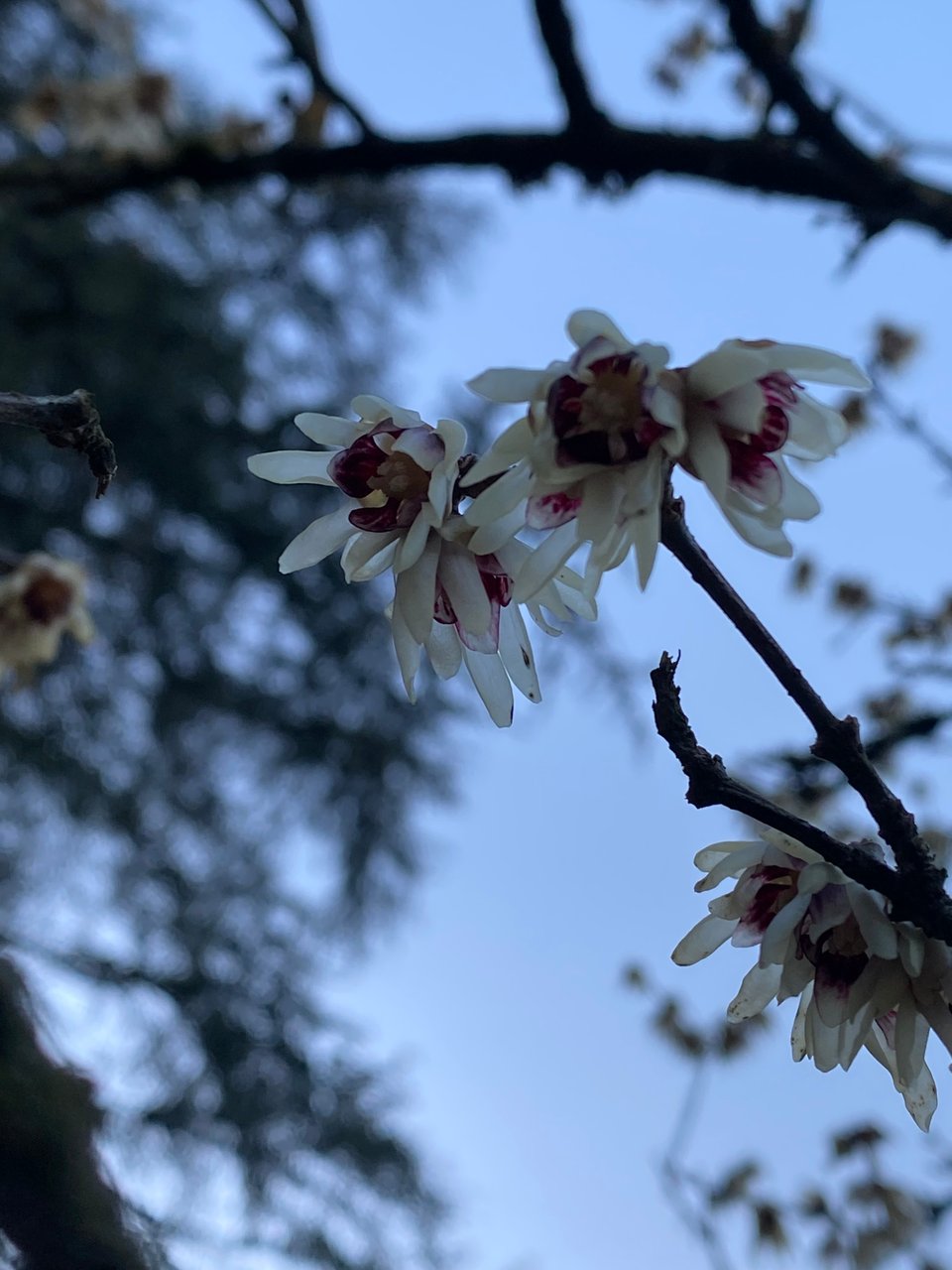
One of the reflections shared in the closing of our recent Advisory call was this image: weeds growing through concrete. That, through community, roots find one another underground and strengthen. That what looks fragile on the surface can be relentless below it.
Another reflection was about resource pooling, not just money, but wisdom, memory, and infrastructure. What would it mean if we stopped rebuilding HR systems from scratch every two years? What if we didn’t hemorrhage funds to consultants because we never had time to build durable internal structures? (As a fellow organisational development consultant, I know how valuable our work is. We exist because major gaps remain in organisational infrastructure.) What if shared infrastructure allowed movements to preserve well-being and stretch resources further?
And another: what if we didn’t have to collapse parts of ourselves to do this work?
We are not wrapping this work in certainty.
Instead, we are committing to:
Experimentation without urgency traps.
Learning from the past without steeping in shame.
Building structures that are elastic rather than brittle.
Creating shared space where leaders can practice new ways of working together.
Resourcing care as an integral part of infrastructure, not as sentiment.
Substratum is still in its early stages.
We are still volunteer-carried.
We are still asking more questions than answering.
But we are grounded in collective thought, collective memory, and collective practice.
We are experimenting.
We are moving forward slowly.
We are building with intention.
We are choosing to grow, even through concrete, with the belief that even in times of collapse, it is possible and vital to keep the cracks open.
With warmth and in community,
Uma
Were you forwarded this email?
Subscribe to our newsletter.
Further Reflections
Transnational Institute (TNI): Mapping Fascism
Global networks, power, and the rise of the far rightFoundation for a Just Society: Funding Feminist Leadership Transitions: A Landscape Analysis
Who Gives: The Crisis Beneath (By Edgar Villanueva): The Crisis Beneath
Nonprofit Quarterly: How To Build Solidarity Infrastructure for the Long Haul by Adaku Utah and Deepa Iyer

Add a comment: