Walking in a new topography
Does where I walk affect who I am?
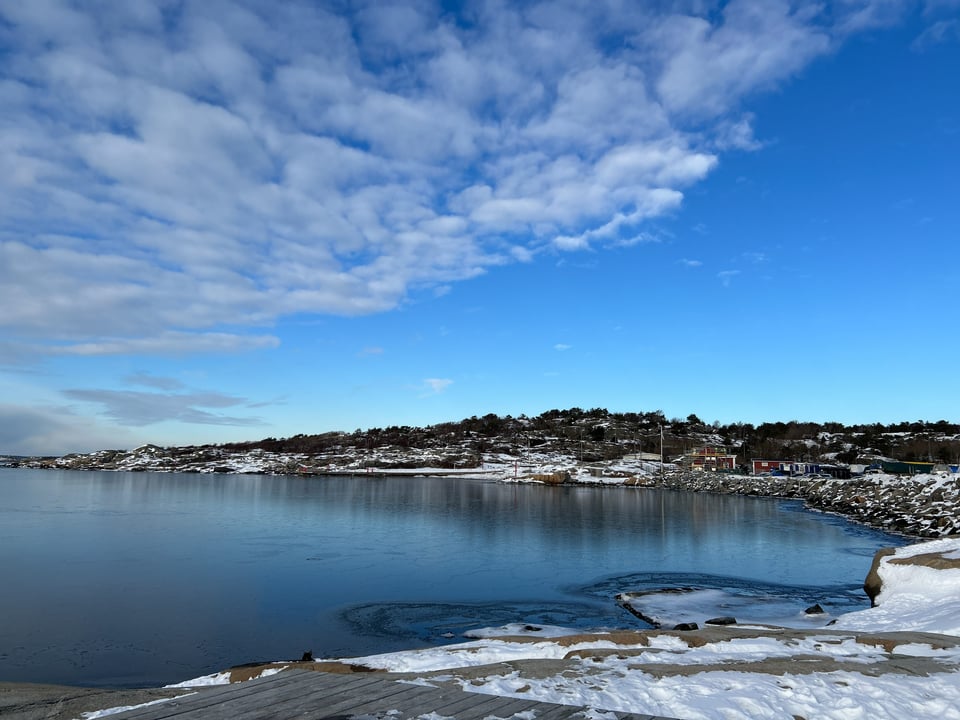
Living so close to the water, the rocks, commuting via the sea does something to the mind. Doesn’t it? In 2024 I’d published an essay for Psyche comparing my life in Germany and India and drawing out the subtle, subconscious ways the two differed. The essay gave me and continues to do so more than I’d imagined. This essay is also somewhat drawn from the substance of my previous work. You can read my Psyche essay here:
The divided self: does where I live make me who I am?
The artist is a receptacle for the emotions that come from all over the place: from the sky, from the earth, from a scrap of paper, from a passing shape, from a spider’s web.
— Pablo Picasso
As the weather begins to clear up and we experience warmer but also wetter days (5 degrees tops), I feel innocently excited about the prospect of being outdoors once again. Be it via my running routines, or by taking those long, ambling walks with M, or perhaps (farther down in the thick of summer) those various trails through the islands in the Northern and Southern archipelago outside Göteborg.
Last summer, as I’d undertaken these trips, photographing them feverishly and feeling my toned muscles help my body move in a riveting way through these landscapes, I had regretted being unable to write about it all. A new landscape, a new topography but where my words? I was brought up and bred on plains and flatlands in and around Delhi. And here I was, in this variously rolling, hilly terrain surrounded by new formations composed of ancient rocks, sea water, and very little loose sand.
In this year and a half of living so close to the sea (it’s a 10 minute walk from our place) and encountering rocks of all shapes and forms each time I’ve ventured out, I feel something has unlocked within. It does something to you—living around rocks, stepping on them to get to places, having to walk down a hill to get groceries, or climbing up a short trail when reaching a friend’s place.
French philosopher Gaston Bachelard comes to mind. He wrote about feeling “psychically innovated” in spacious areas. To him, “vastness” was the “friend of being.” He recognized that open spaces bring a sense of freedom and a chance for personal growth.
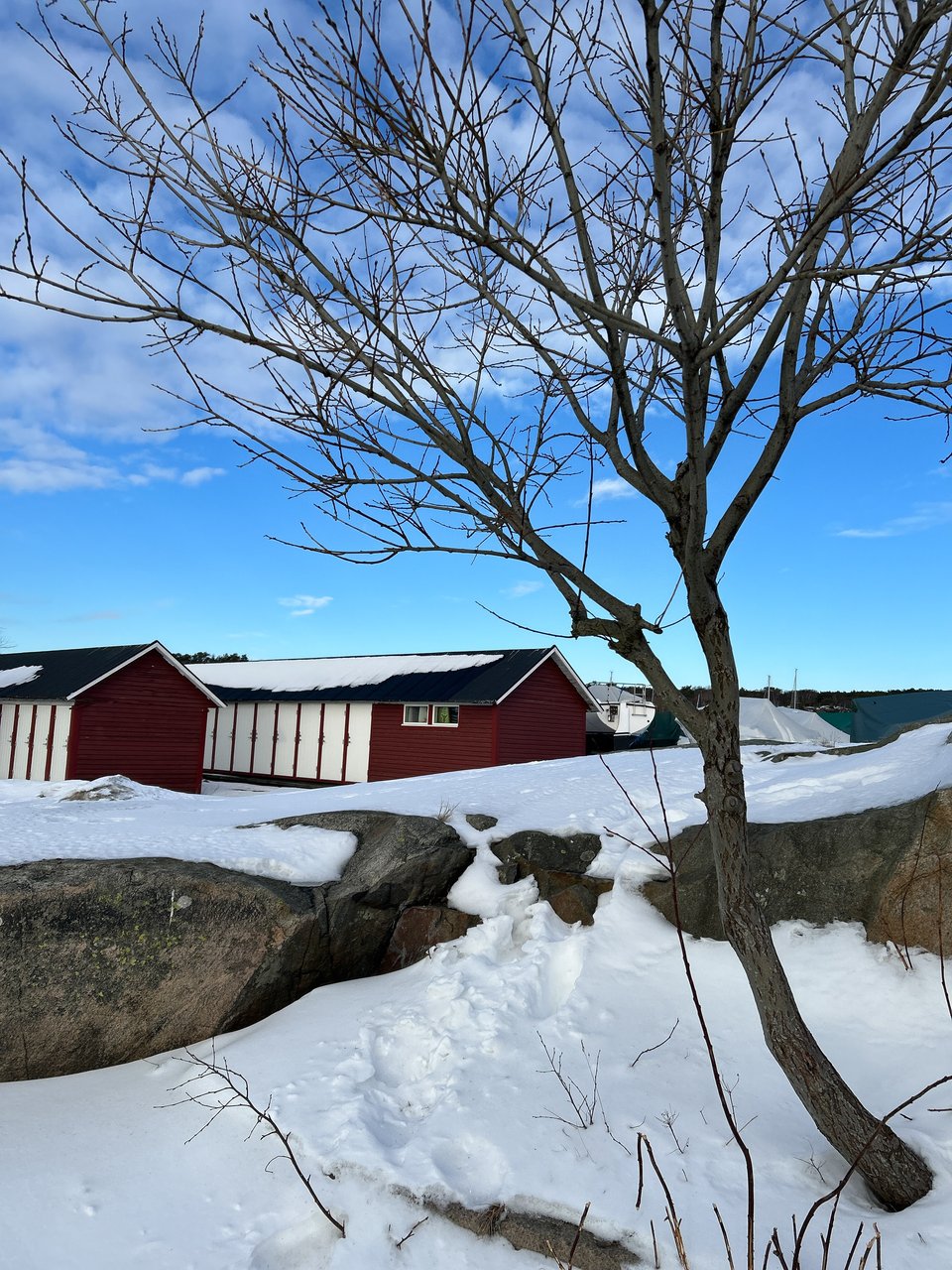
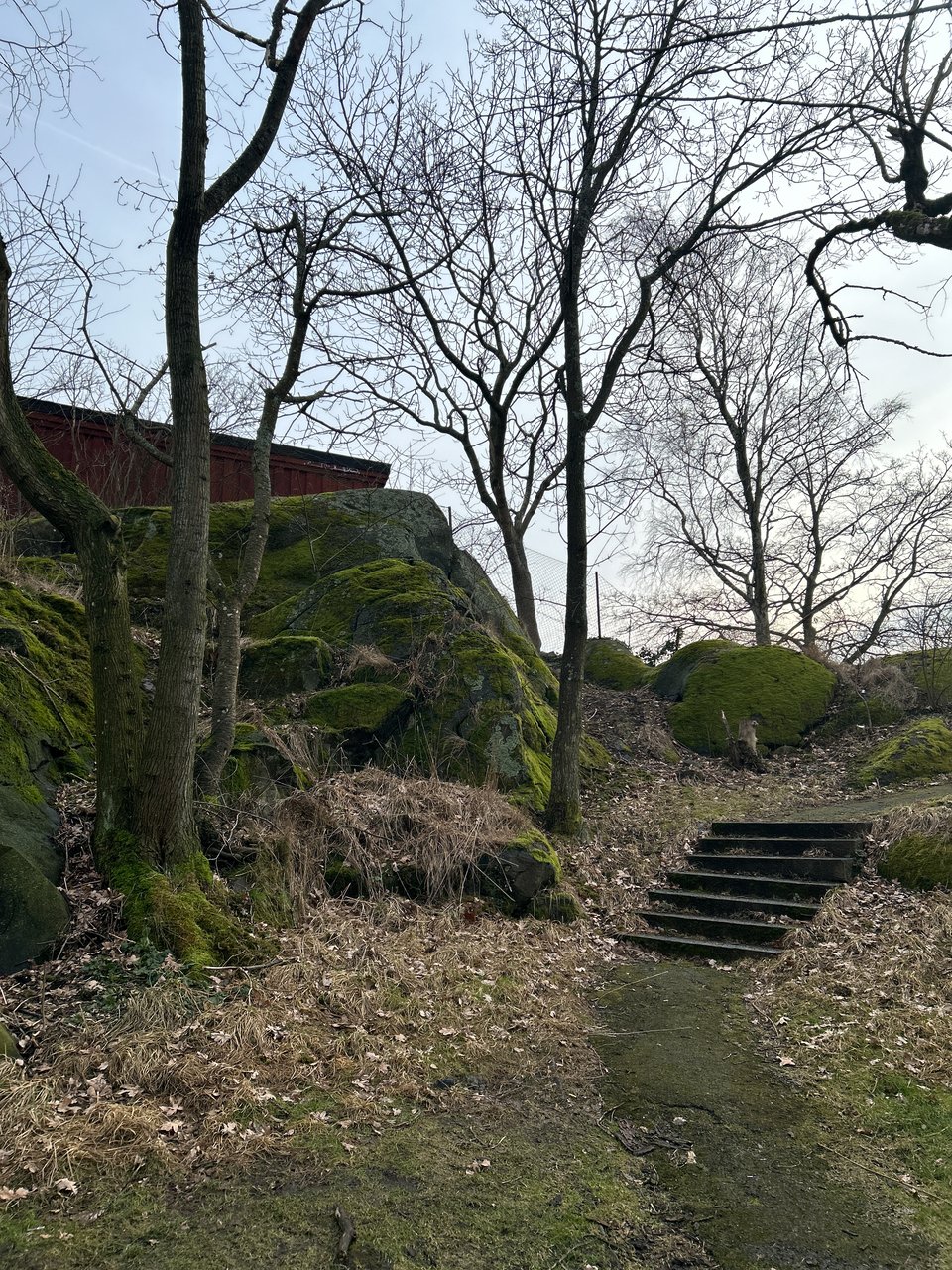
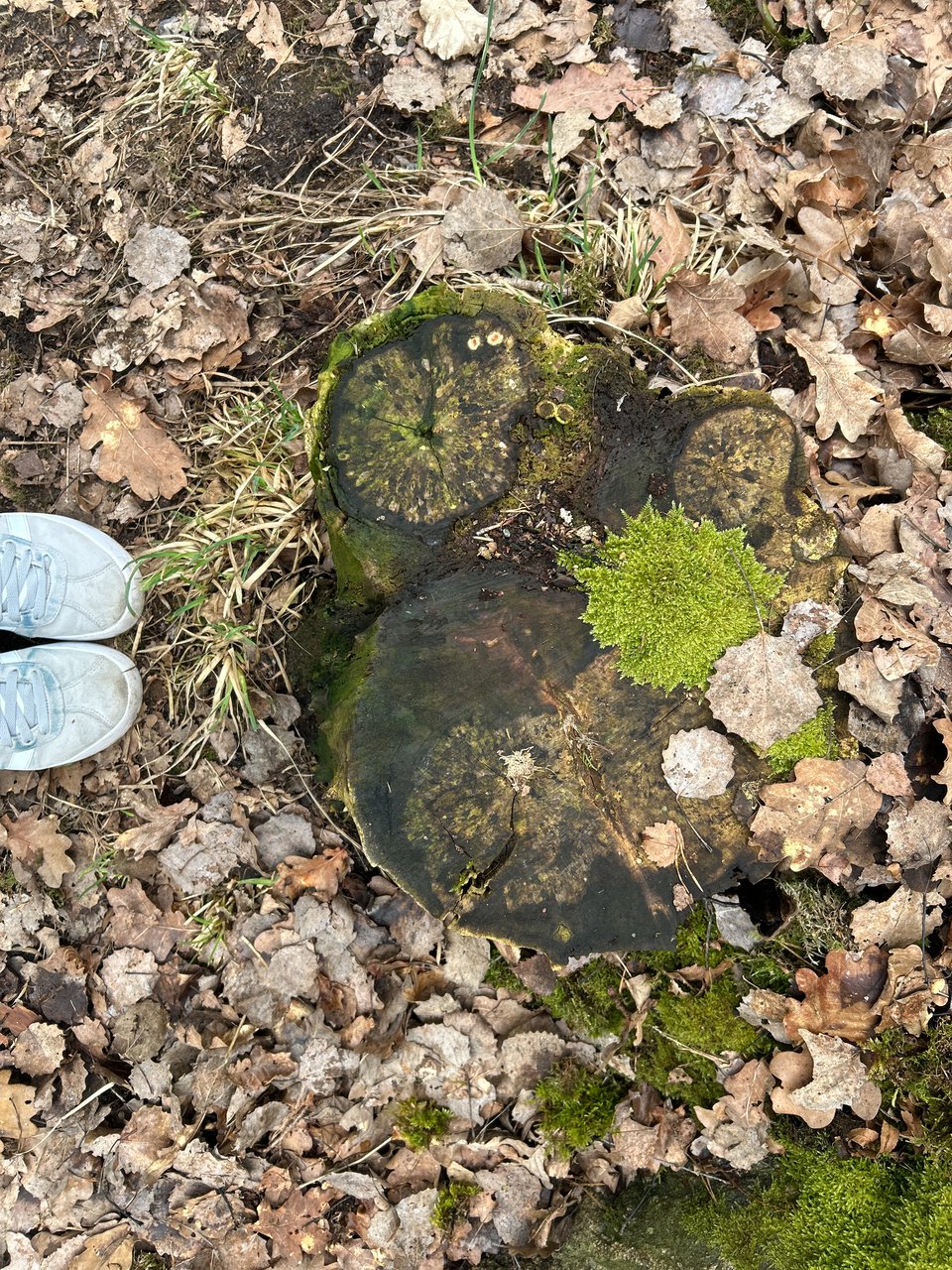
There is a haptic friction to movement in Gothenburg that Delhi never demanded of me. Here as I walk, the earth rises up in mounds, causing me to suddenly slow down or fasten my pace. There’s so much life other than the human around the road, on ridges, hiking trails — lichen, moss, dry shrubs, stray stubborn winter plants. I take the air in by the lungfulls, especially on misty, rainy days, as if cleansing myself of Delhi’s dust and NOx and particulate pollution. Breathing, I feel a sharp, salt-tinged clarity akin to what I felt in the Himalayas back home.
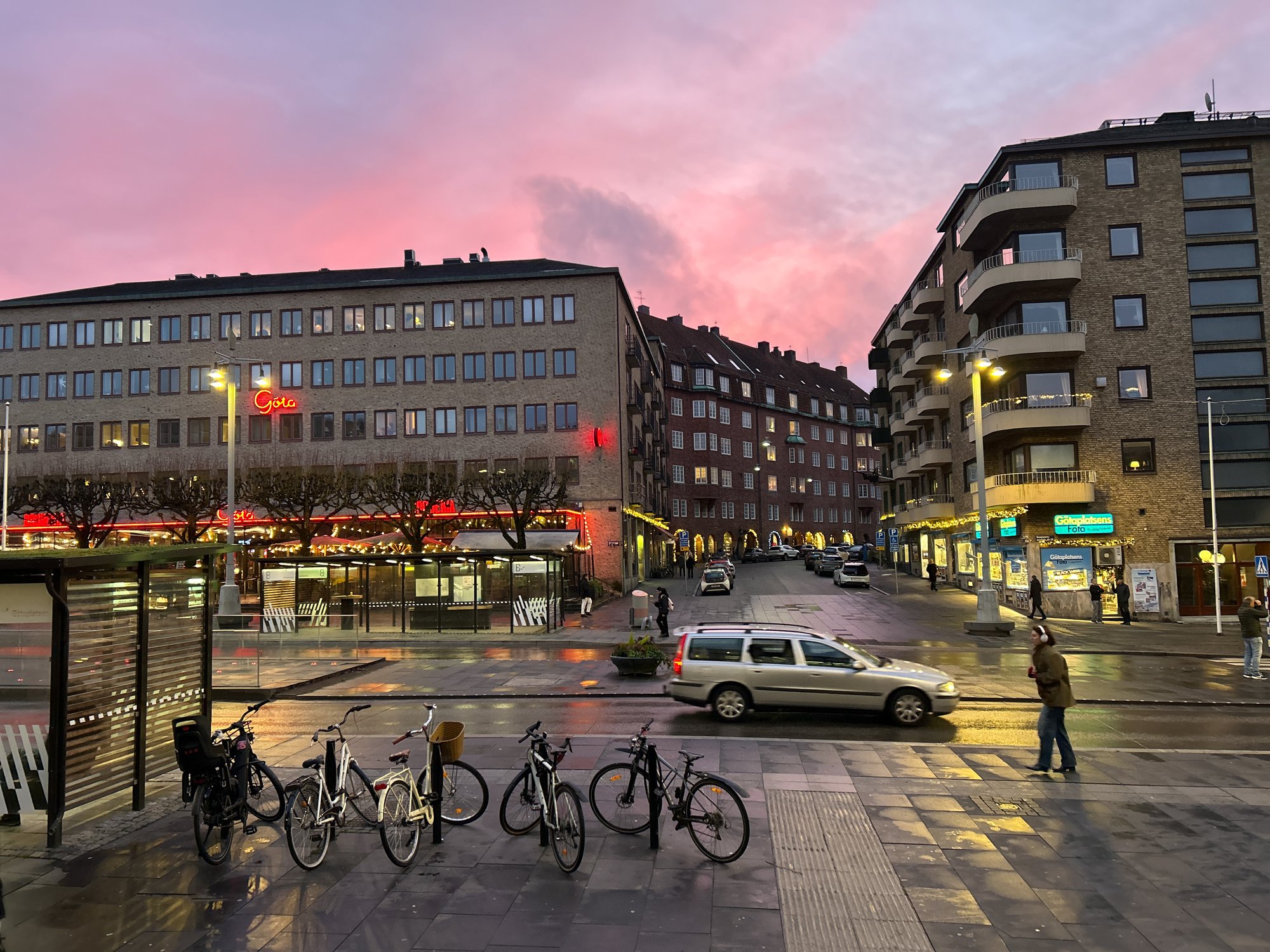
Some of my favourite Göteborg neighborhoods Stigbergstorget, Masthugget and Alvsborg require constant vertical movement.The islands (Styrsö, Brännö, Vrångö) are essentially just massive granite rocks jutting gently out of the North Sea. The internet tells me that what I’m walking on in most parts of the city is essentially Gneiss and Granite, that’s roughly 1.7 billion years old. And because the top soil is often thin, as I walk through the cobblestones of Stigbergs this ancient "basement rock" constantly peeks through, rubbing against my New Balance shoes.
It’s very strange then that walking here brings me a frisson of abandon, a senstation of freedom. I’m still trying to put it to words. It’s taken me these 18 months to understand why people call the rainy and windy season "bad weather." I come from the parched desert badlands of Delhi, cut so close to the deserts of Rajasthan that it bathes in dust through the year. I’ve grown up pining for rain like a forlorn lover, writing paeans to the monsoons as if they were the boyfriend that got away.
Even so, each time I step onto our balcony, take a few steps on the deck, and see the view emerge through the mist, the fog, and the rain, more often that not I feel overwhelmed.
On these walks, listening to The Kinks, or 99% Invisible, or sometimes the sound of cars zipping by, I notice how the landscape slowly unfolds itself around me, creating a silent rupture in my vocabulary. Where I lived in Delhi for over five years was a neighborhood settled atop a small hill, a kind of wonder in the flat, desert land that the city is. There taking walks up and down the entry gate of our society, I’d felt a rush of joy, the passage mimicking that of the many hill stations I’d forever romanticized. Here, words like rapture, frisson and other evocative expressions come to mind.
Had I known the city’s landscape was such I’d have assumed I’ll be unable to fit into it. But that’s hardly been the case. Something I’d read comes to mind:
Look at the things around you, the immediate world around you. If you are alive, it will mean something to you…
I’ve no idea where that’s from, but a small gentleness in that thought sparks in my mind each time I walk through Göteborg. What I’m trying to say is that perhaps that gentleness was just not reachable for me in Delhi. In Göteborg on my walks sometimes the mist lifts or it doesn't; the fog clogs traffic; the rain is relentlessly facile. But moving through it all amid this rocky terrain makes me feel more alive to my surroundings and to my inner self. To put it blatantly, it generates more meaning.
It makes me want to strengthen my knees, flex out my ankles, muscle up my calves. I want my shoulders to have more strength when I pull my weight up the hill in the peak of summer. It’s brought along an inward, outward way of life that seems simultaneously hard to balance and overlook. But this rockiness, the uneven, surprising jaggedness and the way friends and acquaintances have made it their own, makes me want to challenge my ways.
In Delhi, we grow up coveting the Himalayas, not just for short bursts of touristy vacations, but also for the relaxation and calm they bring. On our way back from trips to Himachal or Uttarakhand we try to bring with us the food, culture, and overall vibe of those small Himalayan towns and cities. During Covid, the first trip we took away from Delhi after the first lockdown was to the cheesy, busy, bustling cities of Manali and Shimla. I’d worked from there with the Himalayas flanking me through the window seat. My American colleagues had felt that sublime rush each time we got on a video call, echoing wonder at how gorgeous that setting was.
In The Walking Cure, Annabel Streets connects the dots in the chapter about walking in the hills:
As we survey the world from the summit of our hill, warm and glowing from our ascent, the possibilities seem endless. Briefly, we are invincible.
This is not to say that I’m lumping the various moods and extremes that the Göteborg landscape is capable of with its pristine, if mild, external edifice. But there has definitely come through a slowness, a deliberateness that has created its own kind of languidity in my everyday. Simply put: against the backdrop of Göteborg’s architecture and its quiet urban beauty, I’ve found more spaces for contemplation and pause. And these thoughts have been more about my connection with nature and the way I move through the world.
I cower back as I type this, but sometimes during these walks I feel like I’m a character in a Joachim Trier or Dag Johan Haugerud film, drifting through the mundane, walking through these hills while looking over the rooftops of a sun-kissed Göteborg. A tram cuts through the landscape, revving up my mind as I pull out my phone to take a photo and post it on Insta Stories in a rather lame attempt to cast myself into the world of these movies. “It’s like I’m inside an afternoon of a Dag Johan Haugerud movie,” I type out and push send, as something inside me continues to cringe and curdle slowly.
While I wouldn’t go so far as to say that this landscape has “altered” me or that I’m now a different person altogether (I still don’t know how to cycle or how to swim), I do believe that living in this topography has stirred in me a gentle appreciation for the everyday infrastructure we take for granted. My daily preoccupations, worries and aches remain firmly intact, but on a bad day, I can look out the window, observe the mist settle on the football field, and maybe spontaneously decide to bring out my shoes and go mindlessly for a run.
When I moved here in August 2024, a walk from the closest grocer (less than 250m away) took me 15 minutes. The street wound uphill, I had to take a steep flight of 40 steps to arrive at a clearing from which I’d take another short, slanted walk up to arrive at our patio. My Delhi-addled lungs would deflate, I’d break a sweat and be out of breath.
Eighteen months later, my lungs hold up, I don’t sweat as easily, not unless it’s summer, at least. I can even continue speaking while walking. It’s a surprising, if small, intervention, and not something I’d thought of when I moved. But it provides a lovely preface for how the rest of life continues: slowly, uphill, one step at a time through the mist, the rain, the fog.


Add a comment: