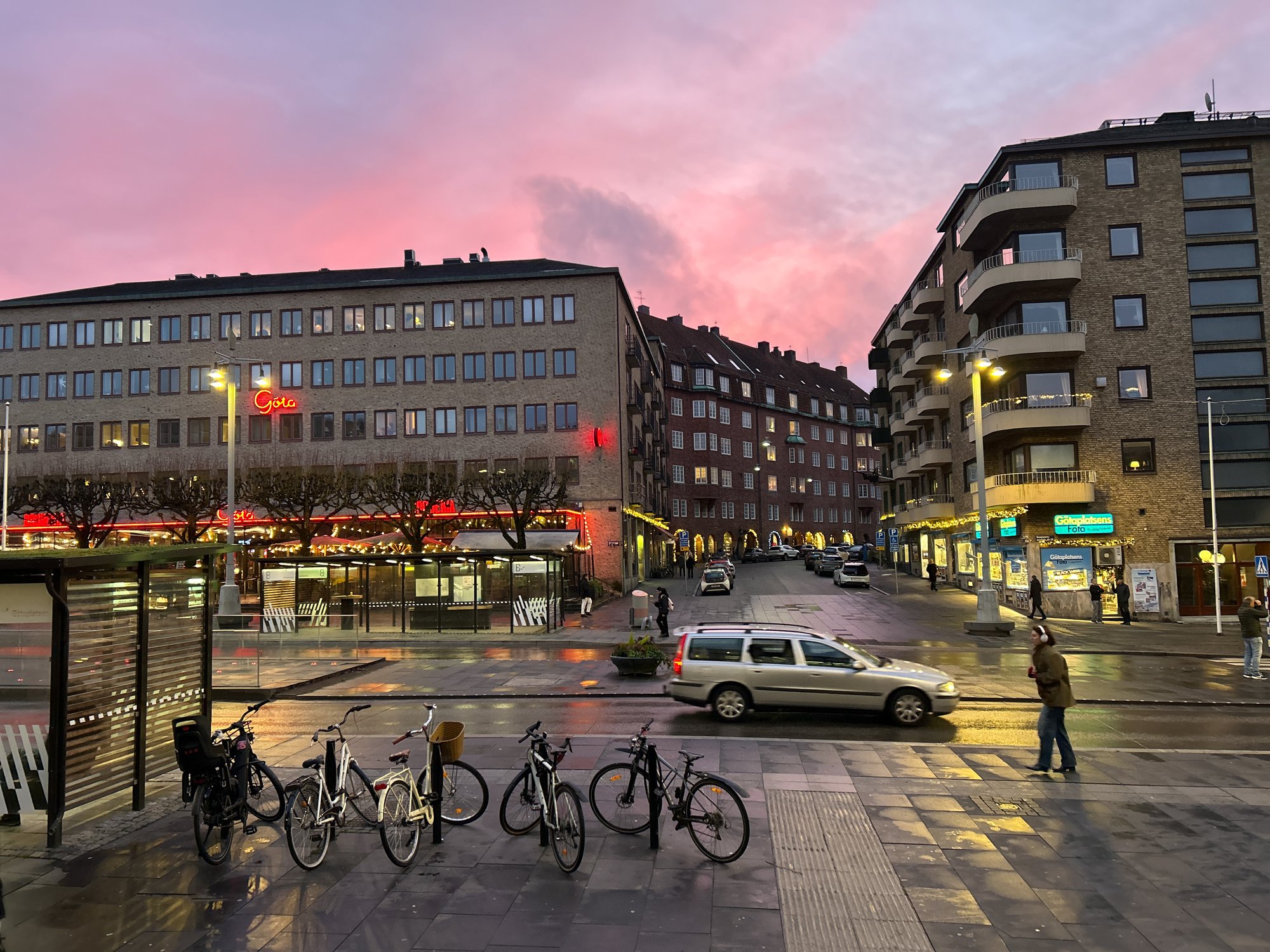
Quick commerce & life at human scale
The everyday intentionality in the inconvenience of living life at human scale
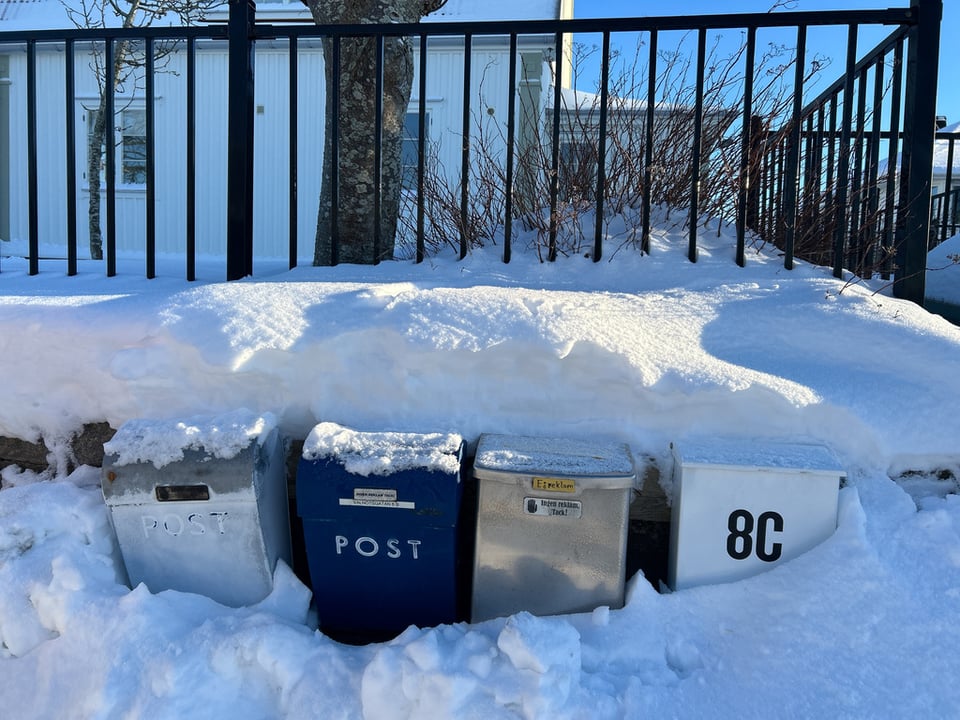
I’ve been rotating a single thought in my mind like a Rubik’s Cube for the last few weeks: What does a 30-minute trek to a post box do to a person? Since moving from Delhi to Gothenburg, my relationship with postal deliveries has undergone an unexpected, seismic transformation. My doorbell hasn’t rung in 1.5 years and life feels just fine.
In my ground floor south Delhi apartment located conveniently on a cul de sac, milk, groceries, Amazon packages, even a single packet of ramen noodles were hand-delivered to my the balcony. On some days the doorbell rang 30 times a day, starting at 6am. Deliveries were simple even if I wasn't home: either tossed over the railing or left with my first-floor friends. The entire experience was mediated by apps, screens, calls. It was frictionless, convenient, almost mindless but what I didn’t realise then was how inhuman it all was.
Here in Sweden, getting a package isn't ever a direct, straightforward delivery, it’s very nearly a video game quest.
Gothenburg is a city of hilly terrain and urban planning that respects nature more than laziness. This follows the fact that in the suburbs, postboxes aren't at the doorstep but are grouped way out by the main street (alongside garbage bins) to make life easier for the postal workers. Additionally, postal services here are carbon footprint friendly.
Last year, fresh out of Delhi and accustomed to blindly selecting options to receive an order in under 12 hours, I made a rookie mistake. I selected a supermarket pickup without checking the address, assuming it was the one a 5-minute walk away. Couple days later, I found myself on a 13-minute bus ride followed by an 11-minute hike in the biting Baltic northern wind, just to retrieve a package.
In these 20 months, I’ve used my evening runs as a ruse to carry boxes home. I’ve trekked through snowstorms, postboxes submerged in drifts. While shoveling, I’ve wondered: Do postmen skip the house if the postbox is buried, or do they carry a tiny shovel of their own?
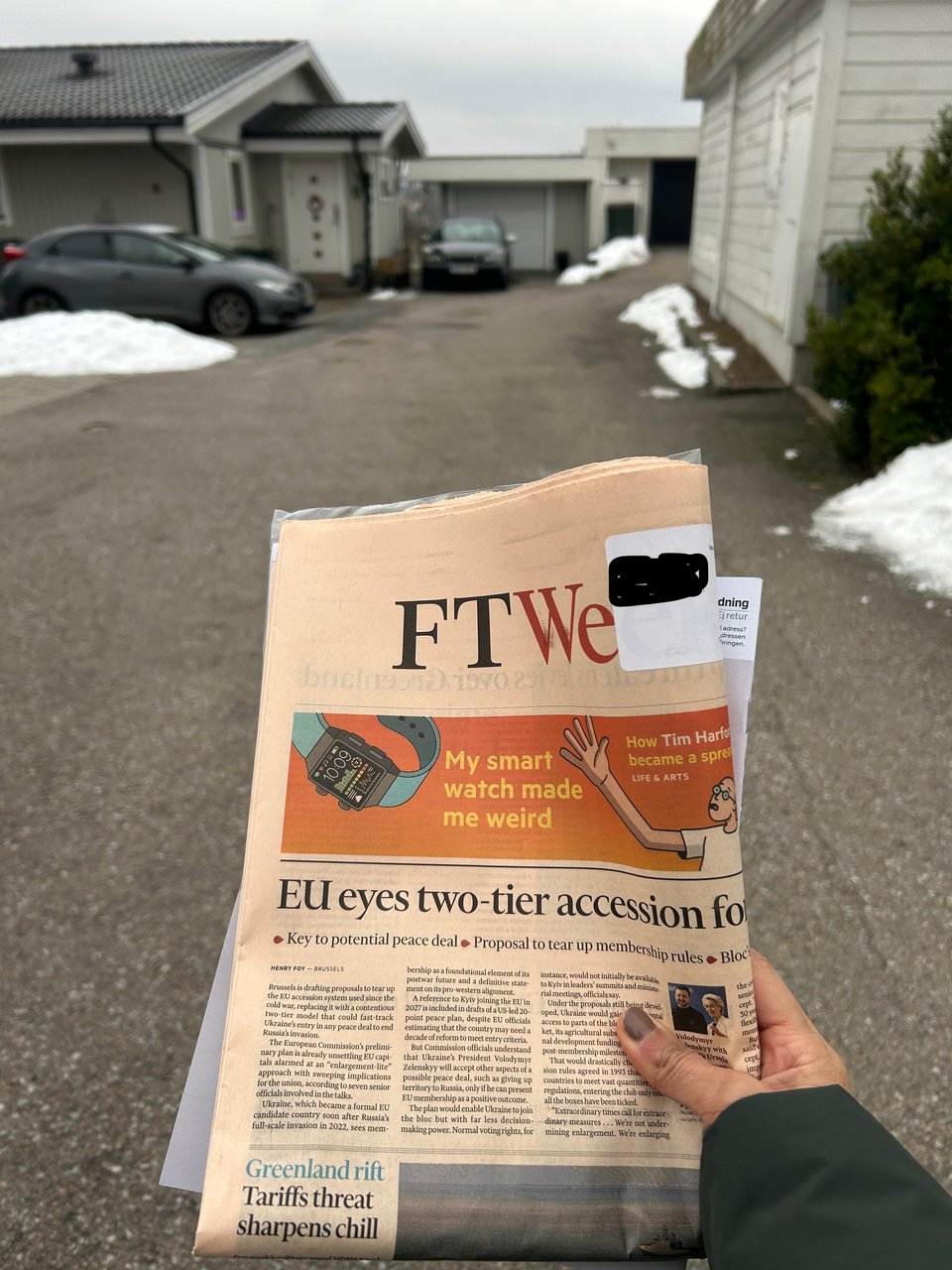
This tangible, strategic effort to receive deliveries seems new, while also being diabolically reminiscent of the nostalgia of 2010-12 e-commerce home deliveries when ordering a pair of Converse or a Diesel wallet felt like reaching out to God himself.
Back then, online shopping felt to me like an act of faith. I once ordered a pair of Converse that arrived two sizes too big, and because I didn't know or understand returns, I simply wore those shoes for years. They were a treasured, hard-won prize. I was secretly proud and in love with them.
Fifteen years later, my relationship with online purchases has inadvertently reverted to its original, primal form.
In Delhi, I ordered ramen noodles on a whim and had it dropped at my doorstep in under 7 minutes.
In Gothenburg, I measure my desires for days plotting, planning and prefiguring logistics with the strategy and acumen of a student in a Chemistry lab.
It could be said that I’ve weaned myself off the instant, impulse purchase ways of life. By introducing friction back into my day, I’ve found something I lost in the convenience of Delhi: intentionality.
In his oft-quoted NYT oped “The Tyranny of Convenience” professor Tim Wu writes:
“Embracing inconvenience may sound odd, but we already do it without thinking of it as such. As if to mask the issue, we give other names to our inconvenient choices”
In these months of not ordering much online, I discovered that practically everything I need or desire is immediately available in one of the three international supermarkets, 6-7 minutes walking from my house. I could walk up to a market, or a small business in the vicinity, chat up with the business owner or store worker, about the weather or any such mundane everyday topic, and make a purchase. Perhaps that way I won’t also lose the threads that tie us to people, making this whole endeavor and life a little more human.
Novelist Kurt Vonnegut was once stepping out to buy an envelope when his wife asked him why he doesn’t buy a hundred of them online in one go. His reply:
“And so I pretend not to hear her. And go out to get an envelope because I'm going to have a hell of a good time in the process of buying one envelope.
I meet a lot of people. And see some great looking babies. And a fire engine goes by. And I give them the thumbs up. And I'll ask a woman what kind of dog that is. And, and I don't know. The moral of the story is - we're here on Earth to fart around.
And, of course, the computers will do us out of that. And what the computer people don't realize, or they don't care, is we're dancing animals. You know, we love to move around. And it's like we're not supposed to dance at all anymore.”
In Sweden I’m relearning my relationship with the outdoors as a place where I could get lost or walk slowly observing a neighborhood cat cross the street or ants bark up a tree. I smile at my neighbours, observe the daffodils bloom at the break of spring and chat up in my broken Swedish with the old uncle taking his daily walk in the sun. I walk to reach the supermarket looking up at the skies to find shapes in clouds and spot new benches lined up next to the tram station, just in time for the summer.
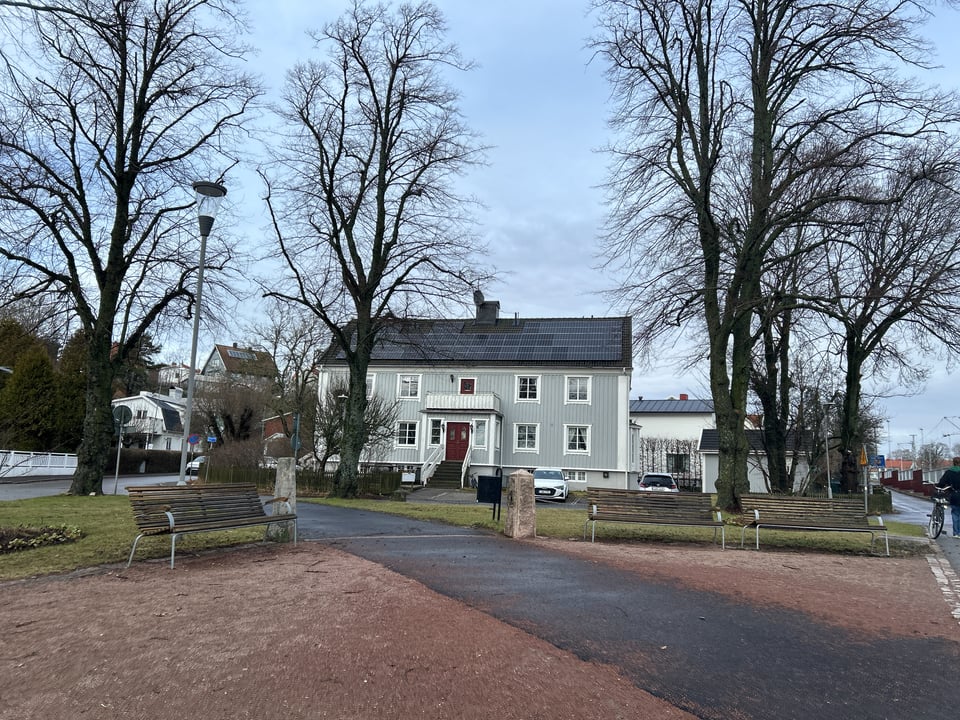
Gothenburg has brought me back to what my parents taught me: that convenience is a double-edged sword. It gives us time but robs us of intention. In Delhi, my life was a series of effortless clicks; in Gothenburg, it’s a chain of meticulous, deliberate hikes through seasons, landscapes.
As Sam Holden writes in his latest newsletter, Living at human and artificial scale:
“…if a more human future and richer cities do arise in a post-AI world, they will come through cultural and political movements to disengage from digital technology, and sustained efforts to create networks in the real world. Protecting and cultivating the common spaces within our cities, uncommodified human relations in our lives, and unmediated realms inside our minds is a process that should be difficult and full of friction. If it’s easy, we’re not doing it right.”
If I were a poet, I’d even muster that there’s a quiet, rugged dignity in having to work for my mail. It renders a mindless transaction back into a human event. I’ve stopped expecting the world to shrink to the size of my doorstep, or worse the size of the black mirror in my palm, and in return, the city has finally started to feel like home.
Back in 2003, Reliance’s ad tagline was “Kar lo duniya mutthi mein” which translates to something like “grab the world in your palms”. But its 2026 and we need to re-calibrate and take things back in our hands. As Holden writes, “If it’s easy, we’re not doing it right!”


Add a comment: