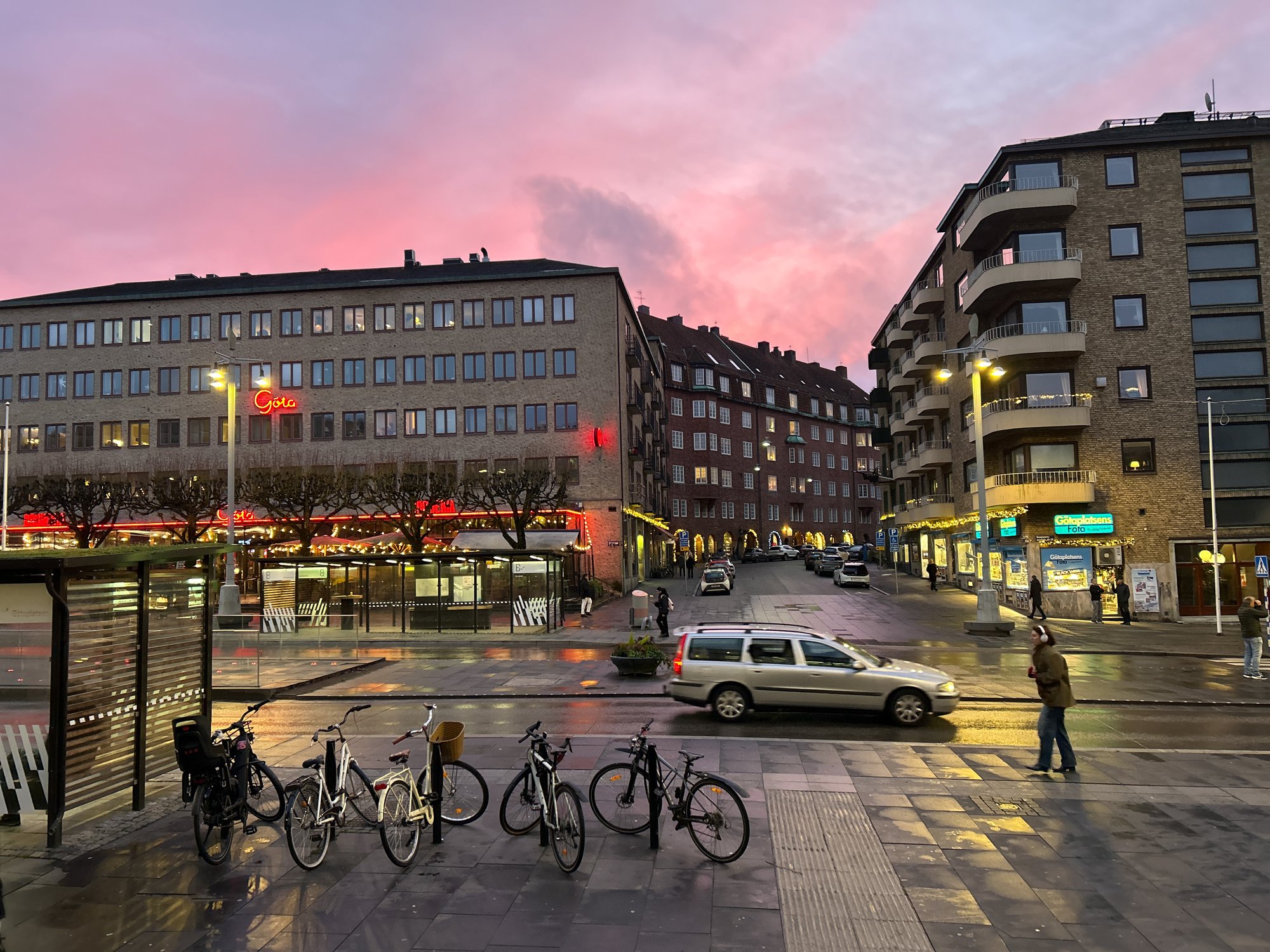
Placemaking as meaning making
"Exploring the magic of mundane city walks and urban interventions in 21st century Göteborg, inspired by Virginia Woolf's 'Street Haunting'."
“No one perhaps has ever felt passionately towards a lead pencil,” begins Virginia Woolf’s essay Street Haunting. It's this idea of a private purchase, a pencil of all things, that sets Woolf out on her rather bourgeois adventure that culminates into this essay. It's London, it's dusk, it's winter. There is so much that could happen outside of a January evening walk, but Woolf finds the drama in the endotic, in the Perecian infraordinary, making us readers quake with her in that sensation of effortless drifting.
This is also how I envision encountering, accumulating, mediating on details about the city on my walks. I live in 21st Century's Göteborg, separated by Woolf's 20th Century London by aeons. Living and walking here it becomes easy for me to engage in a similar, if far less a bourgeois enterprise of losing the self to the streets while out on a winter walk. “How beautiful a street is in winter! It is at once revealed and obscured” Woolf writes. This happens thanks to the deliberate, slow pace of passers by cars, a generally relaxed pace of cyclist traffic and several interventions that allow the space to pause.
These interventions, part of the One-minute City plan implemented in Sweden in 2020-21, are various forms of tactical urbanism joints. There's an almost tacit, unsaid understanding that the city is first for the pedestrian, the lone walker gazing at the surroundings, taking the atmosphere in one sight at a time. It begets a personal musing: Would Woolf have thrived in these environs? What sort of an essay would Street Haunting turn out to be had it been written in a city with planned spaces to pause, meditate, even sulk.
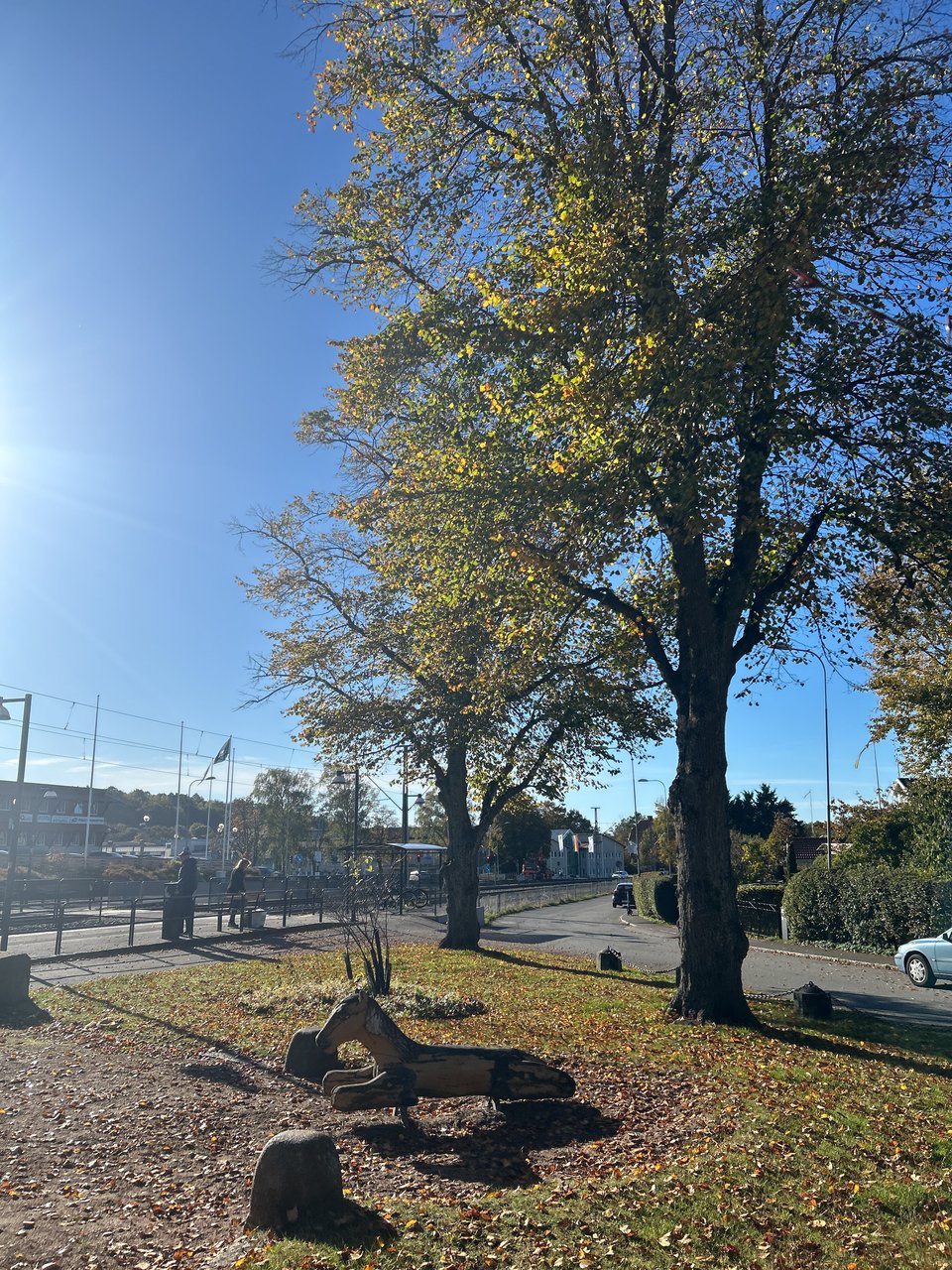
Picture an empty parking in a city, any city, which has been turned into a makeshift garden with a picnic table, a bench, potted plants and stands for e-bikes, cycles. This can be identified as a tactical intervention that not only takes space away from cars, but also creates a new, nimble third place. India, where I come from and spent roughly 30 years living in, lacks sorely in these places. So when I moved to Sweden, these spots jumped out at me almost instantly. Mind you, these aren't parks or dedicated hangout joints like a cafe, or a library, or a park, but are free to use public spots where I've often found immediate respite from the humdrum of the daily, getting to concentrate on nothing as the din of the everyday nearly disappears.
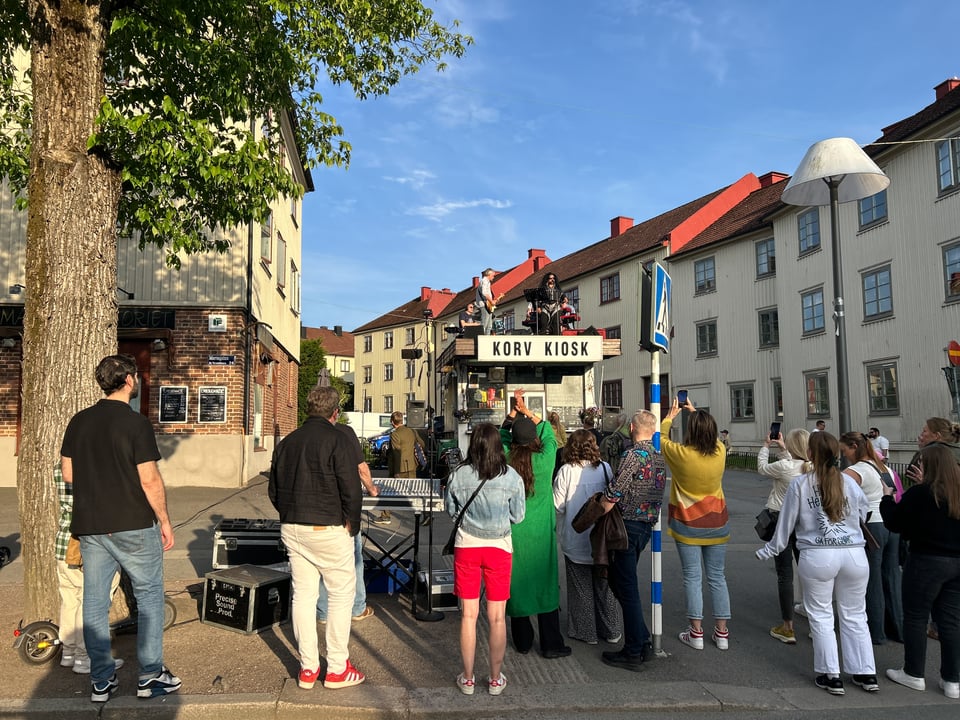
I've sat in these spots, gardens, while neighbourhood children play with their dogs as the cats skulk in the background, or new parents bring their little ones to relax in. I've paused here while on my walks or relaxed and taken a phone call after lunch. At the start of 2025 summer we attended a summer concert where performers sang from atop the Korv Kiosk, as the audience members gathered, danced and jived on the sidewalks. In that hour I was living inside the sidewalk ballet Jane Jacobs wrote of in her book Life and Death of American Cities.
What these interventions end up doing is giving new meaning and novel ways of orientating an otherwise mundane nook that would've been used as a car park. It opens up space for children to play, for people to linger, inviting dreamers, opening up imaginations, stirring conversations.
I imagine, much like me, many people have found these spots to make meaning, find comfort and even kick back and do nothing. A place, then to, just meaninglessly loiter. What this means is that we create an urban utopia in the midst of the otherwise meaningless, often repetitive landscapes of our cities. I've seen how these makeshift spaces empower ordinary citizens by developing and using a variety of placemaking strategies in diverse districts of Göteborg. These include community-led infrastructure, local patronage, simple practices of deliberate mobilization, informal engagement, and inadvertent, unavoidable community making. What they often result into is a considerable evidence of an attempt to ‘reclaim the city’. In essence, Tactical urbanism is a means to create a place of possibilities that go beyond the everyday.
The other day, while returning home from work, my husband and I crossed the hipster, older part of Gothenburg called Majorna. As we neared a crosswalk (one of the 10+ in a 10 mile radius), we saw a father with a baby in a stroller. As the father crossed the crosswalk, his eyes stayed on the kebab roll in his left hand, seeing to it that it doesn't spill, with the stroller pushing forward in his right hand. It was a very natural, bodily reaction for him to use the crosswalk like a sidewalk, without even having to look up on the street, check for oncoming traffic or any thing.
We drive in that very judicious, deliberately slow pace, keeping in mind cyclists, pedestrians in the area, especially in this pocket. This quickly became one of those experiences that's etched so clearly in my mind. Bringing to the fore how in Gothenburg there's so much more respect for the rights of pedestrians, making projects like one minute city almost instant hits.
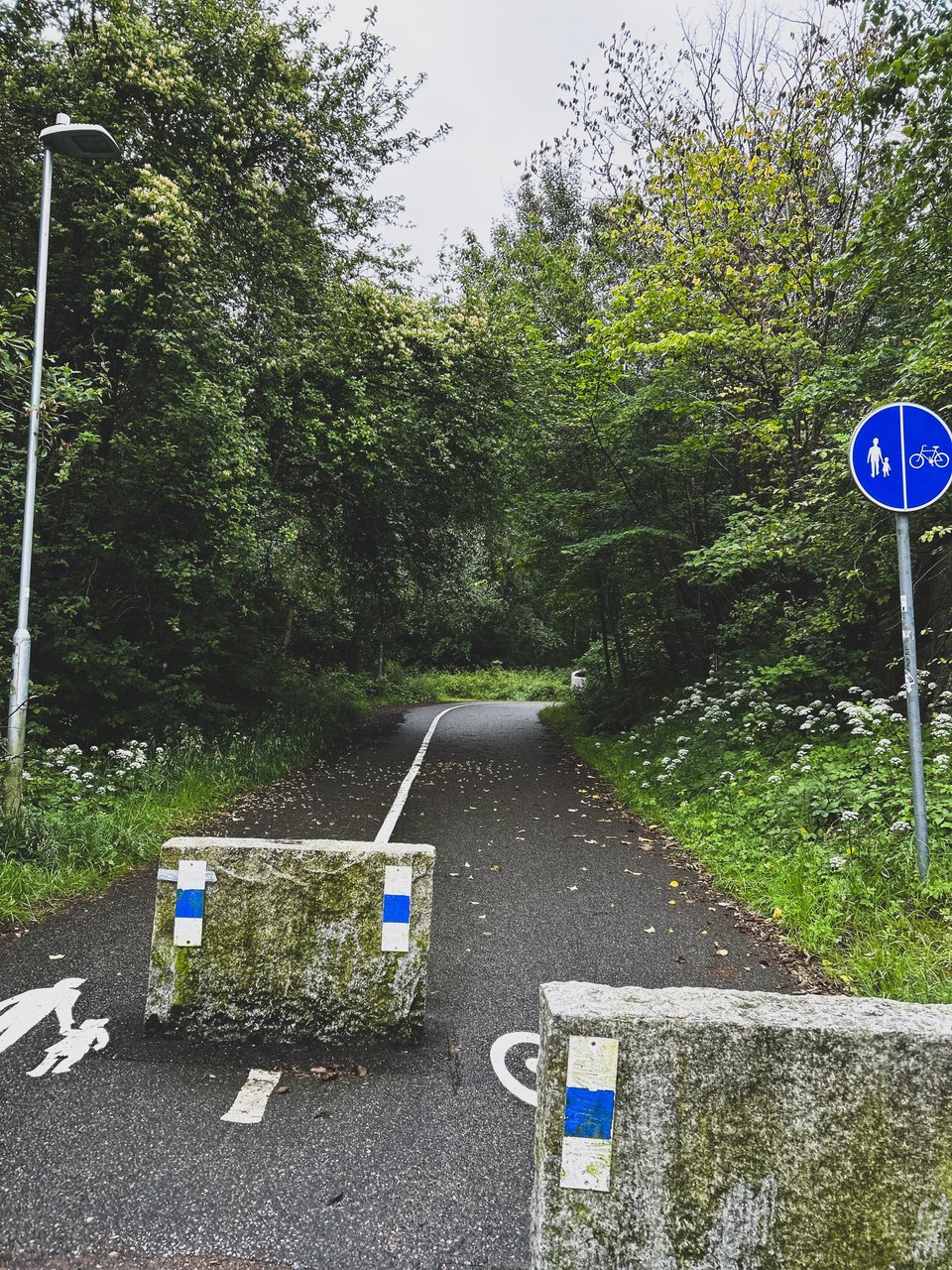
Göteborg's walkability comes from the confluence of a myriad factors, most importantly the proximity to all amenities, green space coverage and crosswalks such as these. With its extensive pedestrian infrastructure and public transport-oriented town centres, the city becomes an easy win for anyone who wants to walk peripatetically in the search of their own veritable pencil, or a literary adventure.
Part of Woolf's street haunting experience is also that cliched dipping into one's consciousness that otherwise remains remote. It's on walks such as these that it actually becomes possible to dip into the ether of the self, to be able to write the self deeper into the minutiae. Undisturbed, enjoying a kebab roll or perhaps imagining the purchase of a pencil, these tactical interventions make navigating modern cities so much more fun, especially when you have a quest like this in mind!
Related reading:
Join the 1,600+ people who already subscribe!


Add a comment: