On taking running notes in the longhand
Longhand note-taking as a way of deliberate existence
Kafka used his daily diaries as a springwell for inspiration:
“Hold fast to the diary from today on! Write regularly! Don’t surrender! Even if no salvation should come, I want to be worthy of it at every moment.”
A climate/sustainability communications strategist a big part of my day job involves reading, writing, rewriting, advising people on their written materials, hosting writing brown bags, connecting with journalists, explaining to them how to write or approach a subject, breaking large data sets and research down into easily accessible communications assets in the digital, written, video and audio formats. This naturally means that I am mostly bound up in front of my laptop or browsing through the (digital or in-person) library of my workplaces, reading long form research pieces, filing out information in usable buckets, scratching the untranslatable portions out and creating bullet points that I could convert into notes, presentations, op-ed pitches, blogs, linkedin posts, newsletters, podcast pitches, videos, etc.
In Jan 2020, one of the first assignments my first communications boss had given me was to create a set of documents guiding folks on how to approach writing a blog on a given subject. Now this was an endlessly interesting premise for me. I’d sit down with my notebook and multi-coloured Muji or Uni-ball Rollerball Pens (pink, green, purple, blue, black) and start with the note taking. As the days passed by, often someone would stop by my desk and comment on my handwriting or the fact that I still used a notebook and pen when everyone had navigated to one of those myriad digital options available. Now this was pre-covid, January 2020, and it could be said that there was still room for the analogue.
Cut to 2026 and I still pursue this method. It has been and continues to be my preferred way of writing, working, existing. Taking notes in the longhand, writing in pages and pages of annotations, ideas, the works. Since I started working as a journalist in 2015 I kept numerous notebooks. These contained my markings on the subjects I was interviewing, meetings I had scheduled, people I wanted to speak with, ideas I had, proposals that were declined, dates I wanted to remember, quotes that felt important (in addition to audio recordings, voice notes) and so much more ephemera.
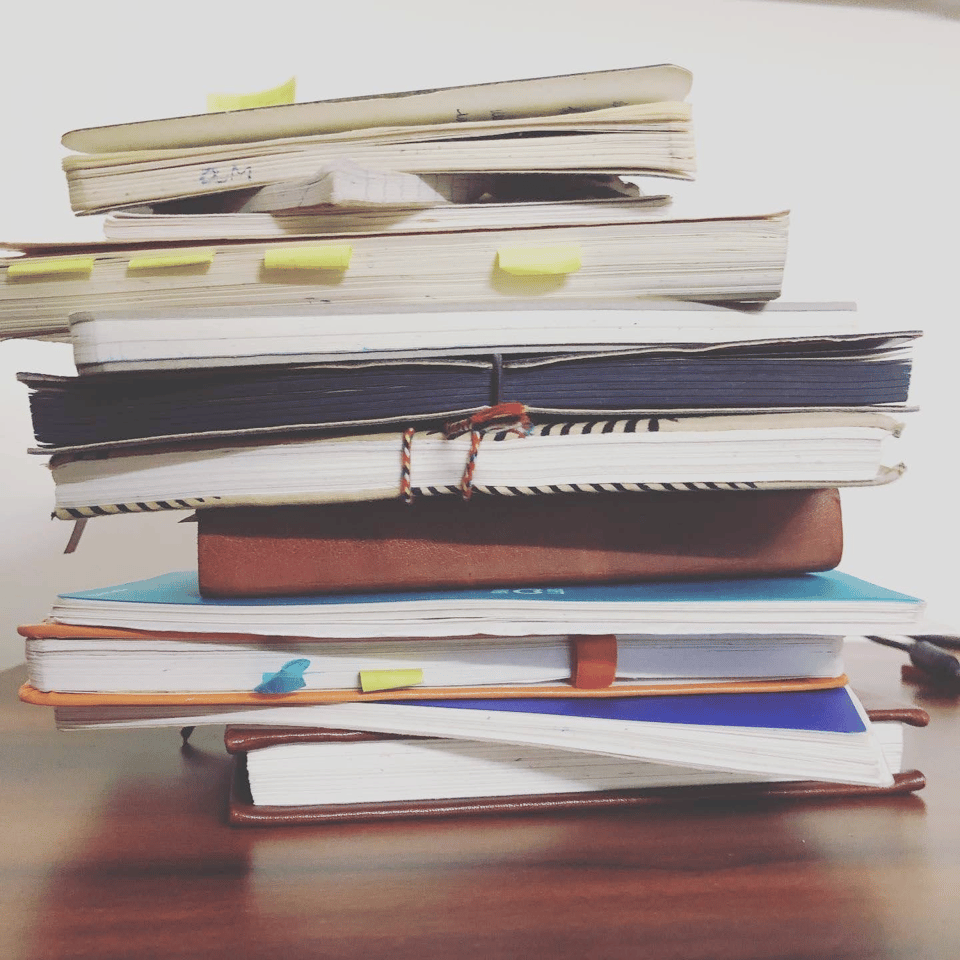
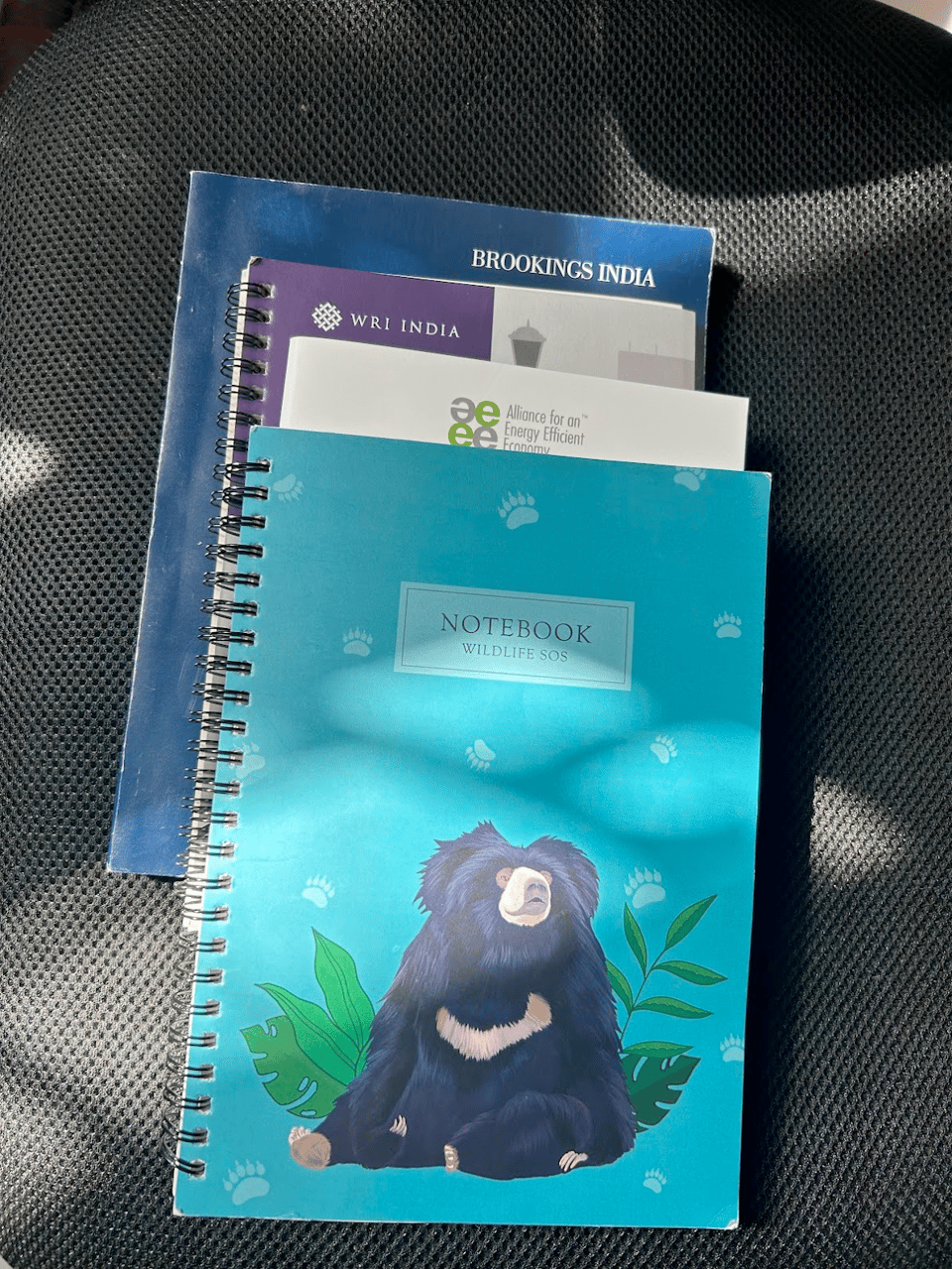
This meant that by the end of each year I’d have accumulated some 10 odd notebooks filled up with all forms of scribbles with often no intent of going back to revisit them, forget about digitizing them. They became instead a burden, much like the heaps of printed research material I had gathered over these years, pamphlets, press releases, booklets, posters, books I received as presents, to review, and those I purchased. But I never let that deter me from continuing to write in the longhand. While I bought my first apple device in 2015, the first time I used the Notes app was sometime in 2017 and then as if in a burst of delayed productivity, I’ve been sort of hooked to it since 2022 but that’s mostly for grocery lists, job applications, ideas, words, sentences that I find while reading online.
Longhand note taking, whether for work or for personal purposes, or for my freelance writing, has always been my mo. While in India I moved cities thrice for jobs (from the west to deep south to north) and within them, some seven or eight times for a new house. Each time these notebooks and books moved with me. I never revisited them, even the thought of revisiting them gave me and continues to give me an ick. So when I moved countries in 2024, I kept aside some of those 45 something notebooks (possibly one from each year, or some such odd logic) and shredded each and every one of the others. It felt like I was attenuating myself. A strangely freeing sensation. As if I had unscripted myself from my past versions and was now free to pursue becoming a new person. Whatever that means.
In the 2026 era digital note-taking, AI models, smart pens and the likes, when I sit in a cafe here in Gothenburg or Stockholm or Berlin or Rome and take notes using a Uni-ball pen on my paper notebook, I don’t draw attention. There’s almost always a micro-trend against whatever the larger swathes of populace seem to be running behind. But 2.5 years ago in Delhi, on a bad air day when I sat in a very busy cafe, reading and making notes in a notebook, a couple sitting next to me were taken aback. I wore my aipods and pretended to not hear them as they went about making shocked comments about seeing someone use a pen and paper to write. I wonder what they’ll make of me in 2026.
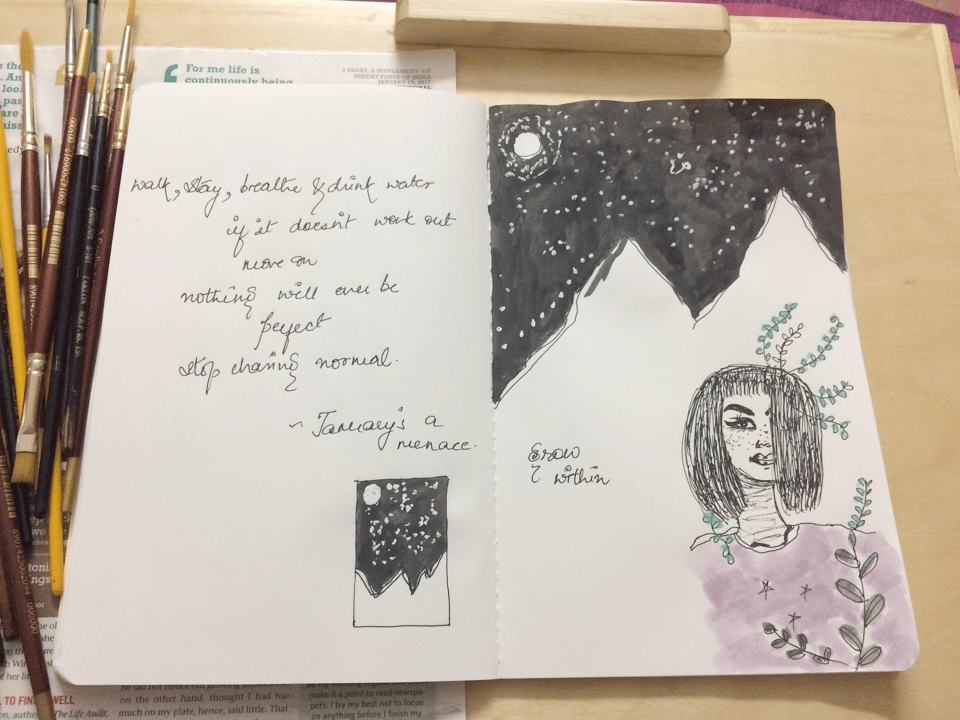
It’s been a thing in my life, like many of us millennial notebook collectors, that we’ve hardly ever purchased a notebook of our own. As a journalist, in those five years I was always inundated by note pads, diaries, notebooks, strips of paper handed out to us at numerous events. At my first job with The Times of India when a friend told me about a three-storeyed stationery store next doors, I might’ve bought two or three of my first ever cherished diaries and notebooks from there. I’d take spare notebooks from friends, often filling up pages faster than I’d imagine. When asked by friends and family for presents, I’d ask for more notebooks. Hence creating a surplus of notebooks yet never really feeling like I was drowning in them.
Over the years people have asked me if note taking this way slows me down, or if I feel special doing it, or best — if its only a pretentious pursuit in a era like this. A couple of folks have even blamed me for having double standards saying “how can you work in sustainability and use paper!” Well, the catch is that I just don’t know any other form of writing, note taking, being attentive. Novelist Brandon Taylor writes about this in his newsletter, how i'm taking notes (for now):
A useful notetaking strategy is not always about speed. I recognize that we live in a capitalist hellscape and the language of commodification has rotted all of our minds and stolen our souls, sure. But that doesn’t mean that we should or need to concede to its logic at every turn.
Back in school, in class IX I remember being taught how to take running notes by my English teacher when she started with Julius Caesar classes. In a moment of clarity about how I could really study better over all, Mrs. Dhingra introduced to us this format of taking running notes, using shorthand, overrun, cursive longhand to make notes not only in the margins of the play but also in our notebooks. These would help in immediate retention but also in revisions closer to exam dates. And overall, she underlined, it’ll make learning with Shakespeare a lot more fun.
I started taking running notes from that day, developing my own short hand, scribbling with a pencil in the book and a pen in my notebooks. And during those four years of studying Shakespeare it sublimated into a form of being able to learn something new and learn it better. Since then I’ve learned two foreign languages (one in the classroom, the other self-taught), I went to law school, I wrote numerous assignments (for myself, friends and boyfriends), wrote a master’s thesis and took personal notes, all in the longhand. In these years of continued therapy since December 2020, I’ve tried to maintain one diary with notes that are more like bullet points from a class of psychology than notes on self-realization.
I’ve hardly ever, though, kept detailed notes about how I feel about things, situations, people. Or a diary about the every day. This changed last year when I found daily pocket diaries being sold in Swedish supermarkets like just another everyday object. The diaries reminded me of my mother’s small pocket diaries from her office days. If I recollect correctly, she’s kept a diary from 1993 or 1994 into which I had made my first ever scribble. A long line in blue ink running from the top right to the diagonal left bottom. I bought the pocket diary and tried to keep everyday takeaways, mirroring the efforts of great literary diary keepers like Mohan Rakesh, Kafka, Helen Garner, Walter Benjamin, Octavia Butler.
Kafka again:
“I won’t give up the diary again. I must hold on here, it is the only place I can.”
Maybe this is a rote, mechanical way of learning, growing and fully leaning into new ideas, but it’s been the only way I’ve known. Had Mrs. Dhingra taught me another way, I might’ve leaned into that. But she didn’t so making running, longhand annotations to life in these notebooks, diaries and strips of paper (newspapers, magazines, last pages of books, napkins, bills, receipts) has become a habit. Last week a friend saw my pile of notebooks and said, “This is a very deliberate way of existing.” And I don’t know if that’s a good thing or not, but just like waking up in the morning and solving wordle, spelling bee and crossword brings me peace (on most days), so does this form of living. An annotated, deliberate life, if you must.


Add a comment: