
Eco-conscious movies to reclaim your attention
Movies that tackle the eternal, urgent question of nature vs. nurture while being cinematic and entertaining
Last year, when I watched Ryûsuke Hamaguchi’s Evil Does Not Exist (available on Criterion Channel), I immediately wrote down some names of similar movies that awaken some semblanc of climate consciousness, solastaliga within the audience. Climate, ecology, environment conscious movies, if you will. These are movies that take you into the womb of the earth, what it is like to be a person there and what’s like to be altered by the bric-a-brac and ephemera that makes up our lived atmosphere. They are atmospheric mood pieces the way In The Mood For Love is for lovelorn, wounded cinephiles, but in a more “Greta Thunberg meets sad-angry climate conscious workers” manner.
The thread that runs through them all (and perhaps the only one) is that they all have a similar dreamlike atmosphere and deal in environmental themes (directly or otherwise). My aim with this list is to capture how some movies show the way we inhabit spaces as humans and how those very spaces alter something within us, often without our noticing.
I’m quite surprised at how I’ve arrived at a list that has something for everyone — people who work in the climate domain, cinephiles, and the curious ones among us. Hope you find yourself a fine Saturday night to watch one (or all) of these!
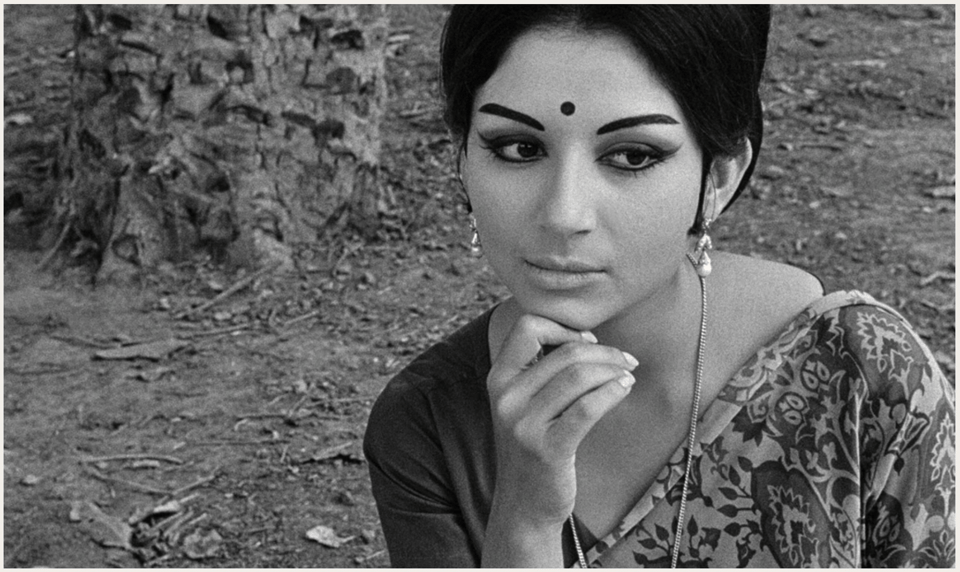
Aranyer Din Ratri, (1970), Satyajit Ray: A restored version of the Bengali classic showed at the Cannes Film Festival in 2025 and will be available to see in parts of the world theatrically soon. The story starts when a group of entitled, upper caste, city-dwelling men travel to the village in the outskirts of their native Kolkata. The area is populated by an indigenous group, the Santhals, is rich in natural resources, and is known for its strong local liquor. The men meet three young city women and two uninhibited indigenous Santhal women. The movie is sexy, strange, and comedic all at once, while maintaining at its core a very considered, balanced social critique of urban human nature. Here’s the trailer to the restored version.

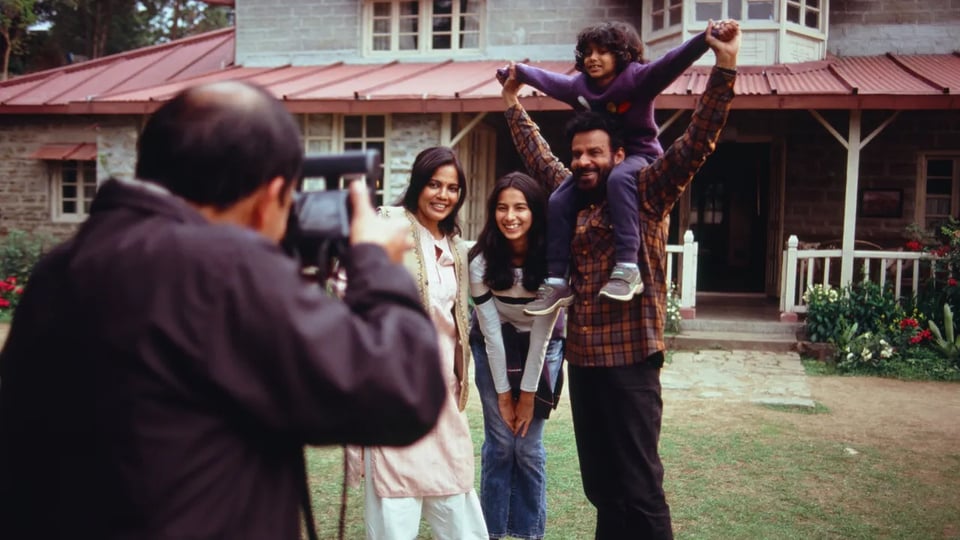
Poster of the movie for its Bologna outing in 2025. A Death In The Gunj, (2017), Konkona Sen Sharma: A direct inspiration from Ray’s forest adventures, in A Death we see similar 1970s urban dwellers camp out in the forests of McCluskieGunj, a town in Northeast India, to visit an aunt’s house during their winter break. The forest is dense, underlit, inhabited by these seasoned city-dwellers alongside locals, and is perpetually haunted by the spectre of the British Empire. Vikrant Massey’s troubled twenty-something Shutu is confused, having just lost his father and failed college exams. His uncle and aunt, cousins, and their friends conspire to torture him. The film is so laden, moist, and heavy, you almost lose yourself in it. It sparked many debates about bullying, nature, and being lost as a grown-up. The beat for me that brings it to this list is that his friends and family leave Shutu inside a ditch in a wolf-infested forest and forget about him. What happens next? (Amazon Prime Video)

A still from A Death in The Gunj (2017) Jugnuma, (2025), Ram Reddy: The complete title of this movie is Jugunma, The Fable and the team went with The Fable for its festival run in 2025. And while it would’ve been an acceptable, anglo-friendly title, Jugnuma (coined by Piyush Mishra for the movie) fits its theme and cadence just perfectly. It’s the 1980s; the location is Uttarakhand, a town nestled in the lap of the Himalayas. Manoj Bajpayee’s Dev, a name that does justice to his land owning ways, finds that the trees in his sprawling estate are mysteriously catching fire. He senses a quiet conspiracy among his workers and other village dwellers and sets out to find out who is behind the fires. While the answer is not hard for most to arrive at, the movie Dev and his family’s arrogance, insecurities and blindness to the immediate truth of being amid nature and despite it all, trying to “own” it. It is a movie that at once captures the ecological self-sustenance of the Himalayan small town it’s set in, and the febrile human insecurity that drives us to imbecilic limits. (Amazon Prime Video)
Still from Jugnuma (2025). Evil Does Not Exist, (2023) Ryusuke Hamaguchi: Out of all the movies on this list, this movie is the one that address the nature vs nurture debate very directly. It is a gripping drama about a mountain village and its people, threatened by a resort development. It works silently, even poetically, worming into us the ways in which the world around us is so independent, free of our, human, intervention. But in the larger sense, Evil Does Not is also an urgent, haunting, take on the chasm between capitalism and environmentalism. It’s a seemingly simple divide but under Hamaguchi’s lens, it sublimates hauntingly. Seen in the moment of 2026’s vapid AI explosion, the movie asks imminent questions about “individualism, community and the devastating costs of reducing nature to a commodity.” (Criterion Channel)
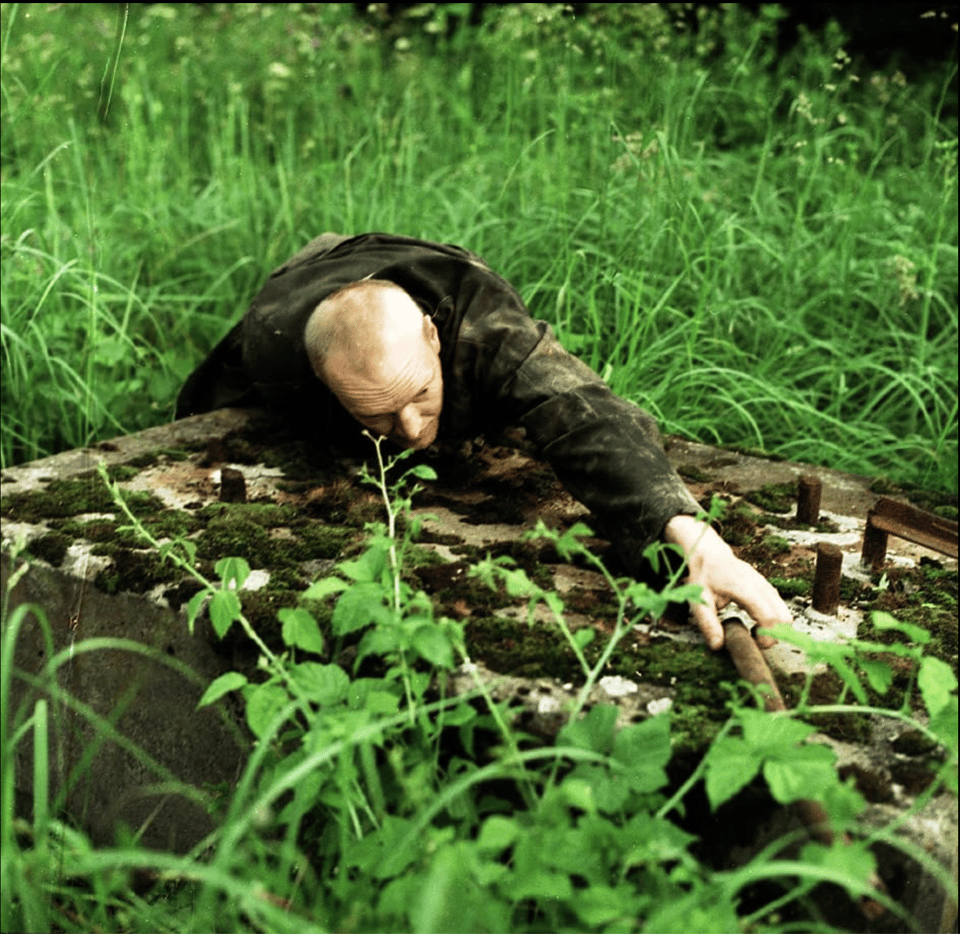
A still from Stalker. (Source: IMDB) Stalker, (1979), Andrei Tarkovsky: Hailed as one of the greatest films of all time, the Russian auteur’s magnum opus was admittedly difficult for me to get into in the first two attempts. Third time around its striking sepia palette finally cracked for me. Stalker is a movie about a thing while also being being about numerous others. It carries philosophical gravitas, metaphysical weight and remains profoundly prescient. Even after seeing its multiple times (alone and in varied company) I still feel confounded as to what it is about. I’ll leave you with a quote from it and maybe you can watch and decide for yourself:
My conscience wants vegetarianism to win over the world. And my subconscious is yearning for a piece of juicy meat. But what do I want?
(MUBI, BFI Player, YouTube)
Only Yesterday, (1991), Isao Takahata, Studio Ghibli: A twenty-something office worker travels to the countryside while reminiscing about her childhood in Tokyo. Upon my first watch I loved how Only Yesterday highlights the beauty of the Japanese countryside not in a kitschy cottagecore way, but in a manner that lends it dignity. It shows the daily work of farmers, bringing out the way in which humans and nature have peacefully coexisted in certain (right?) contexts. Like all other beloved Studio Ghibli films, Only Yesterday excels in creating evocative rural vistas that stay for long with you. (Netflix)
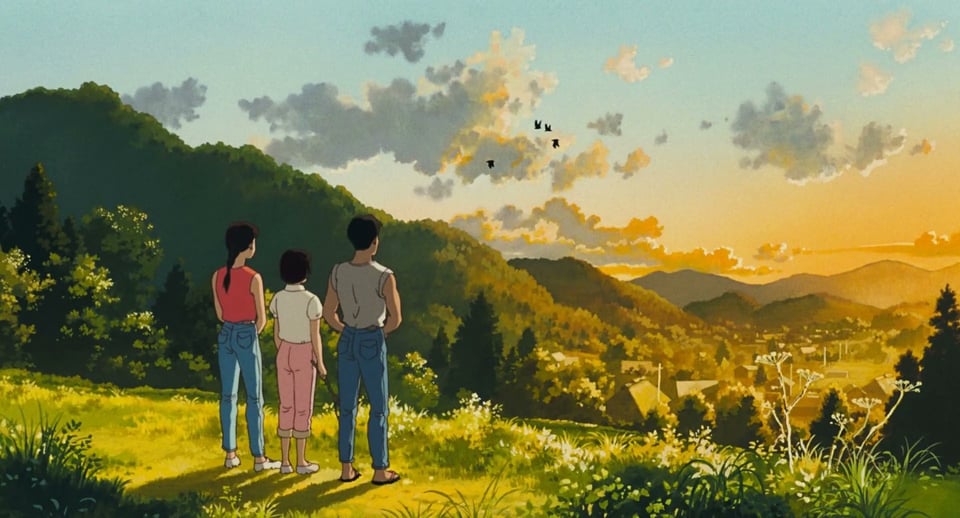
A still from Only Yesterday (1991).
Other titles that almost made it:
The Boy and the Heron, (2023), Miyazaki, Best Animated Feature (Netflix)
Kadvi Hawa, (2017), directed by Nila Madhab Panda, starring Sanjay Mishra, Ranvir Shorey, Tillotama Shome (Amazon Prime Video, Youtube)
Sherni, (2021), directed by Amit Masurkar, starring Vidya Balan (Amazon Prime Video)
The Garden of Words, (2013), Japanese anime drama by Makoto Shinkai
I didn’t get into these movies as a climate/sustainability communicator, but as a cinephile. I found that they held a message within their stories that was sometimes obviously,on other times not so, directly concerned with climate consciousness. They each carry a mood, and a message that lingers long after the credits roll. Hope you find them as entertaining as thought provoking. Do any other such movies come to mind? Share in comments!
Related reading:
A Satyajit Ray lockdown: This essay appears in the anthology 'Garden Among Fires' (Dodo Ink, July 2020); edited by Marina Benjamin
My autorickshaw rides: a smorgasbord for the senses (or why unsolicited rick pics are always loved by social media)


Add a comment: