Delhi's Smog Exceptionalism
Telling Delhi's haze story
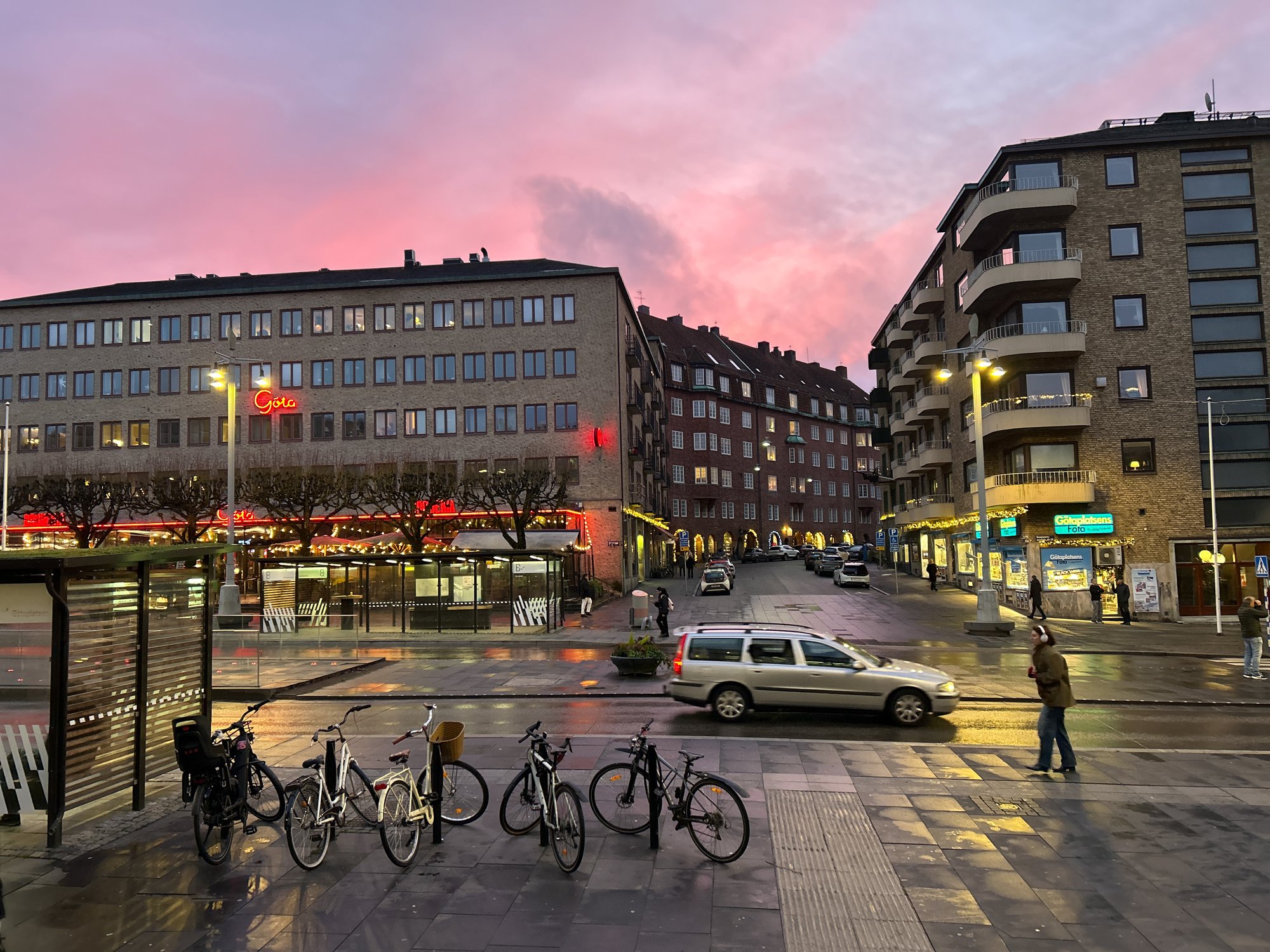
As Delhi’s toxic air breaches yet another critical point, the government fails to address it. I sit here in Gothenburg, Sweden, reading the news feeling helpless for family, friends, acquaintances there. A listlessness engulfs me as I reach out to my memories from 1.5 years ago and write to the very tactile, factual presence of that noxiousness that surrounds us in Delhi every breathing minute of our lives.
This is not my first attempt at trying to put to words what it feels like to be in cradled by Delhi’s smog. I’ve written for Al Jazeera (2021) about the dusty endlessness that Delhi is and for this newsletter about a song that perfectly encapsulates (Shauq, Qala; 2022) the melancholy that accompanies smog. But no amount of writing, thinking, reading is good enough, it seems, to convey the sheer malevolence we’re forced to breathe in Delhi.
In Delhi, you live breath-by-breath, hyperaware of a miasma-esque atmosphere that animates life not like a breeze, but a turgid, dark river flooding a settlement. It’s that heavy, tactile, visceral opaque thing that encases you perpetually. And not just you, but also the cats, dogs, birds around. I remember seeing our (street) cats, Minty and Momma’s eyes turn red during the “air pollution season” (November to early March). What was once a season, is now an endless visage of misery, ill health and limitations of all kinds through the year.
Interestingly enough, smog (smoke+fog) doesn’t have an immediate translation in my mother tongue Hindi. We have a word for fog: Kohraa, one for smoke: Dhuaan, and yet another for mist: Dhundh. Nothing still except Dhuaan (smoke) for smog, lifting the veil that the English language so easily masks with the in-betweenness of the word smog. For seven, maybe eight years (since 2018) I endured through that haze of Delhi, dust particles, PM2.5, PM10, NOx floating in the ether, before I moved to Sweden in 2024. Not many are as lucky though.

My privilege, my partner’s work and my capacity to detach from family, friends has brought us to far away land Sweden where we live and breathe an AQI that’s probably better than what I’ve ever breathed in my life. But come November and an unmissable tension hangs like the dagger in Macbeth over our lives. Just that it’s no hallucination, it’s so real, almost surreal.
Friends, family, colleagues, acquaintances, my entire social cache of vendors, shopkeepers, helps, drivers, along with more than 30 million Delhiites unwittingly, quietly, sometimes even unknowingly endure a range of illness. Some that show immediate ill effects. Others that hide and lurk in the background for years before you catch up with them, or vice-versa.
Even with an air purifier at home, season after season I lived through bouts of sore throat, eyes that itched, throat that felt unseasonably scratchy, a febrile irritation. I’d be more flighty during these times, more angsty, jittery. These symptoms would come with perennial anxiety, sweaty nights, sometimes even sleeplessness. They’d culminate into a fever and eventually a bout of flu. I know many who pop in antibiotics like it’s a gum, each time they come down with something not knowing that these medicines wouldn’t work beyond a point. Not many seem aware that breathing as they are the world’s most toxic air, a kind of venomous pollution that’s increasing everyone’s long-term risks of cancer, heart disease.

Everyday movements are immersed and laminated by this endless, pervasive, almost tangible grayness. Life in that morass, slug-like cloud, is often reduced to its most primal form — you only step out when it’s absolutely unavoidable (but that again is the remit of the interminably privileged).
I remember peering into the sky from my bedroom window and tracing these tiny dot-like creatures that’d hover above the city. From their view, I’d imagined the city must’ve looked like its locked into a tornado or blizzard of a novel kind. Everything in a slow release as the temperatures dip and friction should’ve given way to a simpler form of life. Bill McKibben, founder of 350.org, writes about this in his poignant ode to winter:
“If you think about it in slightly different terms, winter is not the season when it gets colder, it’s the season when friction releases its tight grip on the planet.”
But in Delhi, winter meant another lockdown. The world had moved on from those post the pandemic, but we in Delhi continue to live through renditions of those till now and nothing tells me it’s to change anytime soon.
In 2023, an Indian documentary film created a stir in the world of cinema. Shaunak Sen’s documentary All That Breathes was a nominee for an Oscar for Best Documentary Feature; won the Golden Eye at the Cannes Film Festival; Silver Horn at the Krakow Film Festival; and a range of other critical awards. In the movie, Sen tells the story of Delhi’s Kites, that dot the skies over our roofs and the people who look after them when they fall ill, especially during the season. Through this film Sen created a conversation about the broader philosophical stakes with regard to climate change and how one holds on to optimism when things turn this bleak, this quick.
The film pulled me out of my lazy, inevitable anthropomorphic approach towards the climate crisis, and made me reconsider all the many forms of nonhuman lives around. The human-animal physiology.
Moving out of India, a few of us can very well say that we’ve moved away from it’s coal-centric ways of life. But what about the millions still living there, dependent on coal in ways more than one to eke out a living? From the roadside chai, to the everyday routine of getting our clothes ironed by the local presswala, coal is rooted in the fabric of Indian society. Every part of the economic chain is related to coal or some kind of coal-centric consumption. This then begets many a questions, chief among them — What about the air pollution?
Every November news articles slap us with factoids like these:
Three of the 10 most polluted cities globally are in India
India's rice farmers burn stubble that immediately escalates the air pollution
State and central government fail to do anything about pollution
Delhi hasn’t had a ‘good’ air day in over a year
Something shifted last year in November when people took to the streets to protest about the government’s inaction. Burning eyes, itchy throats, running a mild fever — hundreds gathered around the India Gate in protest. The evening was a familiar smoky, choking haze. A great gray that constantly undermines human-animal lives around. I watched the news patiently, reminiscing as three of my former places of work were/are in that neighbourhood. Some friends who work in sustainability attended the protests, while others continued to drive to work. The government hadn’t declared a health emergency as that would entail bringing economic activities to a grinding halt.
During this season, the gray smoke settles along the street of our beloved Delhi, rubbing its back upon the window-panes of DDA flats. That chalky something can be tasted on some pungent days, and smelled on most smokey nights. And its a leveler, much like Covid-19, lingering over Nehru Stadium, Defence Colony, Kalkaji Colony and Lutyens, for once everyone suffering more or less the same way in India. As radioactive and catastrophic as it feels and is, there’s a tinge of genuineness to the smog. After all, how do you expect clean, breathable air in country where a succession of governments haven’t ever cared about securing clean tap drinking water to its citizens for decades.
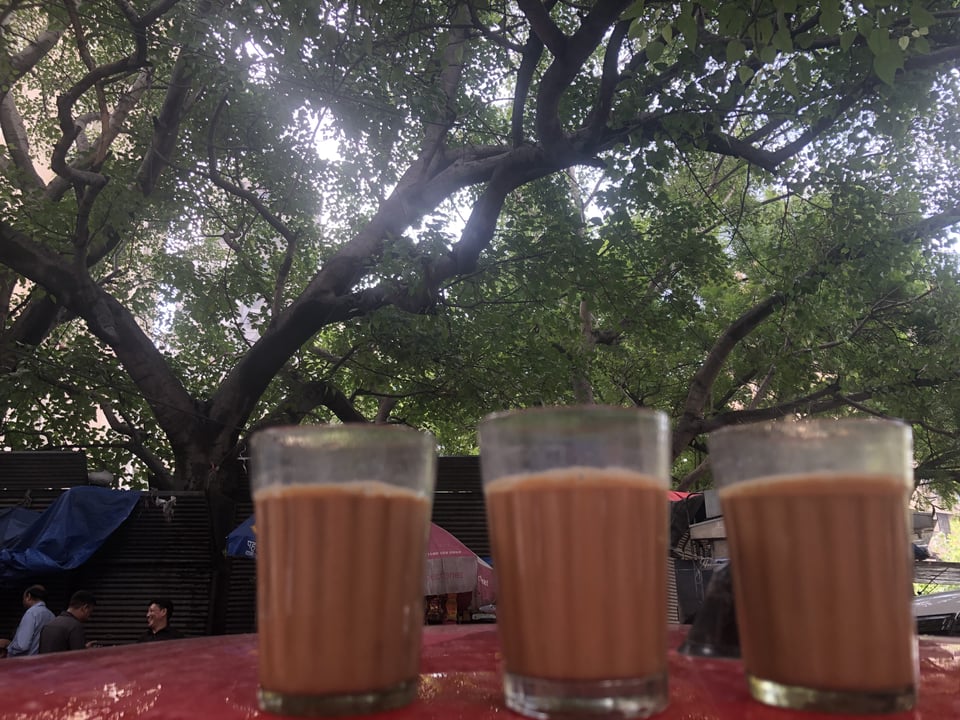
Between 2017-20 I worked for India’s premium business newspaper Mint, their offices located in the beating living heart of Delhi on Kasturba Gandhi Marg (five minutes from India Gate, from the Parliament, the central hub of all power in the country). In my last couple of months in that office, December of 2019 I remember stepping out very often into the beleaguered city with colleagues for tea during work breaks. We’d go out despite the cold, despite the haze, despite knowing poisonous it was. My anxiety skyrocketing as I maintained a faintly composed veneer on the outside.
On one such evening, I’d drafted an email to our then editor, requesting air purifiers for the entire newsroom. I’d pored over it in minute details, making a friend and my (then) boyfriend read through it before I hit send. Both alerted me to something unnameable in that request. How could I be this entitled? That draft sits in my mailbox till date, relegated to the category of one of those many jilted, unsent emails we regret having sent out at all.
If I knew how horribly dangerous the air was, why did I step out at all then, you’d ask. Chai was an excuse. I went out almost as if in solidarity with everyone else who didn’t have an option to hide indoors behind a desk job. The chai wallas who carried tea into all those office buildings around, the samosa stall vendors, the men who oversaw the myriad parkings, the cab and autorickshaw drivers, the icecream vendors, the aunty who sold cut fruits and the bhaiya who made scrumptious Amul butter omelettes for hundreds of hungry, groggy, hungover journalists every morning.
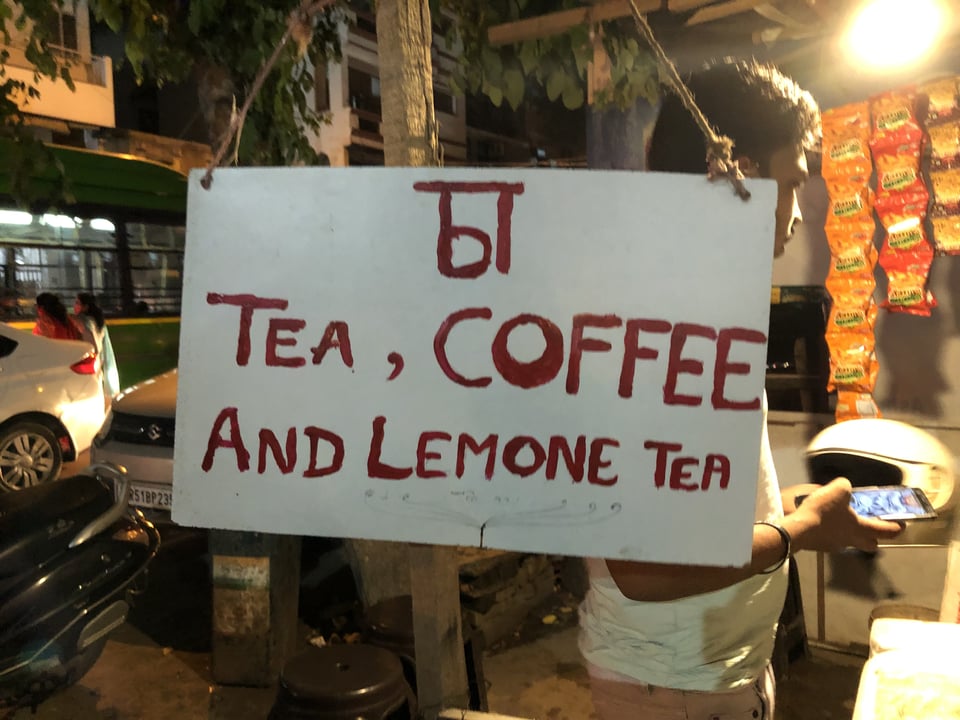
On those strolls, as we indulged in gossip, kvetch, and overshare about booze, lovers, bosses, I’d let my imagination run aflutter. I’d drift off, imagining another, older Delhi — a soft pervasive ennui-laden November evening, a gentle breeze caressing the skin above my ears. I’d dip a biscuit into my clay cup, and yap nonchalantly about the next morning’s run. We’d inexorably joke about our paltry wages as journalists; make silly, endless quips on each other’s poison of choice; exchange bitchily about last night’s boozy discourse that we’d barely, groggily emerged out of this morning. Life would be simple, our poisons limited to vodka, rum, whisky. And the air would be a light, effervescent something we’d casually ignore, even be callous about.
Share “Delhi’s Smog Exceptionalism”
I have so much more to write on this and perhaps another edition of the newsletter will be dedicated to it, soon. Till then, a feral hope lives on, animating my dreams as I sit from afar and watch.


Add a comment: