An ode to Rome's tiny hatchbacks
Exploring Rome's micro-mobility charm filled with tiny hatchbacks, a literal moving history.
Earlier this year, my partner and I were on vacation in Rome and we noticed these tiny hatchbacks, small cars dotting the lanes of the megapolis. They were everywhere. Encasing the city in their warm, orb-like glow, emanating a conscious, if aesthetic, appeal that seems conspicuous by its absence, especially when they’re replaced by SUVs. Their presence drastically altered the visual layout of the city; spoke to the ways people commute, behave, engage with their environments. Without a single pickup or wagon or SUV in sight, these hatches looked pretty and poignant, serving as a powerful reminder of a manageable form of micro mobility. Small (old, new, electric) cars, huge rattling buses and scooters (sometimes with sidecarts) zipping through the cities of Roma in the 10 degrees cold of January felt different, inviting.
While we did our usual museum hopping and (cringe) tourist destination box-ticking, we both felt that in addition to the museums, art, architecture, food, coffee bars, seeing these cars line up the streets of the ancient city added something invaluable to the way we navigated the place. It’s tough for me to rummage through a city like Rome (my first time) and not think of it’s literary importance. But as we walked around the Coloseum area, or dipped in and out of the hipster enclave that Trastevere is often accused of being, I found myself carrying the thoughts of how these cars add a certain indescribable quality to my overall experience of Rome.
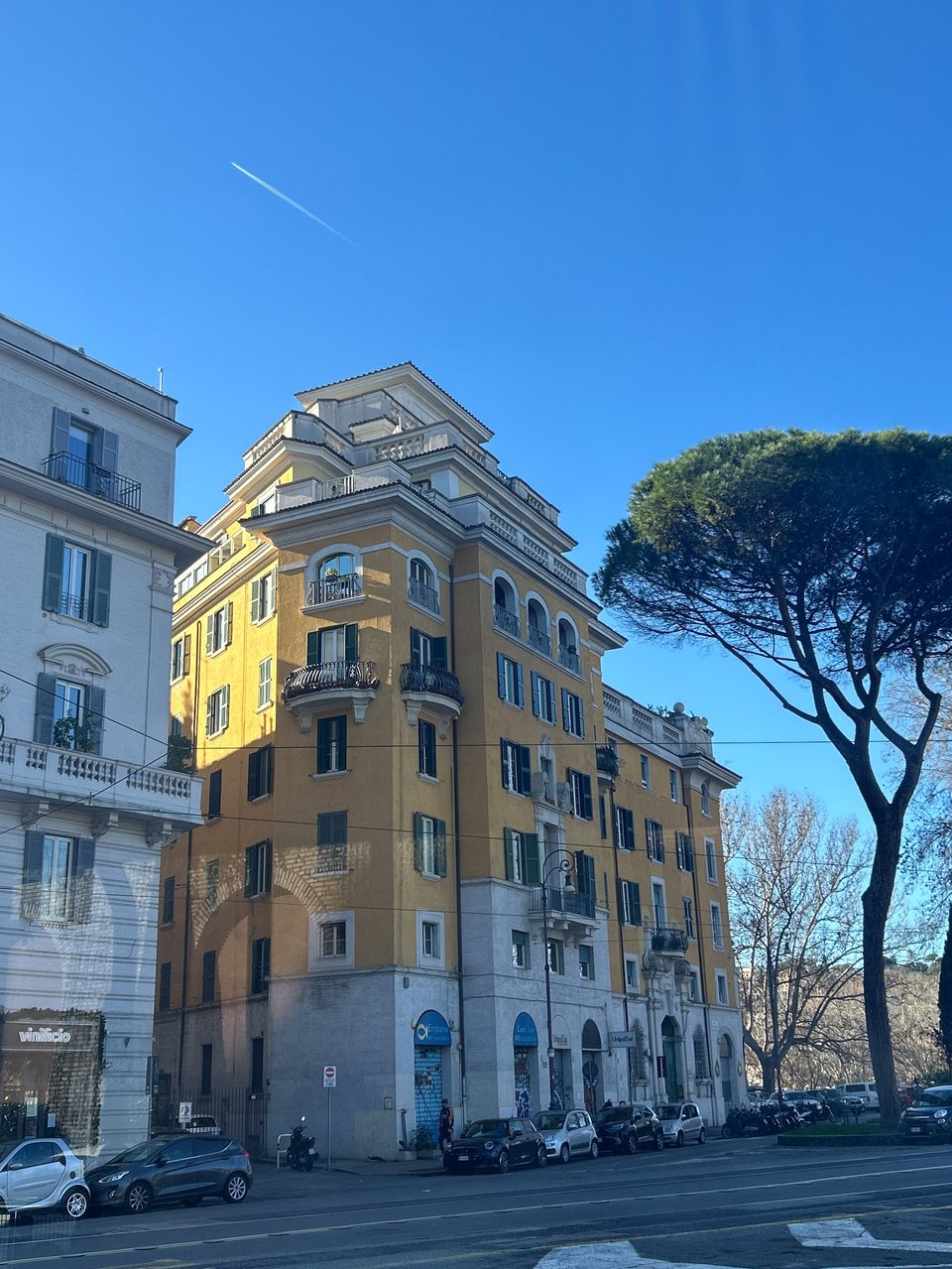
Due to limited parking spots, high density per capita car usage and just perfect day-to-day utility, these cars make perfect sense, adding a layer of efficiency and uniqueness to the Italian capital. These cars include Smarts (a car whose length is about as much as the width of an average car), Mini Coopers, BMWs, and Citroens, so many Citroens. Afterwards, I did a little bit of reading and found that for decades Rome has famously held the world record for the most number of Smarts per inhabitant. Enthralled by the city’s vibrant street life, which is aided, even activated by these hatches, we ventured out at night more than we’d planned.
Rome is important to me because it’s the adoptive city of one of my literary gurus and heroes - Jhumpa Lahiri. Every corner I turned, every cafe I stopped at, every sight I took in, a small part of me wanted to run into her (even though I knew she was in Brooklyn those days). I moved through crowded streets at dusk,as the rain torpedoed down on us, the swashbuckling crepuscular skies creating a lid atop our heads, and found myself never not thinking of how this ancient city’s cultural tendencies, and mobility ease attract so much literary and tourist cache. Perhaps the answer lay in the sidewalk infrastructure too.
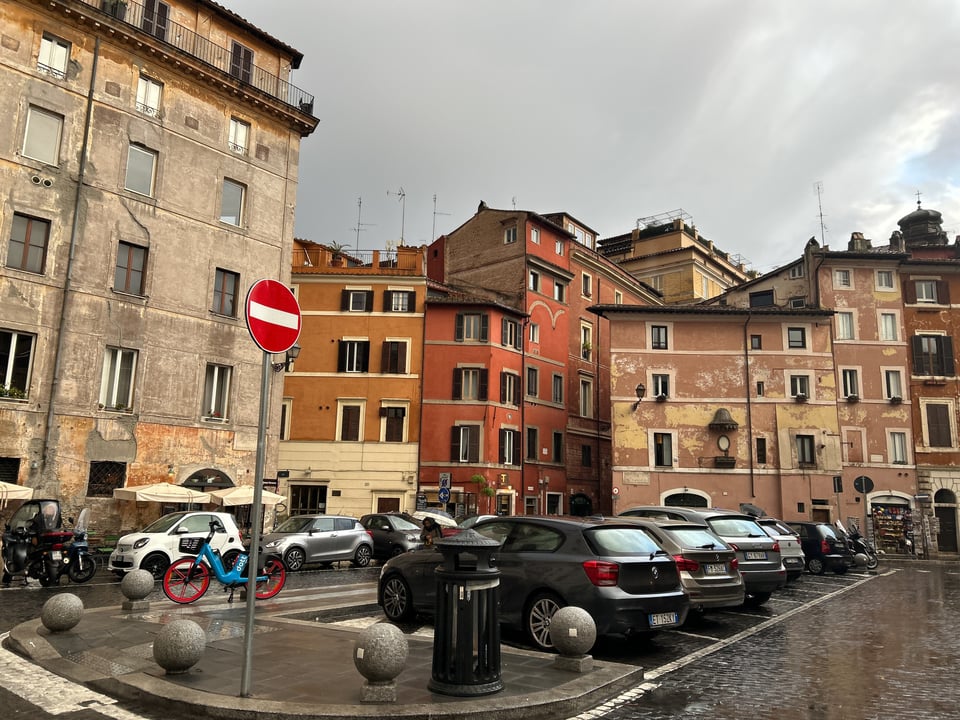
Mornings when the sun came out, I gazed at the upper floors of rows of buildings glow, beam, as the sidewalks down below stark in shadow, dry, yearning to be stepped at. Wandering through the old quarters, seeing these hatches whiz by on the cobblestoned streets,I was remembering Charles Simic, Georges Perec, Lahiri, Lauren Elkin. All connected (to one another and my musings) but also not so.
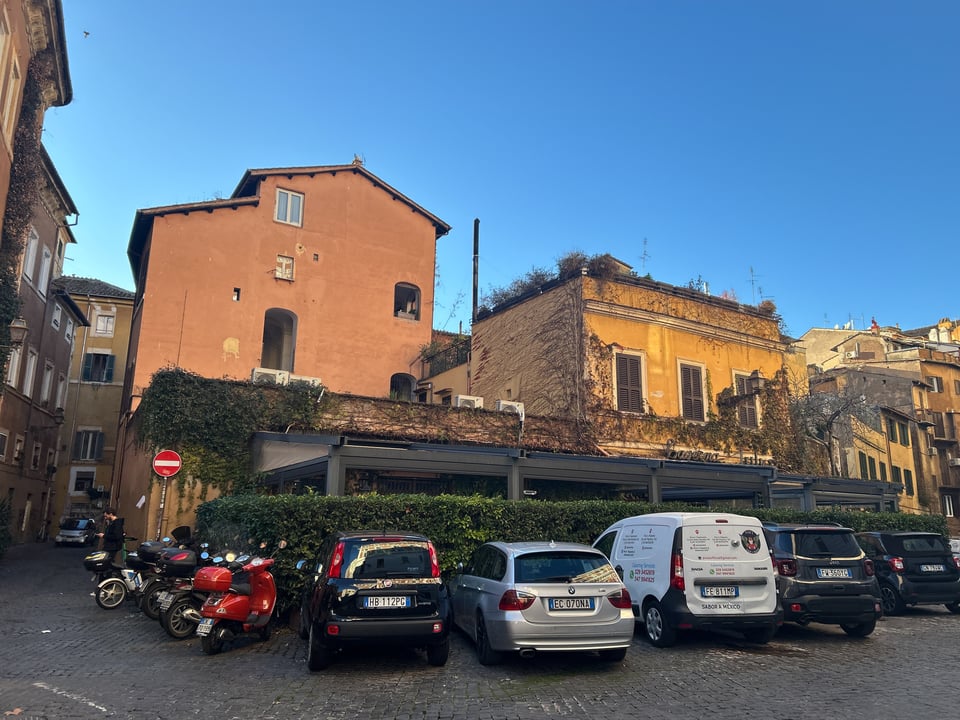
These tiny (emphasis on tiny, as I come from a city and culture of SUVs) hatches, flanked by scooters, motorbikes and e-bikes made for a spectacular view, adding, even enhancing the overall visual appeal of the city. Against its baroque architecture these colourful cars and scooters revving with that unmissable engine vroom looked (what can only be described as) sexy! Put together these created distinctly dreamy panopticon of micro-mobility done right. A couple of times, especially in the old town, I was accosted by scooters whizzing by at high speed and to my surprise,I’d felt curiously exhilarated by that brush.
Simic’s quote about street life haunted me:
“All I need is a street full of people and I’m happy.”
Parading through these busy, bustling streets late at night, with these myriad mobility options Rome felt charged. It actively resists, even refuses claims that a dense, modern, high population city cannot run on high speed micromobility options alongside small hatchbacks. Rome’s winding, narrow streets do the opposite of deterring — they invite tourists to walk and partake in the Jacobsian sidewalk ballet.
On some instances, I observed pedestrians use streets and sidewalks interchangeably, and justifiably so. I was doing the same, too, almost instinctively. Around me there was the morning rush, high count pedestrian crowd, pretty long queues outside select few cafes and pizzerias (dominated by TikTok trends and Instagram reel-makers). In the absence of the sidewalk, walkers spilled, quite obviously so, onto the lanes — a behavior very naturally, silently accommodated by the drivers.
Here, I observed how there was no mismatch between the intended design and actual usage of pedestrian, public spaces. People walking on sidewalks (pedestrian zones), traversing traffic at designated locations, stopping patiently (dogs in-tow) at traffic signals, driving along carriageways. This movement style, I quickly realised, was built into the behaviors of both, Romans and tourists.
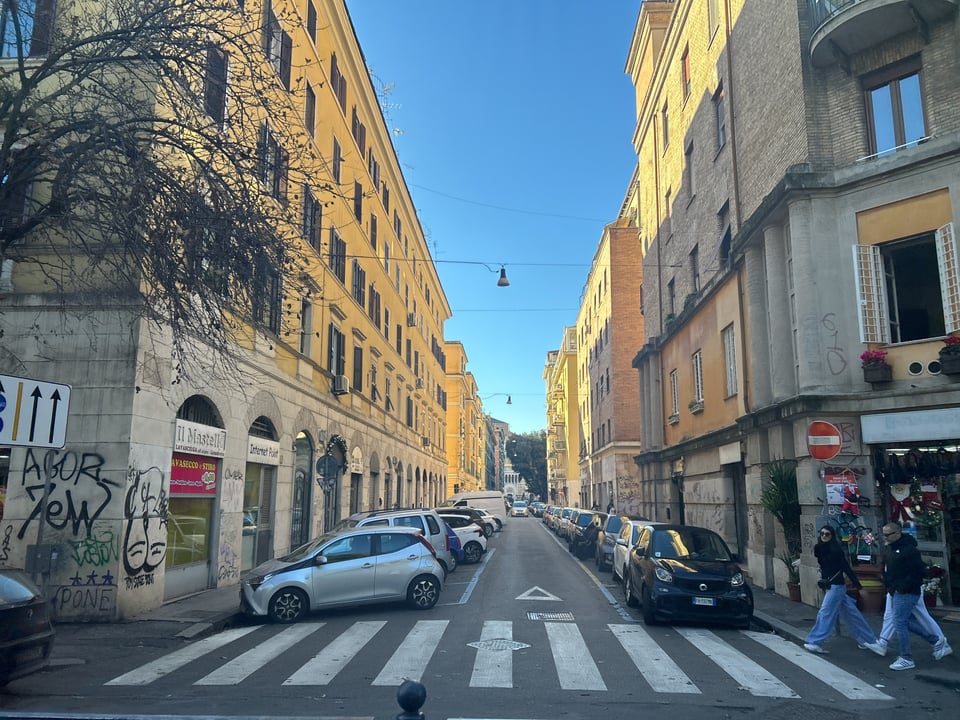
I found later in my research ,a sizeable portion of Rome’s hatchbacks comprise smaller EVs that serve manifold purposes. They take up less space, consume less energy and require fewer critical minerals for battery production. With this, Rome seems to be acing the sustainability dialogue while also leading by their own example.
Since we were visiting during peak Jubilee and year-end tourism days, on all evenings the streets were almost chockablock with people, as cars were forced to squeeze through crowds like people do in a crowded lane. A role reversal!
This begs to be stated though: Rome’s ingenious inclination towards small cars comes from the fact that these winding, narrow streets that make having a car bigger than a Mini simply impractical. Additionally, I found out, navigating their parking policies is almost as tough as its maze of dense, urban streets. This makes it imperative that the locals end up buying the Smart car, which automatically allows for freedom in parking as well as movement.
In an age of mega SUVs, and killer SUVs, when in other markets, sedans are becoming extinct, let alone hatchbacks, it’s heartening to see a city thrive, even somewhat excel, in their use case. Each of these hatches, you can be sure hold a history: personal, political, social. They remind us not only of a time gone by, but also a future that could be universal if looked at with a bare, naked, searching eye.


Add a comment: