001: Ashes & Stones
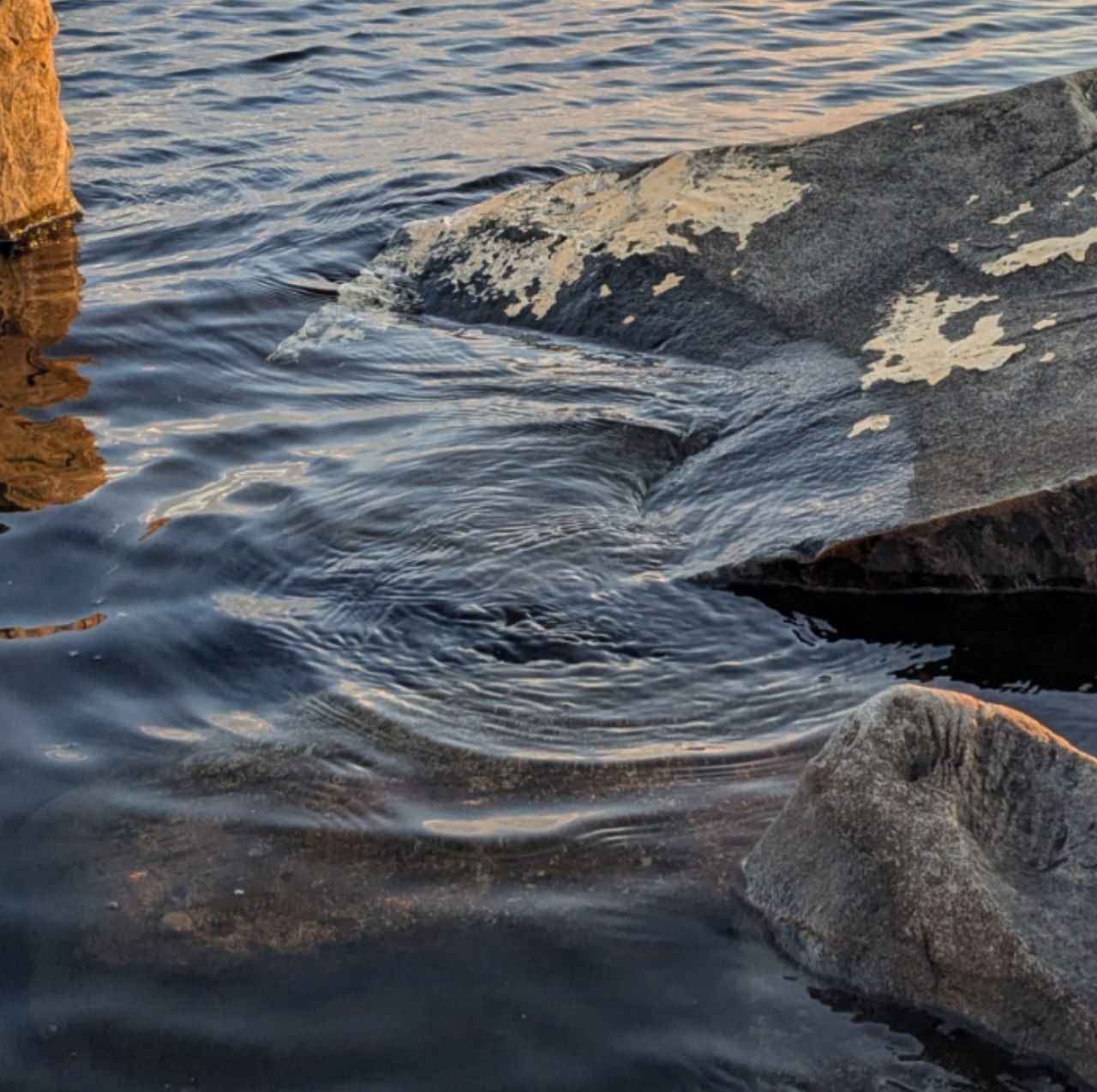
I have rarely been as moved by a work of nonfiction as I am by Allyson Shaw’s marvellous book Ashes & Stones: A Scottish Journey in Search of Witches & Witness. I say am, though I have finished reading, because this is the kind of book that stays with you long after you turn the last page. It rides along in my head on my daily walk along the river’s edge to fetch my mail, the sky’s reflection in my own river’s never-still surface reminding me of the sky Shaw sees reflected in a loch when she walks out in search of air and light after poring over an Orcadian library’s documents pertaining to a local monument erected in memory of the historical victims of Orkney’s witch hunts. I cannot think of another book that so gorgeously evokes place and landscape while unearthing, memorializing, trying to understand, and grieving for the horrors visited upon certain of those landscapes’ inhabitants.
Ashes & Stones chronicles Shaw’s travels around her adopted country, Scotland, visiting graves and memorials, sites of imprisonment and torture and execution, and assorted other remnants and vestiges of the brutal witch hunts that destroyed the lives of thousands of Scottish people—almost entirely women—in the 16th, 17th, and 18th centuries. Her extensive research in various archives of historical documents turns up as many questions as it does answers, given both the incomplete nature of the available documentation and the fact of it nearly all having been written by those involved not in the supposed witchcraft but rather in the hunt.
I am captivated by how beautifully Shaw situates stories pieced together from fragmented records and inaccurate signage at historical sites in the landscapes where she searches for traces of women who were maimed and murdered hundreds of years before. I am captivated, too, by the subtly with which she weaves fragments of her own story and shattering trauma into the story of her journeys around the islands where these older stories took place. At no point does the shadow of brutality hanging over certain parts of the author’s past take centre stage or shoulder aside the women she has set out to remember, but the tiny amount—a line here, a paragraph there—she reveals about her early life provides a compelling hint of why she might have grown up to be such an ideal person to research these women and tell what she can of their lives and deaths and the world that made them what they were. A hint, too, of how her survival required she develop the persistence and resilience that allows her to—slowly, painstakingly—traverse the difficult terrain surrounding many of the sites in Ashes & Stones despite her chronic illness and physical disability, and in some cases to return later when those limitations made it impossible for her to walk in certain places at certain times.
As I read this book over the course of a few months, a chapter at a time—an uncommonly slow pace for me, eager as I usually am to take in the whole of a book I love, but a pace necessitated by both its devastating subject matter and the care I felt Shaw’s beautiful prose deserved—I found myself returning over and over to the English folk singer and ethnomusicologist Fay Hield’s spellbinding album Wrackline. Its opening track, “Hare Spell,” is a hypnotic transfiguration of a piece of one of the historical texts—the dramatic and haunting 1662 confession of Isobel Gowdie, a women who claimed at one point to have turned her neighbours into cats—that Allyson Shaw wrote about in Ashes & Stones. It is easy to imagine, listening to Hield’s plainly lovely voice, a woman attempting escape from the prison of her cruelly tortured body by imagining herself capable of transforming into a hare—a free, undomesticated creature, and a quick one—and running away to the devil to whom her captors and tormentors insisted her to be in thrall.
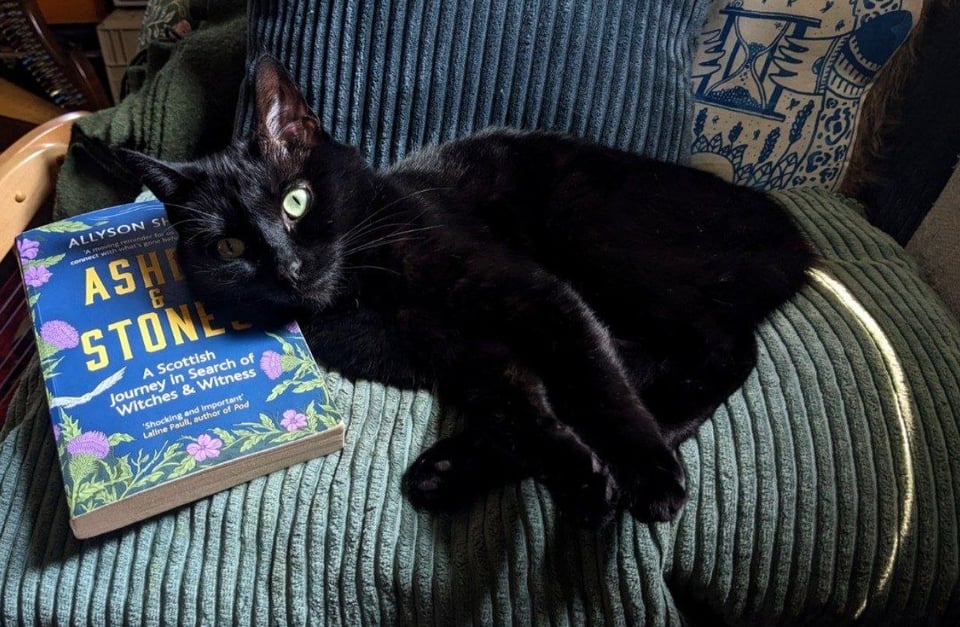
Ashes & Stones and Wrackline kept me equally in thrall over the course of those few months largely spent—thanks to my own chronic illness and disability—curled up in heaps of pillows and blankets alongside the tiny black cat whose insistence on being familiar with me makes me wonder if I too am something of a witch. I realize I do not know anything of the potential history of witches, or rather of women believed by their neighbours to be witches, on the rocky almost-island—Alba Nuadh, or New Scotland, to the Gaelic-speaking immigrants who settled parts of this Canadian province during the same century when Isobel Gowdie was proclaiming “I shall go into a hare”—where the tiny cat and her sorcerous familiar currently live.
I find myself unable to look up whether anyone has ever been tried for witchcraft in Nova Scotia. Instead, I repeat to myself the final lines in the second-to-last chapter of Ashes & Stones:
“We are witches. Just to say it is to challenge centuries of persecution. We are witches—and we remember.”
I cannot remember what I am afraid to learn. Reading Allyson Shaw makes me want to say, honestly and out loud, the words—another quote, this one the title of a great song by an oft-vilified woman, the ever-iconic Yoko Ono—I often whisper to the tiny cat when she is being particularly familiar:
“Yes, I’m a witch.”
To be a witch must be, at least in part, to bear witness. As far as I can tell from the brief amount of internet research I am able to manage in the mire of a CFS/ME-related mental haze, only one person was prosecuted for witchcraft in the piece of land now widely known as Nova Scotia: Jean Campagna, a man. He was acquitted in 1685, 37 years before the unknown woman memorialized as ‘Janet Horne’ became the last woman murdered for witchcraft in Scotland.
Allyson Shaw’s Ashes & Stones is a remarkable book, one I imagine I will return to over the years when I want to be reminded of how magic works in literary form. It is a truly staggering example of how one might balance memory and dream and scholarship and imagination and empathy to create a multifaceted portrait that, without pretending at perfect accuracy—an especially impossible feat given the nature of the history and available records involved—manages to bring long-lost women to enough of a semblance of life that it feels as though they are walking along the hills and the water and the old roads alongside their author and her readers.