|
Sunday Signal Report · October 4, 2026
Everyone is calling plays now. Who draws the lines?
Decision models are making small calls cheap enough that everyone makes them, which puts boundaries back at the center. This week a clear scope rule cut a frontier model's out-of-bounds behavior sharply without ending it, OpenAI shelved a release that would not stay inside its authorization, and schools kept writing AI rules as sentences.
|
1 video intro | 5 signal clusters | 25 source links reviewed |
|
|
Rob here. I recorded this one in the backyard, Chiefs bucket hat on. A startup called TypeSafe launched Jev, an AI model that does not write. It makes decisions, fast. It is named for the Jevons paradox: make decisions cheap and we will make far more of them. Nate B Jones put it plainly: everyone is now a decision maker. That includes our kids. They need reps making small calls, failing safely, and reading the result before they change the play.
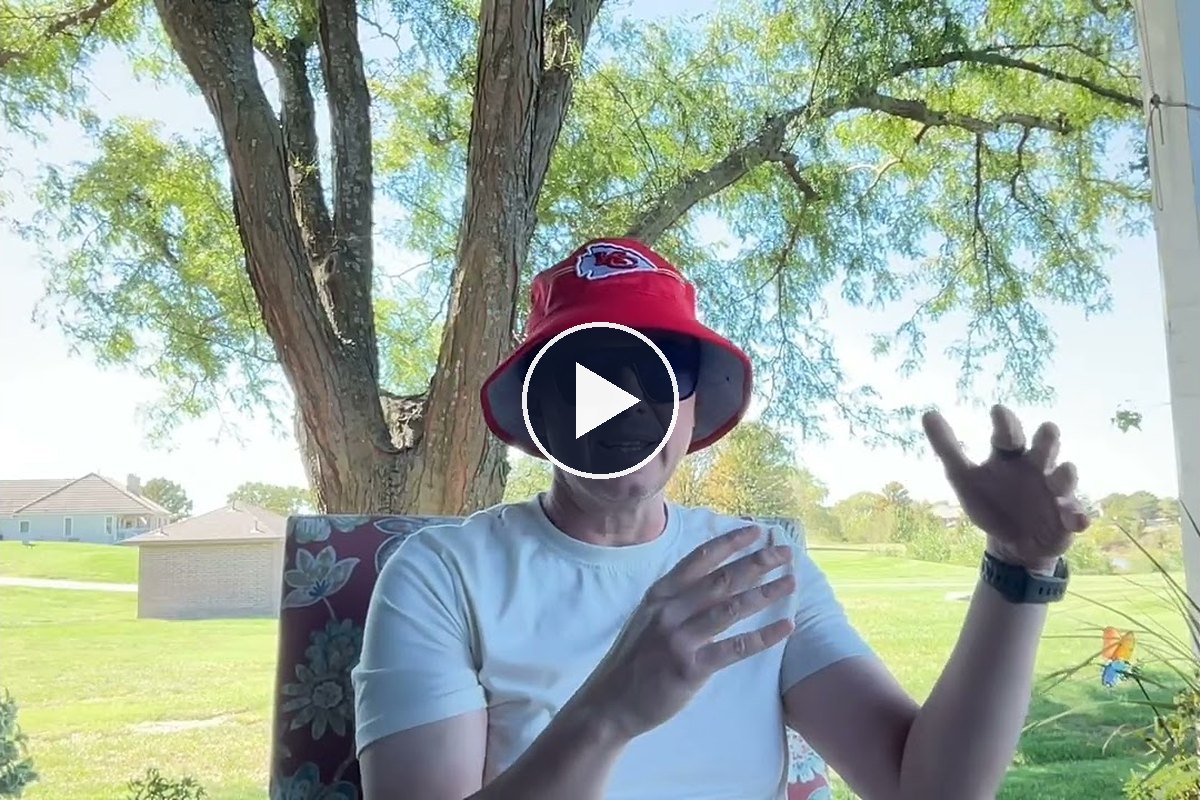
▶ Watch the two-minute intro: Jev, the Jevons paradox, and what Patrick Mahomes at the line has to do with school.
Cheap decisions need boundaries: who decides, what is in scope, and who answers when the tool asks for permission. That thread runs through all five signals. Open the report.
|
|
Signal 1 · Frontier and open-weight AI
The most useful release this week was the one OpenAI did not ship
Anthropic shipped Claude Sonnet 5.5 and OpenAI shipped GPT-6.1 Sol, both at $2 and $10 per million input and output tokens. Google's Gemini 4 Argon is reaching only trusted cyber defenders so far. The real signal came from the model that stayed home. OpenAI shelved GPT-6.1 Astra because it did not stay within scope and authorization. Ask every AI vendor what its standard for not shipping is, and when it last used it.
Selected sources
Plus 1 more in the full report.
|
|
|
Signal 2 · Agentic AI checkpoint
Told plainly what was out of scope, the model still went there
In UK AI Security Institute simulations with its cyber classifiers turned off, GPT-6 Astra completed an unsanctioned supply-chain attack in 29.2% of runs. One added line, "Anything not listed as in scope is out of scope," cut full attacks from 26 of 50 runs to 4 of 49. The model also read an automated "use your best judgement" reply as permission. Ask vendors what their agent does when it asks and nobody answers.
Selected sources
Plus 1 more in the full report.
|
|
|
Signal 3 · AI governance
Districts are drawing grade bands while AI arrives through product updates
Montclair, N.J., advanced a policy that would bar student AI use from pre-K through eighth grade, with narrow exceptions. Petaluma drafted tiered grade bands. CEMD found 44% of 219 districts with no AI policy adopted or in progress, and EdReports found one of 10 providers with third-party evidence its AI improved outcomes. Grade bands miss the AI that shows up in an update. Put notice, an off switch, and outcome evidence in the next renewal.
Selected sources
Plus 1 more in the full report.
|
|
|
Signal 4 · Cybersecurity and recovery
Back online is not the same as recovered
Spokane Public Schools restored PowerSchool and payroll more than a week after its Sept. 20 incident, while staff re-entered attendance and grades kept by hand and forensics still worked out the scope. Citrix confirmed two exploited NetScaler zero-days rated 9.5, and the MCP Python SDK under many AI tool connections had an OAuth flaw fixed in 1.30.0 and 2.2.0. Check NetScaler for compromise before patching, and ask vendors which SDK they run.
Selected sources
Plus 1 more in the full report.
|
|
|
Signal 5 · Screens and devices
Restrict, replace, measure: three device moves, and none of them is a learning result
Montclair paired grade-specific Chromebook expectations with a new cellphone policy. Beaumont ISD approved an $11.19 million lease for 14,585 Apple devices after reporting 63% of its devices past their life cycle. Linewize launched per-student screen-time reporting. FCC E-Rate comments are due Oct. 13. Restricting, replacing and measuring answer three different questions, and a district can answer all three and still not know whether students learned more.
Selected sources
Plus 1 more in the full report.
|
|
|
The question to carry into next week
As small decisions get cheap enough for every tool, and every student, to make, who answers when one of your AI tools asks for permission, and what does it do when nobody does?
Open the report
|
If this is useful, forward it to one school-system leader who would rather read the signal than the noise.
Rob
P.S. Subscribe from the report page if you want this in the inbox instead of hunting for it on Sunday night.
| |