Your Scotland The Bread June Newsletter
As the weather fitfully improves and green shoots reward winter sowing efforts, this month we have stories of being out in the field: literally, in the case of test plots at Stenton and our Soil to Slice groups’ seedlings, and figuratively for STB Project Coordinator Lyndsay Cochrane, who has been running workshops and connecting with other grainiacs at the UK Grain Lab.
Have you ever wondered how the floury-aproned baker in your local Real Bread bakery got there? We hear about one journey and encourage you to get in touch with yours: email us with your story, we’d like to compile some as inspiration for others keen to tread that path.
In the meantime we share a goldmine for inspiration hunters: the newly launched Ministry of Imagination Manifesto, to which our Chair contributed his vision of bread’s power to unlock social transformation.
People’s Plant Breeding – Volunteers needed!
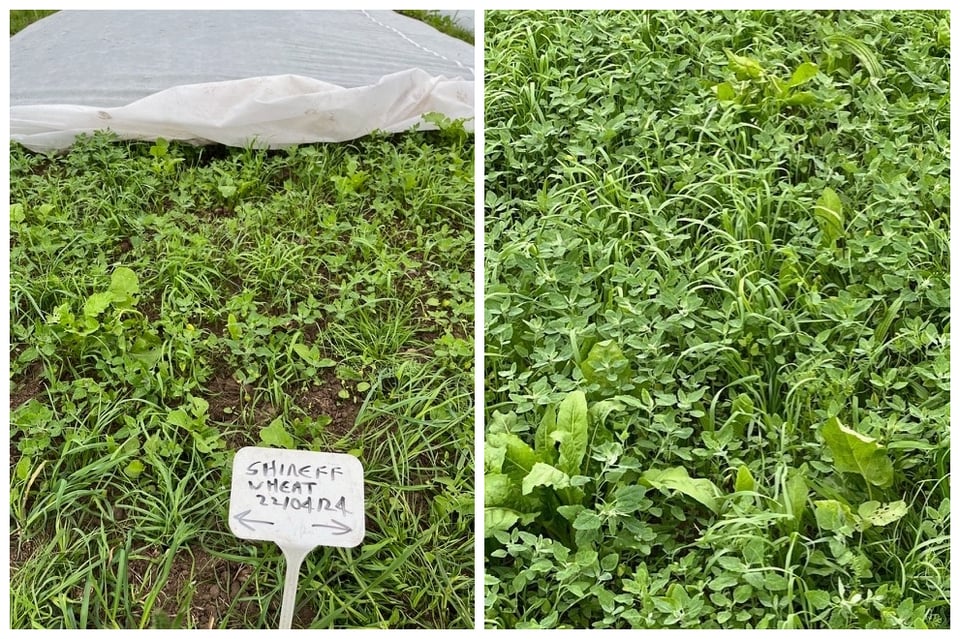
Scotland The Bread is taking part in grain trials curated by the James Hutton Institute as part of a European RADIANT research project into ‘underutilised crops’. Climate disruption makes it prudent for humanity to reduce its dependence on a very small number of commodity food crops (wheat, rice, maize, soya) and to find agroecological resilience in a broad range of edibles. As the late Prof Martin Wolfe, founder of Wakelyn’s Agroforestry and developer of the ‘YQ’ ‘composite crossed’ wheat population, used to put it: ‘diversity for adversity’. Scotland The Bread as a community organisation grew out of co-founder Andrew Whitley’s own agroforestry project (modelled on Wakelyn’s) at Macbiehill in the Scottish Borders between 2010 and 2020. Volunteer Nigel Harding reports on how our own ‘underutilised crops’ (including rare historic wheat varieties) are coming on.
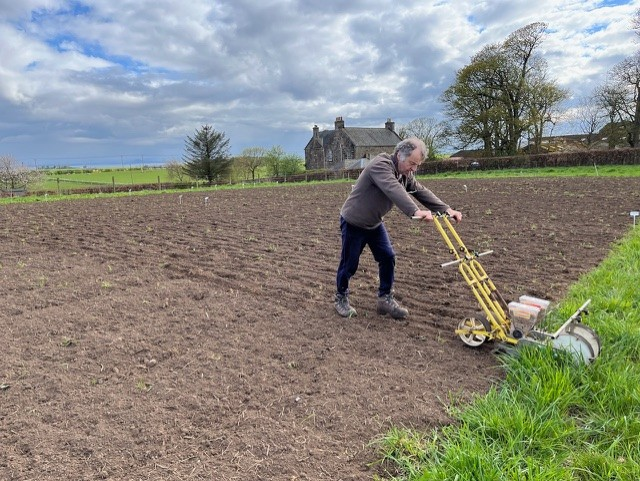
Scotland The Bread’s mission is to popularise bread which is both nutritious and gentle on the planet. Key to this mission is the use of flour milled from cereals sown as genetically diverse mixtures of different strains and varieties. This provides the necessary genetic variation upon which natural selection can act to adapt crops to their local environment, including to rapidly evolving pests and diseases and the changing climate. This evolutionary approach potentially creates more resilient crops requiring greatly reduced chemical (and ‘biocidal’) inputs compared to the genetically homogeneous varieties that dominate modern intensive agriculture. This provides a good fit with more nature-friendly farming systems such as those practised on the Balcaskie Estate where Scotland The Bread’s grain is grown. Furthermore, the ‘modern landraces’ that Balcaskie has been developing for several years for Scotland The Bread consist of mixtures of ‘evolutionary’ varieties that have been chosen because of their high nutritional value and suitability for milling into bread flour.
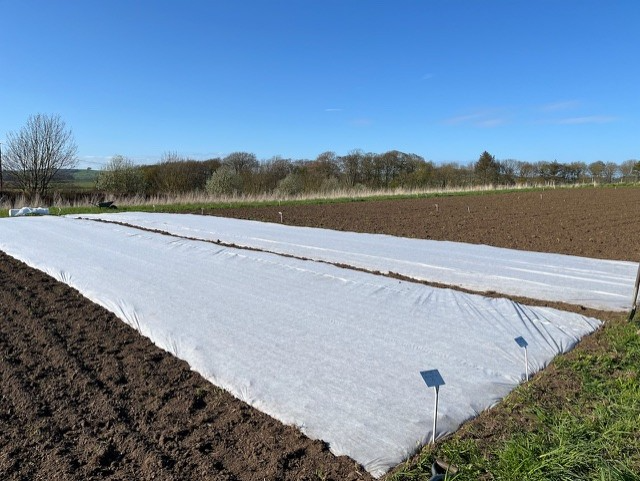
This spring Scotland The Bread has sown a variety of historical grain varieties to assess whether they could be usefully incorporated into the emerging ‘landraces’ or grown at scale in their own right. The cereals sown this year are traditional Scottish bread wheats such as Hunter’s (from around 1810) and Shirreff’s Bearded Red (from the 1850s), as well as other cereals including Oak Farm naked (i.e. ‘free-threshing’ without the awns that cling to the grain) barley (courtesy of Ed Dickin from Harper Adams University) and three oat varieties (Storm King, Sir Douglas Haig Black Oats and the Potato Oat – found in a patch of tatties in 1788) – all of which we want to investigate for their nutrient density and potential contribution to climate-resilient diets. In addition to nutritional data, we are also collecting additional information on these crops including germination rate, establishment rate and yield. All of this data is being fed into the RADIANT project which provides a scientific framework to support grower-led innovation across Europe.
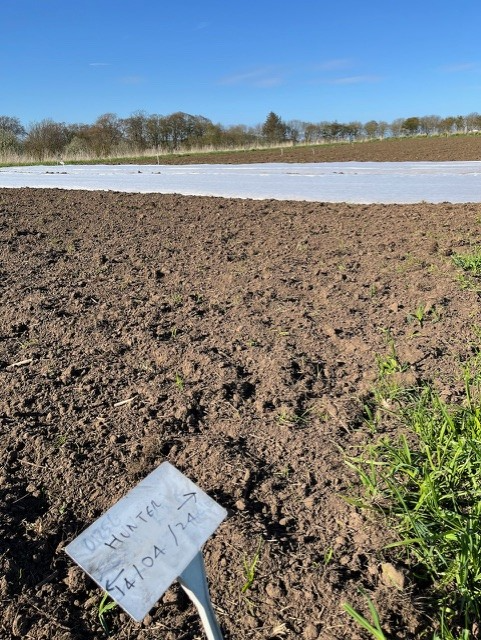
The 0.225 ha (i.e. roughly 70 metres by 30 metres) trial plot at Stenton (near Bowhouse) has kindly been made available to Scotland The Bread at a peppercorn rent by the Balcaskie Estate, which grows the landrace cereals for Scotland The Bread’s flour to certified organic farming standards in which ‘regenerative’ principles are – and always have been – of the essence. People’s Plant Breeding is very much a community-based project with volunteers heavily involved at all stages, including preparing the ground for sowing, sowing the varieties, and monitoring their subsequent performance, not to mention getting on top of the weeds which will require a working party pretty soon. If you would like to help with this work please contact lyndsay.cochrane@scotlandthebread.org.
Flour to the People workshops
Project Coordinator Lyndsay has been on the road bringing Flour to the People at workshops in Blairgowrie and Colinsburgh.
In partnership with BaRI (Blairgowrie and Rattray Initiative), we organised two ‘bread sessions’ to share information about the current grain system and how people in their area could get involved in the movement for a better alternative. A (very popular) tasting activity helped to introduce different types of grains, their various flavours and baking qualities, and participants also had a go at ‘milling-their-own’ with a table-top hand mill while learning more about the production of wholemeal flour. Everyone went away with some of our Balcaskie Landrace flour, a demonstration video with accompanying recipes, and the encouragement to come up with their own ‘People’s Bread’. Two weeks later we met again and participants shared their experiences and experiments, from using a bread machine to trying out different shaping techniques.
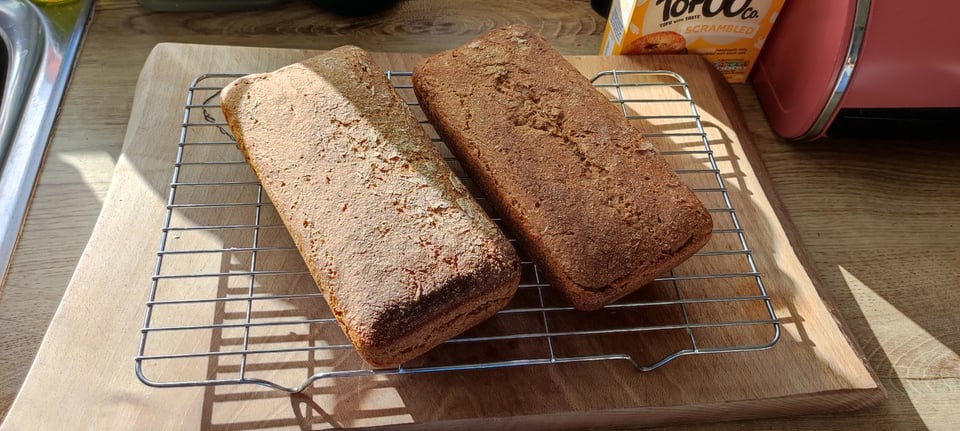
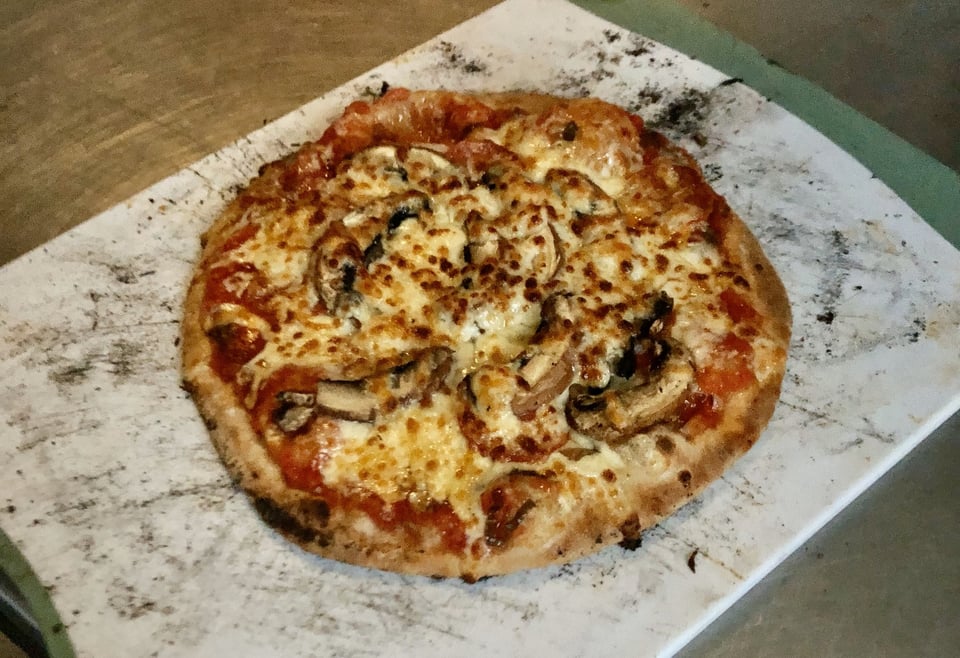
In Colinsburgh, just a few miles from our mill, we brought our very local flour along for ‘pizza week’ of the cooking classes run by Colinsburgh Community Trust. Using Pete’s ‘Soordough pizza’ recipe (which can be found here) we worked alongside chef and workshop leader Dave to show how easy it is to introduce great flavour and some extra nutrition to a family favourite. When a power cut hit the village halfway through the session we were especially thankful for Dave’s wood-fired pizza oven keeping the show on the road…and even ended up feeding some extra guests who had come out onto the street to see what was happening!
Thanks to Tesco Community Grants and Heids & Hearts for funding making these events possible.
UK Grain Lab
At the beginning of May, UK Grain Lab invited its members to a day of connecting, celebrating and shaping the future of the movement. Brewers, maltsters, bakers, millers, cooks, farmers, plant breeders, artists, storytellers, scientists, funders and community organisers gathered in Nottingham to share updates and learn about exciting ways that the collective is leading radical change.
An open platform was provided for any members who would like to share their current work, ideas, challenges and calls for collaboration. Among the contributions, we heard about the search for ingredients that can cope with changing climatic conditions; balancing the use of local organic grains with affordability of bread for customers and fair pay for the baker; a study examining the ability of the wheat system to sustainably deliver healthy diets and food security; and how Grain Lab encouraged the establishment of an olive farm cooperative in Greece.
There were also, of course, many opportunities to sample delicious bakes all made with UK-grown grains and a collaborative feast, including a fully wholemeal cake table.
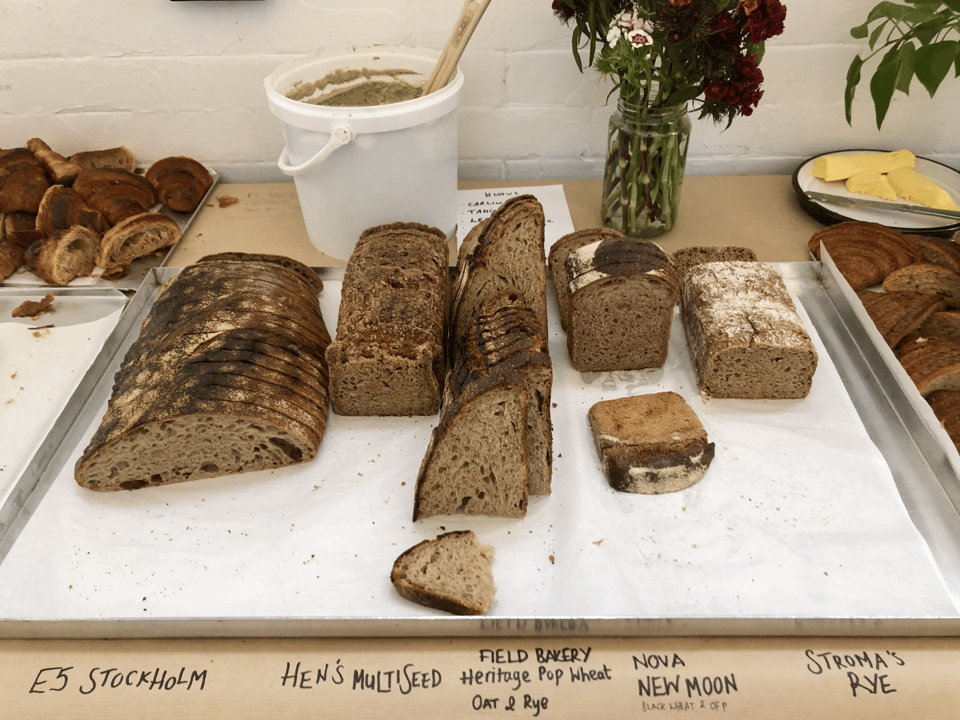
Beginning with a rallying cry and ending with intention-setting, this was a day of inclusion and inspiration, encouraging us all to consider our positions in and contributions to the movement. The Grain Lab team themselves shared an update on the work being done to change regulatory processes in ways which would support the trade and use of genetically diverse seed. The exciting possibilities that such changes could bring formed part of a timeline for the movement, proudly displayed on the walls to create an inspiring vision of a more democratic, decentralised and diverse grain system.
Making a Baker: a breadmaking journey From enthusiastic kitchen experiments with varying degrees of success to “almost full time” baker in two of Scotland’s finest artisan bakeries: thank you to Paddy for this blog post discussing reassessing his career and making the leap into professional bread-making. |
The Arran Pioneer
Thank you to Simon Ross-Gill, Director of The Arran Pioneer Project CIC, and baker George Grassie for this update on their first season with our Soil to Slice project.
The project started with George Grassie from the Blackwater Bakehouse and his dream of a local loaf!
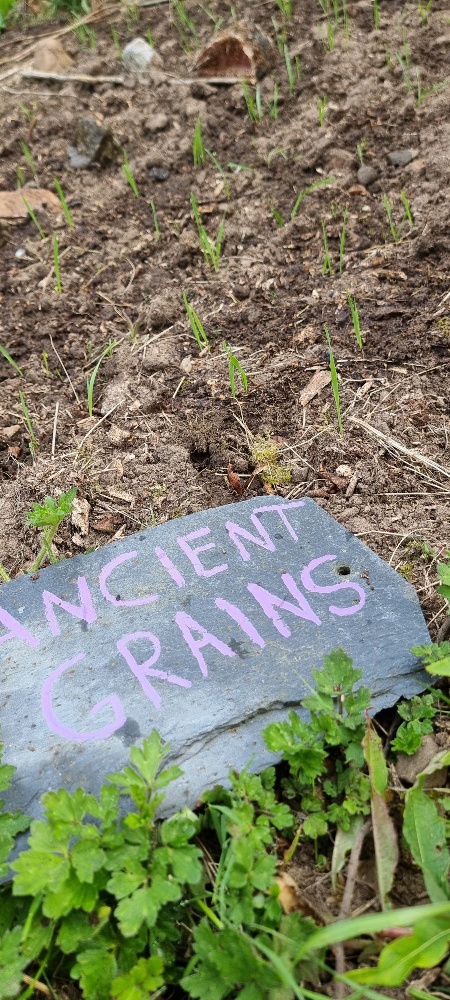
George gave us some Rye, Emmer and Spelt seed that he sprouts and uses on his loaves. After research by our Ranger Zabdi, The Pioneer Project has joined the Scotland The Bread “Soil to Slice” ancient grains project – they sent us Balcaskie Landrace wheat and Fultofta Evo Rye seeds.
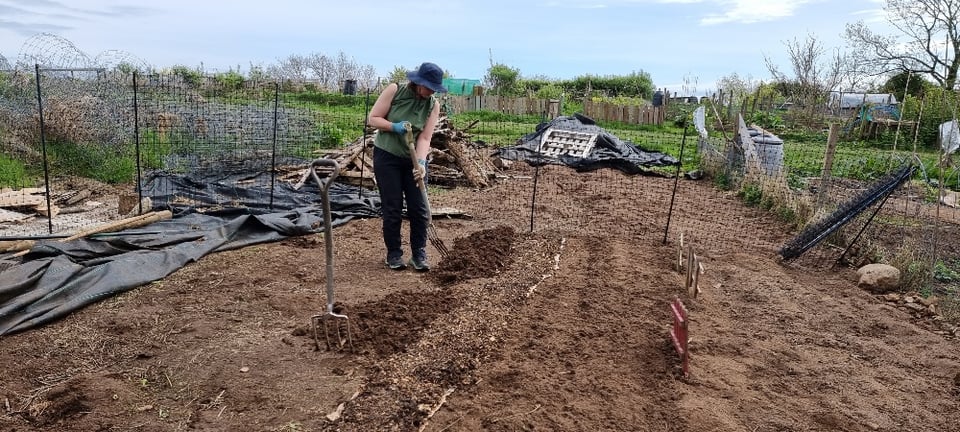
So far we have planted test plots at Community Gardens at Cordon, Corrie, Pirnmill, Kilpatrick (near Blackwaterfoot) as well as with Whiting Bay Primary School at Robin Gray's farm at Sandbraes, and also the Arran Community Land Initiative. We also aim to get local farmers interested in joining the project, to test these varieties for future resilience on the island. The more locations we plant, and varieties we test, we can start to see what works in different parts of the island, so that George can bake many local loaves in the future. We also hope to harvest the long straw for weaving and thatching.
George Grassie wrote to tell us: “As a baker, I have been using ancient grains from day one. They’re challenging, therefore interesting, to work with. The payoff is a flavour that is profound, textures that have body, and a nutritional value that matches.
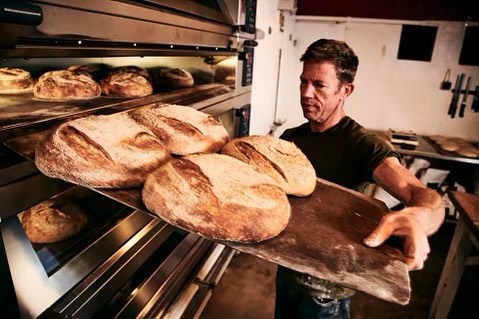
My interest in the idea of a local loaf from grains grown nearby began the first time I made and tasted an emmer loaf; the sweetness and near cake-like aroma were arresting; so much so that you could understand why people began farming over foraging thousands of years ago. Bronze Age settlements are know to have used such wheats, and as I write, archaeologists are profiling Neolithic soils a few miles from the bakery for traces of their diet, hoping to find traces of cereals and other plants.
To bake with ancient grains that may have been grown by the first settlers and farmers of the island speaks of a resurgent resilience in food, amazing nutrition, and a unique story of connection.”
The Sanctuary Tain
Another new Soil to Slice group proves that you don’t need lots of space to get started growing your own loaf - thank you to Anna for this introduction:
“We are a small, newly started group in the north east of the Highlands. Our aim is to be able to feed and serve our local community and bring people together. We are hoping to have some land this year to begin planting winter wheat on. Meanwhile, we planted (albeit rather late) 70g of Balcaskie Landrace in a 4 by 8ft bed yesterday in one of our gardens as a practice run.
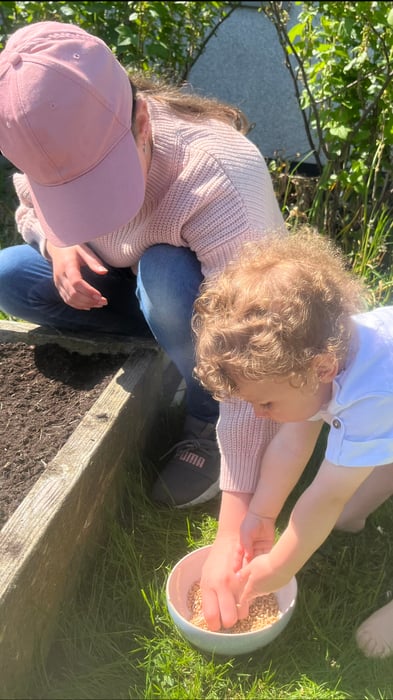
Most of the bed is broadcast but we did plant a small section of a few rows offset at 4 inch intervals. One of us has also bought a Mockmill and has been experimentally baking and bread making with Balcaskie for the last few weeks, it has been amazing and the kids have loved it!”
Ministry of Imagination: the Manifesto
Two years ago, STB Chair and co-founder Andrew Whitley took part in a discussion for the Ministry of Imagination’s ‘From What If to What Next’ podcast, with host Rob Hopkins and Catriona Milligan from Glasgow charity Bridging The Gap.
To mark the ending of the podcast at episode 100, the Ministry of Imagination team painstakingly pulled together every single policy that was contributed into a beautifully-designed Ministry of Imagination Manifesto, which you can download here.
This is a year when 49% of people in the world go to the polls, the most important year of elections for a long time, if ever. Rob Hopkins says: “When compiled together, the over 600 policies that were presented in our Ministry of Imagination episodes are amazing, a powerful and inspiring alternative to the imagination-bereft policies people will be being asked to vote on.
“I really hope you love it. It's a pretty remarkable thing I think, full of bold, audacious, world changing policies. As bell hooks said "what we cannot imagine cannot come into being". Well, now we have no excuse.”

