
The adults and these damn phones ( or why I am TIRED of performative work about children’s digital rights)
This week OFCOM produced its latest OFCOM survey on adult internet habits. Headlines reported that adults are posting less, becoming more passive users of social media. It is a wide survey, but my take is that we still fail to accurately educate adults on digital rights and online safety. I am particularly concerned about what I see as rising numbers of adults who put children online too- which is not something that the survey addressed. It may be true that adults over 24 are wary of posting themselves online. But I do not think that they extend this consideration enough to the babies and children who are now offered up to the algorithm for dubious rewards. Or to the very significant risks that come with Edtech or age verification apps, UCAS applications etc.
It very much seems to me that adults are putting children at risk online, in many ways, and often unwittingly. All while becoming more passive in what they might share online themselves.
I have said before that phone bans are really meaningless when schools and life in general insist that children use apps that take and share their data. There is a broader issue than screen addiction that the public are not being encouraged to understand.
Data mining and adtech aside, if you are online on any social media, it is worth reflecting on any images or videos of children before you like or follow. There are alarming numbers of families or schools or clubs posting children online. This puts those, often very young, children at many risks - from stalking to ai generated deep fake images, or online hate in comments. The adults are the ones putting these children at risk online, even when those children are probably too young for phones or social media themselves.
The adults are the problem, the adults need education and support.
I have said this before, but it bears repeating until we accept it as truth. And act accordingly to make real change.
The adults need support- but where is the support?
I don’t blame anyone for not making good online choices in the UK. The digital rights information allowed into schools and workplaces is not fit for purpose-arguably by design. I worked in cybersecurity long enough to see how much of it was compliance tick box nonsense, created by people who like to focus on “engagement” and “metrics” rather than impact and outcomes. Especially outcomes that might be positive for humans.
In my opinion, there is little desire to create a population that can advocate for digital rights- Edtech would be a dying market for sure. So it is outrageous for the ICO to suggest this week ( see below) that it wishes for parents to educate their children about privacy in the same way as road safety. Or for governments or unions to suggest “AI literacy” courses will help.
All evidence points to the contrary.
A good example of the mess of “advice” is evidenced in these two articles, published in the same week :
Call for parents to teach their children online privacy like they would road safety - BBC News
Three in four parents fear their child cannot make safe choices about personal data online, the data watchdog finds.

The Yorkshire Dales school using AI to mark mock exams - BBC News
Headteacher Julia Polley says students get quicker and more detailed feedback, without teacher bias.
Imagine yourself as a student or caregiver at the school where ai is being used to mark work. You have concerns and the school is not addressing them. So you complain to the ICO…who also do nothing. This is the sad reality of many families like mine.
We complain, gather evidence of complaint timelines and are then told that there are no grounds for complaint. And yet we have these glossy media PR releases with zero substance behind them.
Of note too, is the very sloppy journalism around the AI marking story: the Ai marking company is not identified. And the article does not touch upon data protection issues or other risks or harms that are very possible with ai marking. The main concern is teacher employment prospects.
In addition, the story about the ICO has NOT A SINGLE link to any provider of privacy or data protection information for families or young people. The ICO had a tender out for this service in 2024, which seems to have led to this webpage. There is very little real advice beyond “check privacy settings”. For example, this checklist just suggests talking with a child about what data they might want to share. It does not explain or demonstrate how to check what data is shared, nor does it offer a warning about how this might be hidden by tech providers.
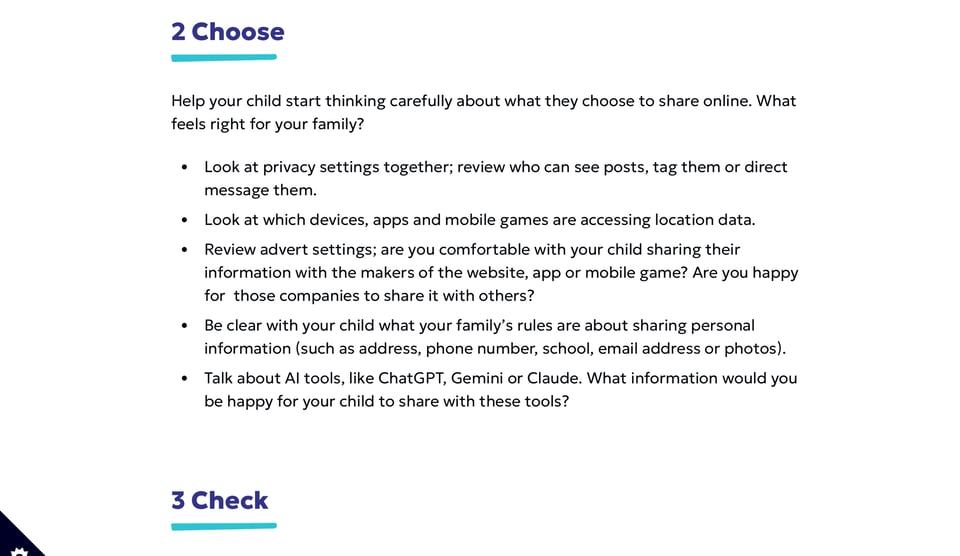
(Alt text :Help your child start thinking carefully about what they choose to share online. What feels right for your family?
Look at privacy settings together; review who can see posts, tag them or direct message them.
Look at which devices, apps and mobile games are accessing location data.
Review advert settings; are you comfortable with your child sharing their information with the makers of the website, app or mobile game? Are you happy for those companies to share it with others?
Be clear with your child what your family's rules are about sharing personal information (such as address, phone number, school, email address or photos).
Talk about Al tools, like ChatGPT, Gemini or Claude. What information would you be happy for your child to share with these tools?)
Good journalism would press these points, discuss them, invite readers to think, and even provide links to resources for concerned families or children. Effective regulation would stop nefarious technology companies and provide accessible public information.
As an example, a few good resources are listed below:
Tactical Tech resources on a number of digital rights topics.
I wish that we had better advice in schools and workplaces that focussed on digital rights. I would love advice that went beyond checklists that assume tech companies don’t lie. I wish that tiny non profits did not have to do the heavy lifting while being ignored in favour of more “acceptable” providers that don’t challenge government narratives.
I also wish that we could admit that many adults are the problem, because they are woefully uninformed by design. Or incentivised to put children at risk online, due to our culture of over sharing and surveillance capitalism. I doubt the ICO will say that, but it should.