
It is for your own good: the tech lie that education is buying
It is time that we reject tech company led narratives that are dominating the screen/phone free/social media ban discussions.
It is time that we hear from harm reduction experts instead of talking heads, many of whom are paid to promote edtech or who have their own edtech companies.
Let me explain:
When I worked in cybersecurity and tech, there was a common, very toxic attitude of blaming customers or colleagues for issues. “PEBKAC” (problem exists between keyboard and computer) was a popular utterance. It was arrogant and disingenuous because the problems most often stemmed from bad product design or user experience. Many of you will have experienced this yourselves. Perhaps you have heard it. Or maybe you have felt demeaned and gaslit when you described a technology issue. Casey Johnston describes this issue and how tech companies manipulate journalists and deny accountability in this episode of Tech Won’t Save Us
I recommend listening to the entire episode, it will make you feel less like you are the only one who ever had an issue with a product.
I see many parallels in education and this is why I am writing this. Because the social media/phone ban debate has become led by the tech lobby. Instead of regulation, accountability for tech companies like Meta or Twitter or Google, we have age verification for all citizens. We also have blame and responsibility shifting onto children and parents. Phone pouches and brick phones as solutions.
ANYTHING but hold tech companies accountable.
Anything but have nuanced, policy and survivor informed debates.
So how about if we agreed, laid it out on paper, wrote it on the walls “ the problem exists between tech company and customer, not keyboard and computer?
One of the most frustrating elements of these debates is the lack of real expertise invited to speak. We have experts in moderation, regulation, child safety. They understand the nuances, the issues and the careful path to tread. They also won’t allow tech CEO to blame customers.
Instead of these voices, we have a cacophony of TikTok teacher influencers, edtech ceo and teacher tapp survey rubbish.None of whom are independent. If you have an LLM based marking app, or you work for an ai teaching app,you cannot be said to be neutral in any of these discussions.
Everyone has a right to an opinion, and to express that. But we need expertise, not tech company backed bluster and noise.
It is harmful.
For example, we should not be discussing age verification and social media bans without including the views of digital rights organisations - which often represent the voices of youth.
I am also really, honestly tired of hearing discussions about screens, phones, social media without any balance or discussion of wider governance issues.
There is a lot of noise that has followed this article in the Economist, which lambasted edtech. It did not, however, really touch on edtech digital rights issues.
Edtech has always been full of problems. Recent reports on Google’s objectives in education have woken up a few to the ways tech companies want to create little empires of future customers, as well as take data. There is nothing altruistic about edtech.
For too long, schools have been fooled or coerced into partnerships with technology companies. A few iPads, or stylus pens, apple educator badges usually did it. Or the endless support from the edtech proponents,usually well connected white men. No one was allowed to challenge or question it all- and trust me, we tried.
The very same people who refused to listen to concerns about edtech harms are now the ones on tv or social media bleating about “screen use” or “phone pouches”. Purely to jump on a bandwagon. They have no insight, no tech harms understanding and they often do this while upselling their own app, product or product they are paid to promote.
I am going to use the examples of edtech voices who have weighed into this debate without any insight or care to include expertise on the matter. There are teacher or ex teacher influencers who have blogged or made TikTok videos about social media bans and screens in schools- but with the added element of using the debate to promote their ai marking app or ai teacher app. These are not neutral or credible voices.
Image if these people used their considerable platform to amplify a tech harms advocate. We have many in the UK -at UCL,for example.
I wish there was less a culture of tech hype and personality, and more of seeking to offer insight or a stage to others. We need to share the mic.
I also want us to ask ourselves why there is a dichotomy of social media ban noise from schools, while teachers are filming in classrooms and posting children online. One example is below:
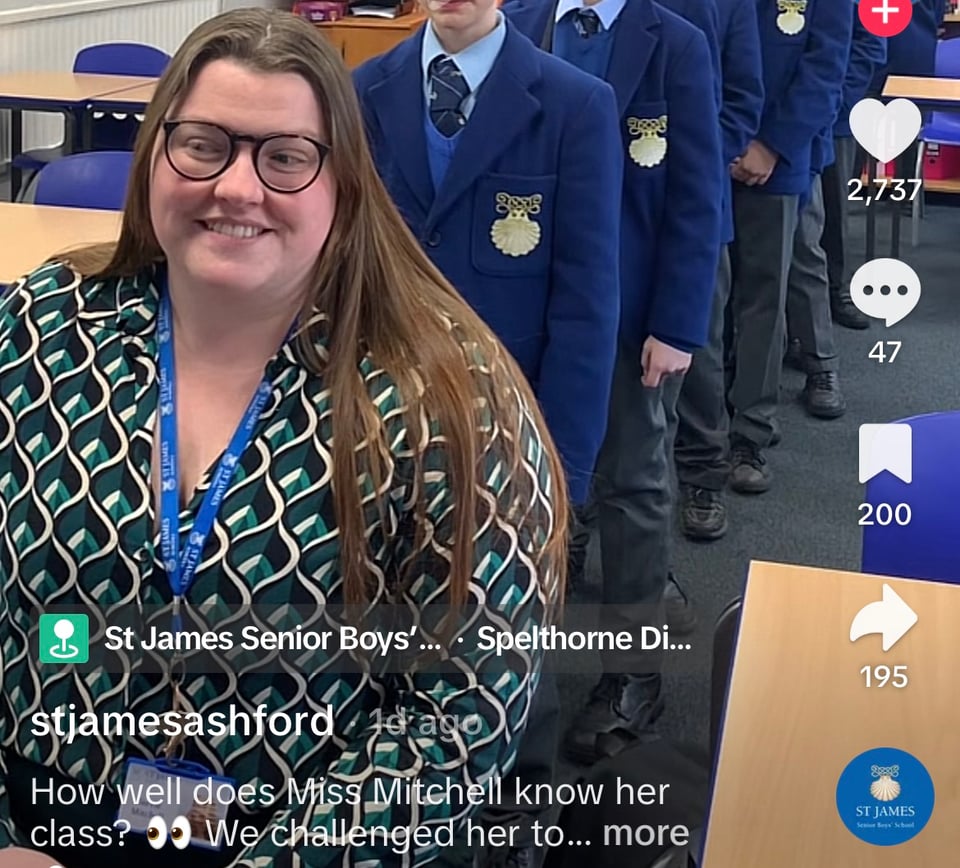
This image is a still, redacted, from a video on TikTok, one of many following a recent trend. This social media app created trend, designed to get biometrics and data, has encouraged people to sit in front of their team or class, and identify a child by name from just hearing their voice.
At no point should safeguarding permit this. Posting images and now video of children, in a uniform and on a school account that geolocates them, AND SAYING THEIR NAMES?
THE ADULTS ARE THE PROBLEM
We need better digital literacy amongst adults. And teachers should be the first to get it. I wager this teacher in the image, all like her and the school itself, all support phone bans, social media bans.. but do this. There is no common sense,safeguarding or thought about what might happen to a video or image of a child in this ai deepfake age.
When I see adults who are capable of discernment online, of seeing trends and filters etc for what they are, I might relax a little. The children in that image are not being shown sensible digital practice. They are being shown that likes and shares count more than privacy. That the tech companies are great and we should dance for them, and that it is our fault that tech isn’t safe.
In my opinion, you should not be able to upload images or video like this. We should ban adults from posting children online first. I also think that caregivers or children themselves cannot properly consent to this kind of image sharing. I have said this before, but the current school image consent forms are still languishing in the 1980s where perhaps we had a pic in the local paper. Not an image that could be relistically deep faked or used to locate you in seconds,
This is the challenge we face as we look to the future.We need to be more discerning in who we look to for advice on technology. We need to be prepared to be uncomfortable, to remove some tech from our classrooms. And to address that with students and families. I think the current status quo and grifters paradise exists because schools are unwilling or unable to do that because of various pressures. There is only government information on adopting edtech and ai. I can find very little on real governance.
I do not know a single educator or school leader who does not care deeply about students, families and digital rights. But they are misinformed by politicians, regulators and the internet faves.
It is pertinent and valid to discuss screen harms, online harms. But we need to broaden the debate to discuss the data harms that are potentially huge. We need to permit schools to question and reject more tech -such as biometrics for canteen payments. Or, to withdraw from ai and edtech projects such as the new online tutoring scheme because of the harm it could do. Or the harm it has done already.
Phone bans and age verification are sadly part of censorship not better safety. Tech companies can and should moderate content and make things safe. Arguing for age verification and bans plays into censorship and tying the identity of everyone to their online activity. As Meredith Whittaker of Signal says, we all need privacy - everyone closes the front door or the bathroom door. It is not about having something to hide, but about having digital rights.
And digital rights are where this discussion should be. Why are we accepting age verification and bans instead of demanding better tech? Why are we not furious about the data sharing and adtech and gambling that is standard in edtech? Bans and phone pouches are a distraction to get you to look away from the harmful digital rights abuses that come with screens in schools etc. The edtech influencers make money from you paying into a system that benefits them. They won’t ever talk about digital harms. It would lose them contracts.
Saying no, asking about ethics can be innovative. Innovation and forward thinking is scanning the horizon and making sound decisions, not following hype.
In conclusion :
Edtech is sadly assumed to be safe. We also assume that regulators are doing their jobs. I regret to inform you that tech will indeed not save us, and the blame will be on you as an individual if a class action comes around. Your fave influencer will be nowhere to be seen at that point.
Reject phone pouches and age verification and start asking hard questions about where data goes when children open an edtech app.
And perhaps ban adults posting images of children online before we ban the children themselves. Just a thought.