
Directional Alignment
A story of humble beginnings and the information overload that has to be navigated
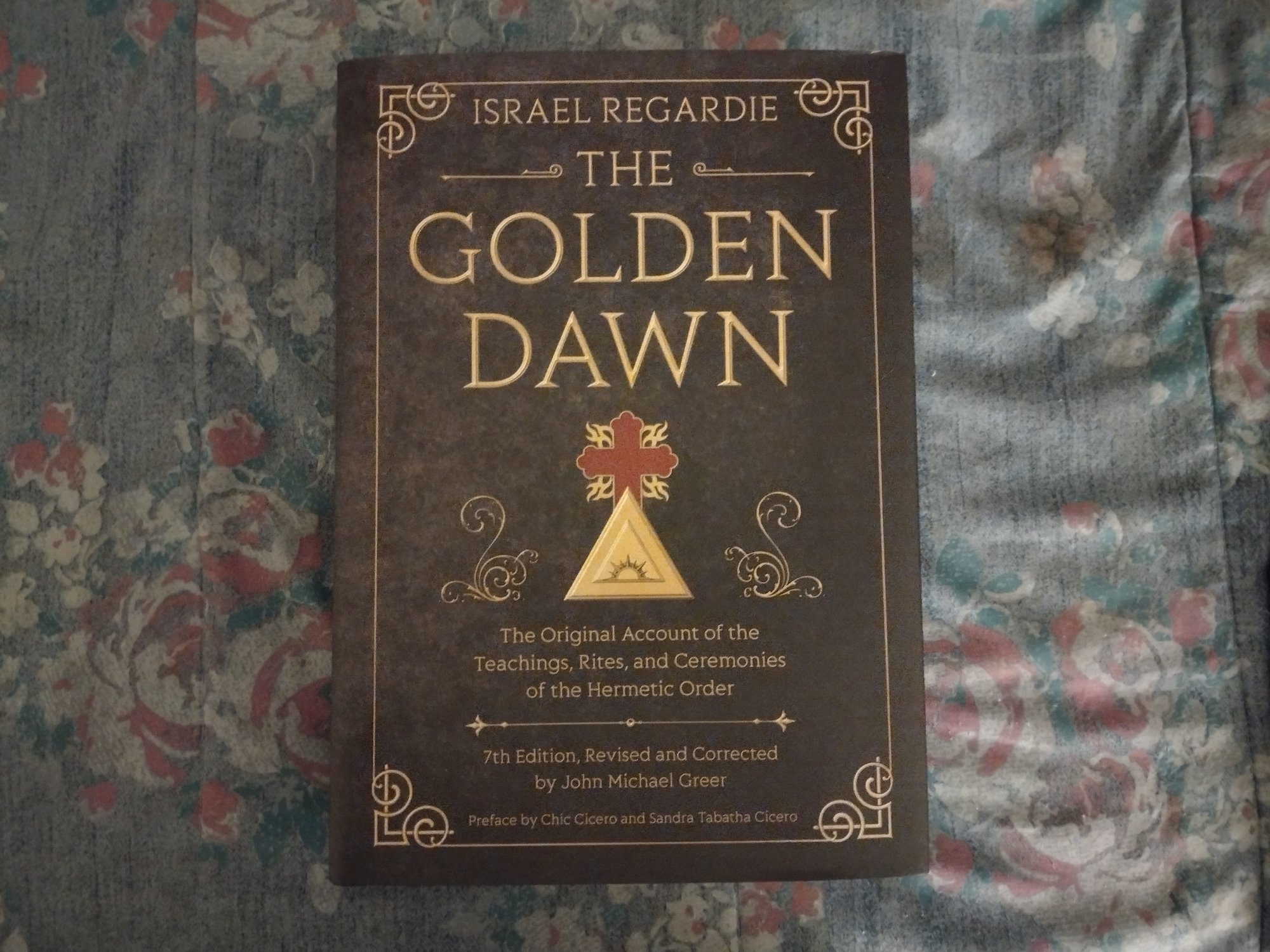
Okay, starting with the five-pound elephant on my shelf, The Golden Dawn by Israel Regardie, holy crap, y’all…
As Extreme once said in their song by the same name, “It’s a monster…”
It is. I specifically planned a day where I was just going to try to do a little study into some of the rituals and ceremonies around The Golden Dawn because it came down to one thing. The contents of this book are well over a century old but they’ve been published for just under that. In fact, the 2030s will mark the 100th anniversary of it’s publication with it’s author having passed in 1985.
In fact, if you want to know where I got some of the Golden Dawn rites that eventually did land in my lap without getting the source material first, Konstantinos, J.H. Brennan, Aleister Crowley and so many others have covered the LBRP, The Middle Pillar, so on and so forth but what I found interesting was where they diverged.
Yeah, every source is a little different in some aspect or another.
Crowley & Regardie’s work on The Golden Dawn’s Lesser Banishing Ritual of The Pentagram are structurally the same.
The variances happen across a few different practitioners.
Examples:
Regardie (The Golden Dawn 7th Edition) – Behind me shines The Six-Rayed Star
J.H. Brennan (Magick For Beginners) – Above me shines The Six-Rayed Star
Crowley (Liber O Manus et Saggitae Sub Figura IV) – In The Column, Shines The Six-Rayed Star
Konstantinos (Summoning Spirits) – Within me shines the Six-Rayed Star.
So, question is…who’s right?
Honestly, that depends on how you look at it. Regardie is going with what he found and what he was able to reproduce for preservation. In his presentation, the positioning and acknowledgment of the star behind the practitioner, that indicates spiritual support which isn’t a bad position to be in. You have backup. That’s pretty cool.
Crowley, brilliant as he was with his work (and wild as hell in his work at times, I won’t lie, it’s wild to read some of his work) places the star in the column, the central axis that, if done correctly and visualized correctly should be beaming through the practitioner’s center axis. To me, that means you can step in or out of it.
Brennan, this was my first introduction to the LBRP back in 2000. This was the book, in fact, let me show you the two books that got me started…here you go.
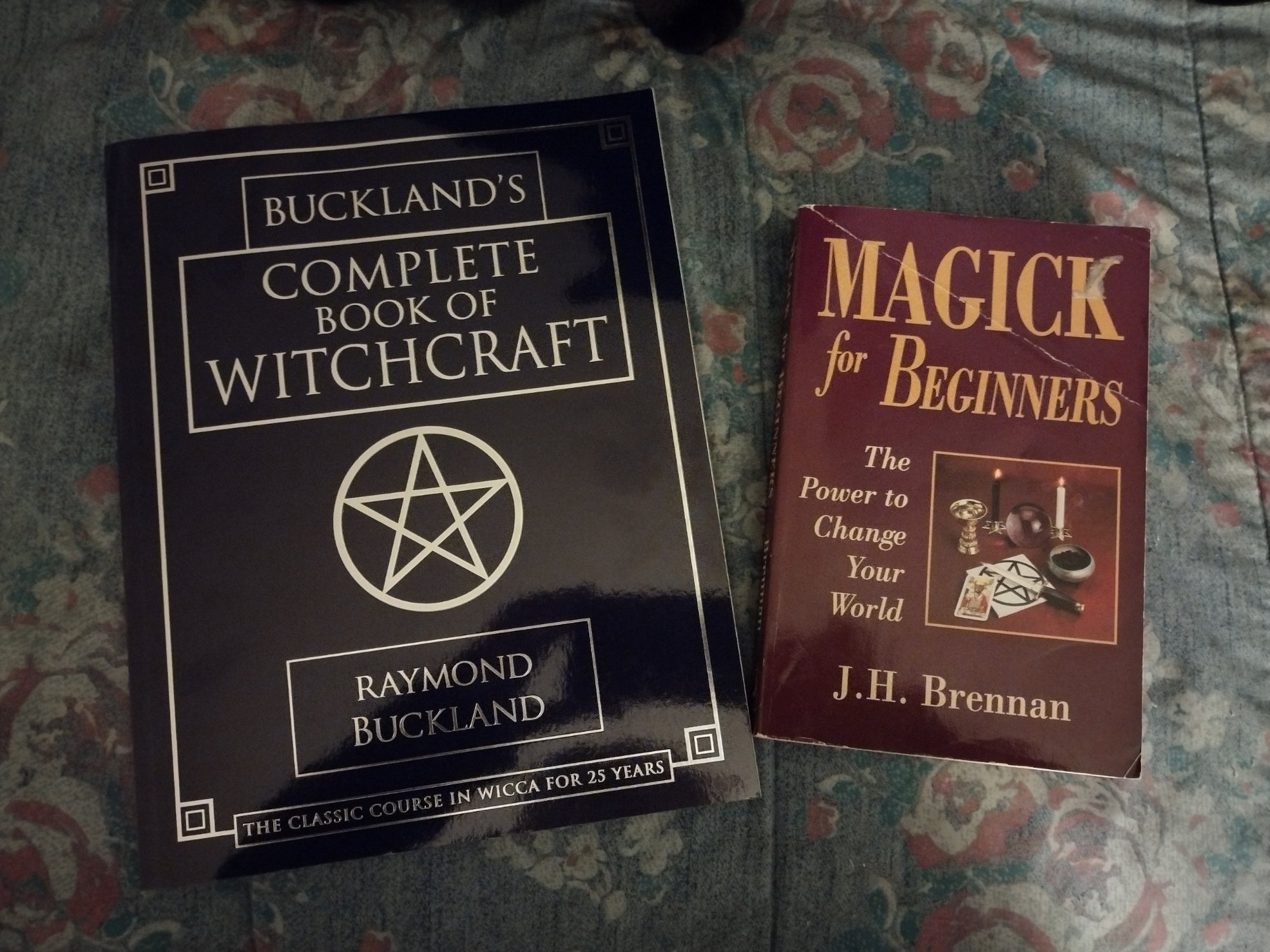
I can tell you Buckland’s Big Blue is definitely a newer edition. I got Big Red too.
This copy of Magick For Beginners, that’s legit the very same edition I had originally purchased in Esoterica in New Orleans on the weekend of May the 5, 2000. I picked these two books up and The Hermetic Tarot which…don’t do that. If you’re a beginner, don’t do that one as your first deck. Go with Rider-Waite until you get the hang of it or something like the Everyday Tarot Deck by Brigit Esselmont and grab her book Intuitive Tarot. It really breaks it down and makes it easy for a total beginner or even someone experienced.
Now you bring me to why that moment 26 years ago matters.
Because I really wish there had been someone there to kinda properly instruct my 21-year-old ass, that’s why.
That’s why I built this. That’s why I’ve spent some time in the background while I was writing The Nocturneverse (I will get back on that, I promise!) and the articles that started coming, that was because I’d been doing work behind the scenes that I hadn’t talked about for months. What you’re seeing is a lot of end product of that.
I built this because I know that when I was in my 20s, I couldn’t have looked at this material like I’m looking at it now. I’ll be honest with you, trying to reconcile some of the ceremonial magick with Buckland’s take on Gardnerian Wicca at the time, that was not easy. Trying to read Tarot, forget it, I got looks into the personal lives of some people I didn’t want and largely kept to myself because that’s personal. That felt like being held at gunpoint and being told “…you listen to me. You tell ‘em what I tell ya, capisce?”
Today, I enjoy doing readings though my focus has shifted to The Runes. Tarot and Oracle decks are lovely and I love using them. I love showing off that artwork of the cards. When I give someone a reading, it feels like “Here’s what they really need to know. Just give them that and reassure them everything is fine but they need to be mindful.” I know the difference between ceremonial magick and honoring the gods in ceremony.
As much as I say groups and I have a sort of short time-frame for whatever reason, every group I was in did shape and form ol’ Raven here in one way or another. I don’t think I’d be where I am without them in some ways and I can’t deny that but the exciting part is the day you wake up and everything is different.
Now, you don’t feel alone or isolated and even if nothing has changed, you still don’t have a social circle, you don’t have an organization, things are continuing same as they always have…but it’s different. You don’t feel disconnection. You don’t feel isolation the same. Before, it was a dark hole. Now, it’s the quiet monastery you can go to in more contemplative moments.
You know you still don’t fit in and you never will, that never changed.
So how is it all so different now?
The connection.
Peeps, I don’t have to tell you that this isn’t easy work. Today, alone, I had to scrap parts of the lesson plan I had for the day as, I’d really ill-prepared for it in certain aspects, however, I managed to salvage it by doing a comparative study.
I literally hand-transcribed The LBRP from The Golden Dawn, and then something occurred to me after I’d written how structurally, each source shared the same construction but slightly different door placements. I was going to stop there, however, something occurred to me. I hit the shelf again and pulled The Nine Doors of Midgard and started thumbing through it. I found The All-Gods Form of Hammer-Signing and The Hammer Working.
I also copied this one into my notes but not reproducing it here. If you want to see that, gotta get a copy of the book somehow and then we can discuss but for now, let me explain what I had found.
The LBRP is explicit. You use the Qabalistic Cross, you use invoking pentagrams, so on and so forth and you close out by using banishing pentagrams. You do the entire ritual again but you are just doing your pentagrams in reverse of how you initially drew them in order of the numbered points. Don’t invert the things! Huge distinction.
So this one was different, The Qabalistic Cross has been repurpoed and then followed, not tracing directional and elemental pentagrams, you invoke the runes, tracing them in a ring around the area where you’re working. Then you trace Mjolnirs rather than but the structure is different and, does not seem to have a banishing component.
The conclusion was that The Hammer Working wasn’t so much a Norse-Styled LBRP but part of another working somewhere within the book because that book isn’t a collection of rites like The Galðrabok is, but a curriculum in and of itself, similar to The Golden Dawn.
The most eye-opening thing is that comparing the sources also reveals quite a bit about the practitioner themselves. Regardie was moving toward preservation of a system that would have completely died except in widely-varied traditions. If Regardie didn’t do what he did, this would be another in the long-series of footnotes in history. Another thing we’d have to reconstruct in variant flavors with most of the original meaning and intention being lost.
While I think Aleister Crowley’s earlier work shows a disciplined and sharp mind, even if I don’t always comprehend what it is he’s getting at with some of his writings, even his own structure tends to reveal a little bit of the cult of personality he’d built around himself. Granted, it’s nowhere near as prevalent as it is in his other writings but it is worth noting. Having Crowley as your primary source isn’t something I’d recommend. Go to the source first.
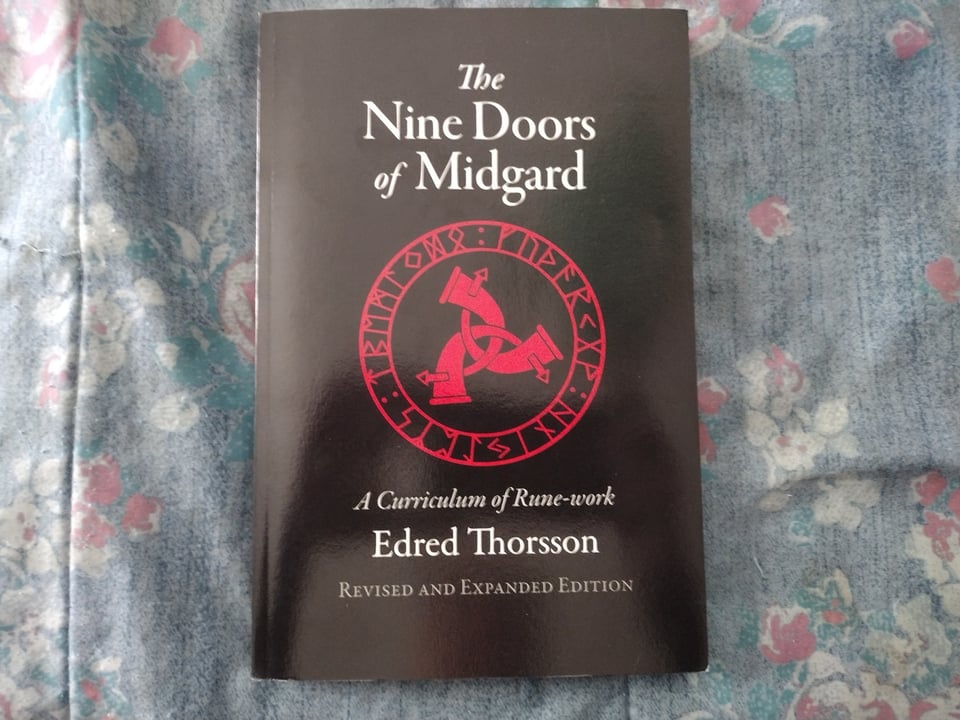
What The Golden Dawn and The Nine Doors to Midgard have in common is that, if one were so inclined, they could pick either of these books up and completely train themselves as long as they had some type of structure that’s self-imposed in service to learning the information between the covers.
Believe me, it will take time, repetition and integration into your brain. If you’re like me and picking all of this up a little rusty, well don’t worry, you’ll have a little less rust each day.
You can accelerate it by joining Rune Gild or some Golden Dawn offshoot lodge, however, if you’re here, the only suspicion I carry is that you’re as disinterested in that as I am. If I’m wrong, no harm, no foul. This space is just about what I’m doing, you don’t have to do exactly as I do.
Alternately, if it’s just Ceremonial Magick you want to do (and I don’t blame you, even going Norse path here, it works!) then there is one option that’s a little more accessible because both of the aforementioned…they’re written with mentorship in mind, face-to-face, one-to-one.
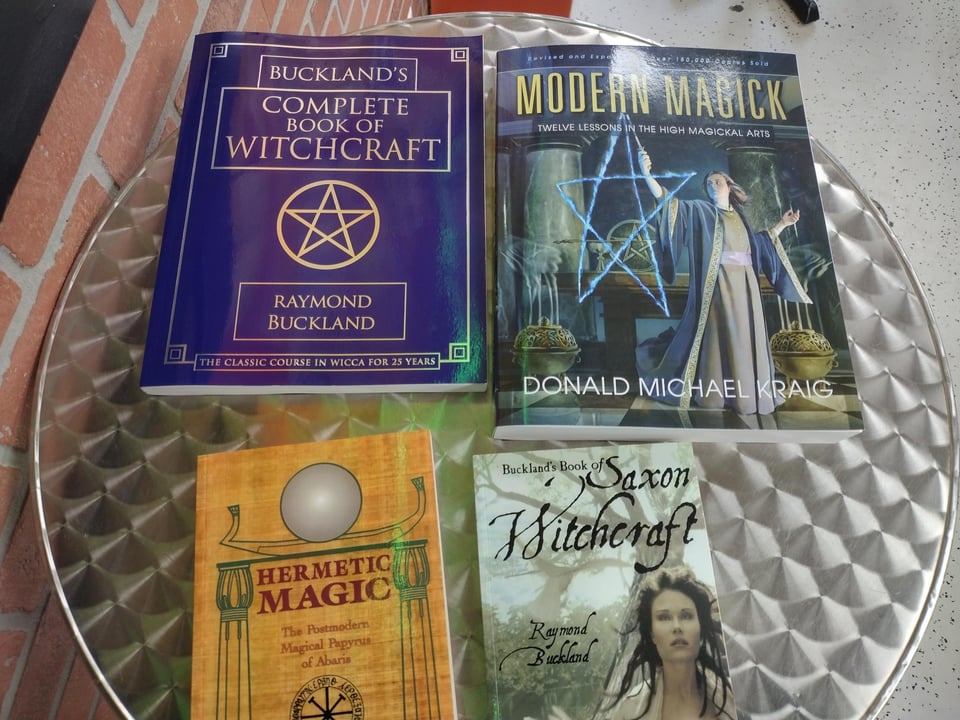
Modern Magick by Donald Michael Kraig, however, can teach you much of the same thing but it appeals to just about any and everyone who’s interested. You’ll still find many of the same magickal symbols shared between The Golden Dawn and Modern Magick but Modern Magick tends to diagram it out a little better which is more orienting to the practitioner who may be more visual in learning than mere technical description.
As long as this particular article has gone, I think it shows the types of examples one can run into. Like anything, I always recommend starting at the source if you have burning questions in your mind as to where something came from or what a word, symbol or action means or does. It’s good to start somewhere, note the little differences between sources/practitioners if you so decide to practice esoteric arts and then decide what works best for you.
That’s really the point is finding what resonates with you the most. For some, it’s a certain tarot deck, the placement of a six-rayed star (hexagram) or even an amulet that no one but the practitioner ever gets to see hanging from the neck. In any case, it should be clear to you why the gesture, word or object is sacred and that only comes from deepening your understanding of what it is you’re currently doing.
If you’re already well into your respective wheelhouses, great, show someone else along the way.
Back when I was that kid in New Orleans just beginning his first steps into this world, I was given both the best and worst piece of advice someone my age can get.
When it came to Magick For Beginners, I was told, “Just take what works for you, don’t worry about the rest.”
Worst. Advice. For. A. Dude. In. His. Twenties.
I know what you’re thinking, “Raven you’ve been telling us the same thing and doing the same thing the entire time.” You’d be right, I’ve done just that, however, if you’ve looked, I also preface it with what works, why it works and why it might be a great thing to try.
A lot of this is trial and error and the one part of this that makes the pitfalls so harsh is that the way this was structured, it was for the adept to pass on to the practitioner. Things had to have proper context and explanation.
Thankfully, there are those of us that made a load of mistakes and discovered the traps in our 20s and 30s and some of us are entering our 50s with a firm grasp on the wheel finally.
Remember, yes, it can be difficult to navigate.
If anything, I’m proving it’s not impossible.
Add a comment: