Hashbrowns, fave apps, and a terrible first draft 😅
Here's how I ACTUALLY write a book:
Hi writer,
I’m home from Italy, back at the desk, and trying very hard to love my cup of tea as much as an Italian caffè latte. I miss my retreat writers, and I miss the chiming of the bells.
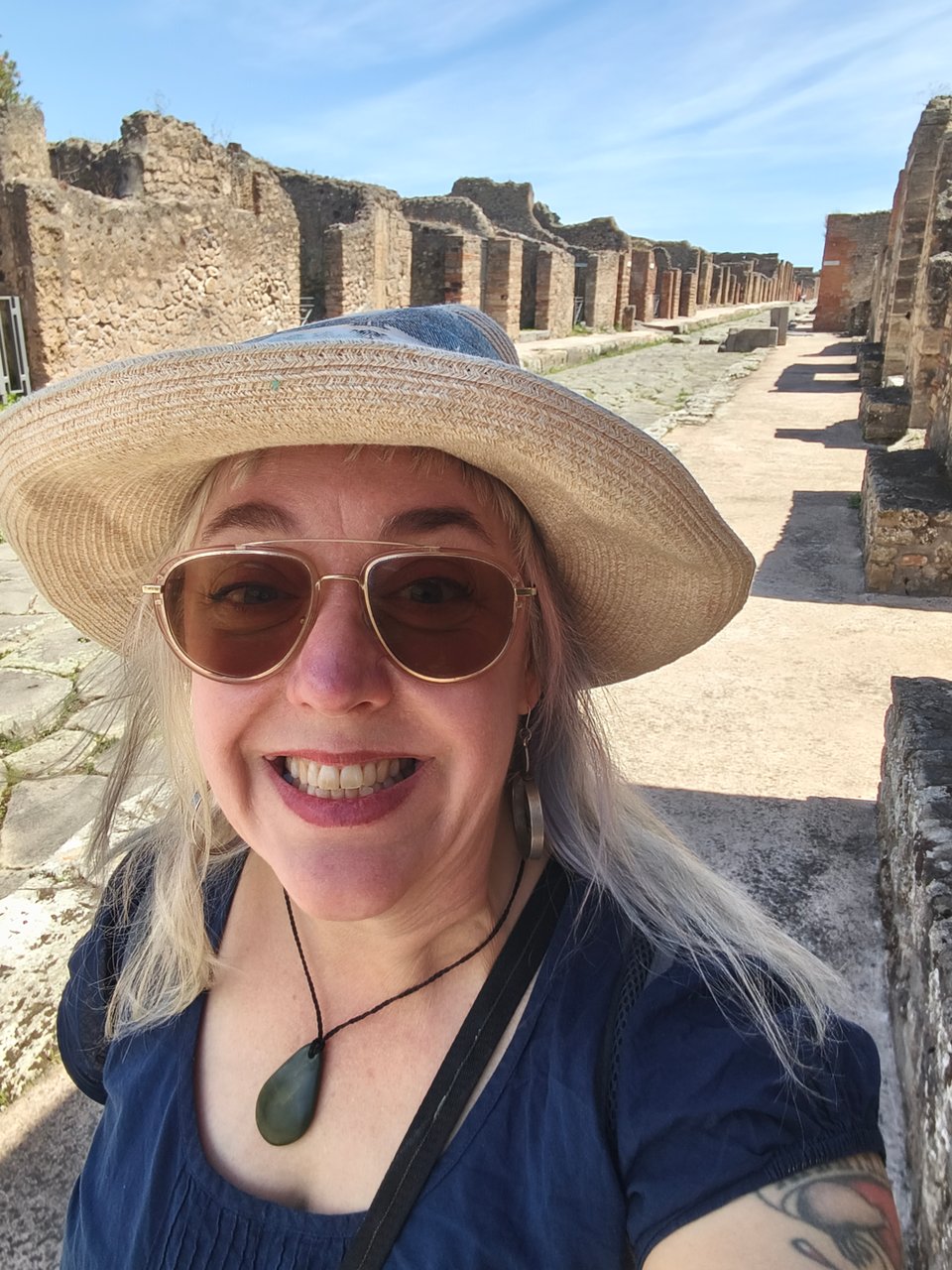
And I’m gearing up to write a book. (pats pockets to check I have the map before remembering I have to draw it myself)
So, how do you write a whole book, Rachael?
I’m asked this quite a bit, and I usually say something like this:
Have an idea. An amazing idea is great, but any ole idea will do, honestly.
Write a little (or a lot) of the book.
Realize you have no book in this mess, that there never was one, and that you should go back to waitressing because at least there you got unlimited hashbrowns, which writing has never given you.
Cry. (That’s not quite true. I’m not a crier. Instead, I get a spiky lump in my throat and grump around the house, a little black thundercloud with smudged glasses.)
Repeat 2-5 until the book is done.
This is true, yes, but a gross oversimplification. Every writing day is a mix of perfect joy and hopelessness, or as Martha Graham said, “a queer, divine dissatisfaction, a blessed unrest.”*
A divine dissatisfaction. THAT is writing. I’m never happy with my writing, but I’m HAPPY with my writing. You know?
But let me be more direct with the nitty-gritty daily details.
Here’s the way I actually do it.
I plan a little. I have an idea, and I think about it, turning it over in my mind until I feel moved to write some notes. I usually start a new Scrivener file because I’m used to its organizational features, but any word processing system will do you nicely.
I try to know a few things before I start:
my main character - what external goal does she desire in this story?
my authorial aim for my main character - how do I want her to change?
her inciting incident - this usually comes at the 15-25%, where she moves into a new world, one she didn’t really want to have to enter but chooses to because of reasons (good ones). This is often the one thing I know about the story, that exciting what-if moment.
her dark moment - this usually comes around 75-85% in the book, and sadly, I usually don’t know what it is. (But I do know it for the new book! So exciting!)
vibes - what will this book feel like? I’ll absolutely screw this up six ways to Sunday by the end of my first draft, but I like knowing whether I’m writing a sweet romp or a darkly twisted tale. (Joke’s on me, I’ll still write it warm-heartedly, which is my voice’s curse and also its blessing.)
That’s it. I wish I knew more. I wish I were a hard-core plotter, but I’m just not. The only time I really made a fully fleshed-out outline, the book curled up and died. I wrote its corpse anyway, but it was the heaviest lift of any book I’ve ever written.
(Some people think they’ll have to revise less if they plot out their books well, but sometimes it’s actually harder to revise a tightly plotted book because the author can get so tied to what they thought should happen. Overall, though, revision is a challenge for everyone, so that should be a…relief?)
What next? Gimme the nitty-gritty!
I open four tabs on my computer:
A Trello project for the draft, because I like stats and numbers and watching how fast/slow I go. (Free)
A Pacemaker project for the draft, same reason (this counts words, not time). (Free but I pay for the expanded version because I have a lot of projects)
A Google spreadsheet, on which I’ll capture an outline as I go. (Free)
Brain.fm set to ADHD focus music. (Paid, they have a 14-day trial - I used it for one day and immediately bought the service. It works well for my brain.)
I use the OneTab Chrome extension (free) to keep groups of tabs organized. When I click it, these four tabs are minimized to one. So to launch my writing for the day, I hit it again. All four spring open, the music starts, and bam, I start writing/working.
BUT HOW DO YOU WRITE THE BOOK? These are just apps!
Whoops, sorry.
Here’s how: I write as quickly as possible, even if I’m just skeletoning the scenes I don’t understand or even believe in yet. I try to write my first drafts in 10 weeks, which - easy math - means I write 10% of my book each week.
I love this because that means I get two weeks for Act 1, three weeks each for Acts 2 and 3, and two weeks for Act 4. (I use a four-act structure, which is exactly the same thing as a three-act structure but much easier to understand 😁.)
Each week, I have a mission: to get to a certain part of an act. That’s it.
I’m not writing well. I’m just writing.
I simply need to have a draft done, so I can revise it into what it wants to be.
(My regular reminder: NO ONE should revise as they go, no matter how much of a perfectionist you are in your real life, UNLESS this is your method AND you’re producing completed books you’re proud of. 98% of writers don’t revise as they go. People who try to revise as they go usually have a book (or ten) they’ve been working on for years, rarely getting past the 50% mark.)
My only goal is this: a terrible, shitty, drafty, scrappy first draft.
And what a thing of beauty it is! A first draft is completely perfect as is, and oh, the feeling of mad, overwhelming joy when you finally type The End. Of course, you’ll eventually take it apart and put it back together so that it makes sense, but that’s for later.
When the first draft is done, you CELEBRATE. What a writing marvel you are!
Why I’m Thinking About This:
Because I’m about to write a new book! 10 weeks to a first draft!
And I’m really excited this time because my writing schedule doesn’t usually line up so perfectly with my class, 90 Days to Done.
Starting next week, I’m going to be writing my new book alongside my students as they write theirs. I’ll be showing them my progress and techniques, warts and all, along the way.
If you’ve been wanting to write the book of your heart, this might be a great time to join us!
All the details are here, and we start next week!
90 Days to Done (for drafting)
and
90 Day Revision (for revising).
I’d love to have you.
No matter what, get some words down. Your words matter. The world needs them. And only you can write them, no one else.
Onward!
❤️ Rachael
Website | Ink Village | Instagram | Podcast | Patreon
* This is my favorite writing quote, and while I knew Martha Graham said it to Agnes de Mille, I didn’t know the backstory: that Agnes was despairing after the hit of Oklahoma, a show she’d choreographed in an “only fairly good” way. She had a “burning desire” to be excellent, and talked to Martha about it. The whole thing is worth your time.
PS - Please consider forwarding this email to a writing friend who might also like it? They can subscribe by clicking HERE!
PPS - As always, 100% human written, so please forgive the human typos! 🤦
PPPS - If you tried to register in the last few days, I’m sorry that my website was down. I’ve tried to give it some CPR, but if you see it going blue again, do let me know!
Add a comment: