
Permission to pray
Dear Friends,
As you may know, in the Muslim faith Ramadan is a holy month of fasting, prayer, and reflection. On the first night of Ramadan this year, I was in the village of Al-Walaja in the West Bank. I was invited to join a family for their beautiful iftar - the dinner at sunset to break the day’s fast.
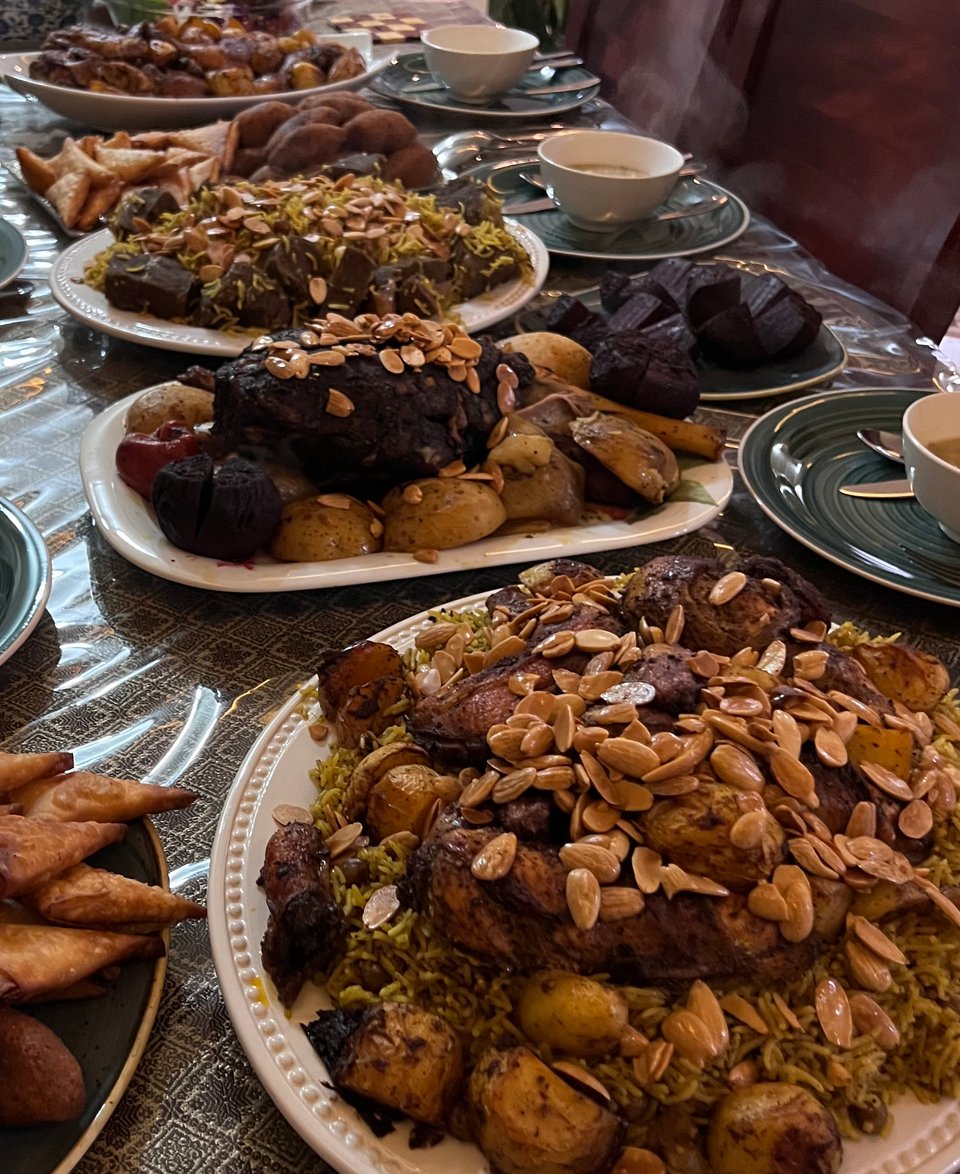
It was a very special night, and even more so because the mom (who I’ll call Aneesa) got some exciting news while I was there: she received permission from Israel to visit al-Aqsa Mosque in Jerusalem the following Friday. This 57-year-old woman was overjoyed, jumping up and down with excitement.
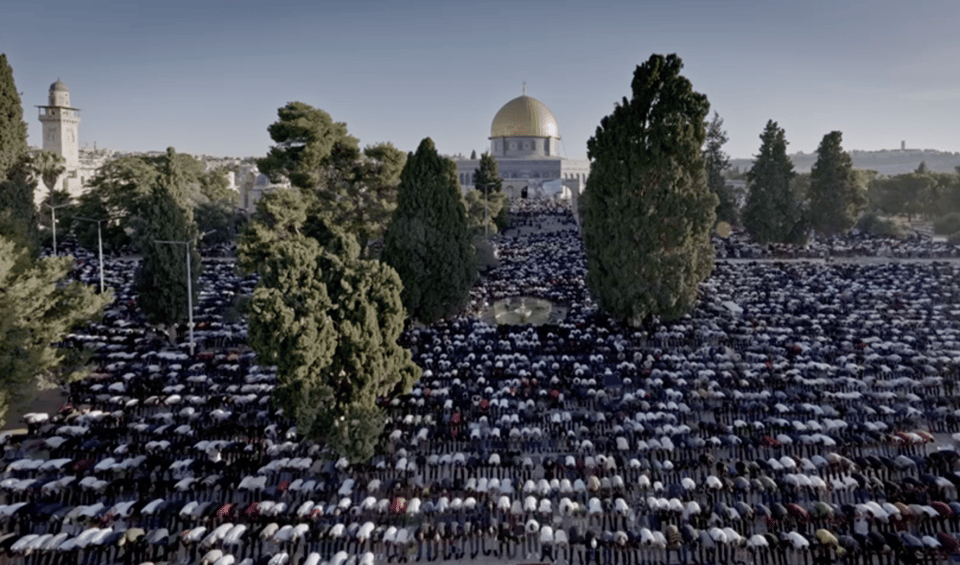
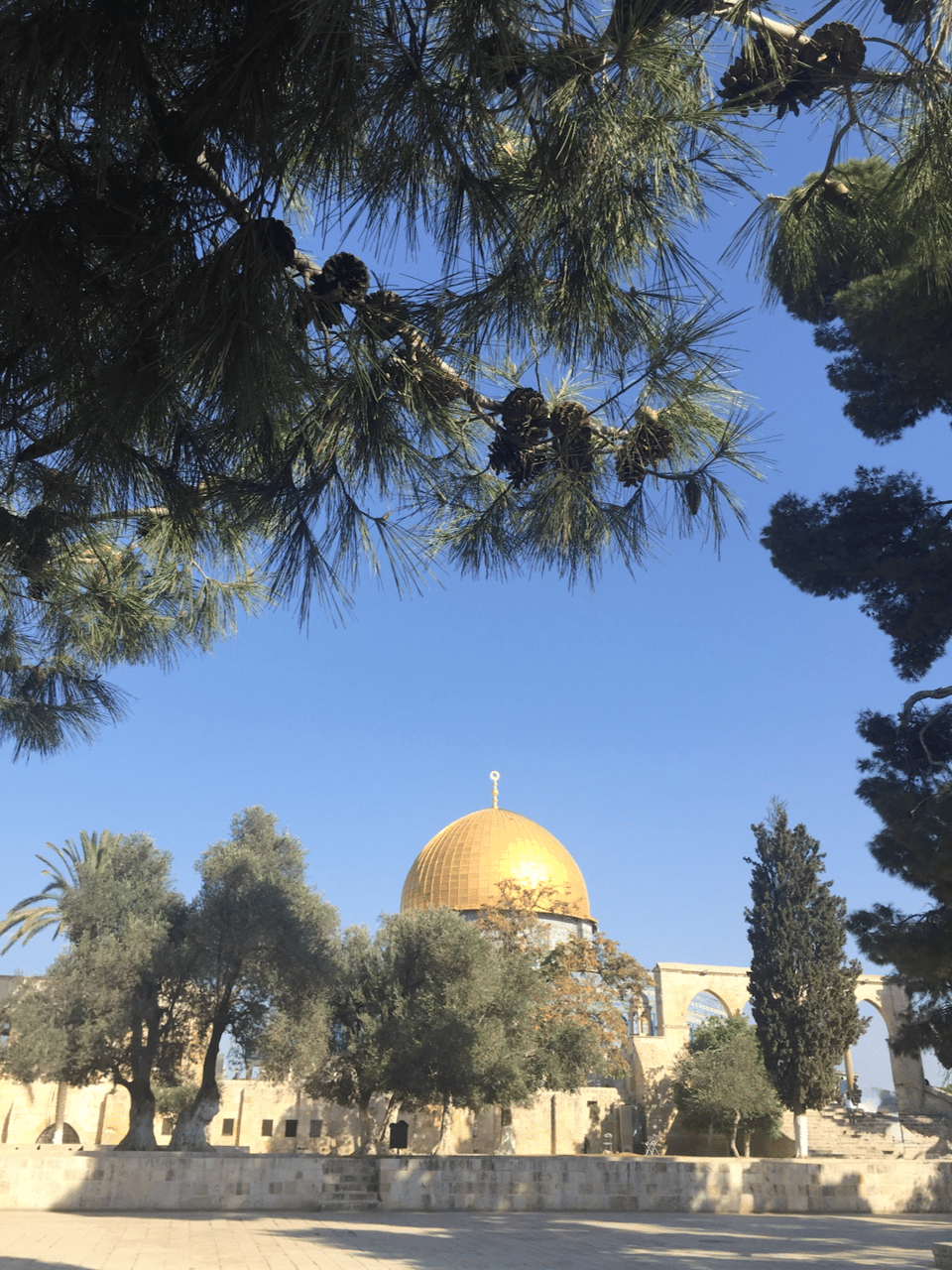
The al-Aqsa Compound in Jerusalem is a plaza that includes the iconic Dome of the Rock and the Qibli Mosque of al-Aqsa. The entire area of 144 square meters is often referred to as al-Aqsa Mosque, and in Arabic as Bayt al-Maqdis or Bayt al-Muqaddas, which means House of Holiness. It is also called al-Haram al-Sharif in Arabic, which is translated as the Noble Sanctuary. Jews refer to the site in English as the Temple Mount, and in Hebrew as Har ha-Bayit. The site is a holy place for Muslims, Jews, and Christians. The names Sacred Esplanade and Holy Esplanade have also been used as neutral terms that do not encode any one religious perspective.
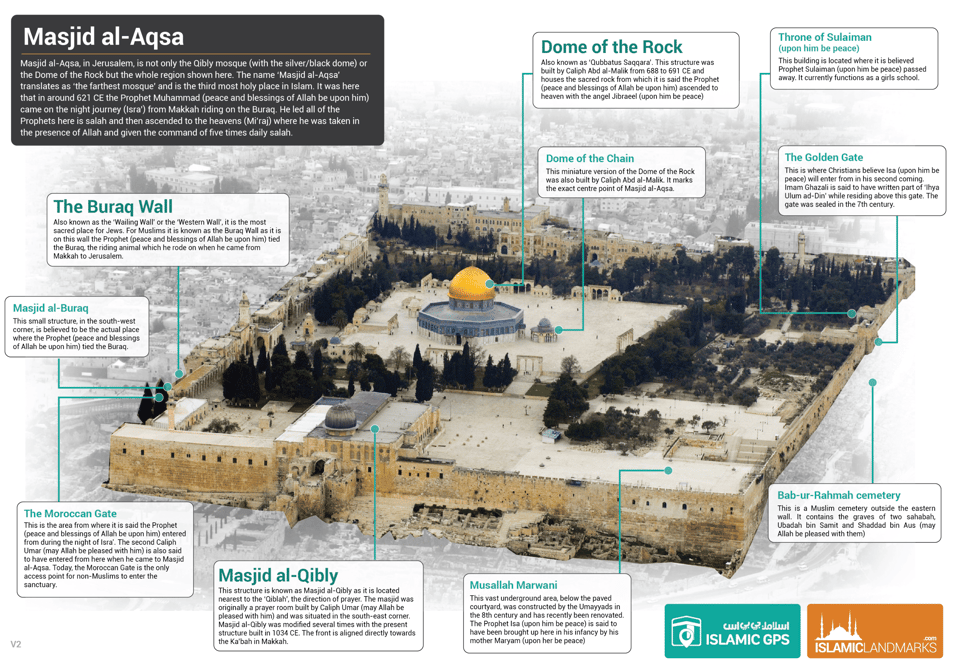
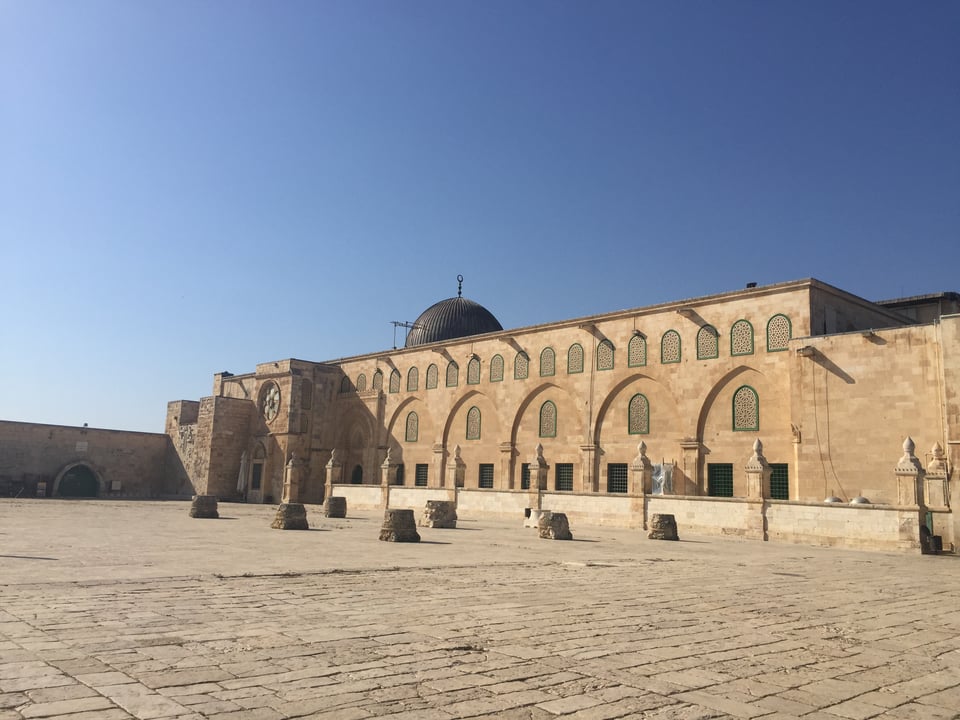
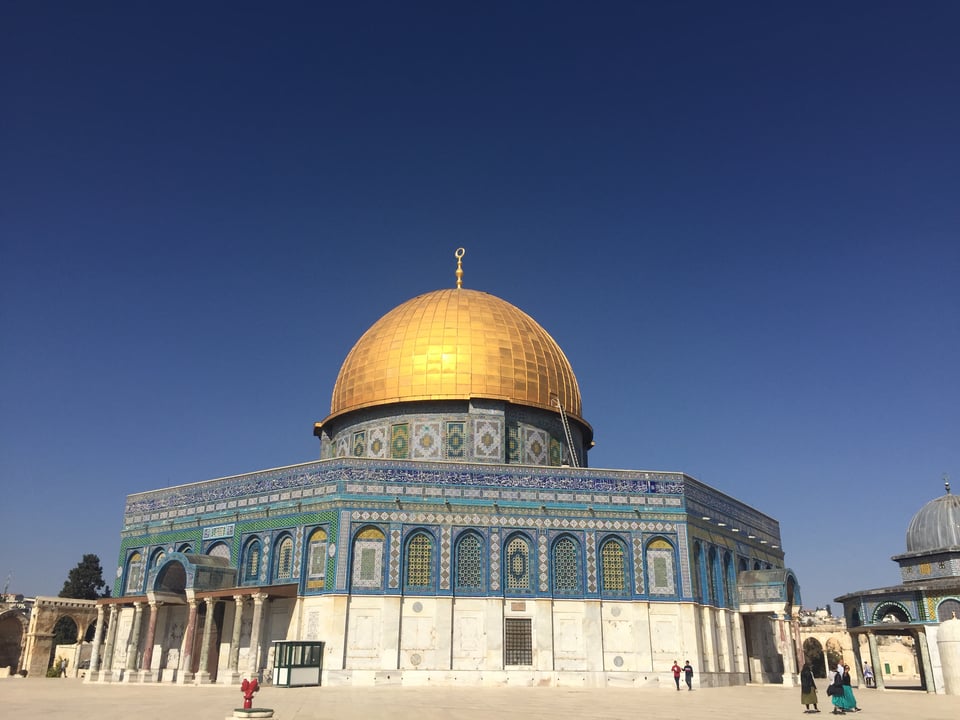
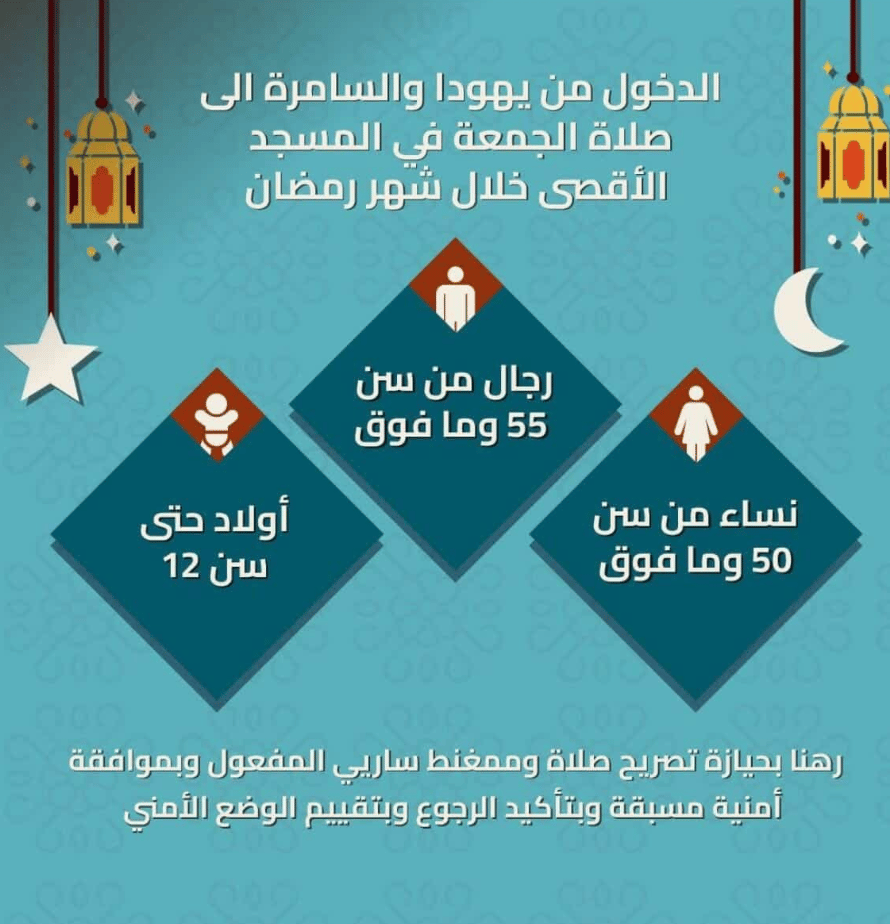
The al-Aqsa compound is under the control of the Jerusalem Islamic Waqf - a council of 18 members appointed by Jordan. But because al-Aqsa is located in Israeli-occupied East Jerusalem, Israel controls who can enter. West Bank Palestinians must apply for permits to al-Aqsa. These are generally available on only four days a year - each Friday of the holy month of Ramadan. Only women over 50, men over 55, and children under 12 are eligible to apply.
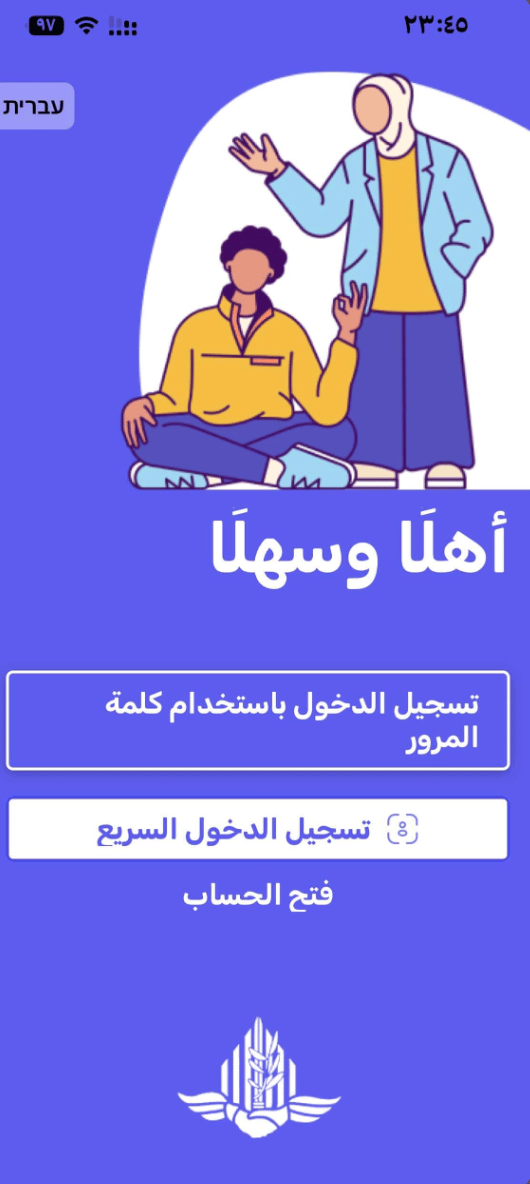
Aneesa was one of the lucky ones who was able to visit al-Aqsa this year, on the first Friday of Ramadan. She was allowed to be in Jerusalem from 8 am until 5 pm only. She was required to download an app from the Israeli government for the day of the visit. She had to upload her photo, and enable GPS tracking. On the blessed day, her son drove her to Checkpoint 300, which Palestinians may cross only by foot.
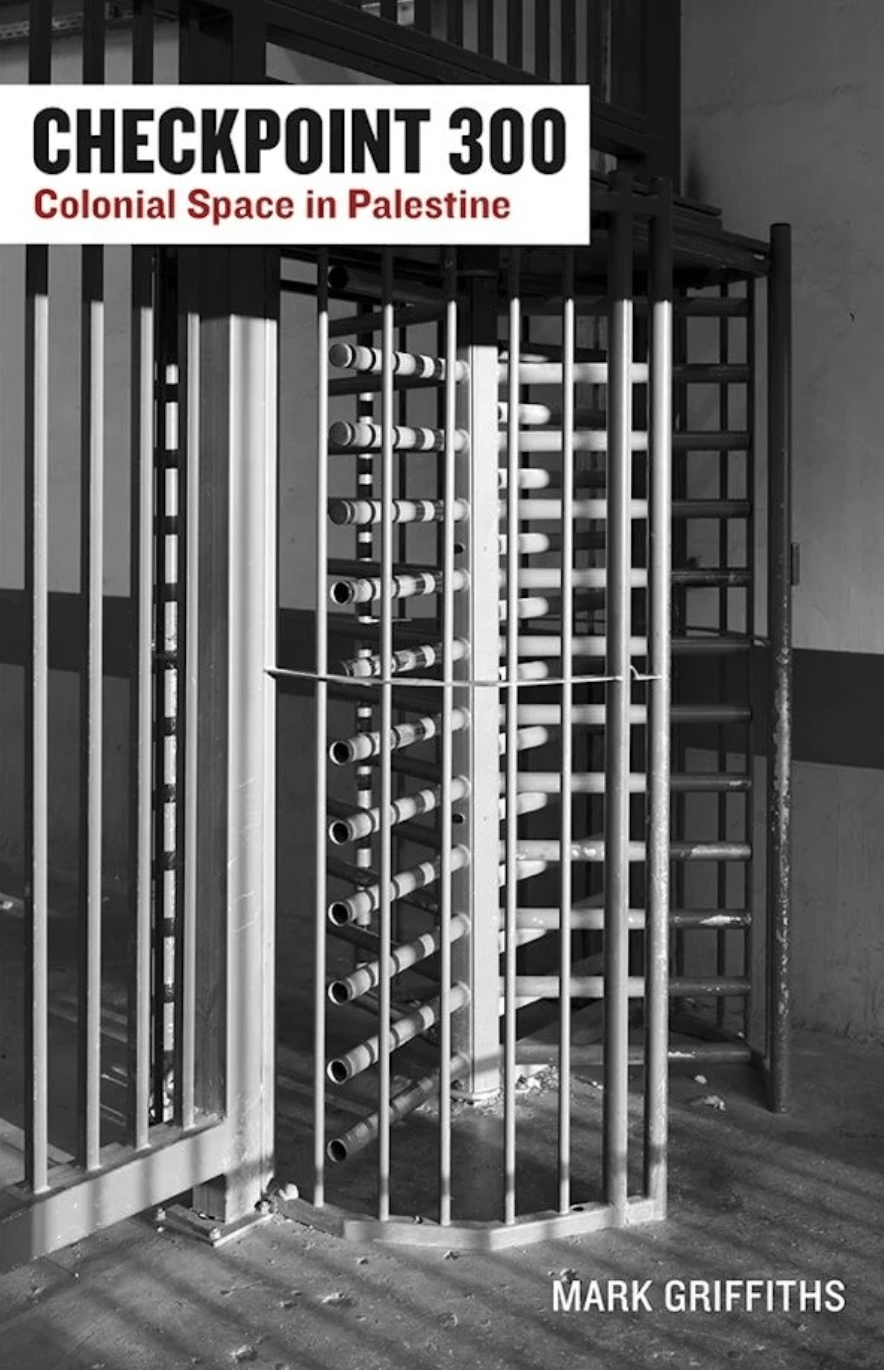
Before entering Checkpoint 300, Aneesa stood in a line between metal barricades that the Israeli military has installed. She completed the first round of processing before entering the building. Inside the checkpoint, Israeli soldiers examined her ID and asked some questions before allowing her to pass. She then boarded a bus to take her and the other pilgrims to al-Aqsa.
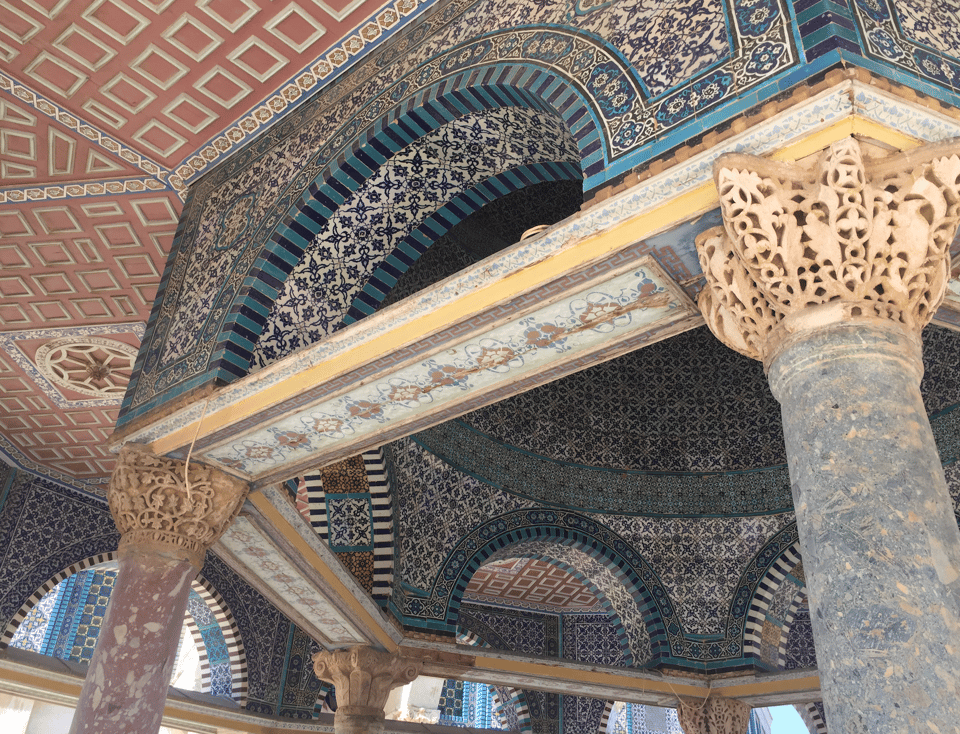
A Palestinian from Jerusalem, my friend Samir, explained the importance of al-Aqsa: It’s not only religion, it’s about our culture, any holiday …. As a kid, you’ll be there - we play football there, we play games there, we study there. Everything in your life, it’s all around that compound. And the holidays, vacations, everything…. So you’ve been raised from an early age of your life, you’ve been raised that that area is happiness. It’s something important for you, even if you’re not religious…. And for me, I love that place. I love it. When I’m depressed, or something in my brain is not well, I go there. I go inside and I walk there. I enjoy being there. To feel the peace there, it’s enough. It’s healing somehow. It’s not just me. It’s every Palestinian who feels the same.
Aneesa knew she was lucky, as Israel drastically reduced the number of Palestinians who would receive permission to pray at al-Aqsa this year. But she had no way to know that just two weeks later, Israel would close al-Aqsa completely. After the start of the US-Israel war against Iran on February 28, Israeli authorities barred access to the Old City of Jerusalem for anyone other than residents or shop owners. The restrictions extended to all holy sites, which were closed for 40 days.
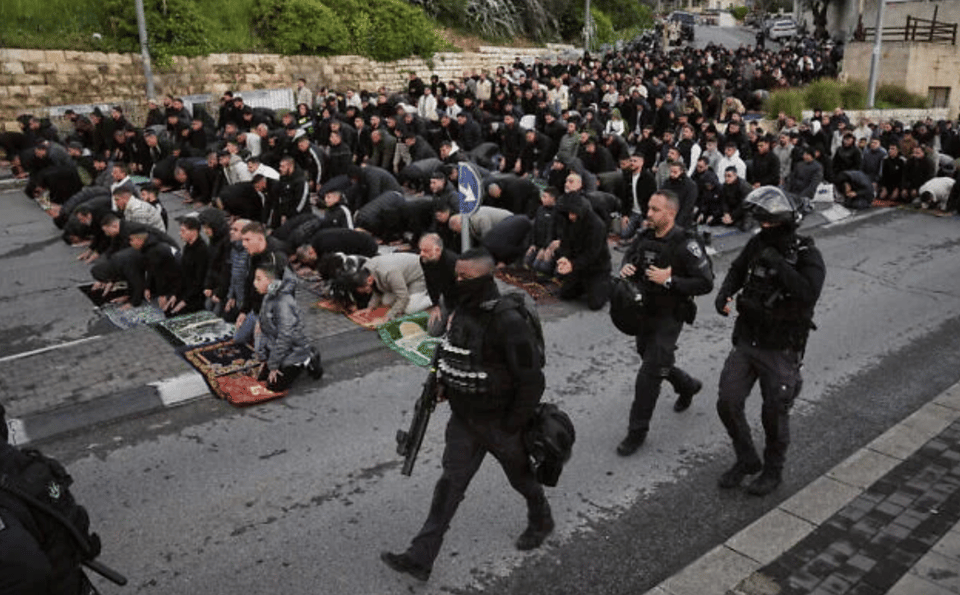
On the first day of Eid al-Fitr, the holiday that marks the end of Ramadan, al-Aqsa remained closed. Men, women, and children gathered near the gate to the Old City, to pray and celebrate as close as possible to the sacred site. They were met by Israeli tear gas and beaten by batons as the police forced them away from the gate.
During the war, Israel also prevented Christians from reaching holy sites. The Catholic Church’s highest official in Jerusalem was barred from the Church of the Holy Sepulchre, believed to be the place of Jesus’s death and resurrection. Even committed Israeli allies Mike Huckabee (US Ambassador to Israel) and Senator Ted Cruz criticized the Israeli police for prohibiting the official from entering the Church on Palm Sunday. The decision was reversed, but that does not change the colonial logic that leaves the Israeli government in charge of sites that are holy to Muslims and Christians.
While the Israeli government stated that closing the religious sites was a security measure to protect visitors, there is a movement for Israel to gain control over al-Aqsa, and officials have stated that is their goal. A member of the Israeli Knesset (parliament) said, “I’m not asking for equality at the Temple Mount; there is no equality - it’s ours and ours alone.” Itamar Ben-Gvir, Israel’s Minister of National Security said in June 2024, “We say in the simplest way, it’s ours.”
In an essay entitled ‘Israel’s closure of the Holy Sepulchre is proof that no faith is safe from occupation,’ Ismail Patel notes that “access to the sacred is contingent on the whims of an occupying power”. He says this is neither security nor neutrality. It is, rather, “the exercise of power that seeks to normalise exclusion”.
Aneesa returned home after her visit to al-Aqsa, and she logged out of the Israeli tracking app. She was exhausted but overjoyed. She hopes to once again be able to visit this sacred place that is so close - and yet so far - from her home in the West Bank.
Salaam,
Nancy
Postscript: The day after this Postcard was mailed, Israeli police confiscated two soccer balls from kids who were playing in the al-Aqsa courtyard, and then deflated the balls. Another step to quash all Palestinian presence in Jerusalem’s Old City.
If this message was forwarded or if you reached it from a link, you can subscribe to receive future Postcards directly
Subscribe now