
We know it's history because the bill comes due
I didn’t know how this week’s essay was going to land, initially. But I will say, I didn’t have high expectations. And as someone who does this for fun, I can afford to have down weeks. I always send this newsletter out on Sunday morning, but I post the essay on Saturday to my blog and on social media. Facebook, in particular, is an interesting place to gauge the impact. And this week I dragged together child abuse cases, zoning, and historic preservation to make a broader point about how we think about history. Some folks did not like that. But I’ll leave it up to you.
Also, you won’t find my voice in the next few months of The Olympia Standard as the podcast shifts into election coverage. Daniel Garcia is stepping into the host’s chair. The first campaign episode (on the TRL levy lid lift) is linked below.
Also, the “more reading” links at the bottom are particularly good this week.
Enjoy! Share! Love (each other)!
We know it's history because the bill comes due
Washington State is getting invoices. A record $614 million in outstanding state liabilities for legal fees, jury awards, and tort settlements. A housing and homelessness crisis keeps compounding. These things are a single bill representing the real toll of history. Washington State ended its fiscal year on June 30 on the hook for this record-setting $614 million because its 1967 waiver of sovereign immunity is exceptionally broad. Public liability exposure continues to grow.
This crisis is driven largely by childhood sexual abuse claims in the foster system, which ballooned from just four claims in 2018 to 1,110 in 2025. Individual verdicts have reached up to $117 million. Local governments face immense strain too. The Washington Counties Risk Pool fell $25.3 million short of solvency requirements due to skyrocketing claim liabilities, directly threatening core public services. This phenomenon is a concrete example of why history matters. Because the facts of history come clear, people living today pay the price.
Nowhere is this story told more clearly than in the KUOW podcast "Adults in the Room." In the late 1990s, systemic and cultural failures converged at Garfield High School in Seattle to shield a popular teacher from accountability and suppress the student-led push for truth. The teacher served as a revered leader of an outdoors program, which created a powerful halo effect. People framed his boundary-crossing behavior as evidence of a unique and progressive rapport with students rather than abuse. When early warning signs surfaced, district administrators chose self-preservation over investigation. They conducted cursory internal reviews and buried complaints when victims minimized events out of fear or loyalty. This culture of institutional protection was reinforced by a total lack of rigorous mandatory reporting protocols, allowing authorities to treat serious allegations as internal personnel matters instead of launching independent law enforcement inquiries.
When student journalists tried to breach this wall of silence, the adult establishment closed ranks. They weaponized peer pressure and official authority to isolate the whistleblowers, demand their resignations, and vilify them for smearing the school's reputation. Institutional preservation took precedence over student safety until Hudson's suicide brought the crisis to a tragic end. History lives in human stories like this one. We care about what happened inside those buildings rather than the buildings themselves. The tort bill piling up is the incoming tide of history and institutional failings that our future selves will thank us for learning.
City halls have their own version of the same premise. Across Washington, municipal governments and homeowners have fought for decades to reduce density and maintain low-density zoning, even while facing a severe housing affordability and homelessness crisis. Local political pressure restricts the growth of the overall housing supply by enforcing restrictive land-use policies like single-family zoning, minimum lot sizes, and height limits.
Legally banning denser multi-family housing created an artificial shortage that drives vacancy to critical lows and surges rents. Research shows that regional housing costs and low vacancy are primary structural predictors of homelessness, far more than poverty or addiction. Since the 1970s, our regional history is dotted with neighborhood defenders systematically blocking housing through public hearing abuse and environmental challenges. Now that we do not have enough housing, the bill is coming due.
The tendency to choose sensational distractions over systemic reality is deeply rooted in Washington civic culture. We can see this in two parallel events in Thurston County during the late 1980s, which were the Satanic hysteria surrounding Paul Ingram and the ignored reality of systemic abuse at the Olympia Kiwanis Boys Ranch.
In 1988, Thurston County Sheriff Deputy Paul Ingram was arrested on abuse allegations by his adult daughters. Driven by church doctrines, suggestive interrogation, and recovered-memory therapy, Ingram developed a coerced false confession to a fictitious Satanic cult involving ritual murder and animal sacrifice. We eagerly embraced the sensational panic despite scientific proof that his confessions were suggested. Ingram pleaded guilty and served fourteen years.
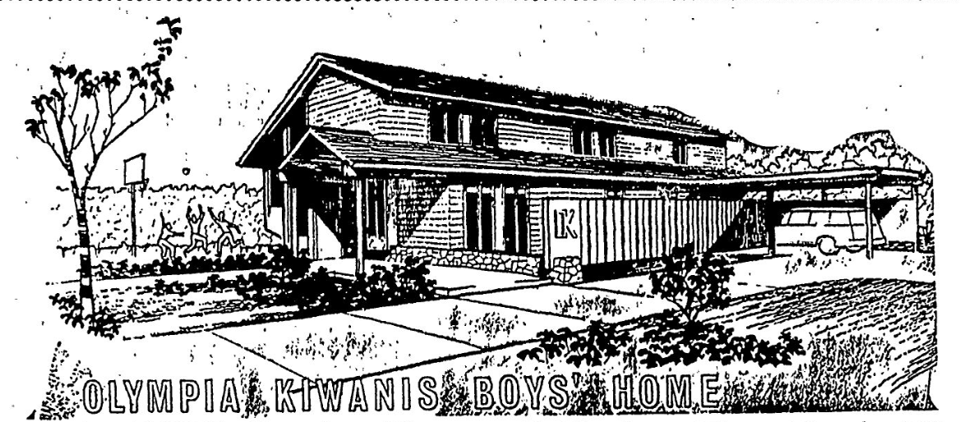
Simultaneously, real abuse occurred under state supervision at the Olympia Kiwanis Boys Ranch, a foster home founded in 1971. For over two decades, administrators outsourced safety and discipline to the residents themselves. They enforced order through violent practices like open season, which involved coordinated group beatings of boys who ran away or broke rules. Wards were beaten with heavy objects, and older residents systematically targeted younger boys for sexual assault. Rather than reporting these rapes, staff documented them in internal logs and dismissed them to the victims as normal adolescent behavior.
This abuse was protected by systemic regulatory failure and political cronyism. A 1989 state audit found the ranch failed eight of ten licensing requirements and engaged in systematic financial over-billing. Yet, the state restored its license and reduced its over-billing debt. In 1991, a state official directly intervened to bypass licensing staff and keep the ranch open. When Olympia Police confirmed pervasive abuse in 1992, the local prosecutor declined to file criminal charges.
The state cannot escape the financial invoices for decades of ignored institutional harm. When the criminal justice system failed to hold ranch administrators criminally liable, the civil tort system became the primary vehicle for establishing accountability and securing restitution. Decades of civil litigation culminated in over $70 to $77 million in settlements for survivors. Washington State and private insurers paid out an additional $40 to $50 million to settle historic abuse claims involving the Kiwanis Vocational Home in Centralia, establishing that the organization possessed institutional knowledge of the abuse.
These historic payouts contributed to a fiscal crisis. Because Washington's waiver of sovereign immunity is broad and courts eliminated the statute of limitations on childhood sexual abuse, foster care abuse claims ballooned. This liability strained risk management systems. The Washington Counties Risk Pool failed its regulatory solvency test and fell $25.3 million short of unpaid claims estimates. The pool was forced to levy an immediate 35 percent base-rate increase on member counties. These skyrocketing payouts drain funding from core public services, creating a vicious cycle where underfunded programs lead to further claims of neglect.
Public finance research shows that newspaper closures lead to higher municipal borrowing costs. Lenders demand higher interest rates as compensation for unmonitored governments that are more prone to wasteful spending and corruption. Borrowing costs increase after a newspaper closure. Nationally, this news desert premium costs local governments and taxpayers $1.1 billion annually. When local media erodes, egregious misconduct goes unmonitored. We might miss the picture in our local politics, but the banks lending money to our cities and counties will not.
I want to draw a counterbalance to my argument by acknowledging a way that history is often discussed in our time: Historic preservation of houses or structures.
This is well-meaning work and something that I seem to nod to in my work when I write about parking lots.
But history is recorded in the structural debts we inherit from the past rather than the amber of a static building. When we obsess over freezing physical structures in time, we engage in a form of cultural narcissism that distracts from living crises. Nostalgia offers a sanitized version of the past that shields us from accountability. Real history demands that we confront how yesterday institutional self-preservation and exclusionary planning shape the housing affordability and systemic failures we pay for today. True historical understanding means letting go of physical fetishes to focus on human needs, ensuring our communities adapt, account for past harms, and build an inclusive future.
The Olympia Standard #160: The Timberland Regional Library Levy

In our first episode of this general election campaign season, Daniel talks with Brent Caron of the Timberland Library workers’ union and Rachel Martin of the TRL Patrons group to talk about the Library Levy Lid Lift.
What else you should be reading or watching
This is a great, short essay about the decline of front porches and the rise of (sometimes violent) no soliciting signs and what that says about us. This also answers the question of how I start thinking about topics. Already here, I'm thinking about whether there is a particular regional way we've talked about "no trespassing" signs in Cascadia and how they evolved into the violent "no soliciting" signs we see today.
Speaking of great essays, Leah Sottile is already one of the region’s best writers, but her essay on Manifestos in the Pacific Northwest is a banger. She is approaching something here that I’ve seen very few people take on: a deeper and justice-based understanding of our regional identity. I really hope she follows this thread.
And of course, redrawing political lines in Cascadia is always a fascinating topic. But I've rarely seen the counter-argument presented so well: "Idaho is not terribly interested in eastern Oregon — at least to the point of concluding that, at least financially, it doesn’t pencil out as a long-range investment."

