Marcus Whitman is our Robert E. Lee Statue
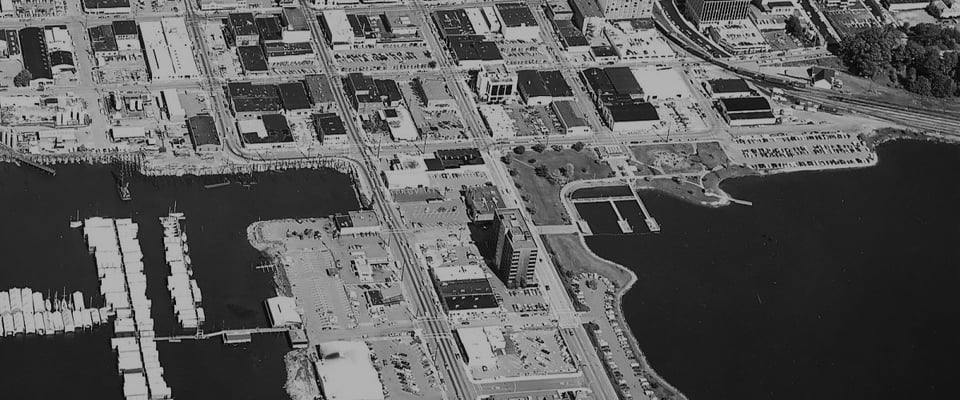
I had planned to write this week about the history and nature of our downtown—how something that feels so normal to us, almost innate to the layout of Olympia, actually came to be. There were once no one-way streets downtown. It’s an interesting story, but I left it on the shelf for now.
That’s because last week the State Capitol Committee finally confronted the reality of a post–Marcus Whitman statue Legislative Building, if only sideways. I’ve written about this before at the Washington Standard. But this time Lt. Governor Denny Heck told the committee that it’s time to check back with the Legislature to clarify exactly what they want done with the Whitman statue once the new Billy Frank Jr. statue is ready.
Team Melt It Down, checking in.
Speaking of the legislature, we did something different on the podcast. We released a session preview!
The Whitman Statue Is Our Confederate General Statue. It is Time to Go
For the last year or so, the state has been tied in knots over a very simple question: where should we put the Marcus Whitman statue once it’s removed from its current spot at the Capitol?
Down the hall? Near the Senate dining room? Outside, under cover, fingers crossed it doesn’t get vandalized or fall apart? Maybe leave it where it is and move everything else around it?
Watching this debate unfold has been oddly familiar. Not because the details are the same, but because the pattern is.
We’ve seen this movie before. Just not here.
In the South, communities spent decades arguing about what to do with Confederate statues. Every option was explored except the obvious one. Move it somewhere else. Add context. Put up a plaque. Keep it for history. Avoid controversy. Respect “both sides.” Study it a little longer.
Sound familiar?
Eventually, many of those places had to face the truth. Those statues were never neutral. They weren’t built to teach history. They were built to tell a story about power, race, and who belonged. And once that truth was unavoidable, the only honest option was removal.
Marcus Whitman occupies the same space in Washington’s history.
That may make some people uncomfortable, but discomfort isn’t a reason to avoid clarity.
The Whitman statue was not erected because historians reached a careful consensus about his importance. It was erected because a specific myth needed a physical anchor. The “Whitman Saved Oregon” story wasn’t just wrong. It was useful. It framed white settlement as inevitable, benevolent, and divinely sanctioned. It pushed Native people to the margins. It wrapped colonization in religion and heroism.
That story has been thoroughly debunked. Not recently, but decades ago.
And yet, the statue remains.
That’s why the comparison to Confederate generals matters. In the South, statues of Robert E. Lee and others weren’t really about the Civil War. They were about reinforcing white dominance long after the war ended. Many were erected during periods of backlash against Reconstruction or the civil rights movement. They told a story about who was in charge and whose version of history mattered.
Whitman’s statue does the same thing here. Different region. Different century. Same purpose.
The Whitman myth emerged in the late nineteenth century, decades after his death, at a moment when the Pacific Northwest was trying to explain itself to the rest of the country. The story claimed that Whitman’s 1842 ride east “saved” the region from British control and secured it for American settlement. It cast him as a lone, heroic figure whose actions supposedly determined the fate of the entire region.
That version of events was never supported by serious evidence. The boundary question between the U.S. and Britain was already being negotiated through diplomacy, economics, and military power. Whitman played no decisive role. But the myth stuck because it did important cultural work. It centered white, Christian settlers as the rightful authors of Washington’s history and treated Indigenous nations as background characters in their own homelands.
The myth also served a political purpose. Elevating Whitman, it justified land seizure, missionary violence, and the displacement of tribal members as part of a righteous and inevitable process. It replaced treaty rights and sovereignty with a comforting story about destiny and sacrifice. That framing made colonization feel moral instead of brutal. It made white supremacy feel like history instead of ideology. It is no mistake that we spent decades denying treaty rights and jailing tribal fishermen like Billy Frank Jr., because the story of Whitman made that inevitable.
The Legislature already recognized this, even if it didn’t quite finish the job. In 2021, lawmakers voted to replace Marcus Whitman with Billy Frank Jr. in both the U.S. Capitol and the Washington State Capitol. That decision wasn’t subtle. It was a clear statement about who represents Washington’s values and history.
Billy Frank Jr. fought for treaty rights, environmental protection, and the rule of law. His life and work are grounded in truth, not myth. Elevating him was the right call.
But when it came time to deal with the Whitman statue in Olympia, the Legislature stopped short. No clear instructions.
At a recent joint meeting of the State Capitol Committee and the Capitol Campus Design Advisory Committee, Lt. Governor Denny Heck said the quiet part out loud. The committees, he acknowledged, don’t have guidance from the Legislature on what to do with the Whitman statue here. They’re trying to navigate “sensitivities” without knowing what outcome lawmakers actually want.
So now we’re stuck in the process.
We’re talking about structural engineering studies to see if a four-ton statue can sit in a hallway. We’re debating whether it should be inside or outside. We’re spending time and money figuring out how to preserve a monument the state has already decided should no longer represent us.
Meanwhile, Billy Frank Jr.’s family has made it clear they don’t want his statue sharing space with Whitman. That shouldn’t surprise anyone. Pairing them would flatten history into a false equivalence. As if these figures occupy the same moral or historical ground.
They don’t.
What’s striking is how often people say this is all too complicated. It isn’t.
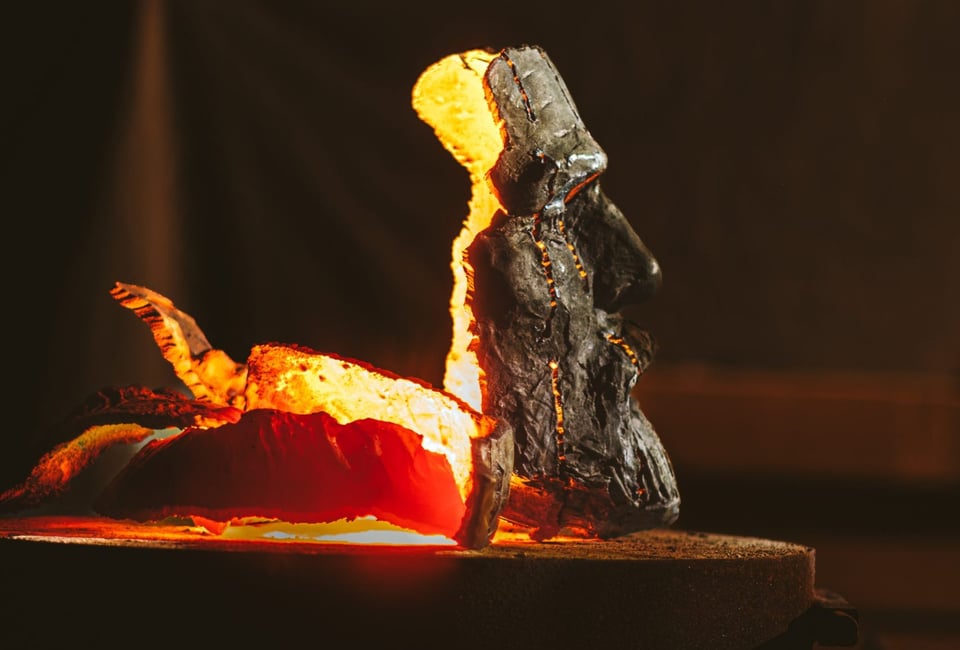
Across the country, far larger and heavier bronze statues have been removed. Robert E. Lee monuments towering multiple stories high came down in Richmond and Charlottesville. A massive Confederate monument in Raleigh was dismantled. One Lee statue was melted down and turned into new public art. Size didn’t stop those communities.
Washington isn’t being asked to do something unprecedented. We’re being asked to catch up.
And here’s the part that often gets lost. Removing the Whitman statue does not erase history. It corrects a distortion. History lives in books, archives, classrooms, and museums. Statues live in civic space. They tell us who we choose to honor.
Right now, the state is bending over backwards to honor a lie because it’s heavy and old and awkward to deal with.
That’s not a good reason.
The Whitman statue is our Confederate general statue. It was built to promote a false, harmful narrative. We know that now. Pretending otherwise just delays the inevitable.
The Legislature should finish what it started: tell the Capitol Committee plainly that the Whitman statue should be removed from the Capitol Campus entirely. Not relocated. Not tucked away. Retired.
Deaccession it. Dismantle it. Repurpose it. But stop pretending it needs a place of honor.
This isn’t about tearing down history. It’s about telling the truth.
The Olympia Standard: What Olympia is expecting from Olympia
Erika sits down with Maria Flores from the school board, and Daniel visits with State Senator Jessica Bateman. We dive deep into what schools need from the legislature and what we should expect this session as a community.
For further discussion on school funding, please see episode 105: Do We Need to Close Schools?
Do you want a copy of “Ever Unimproved?”
Just a reminder: you can buy a copy of “Ever Unimproved,” my chapbook of poetry I wrote in 2025. But I have some hard copies as well that haven’t been claimed. So, if you live in or around Olympia, let’s figure something out, and I’ll get you a hard copy.
What else you should be reading this week
In public art news, Seattle’s Latino murals, led by artist Rene Julio Diaz, use public walls to explore migration, identity, and community. His work blends culture and current issues, fostering dialogue, connection, and belonging across neighborhoods.
One of my favorite new outlets I’ve been following covers religion from the Inland Empire. This week, FaVS News writes about how Interfaith leaders protested at the Idaho Capitol, accusing lawmakers of misusing Christianity to justify laws harming trans, immigrant, and marginalized communities. Clergy called for church–state separation, compassion, and moral courage as the legislative session began.
I appreciate people in Olympia who refuse to take down their lights after Christmas. It is still dark out there, folks.