
How a the 1926 Rose Bowl Game Defined Two Eras of Exclusion
I am attracted to historical, along the lines of how the University of Washington was the launching pad for Southern redemption through college football. So, I thought the 100th anniversary of the “Game That Changed The South” was a good point to look back and see how both our region and theirs’ moved on from that historic game. So, I wrote about the impact the game had on the South and also how we moved on as a region with some not-so-surprising parallels.
You can also see below how to get a printed copy of my poetry collection and some links to local history.
The South's Mythology, the Northwest's Bureaucracy: How a Single Football Game Defined Two Eras of Exclusion
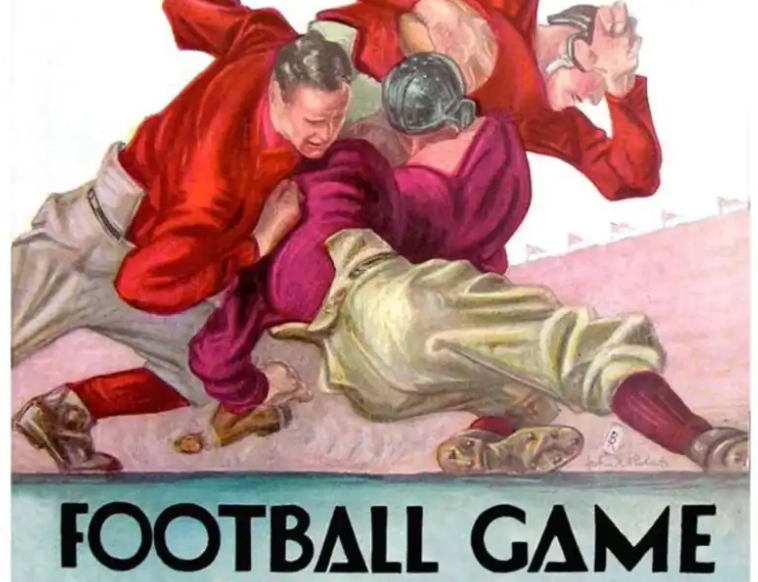
One of the most compelling ironies of regional history is the fact that 100 years ago, the University of Washington was on the losing side of "the game that changed the South." While the 1926 Rose Bowl is often remembered in Seattle as an athletic footnote, for the American South, it was a cultural baptism.
By defeating Washington 20-19 on New Year’s Day in Pasadena, Alabama became the first Southern team to achieve national legitimacy, effectively birthing the SEC and a century of collegiate football dominance. For white Southerners, this victory acted as a symbolic "do-over" of the Civil War, allowing them to reclaim a sense of honor and "manhood" through what contemporary writers called the "Spirit of Lee."
However, to be honest about the nature of this regional pride, this era of Southern football was an exclusively white phenomenon. It was rooted deeply in the "Lost Cause" mythology. While the victory projected an image of modernization and grit to the rest of the country, it was strictly gatekept by Jim Crow laws and "gentleman’s agreements" that barred Black athletes from the field. Football in the South reflected a new, formidable image of Southern strength to the nation while simultaneously protecting a segregated social order at home.
The 1926 Rose Bowl was The Birth of a Nation on the gridiron.
For decades after, Southern football remained a regressive stronghold. Politicians attempted to block integrated matchups as late as 1955, framing them as a social "Armageddon." Yet, the South’s near-religious obsession with winning eventually turned the sport into a Trojan horse for progress. Coaches eventually realized that to remain national powerhouses and secure lucrative TV contracts, they had to prioritize the "pragmatism of winning" over prejudice. This forced the integration of Southern athletics faster than many other social institutions, simply because the region refused to keep losing to integrated Northern teams.
While the South used the 1926 Rose Bowl to march toward a new identity, the Pacific Northwest was navigating its own version of a white-centric movement. By 1927, the Ku Klux Klan was losing steam in Washington, with an Olympia rally drawing only a fraction (only 12,000) of the crowds seen during the "mega-rallies" of 1924 (above 50,000). It is easy to mistake this decline for a burst of progressivism, but the reality is that the Klan faded because it had already won its primary legislative battles. Most notably, nativists had secured the 1924 Immigration Act, a law spearheaded by Aberdeen’s Rep. Albert Johnson that codified eugenics and racial exclusion into federal policy. In the Northwest, the Klan didn't need to keep marching because its vision for a white America had already been signed into law.
There is a striking parallel in how both regions disguised their intolerance to make it more palatable. In the South, white supremacy was repackaged as athletic valor; in the Northwest, it was masked as a weekend family outing or "Christian nationalism." By framing the politics of hate as entertainment, the Klan in Washington made radical exclusion feel remarkably normal. Historians often downplay this era as a fad, but that overlooks how deeply these everyday prejudices were ingrained in our local culture. Just as the Rose Bowl victory elevated an exclusionary Southern identity, the thousands of people who watched the Klan march through Olympia were witnessing a movement that had already successfully institutionalized its goals.
Comparing these two regions reveals the different ways systemic racism settles into a community. The South used football to hide its regression behind a mask of modernization, while the Northwest used a "liberal" shrug to hide how deeply its nativist victories were embedded in the law. We tend to remember the eccentric spectacle of the hoods, but we often forget the boring, bureaucratic laws that those individuals successfully passed. While Southern identity was being forged on the gridiron, the Northwest was allowing its own radical movements to melt back into the community, leaving behind a legacy of exclusion that didn't require a uniform to persist.
After the 1926 loss, Husky football seemed to become a barometer for the region’s volatile economic pulse rather than a pillar of regional identity. While Alabama fans greeted their team with brass bands, Seattle met the Huskies with a collective shrug. As the region entered the Great Depression, the team's struggles mirrored the grim reality of the "Boeing Bust" and other economic downturns. Conversely, our Rose Bowl successes in 1960 and 1992 served as the atmospheric backdrop for the Seattle World’s Fair and the global cultural dominance of the early dot-com era. Football in the Northwest never forged our soul the way it did in Dixie.
However, we cannot ignore what was happening beneath the surface during those years of economic struggle. As the prosperity of the 1920s pulled back like a receding tide, it exposed the jagged rocks of prejudice in Cascadia. The Great Depression turned the region into a desperate battleground where the "first to be fired, last to be hired" rule decimated minority communities. In cities like Portland, white workers began displacing Black workers from service jobs, while Mexican and Filipino laborers were targeted for state-sanctioned purges.
This era also saw the quiet institutionalization of the Klan’s nativist mission through federal relief programs. The Civilian Conservation Corps eventually adopted complete segregation, and the Federal Housing Authority’s 1934 rating system officially gave birth to redlining. By drawing lines around neighborhoods with even a single Black resident, the government strangled minority districts like Portland’s Albina District. This wasn't the loud, "Spirit of Lee" racism found in the South; it was a cold, bureaucratic version that baked inequality into the very geography of our cities.
Looking back at New Year's Day 1926 in Pasadena, we see two regions attempting to define themselves through very different means. The South used the football field to march away from its past toward a multi-billion-dollar future, turning regional pride into a national powerhouse. In the Northwest, we won our battles for exclusion early and then largely forgot we ever fought them. We watched the Klan march, allowed them to influence our laws, and then permitted them to return to being our neighbors without much further thought.
Ultimately, we have to remember the laws as much as the rallies. If we only focus on the spectacle of the fiery crosses, we miss the long-term impact of redlining and immigration acts. The South’s shield was football, but our shield in the Northwest was often our own indifference. Understanding this history is essential as we continue to debate policies to combat institutional racism today, as it reminds us how easily these systems can persist once they are quietly integrated into the fabric of a community.
Do you want a copy of “Ever Unimproved?”
You can buy a copy of “Ever Unimproved,” my chapbook of poetry I wrote in 2025. But I have some hard copies as well that haven’t been claimed. So, if you live in or around Olympia, let’s figure something out, and I’ll get you a hard copy.
What else you should be reading this week (local history edition)
Between his two books on labor and radicalism in coastal Washington, Aaron Goings is probably one of the most important historians for you to read right now. The echos of labor’s fight with the KKK in the first half of the last century tell us a lot about what is happening right now. And I mean right now, now. So read Red Harbor.
The only thing wrong with “Contested Boundaries” is that, as we come near 10 years after its release, it is no longer a “new” history. It is a framework for how we should treat history moving forward. Along with Megan Asaka’s “Seattle on the Margins,” it is a classic.
Not that historical, but I wanted to look back at Welcome to Olympia, a short-lived podcast that (as far as I can tell) fell victim to the pandemic. It perfectly captures the spirit of our town right before everything changed.

