
Commuted Faith
Writing about a church I stepped away from in 2009 is harder than I thought. Especially when I grew up going to that same church and attending the school. But I just let it go and the thesis ended up making sense when I got it all out. St. Mike’s very much was the center of my universe for my entire youth, which I don’t dip very much into, but there are nuggets in this piece.
Also, if you want to try out some poetry I’ve written, my new collection Wake Joy is available here. You can also wait a week or so, I bought 15 copies that I’m going to give out. Or buy one. I didn’t mark them up, so the price is just the cost of printing.
Commuted Faith
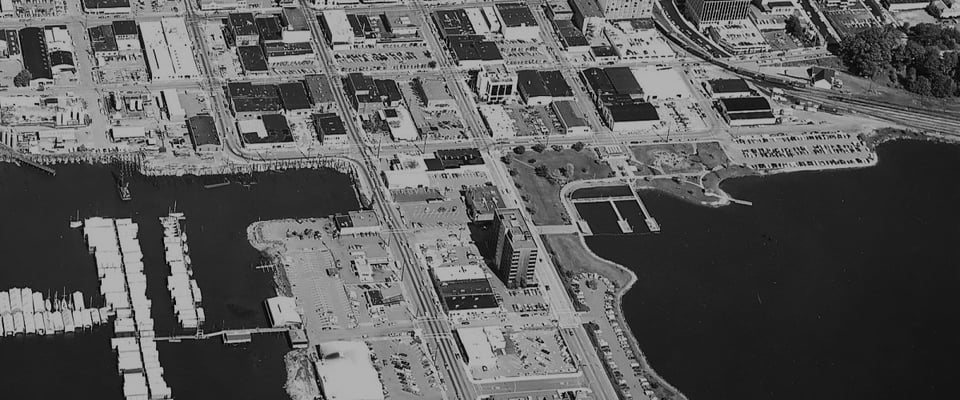
If you park in the lot on the west side of Columbia Street between Ninth and Tenth, or in the smaller lot across Ninth, you'd never guess both spots were once Catholic land. The big lot was the church. The small one was the school.
The big lot was also where a descent into mental illness almost led to the destruction of Olympia’s only Catholic church.
On April 24, 1963, thirty-year-old Reginald Campbell poured oil and cleaning solvent onto clothes and carpet in a hallway near the St. Michael's sanctuary, then set it on fire. A passerby spotted smoke. Campbell was found holding a large oil can inside the rectory parlor next door. Campbell didn't run. He confessed on the spot and explained his reasoning. He felt an overwhelming pressure to destroy the Catholic Church, and burning it down seemed like his only option to make that pressure stop. He planned to burn the post office next, followed by St. Michael School and St. Martin's College. A few days later, while sitting in the Thurston County jail, he set fire to his blanket.
This breakdown didn't happen overnight. Raised mostly by his grandparents in Bellingham, Campbell left school after ninth grade. He served in the Marines and later worked as a painter, millworker, and meatcutter. Around 1958, he converted to Catholicism. By January 1959, his marriage had dissolved. That October, police arrested him in Olympia after an assault, where he claimed that Catholicism was persecuting him and that someone had wired his house.
The parish he tried to burn had deep roots on that corner.
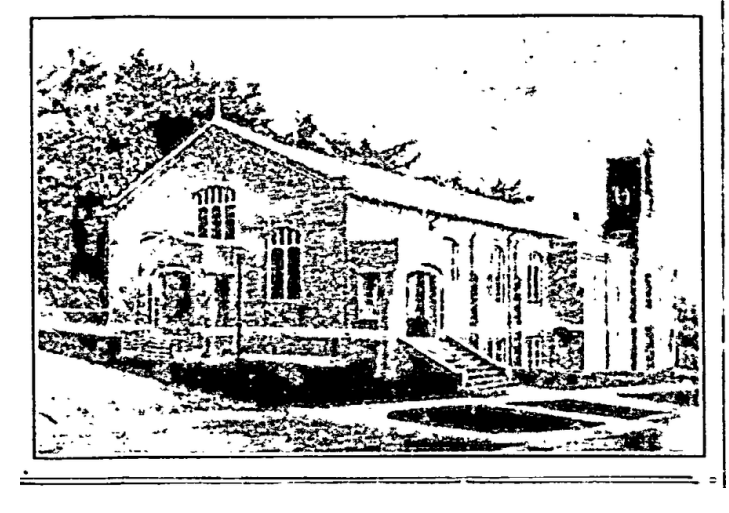
St. Michael Parish was established downtown in 1875. In August 1881, Father Peter Hylebos invited the Sisters of Providence to open a school. They started in a small wooden building provided by the parish with just 35 students. Three years later, Mother Joseph supervised the construction of a permanent two-story wooden academy at Ninth and Columbia. The parish hung a church bell in the spire in 1883, and it rang across town when the Armistice arrived in 1918. Parish life was vibrant and busy. Easter featured Latin chant with organ and violin, while Christmas brought Midnight High Mass. In the parish hall, groups like the Ladies Altar Society, the Holy Name Society, the Young Ladies Sodality, and the Catholic Daughters hosted card parties before Lent, along with chicken dinners and seasonal bazaars.
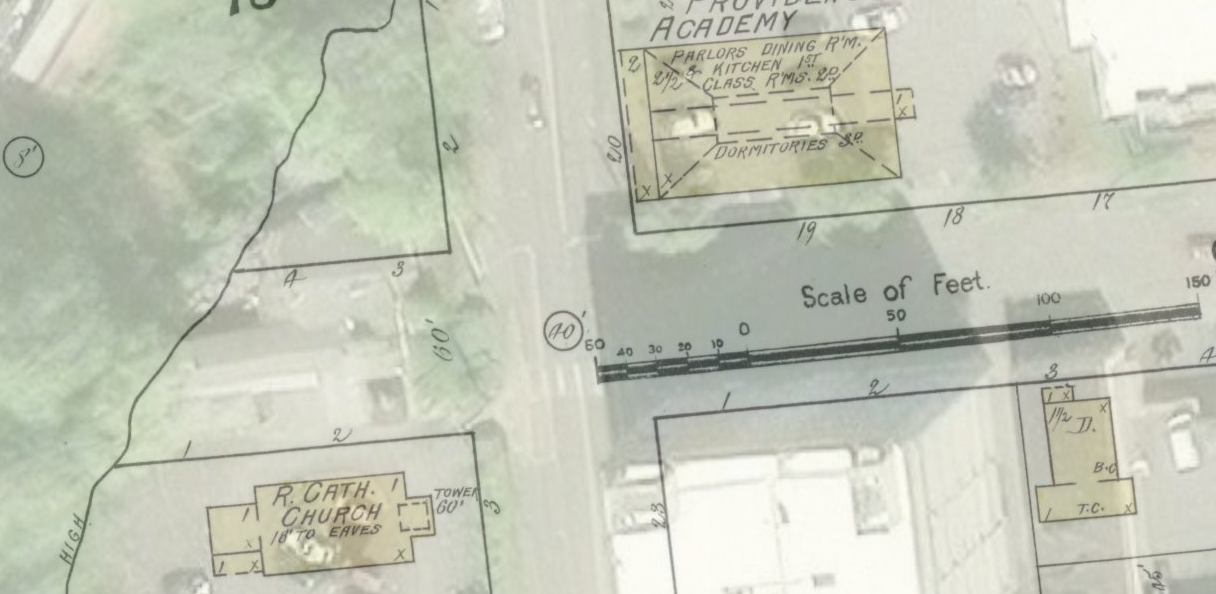
The school kept growing. Workers added an annex in 1914. When the parish built a new brick church next door in 1919, space grew tight, forcing third and fourth graders to meet in the church basement. In 1926, Father Michael O'Dwyer bought the academy building for $11,000, turning it into a parish school and closing its high school and boarding divisions. In 1949, city inspectors condemned the upper floors of the old building. The parish broke ground on a new campus on Boundary Street the following year, and the school officially moved to Tenth Avenue Southeast and Boundary in July 1951.
The church itself stayed downtown for another twelve years.
In February 1963, parish leaders presented plans for a new church on Boundary Street to the Olympia Board of Adjustment. Board members raised concerns about off-street parking. They approved the project only after receiving clear promises about parking space, with final designs showing an asphalt lot for 158 cars next to the church and school.
Two months later, Campbell walked into the old church holding an oil can.
A court-appointed psychiatrist diagnosed Campbell with chronic paranoid schizophrenia after the fire and concluded he was legally insane during the attack. On June 28, 1963, the judge ruled Campbell incompetent to stand trial and committed him to maximum security at Western State Hospital. By July 1964, doctors reported he had stabilized and could understand the charges. However, because a person legally insane at the time of an offense cannot face trial, the deputy prosecutor moved to dismiss the case. On November 20, 1964, Clifford signed the order dismissing the arson charge without prejudice.
Campbell's story acts as a lens for thinking about memory, reality, and how we form our identity. It highlights what happens to community memory when historic locations shift. Campbell's mind broke down, causing him to view his adopted church as a threat rather than a sanctuary. At the same time, the broader Catholic community underwent its own shift, moving out of downtowns and into car-oriented suburbs across the West. Religion's place in daily life became less anchored to specific neighborhoods as car culture grew and regional religious habits evolved.
Dedicated in 1966, the new St. Mike’s church brought the sanctuary, rectory, school, and parking together in a single concrete complex. Parking design dictated the Sunday routine. Father Leonard Rafalowski scheduled six Masses across the day, at 6:30, 7:30, 9:00, 10:30, noon, and 6:30 in the evening, to keep traffic moving smoothly. This schedule gave families time to park without feeling rushed and left room for coffee in the parish hall between services. Demolition crews took down the old downtown church on Columbia in the late 1960s.
St. Michael's looked very different from eastern Catholic parishes. In the industrial Northeast and Midwest, Catholic life centered around dense, walkable neighborhoods built by European immigrants. Schools, clubs, and church buildings stood close together, and residents identified their neighborhoods by parish names rather than street names.
The Pacific Northwest developed along a different path. Low church attendance here goes back well before World War I. Early settlers primarily came from two groups. Settlers from the upper Ohio Valley and Appalachia practiced faith at home, questioned formal clergy, and joined independent movement churches that didn't track formal membership. Meanwhile, settlers from New England arrived in the 1840s carrying the spirit of the Second Great Awakening, prioritizing personal conviction over church authority. Neither group embraced centralized religious institutions.
Catholics have always formed a small minority in this region, so St. Michael's grew as a destination people chose. Families drove in from across town, selecting a parish based on mass times or musical style rather than neighborhood ties. Postwar growth came mainly from state workers and military personnel from nearby bases rather than tight immigrant enclaves.
I grew up at the Boundary Street campus, attending both the school and the church. Before that, I spent two years at McKinley, the old school on Boulevard that was demolished in the 1980s to eventually make room for the Olympia Regional Learning Academy. With its split discipline programs and regional focus, ORLA follows today’s theme of disparate choices allowed by car culture.
Reaching St. Mike's meant heading down 22nd and taking Eastside. When my parents didn't drive us, I took the city bus. It picked us up at the end of the block and dropped us near Union and Eastside. While most kids rode yellow school buses, I commuted alongside adults heading to work, participating in community life from a slight distance.
I didn't realize traditional parish neighborhoods existed until my family moved East when I was eleven and local news reported on potential school closures. St. Michael's wasn't an ethnic enclave. It functioned as part of a network of local institutions, alongside places like Providence St. Peter, serving the broader regional community.
For older generations, faith organized daily life. By the time I grew up, that formal structure had softened into something subtle. You can see this shift in how far people travel to find a spouse, moving from local neighborhoods in the 1930s to regional or digital connections today.
The lesson I take from this is that centering your life entirely around one institution can isolate you from participating in the wider community.
Suburban growth and increased car ownership allowed people to select neighborhoods and schools along social and racial lines. Modern layouts didn't eliminate older social divisions, but they reshaped them into subtler patterns that persist even without physical barriers.
In Thurston County, the Islamic Center across from Pleasant Glade Elementary stands out as a unique enclave. Founded by Cambodian Muslim refugees fleeing the Pol Pot regime in the 1980s, the community started in a converted mobile home on Martin Way before buying 10 acres on Abernethy Road. Today, around 40 Cambodian families live along Abernethy, sustaining strong multi-generational connections while welcoming a diverse congregation of roughly 250 members. Its distinct setup highlights how different the rest of the county's suburban landscape has become.
Sixty years after Campbell's arson attempt, the move to Boundary Street reflects this broader change. Moving away from downtown's street grid finally pushed churchgoing to be a choice forced by suburban sprawl rather than a neighborhood identity as it had been elsewhere. Trading walkable streets for a 158-car lot and managed Mass times matched a culture where people choose religion rather than being born into it.
The church sold the downtown property in 1968 to Carson Stookey, a neighbor who lived next door in the house that is now Swing Wine Bar. He kept the land undeveloped for years, and by 1973 it still hadn't been paved into a parking lot.
Carson and Pauline Stookey were active local developers. Starting in the late 1930s and continuing through the postwar building boom, they assembled land ranging from rural acreage to waterfront properties and downtown lots. They platted new additions, financed land sales, and collaborated with regional builders to construct suburban neighborhoods across Olympia, including developments in the car-oriented southeast section of town.
Car ownership made choosing a church easy. A short drive connected residents to any part of town in minutes.
Back in the 1940s, single-family homes and apartment buildings surrounded St. Michael's before downtown expanded toward the Capitol. It's easy to imagine a parishioner taking a short walk to church on a clear summer morning.
Once driving became common, people picked churches based on schedule or preference rather than proximity. The parish adapted to that mobile lifestyle by building a 158-car lot and spacing out Sunday services to handle traffic smoothly.
What else you should be reading this week
The slowly evolving idea of changing Hood Canal to Salish Fjord apparently finally hit a road block. Which is good, because the idea of a Salish Fjord is not only unoriginal, we can come up with something different that the Salish Fjord on the Salish Sea. But it is also Scandinavian-centric since the entire proposal comes from a retired teacher in Poulsbo. Tribes didn’t know about the idea at all until it was officially proposed three years ago. And and the excuse given this week by the person behind the proposal is telling to me.
“When I started this process three years ago, I reached out to several tribes via email and did not hear back from any of them,” Stark said. Stark said she did not have any connections with tribal communities in order to get suggestions from them.
That tells you more about the lack of connection between tribal and non-tribal communities, and an assumption that an email is a great way to reach out on this topic, than anything else.
Speaking of tribal people in the current time, the Thurston County Museum of Fine Art is now hosting Temporal, a show that “highlights real people and real stories of Indigenous presence in the now: who we are, the ones we love, the stories we tell, the homes we live in, and the marks we leave behind that shape the future.” They are having an Artist Talk on November 27 with Daniel R. Smith, Tammie Dupuis, Inanna kʷaɁowišč tyee McCarty, Cynthia Masterson, and Justin Olmstead that you should think about going to.
Little Hollywood is back. Janine Gates had written one of the best blogs in Olympia, but put it on ice in 2019. Over the last few weeks, she has posted a couple of new entries, including this one on a Deschutes Estuary public meeting. Her next post platforms a bunch of pseudoscience collected in an entire book that smart people have spent years debunking. But it sounds like the book is really hard to get a hold of, which is an interesting strategy. Either way, glad to see she’s writing again.

