
Women at work
From "9 to 5" to "The Devil Wears Prada," movies about working women have bangers for title sequences
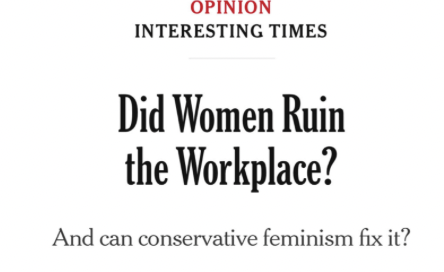
Not long ago, the New York Times published a piece asking, in all seriousness: “Did Women Ruin the Workplace?
The headline was eventually changed to “Did Liberal Feminism Ruin the Workplace?” but potayto, potahto.
The thing is, women have always been in the workplace, even when that workplace was someone’s home (their own or that or an employer).
There was a shift starting in the mid-20th Century, when more women started working in office jobs. According to the Bureau of Labor Statistics:
A major factor that contributed to the growth of the U.S. labor force in the second half of the twentieth century was the remarkable increase in the labor force participation rate of women.
That trend started in the 1960s, but Hollywood only really took notice in the 80s. The era gave birth to the yuppie, so maybe it’s no surprise that Hollywood became unusually fascinated by the entertainment value in this particular white collar (and white character) slice-of-life.
But it got me thinking more generally about work movies. Or at least, a certain kind of work movie.
Upbeat, knowing, playful — but not without something to say. Movies aimed at a general audience that don’t seem to get made much anymore.
I bring this up because I love how so many of these movies begin, which is what I really want to talk about. So let’s talk about aesthetics.
The movies that come to mind have a propulsive score accompanying a montage of people on their way to work. Nearly all were made in the 1980s.
Consider the opening moments of “9 to 5,” the 1980 comedy starring Jane Fonda, Lily Tomlin and Dolly Parton as desk jockeys who enact revenge on their misogynistic boss, played by Dabney Coleman, and they end up improving everyone’s work life in the process.
The movie begins with the insistent piano of the film’s title song (by Parton) and images of people purposefully walking to their jobs. The footage is shot from the knees down, so that everyone is reduced to a collection of legs, but the sequence draws you in because there’s so much motion and energy.
Real life commuters may feel like they're dragging themselves to work. But in the movies? The visuals suggest so much anticipation for what the day (and the movie) will bring. Places to go! Things to do! People to see!
There are women dressed in Very Serious Business Suits up top, and thick socks over their pantyhose and sneakers on the bottom because these movies reflected what’s real: Most women weren’t (still aren’t) walking block after block in heels, and so what if it looked a little goofy to wear their Reeboks for the commute in?
The same template opens the 1987 comedy “Baby Boom,” starring Diane Keaton as a driven career woman who suddenly becomes the legal guardian of a toddler. It’s a movie that ponders if women can have it all — and if the question itself is even fair — and if you’re looking to catch up with some of Keaton’s lighter fare in the wake of her death, it’s a lot of fun and currently streaming (free) on both Tubi and Pluto. The title sequence begins with images of Manhattan skyscrapers, and then segues to the hustle and bustle of people on their way to work. Lots of blazers and purposeful strides, to a snazzy-jazzy soundtrack.
As an aside: Amazon plans to remake “Baby Boom” because apparently we’re trapped in an ouroboros that has doomed us to rewatch new versions of the same thing while original ideas are left to evaporate into the mist. The premise of the 1987 movie isn’t unique; women have been juggling the demands of work and family forever and they could make a new movie about that and call it something else. Even if you buy the idea that remakes are easier to market because of familiarity with the title, how many people under 40 are aware the original even exists?
Well, end rant. Let’s get back to the 80s, because in 1987, “The Secret of My Success” also came out. Michael J. Fox plays a lowly mailroom worker at a large company who somehow cons his way into a corner office by pretending to be someone he’s not (while still doing his mail room job). The opening offers that now familiar “city! exciting! action!” imagery, interspersed with scenes back on the farm, where he explains to his parents why New York beckons. The entire sequence is underscored by the title song from Night Ranger.
It’s a ridiculous movie! It’s also a fun! (Except for the part where his boss’s wife either seduces him or sexually harasses him into have an affair — the film can’t decide precisely which it is, but he’s somehow both a reluctant and eager participant. The 80s have a lot to answer for.)
The opening montage quickly establishes the main character’s backstory while also putting you, the audience, in the right frame of mind. The right mood. It’s all very “here we go!”
1988’s “Working Girl” has a similar premise, starring Melanie Grffith as a gloriously big-haired Staten Island secretary who gives herself both a sleek makeover and a promotion at work by pretending to be her boss, a high-powered executive played by Sigourney Weaver, who is laid up for a few weeks after a ski accident. In the process, Griffith’s character also nabs her boss’s boyfriend, played by Harrison Ford.
The movie’s opening features a banger from Carlie Simon (“Let the River Run”) and aerial footage swooping around the Statue of Liberty before the camera glides down to a commuter ferry, where Giffith’s character is … yep, on her way to work.
You know what movie has a similar opening to all these mentioned? 2006’s “The Devil Wears Prada.” I don’t know if director David Frankel was intentionally channeling these forebears or not, but the opening shares so much DNA with them.
We see one gorgeous woman after another getting ready in the morning, and then off to work she goes to melody of KT Tunstall’s “Suddenly I See.” One of those women is the film's decidedly less sophisticated protagonist, played by Anne Hathaway, who is supposed to seem frumpy by comparison. A new arrival in the city and fresh from college, this is her first day as an assistant to the demanding Anna Wintour-esque fashion magazine editor played by Meryl Streep.
Yes, her work life ends up sucking tremendously. But it’s also exciting? Oh, Hollywood. A lot of people usually experience only the first half of that equation.
It is probably no coincidence that four of the five films I’ve mentioned are comedies about the work lives of women, a topic I was drawn to even as a child. I remember wanting so badly to fast-forward to my 20s and become one of the people in these movies and do adult things, like hurrying to my interesting job and meeting for drinks afterward. Reality is often at odds with Hollywood. At the very least, commuting is never as invigorating as it looks on screen.
2001’s “Legally Blonde” does something different but similar to the aforementioned films, with Hoku’s upbeat “Perfect Day” underscoring an idealized, candy-coated version of college life. A sweet but vapid young woman, played by Reese Witherspoon, goes to law school to chase a guy, and ends up realizing she has legitimate ambitions of her own that have nothing to do with that loser, anyway.
Music is essential to these opening sequences.
And also, just as important to a movie’s final moments.
Can I pivot? Because I’m going to pivot away from work movies to focus more on music more generally.
I’m partial to movies that close with a Randy Newman (or Newman-esque) song as the leads ride off into the proverbial, sometimes literal, sunset. Usually there’s a piano or saxophone in there somewhere. See 1987’s “Overboard” which includes Newman’s “Something Special.”
Or 1984’s “Romancing the Stone” with a score from Alan Silvestri; his composition that plays over the end credits is simply called “End Title.”
Which brings me to another thought about these mid-budget movies, which is that a composer was hired to score the entire film, giving it a specific sonic identity.
Bill Conti scored “Baby Boom,” and his resume includes music for everything from “Rocky” films (including “Gonna Fly Now”) to “The Karate Kid” to the glorious fanfare of “The Right Stuff” (for which he won an Oscar).
Rewatching “Baby Boom,” the score suddenly reminded me: Yes, I know this movie. Hello, old friend. I’m fascinated by the psychology of how music works on our emotional connections to things.
“The Devil Wears Prada” features the music of composer Theodore Shapiro, who has more recently worked on Apple’s “Severance.” His other credits include “13 Going on 30” and “Wet Hot American Summer,” among others.
But it’s “Suite from The Devil Wears Prada” that I love both for the music itself, which is gorgeous — ending with a rousing anthem of a woman taking her life back — but also because it’s music I associate only with this movie.
A few weeks ago, I talked about the way music can function as branding, and when I hear any of this music, I instantly think: “The Devil Wears Prada.” It hasn’t been diluted by showing up in anything else.
I’ve seen the movie enough times that I can identify which piece of music goes with which sequence, because it’s distinctive and well-matched to the emotion of the scene.
That, to me, is the real genius of an original score: It helps give definition and shape to the story.
The music in “The Devil Wears Prada” is underrated but brilliant. Frankel is also directing the sequel, and while I’m skeptical of any project that’s so blatantly an IP grab, I’m curious to see if he’s working with Shapiro or another composer to capture some of that musical magic again. Here’s hoping.
Are mid-budget movies still doing this at scale? If so, it’s not making an impression.
Popcorn Disabilities
For the Tribune, I talked with film critic and author Kristen Lopez about her new book “Popcorn Disabilities: The Highs and Lows of Disabled Representation in the Movies.”
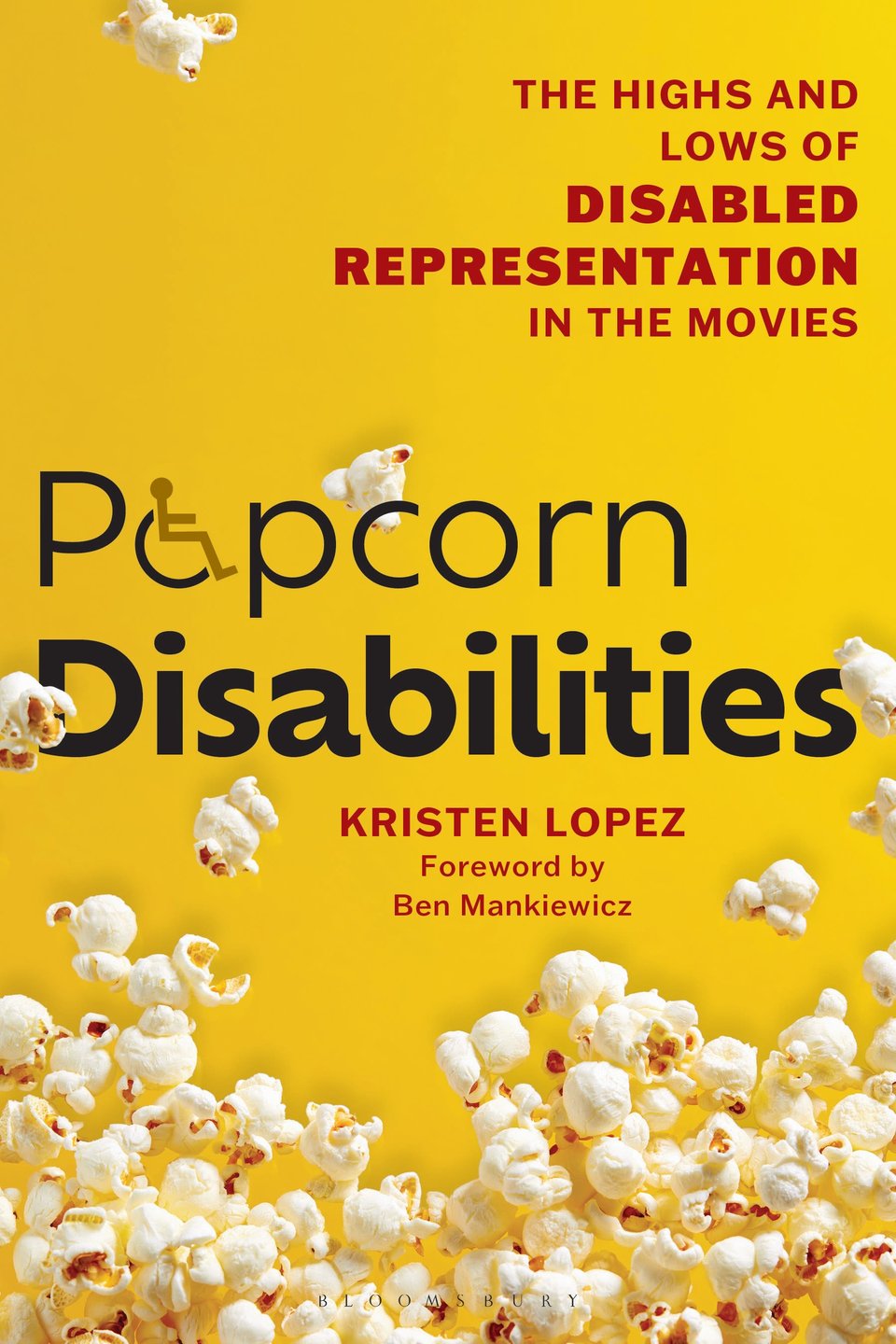
In it, she writes: “I want people to look at movies, past and present, more deeply.”
That’s always my interest too!
Here’s a bit from our conversation:
Q: There’s a phrase you use throughout the book, which is the Tiny Tim principle. Explain what that is.
A: Tiny Tim is the one that screwed it up for everyone! He’s obviously the character from “A Christmas Carol” and he’s kind of the de facto definition of what a disabled person is, where you have a character that’s disabled and therefore sickly, but he has such a good heart. His soul is pure. And through his purity and goodness and unselfishness, he is able to teach the miserly Scrooge how to be a good person. And that was something that set the tone for shaping the belief that disabled people were children in need of caring.
So that extended to movies more generally, where disabled characters are always good and almost saintly and they help teach able-bodied people how to be good people.
By the way, she has interesting things to say about horror and disability and she really likes the Chucky movies for this reason!
You can read the full interview here.
Lopez runs the website The Film Maven and a few months ago she wrote about the book ahead of its publication:
Last year I sat down to write one of the most difficult books of my career (and I have two more coming after it). A book that looks at disabled tropes and stereotypes in the movies and, more importantly, how they make disabled viewers feel about themselves. There’s a reason disabled people have so much self-loathing. It’s because, for better or worse, movies have kind of told us to hate ourselves. Writing this book made me angry and sad, at times, but it was also highly cathartic examining how the movies I love, and love to hate, about disability have shaped my own conception of myself as a disabled person and, ultimately, what needs to change.