
"The Pitt" vs. its fandom
Why is the show's vocal fandom putting "The Pitt's" characters on trial to be deemed “good” or “bad"?
When “The Pitt” premiered on HBO Max last year, I remember thinking: Finally, a streaming show that emulates the kind of shows that were once a staple on network TV.
John Wells is an executive producer and his involvement is key. A veteran of shows such as “ER” and “The West Wing,” he may not have a recognizable style like other super-producers (such as Shonda Rhimes or Ryan Murphy) but he understands television as a format in ways that have become increasingly rare in the streaming era.
This makes “The Pitt” an instructive blueprint for other streamers to follow suit.
Alas, none has as of yet.
Netflix tried unsuccessfully to create its own version of “Grey’s Anatomy” last year with “Pulse,” which was too bland to work. (You can read my review here.) But otherwise the streamer prefers licensing these kinds of shows from the networks instead of creating a few of its own. That’s probably a safer (more cost-effective) bet. But, man, it betrays such a lack of ambition.
Starring “ER” veteran Noah Wyle, “The Pitt” is a weekly medical drama that is caffeinated competence porn. It transpires over 15 episodes to capture a day-in-the-life of a harried Pittsburgh emergency room. There’s no intrusive musical score or soapy antics to juice the drama. Just the stuff of life, and sometimes death, which is interesting enough. The Season 2 finale premieres next week.
It’s thrilling that someone — a few someones — finally decided it’s possible to take all the things that people love about network TV and make it work for streaming.
I don’t want to oversell it. “The Pitt” is a good show. I watch. I enjoy. And then I move on.
So it’s been fascinating to see that a certain segment of viewers have a very different relationship with the show. This would be the “fandom,” who have strong opinions about how the narratives unfold and how the characters are written.
What’s going on?
On one hand, this reaction is a mark of the show’s quality; people have become so invested in the ensemble — playing an assortment of doctors, doctors-in-training, nurses and other hospital staff — that it matters what happens to them in this fictional world. Conversations on social media analyzing these narrative choices aren’t a bad thing.
Some of it, however, is … odd. Confidently asserted — hooboy, the confidence is something — but odd, nevertheless.
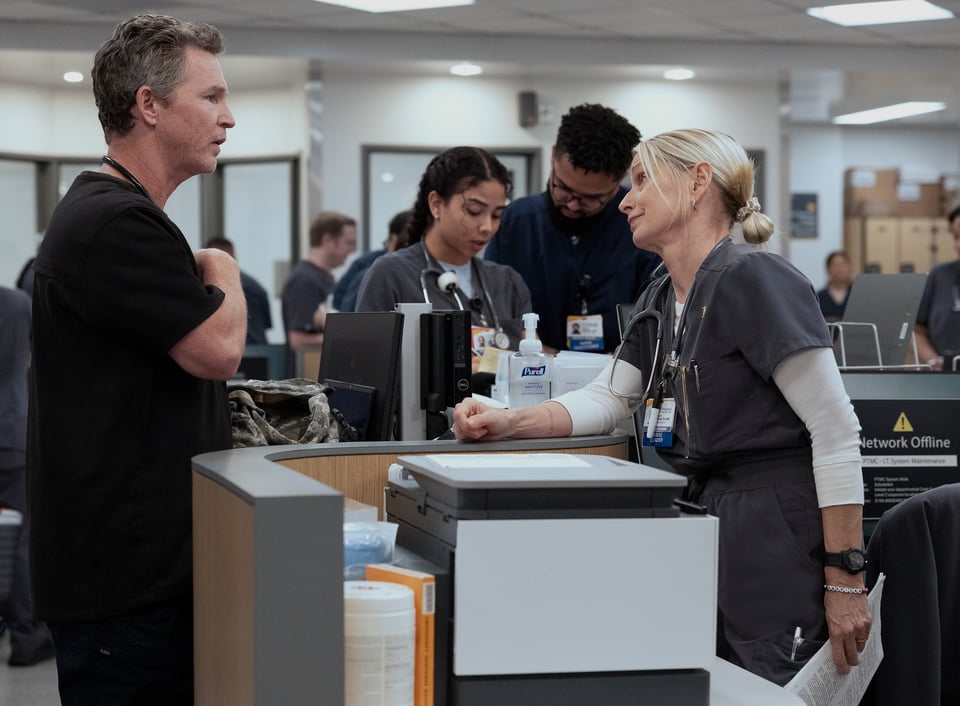
“The Pitt” is offering up pretty standard stuff. It isn’t built to inspire such an intense reading among viewers.
Such as:
By far, the weakest aspect of the writing in “The Pitt” Season 2 is that we only have 2 episodes left and we STILL don't know the PittFest shooter's name and motive.
Right … because this information isn’t relevant to the stories “The Pitt” is interested in telling. The show is focused on the experiences of patients and staff in the hospital on one specific day. That’s what we get. We’re left to infer the rest. That’s OK!
Another comment:
Remember the water park slide collapse and how we thought the ER was going to overflow with victims and it just... didn't and then that plotline was completely done within like 20 min? Yeah.
Why should this storyline overtake the remaining season? People were injured due to the collapse, and then the ride was presumably shut down. It’s believable that the tragedy would be contained to a handful of people.
Here’s another:
“The Pitt” really mangled the Dr. Langdon “addiction” arc. He isn’t even a drug addict. He injured his back and took legal and medically necessary pain meds. He developed a tolerance and became physically dependent on them.
Wut??
But wait, there’s more:
They did not give him any reason to become an addict aside from physically, i.e. removed any personal blame. This is not how addiction works. The pain provided the drug but what was going on in Langdon's life past or present that made him vulnerable to abusing the prescription?
The reasons that contribute to any person’s addiction can be complex, but the show isn’t exploring that so much as how Langdon’s history of substance use affects his dynamic with both his supervisor (Wyle’s Dr. Robby) and an underling (Isa Briones’ Dr. Santos), the latter of whom clocked Langdon’s issues when everyone else didn’t.
That’s what the show is interested in, because “The Pitt” is focused on the workplace as a narrative driver. Langdon’s backstory is left vague for the same reasons everyone else's backstory is left vague. Not sure about you, but I don’t know much about my colleagues' lives outside of work, either! (And frankly, I don’t need to).
Let’s keep going:
Are they going to address why Samira's mom was spam calling the hospital trying so hard to get ahold of her?
I’m genuinely confused by this person’s confusion. Her mom is ignoring all kinds of reasonable boundaries while Samira is at work, and she “spams” the hospital’s landline because she couldn’t reach Samira’s cell phone when the staff had to go fully analog. She’s doing this for reasons we don’t need spelled out, because what’s important is the effect it’s having on Samira.
Critiquing … or misreading?
We should critique screenwriting that isn’t doing necessary character and world-building, which is conspicuously prevalent in many projects at the moment. (A lot of the debate around “The Drama,” starring Zendaya and Robert Pattinson, centers on this question: Is the script underwritten or are audiences demanding a corny amount of narrative hand-holding?)
Sometimes the writing is bad. (Emerald Fennell’s films come to mind; vibes that suggest the illusion of substance, but a mess when it comes to story structure and a conception of characters and themes.)
So yes, sometimes the writing isn’t doing its job.
And yet maybe there’s also an expectation among certain audiences that every detail be explained and addressed in full.
“The Pitt” may not be a documentary, but it’s filmed like one. That means we’re going to be asked to read between the lines.
Consider a scene from last night’s episode, wherein Dr. Langdon (Patrick Ball) and Dr. Whitaker (Gerran Howell) are in the break room. Langdon is vaguely mocking Whitaker’s farm boy origins by referencing the movie “Babe.”
“Can you cut the shit?” Whitaker says. “The sarcasm thing? The little buddy routine, like you’re what, you’re the Skipper and I’m Gilligan?”
Langdon is taken aback. “OK, so who am I?”
“Play whatever part you want,” comes the response, “just don’t pick mine for me.”
Someone posted a clip of the scene and said: “What is this argument?”
Someone else chimed in: “Literally came out of nowhere and I had no idea what they were talking about. There’s barely even subtext here, like wtf was this?”
OK, this is telling me a lot about these viewers.
First, you need to understand the pop cultural references, both to “Babe” and “Gilligan’s Island.”
You also need to pick up on the fact that Langdon is being mildly patronizing by bringing up Whitaker’s farming background, as if that makes him less sophisticated. A hick. It’s a subtle dig that Whitaker maybe doesn’t quite belong there. That’s an important class nuance some viewers are missing.
You also need to understand the character dynamics on “Gilligan’s Island,” and that the title character was specifically portrayed as a hapless goof.
I get it if this went over the head of younger viewers. But that doesn’t mean it’s a poorly written scene; it means you need a deeper pop cultural literacy to appreciate it. This isn’t unusual. I watch things all the time where I don’t immediately know what’s being referenced; the amazing thing about the internet is you can look it up and learn something.
So, to the question: What is this argument?
Well, let’s think about it. Langdon has been gone from the ER for a year. This is his first day back. His memory of Whitaker — his mental picture of Whitaker — is of the overwhelmed guy he met struggling through his first day in the job. He hasn’t seen Whitaker grow and gain confidence, so that “old” picture is shaping some of the casually patronizing energy Langdon is giving off.
And Whitaker, who has become more self-assured, tells him to knock it off.
Langdon was the cocky swaggering big dog of Season 1 before Robby confronted him and kicked him out of the emergency room. Post-rehab, Langdon has returned with a certain amount of humility. But other old habits die hard; though he’s spent his workday apologizing to people he’s wronged, he hasn’t stopped to consider that he doesn’t actually know some of his colleagues at all, because he hasn’t been working side-by-side with them for the past year. It’s yet another way in which he’s being humbled.
We learn something about both Langdon and Whitaker in that moment. That’s character development.
Maybe there’s another layer.
Langdon is tall and has conventionally attractive looks, whereas Whitaker is short. We know society likes to dismiss short men. Whitaker is a nice looking guy, too! But, more often than not, the Langdon’s of the world are treated as the ideal — more authoritative and deserving of respect. So maybe that’s some of the subtext too: Just because you’ve moved through life as a “golden boy” doesn’t mean you can talk down to me.
I saw people theorizing that, in this moment, Whitaker was actually taking his frustrations with Santos out on Langdon — and why didn’t the writing make that more explicit?
Look, sure, maybe that’s an additional reading of the tension of that scene. But you’re not understanding the scene itself if you think it’s only that.
Here’s another, more general complaint I saw:
There can't be any substantial character arcs or relationship building because we literally only see these people for one day at a time at work.
Right. That’s a feature, not a bug. Because that’s the kind of show this is. Other shows are deeply invested in backstories and lores and, yes, character arcs and relationship building. “The Pitt” wants to portray what it’s like to work in (and be treated in) an under-resourced ER.
So what are the opportunities for drama within that context, in addition to the medical emergencies themselves?
Well, the characters are working in a pressure cooker, which is exhausting. At times, it’s also psychologically harrowing, no matter how much these characters may deny it. It’s a recipe for burn out. Even the newbies are burned out by the end of their shift.
That’s a story worth telling.
Like a marathon, the job requires endurance and a certain amount of stifling one’s emotions and ignoring one’s own needs. Maybe it’s an environment that exacerbates certain human flaws. Everyone is overworked on a good day, and so far, in its two seasons, “The Pitt” has transpired on an extraordinarily bad day. There’s a certain amount of humor and absurdity threaded through all of it, as well, because that’s also true to life
What’s missing are more inconvenient realities a show like “The Pitt” could tackle if it wanted, at least from a patient’s point of view. The prevalence of medical racism or doctors being dismissive of their patients’ insights or concerns.
But other workplace pathologies, like subtle forms of bias — which exist across all industries — are there. We can argue whether these qualities are intentional or a reflection of the writers’ own unacknowledged biases. Either way, these behaviors make human sense, even if you don’t like to see it happening.
But on social media, the show’s characters (or more accurately, the show’s creators) are effectively being put on trial to be deemed “good” or “bad.” There’s a tendency among some viewers to perform morality and grade themselves against these fictional individuals.
The retired clerk who comes in to pinch hit when the hospital’s servers go down (played by Rusty Schwimmer) is reviled by the fandom, some of whom have asked: Where was she on Jan. 6? I had to laugh, because this isn’t an inaccurate reading of the character.
But she also came in — on a holiday, no less — because she knew she was needed and her help would make a difference. And in fact, she did make a difference; the ER was floundering before she was able to organize things, old-school style. She’s no longer employed by the hospital, so I don’t see how she’s getting paid for those hours.
These two truths — she’s probably a bigot, but one who did a good deed that benefitted everyone — have to sit side-by-side with each other. That makes her more complicated. That’s what stories are supposed to do.
You can still hate her! But you can’t be mad at the writers for the character’s existence. I mean, you can if you ignore the nuances. But that’s the opposite of careful, attentive viewing.
If anything, there should be more characters who make you feel a certain amount of revulsion or alarm, because in the real world, there are plenty of MAGA or anti-vax people employed in hospitals (as they are in any other profession). The unfortunate reality is that abusive doctors and nurses exist.
“The Pitt” doesn’t want to go there, and that’s fine.
But audiences need to create space for ugly characters to be written and portrayed as more than two-dimensional villains, or likeable, well-intentioned characters who also have ugly traits. That’s life and that’s what “The Pitt” is trying to capture.
I was watching an old episode of “Law & Order” from the original run — as I am wont to do — and it’s another show in which we know very little about the main characters outside of what we learn during the course of their workday. So, a decent comparison.
A college security guard is accused of killing an anti-war protester in the late 60s. Turns out, that college student was an undercover cop who infiltrated anti-war groups in order to foment violence and undermine their efforts.
The show’s two prosecutors have differing opinions about the case: Jack McCoy, who live through this era, is outraged that the police ran a secret operation to subvert anti-war efforts. His younger colleague, Abbie Carmichael, says the police had every right to try to kneecap terrorists. Yes, “terrorists.” That’s the word she uses, and she’s hostile to the suggestion that the police were in the wrong.
Watching this episode, I tried to imagine how “The Pitt’s” fandom would engage with this episode. I think they’d want to burn it to the ground. But why? It’s strong storytelling! Yes, Carmichael comes off badly! Sometimes the prosecutors come off very badly on this show, which I appreciate! But that’s what makes the narrative work. In this episode, Carmichael is there to create friction. But also, if we’re being honest, she’s espousing a common worldview.
In other episodes, Carmichael is on the “right” side of things — fighting to hold doctors accountable for the death of a patient, for example.
I may agree with her on some things, disagree with her on others. But she’s a compelling character either way. And that’s what we should want from both screenwriters and actors.
So what’s going on with these intense reactions to “The Pitt”?
Here’s one theory I saw:
“The Pitt” fell into that classic trap of having an online fandom that spent more hours reading fanfic after just one season than they did actually watching that one 15-episode season and it totally warped their understanding of what the show is, subconsciously or not
Or as Wyle recently observed in an interview:
I think audiences have become sophisticated in a whole new way when they watch a show. They’re watching the show that we’re making, and then they have another show that they’re making. And when that show doesn’t align with the show you are making, they don’t like it as much because they thought you were taking it where they’re taking it. So they have their own fictions and offshoots and relationships that they are narrating in real time with the one we’re doing. It’s fascinating to watch.
That’s putting it diplomatically.
The show has had casting changes that have raised eyebrows. After Season 1, Tracy Ifeachor, who played Dr. Collins, was written out of the show. And last week, it was announced that Supriya Ganesh, who plays Dr. Mohan, will not be returning for the show’s third season next year.
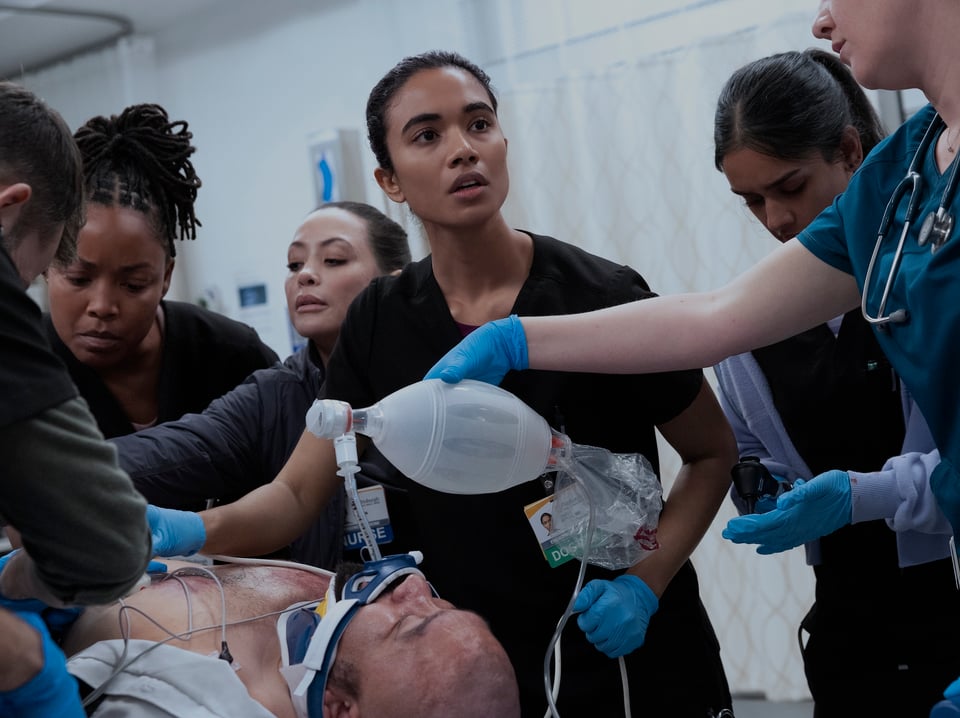
Not all doctors are hired on staff at the hospital where they do their residency, so these choices have a certain logic to them. That both actors are women of color does leave a sour taste in my mouth. But “The Pitt” features more women of color in major roles than most shows. And it just promoted Ayesha Harris, who plays night shift resident Dr. Parker Ellis, to series regular. To acknowledge Harris’ promotion doesn’t mean you’re automatically treating the actors as interchangeable.
It’s OK — legitimate — if viewers find these changes annoying or wrongheaded. But also, cast members rotating in and out is how so much of TV has always worked.
Consider this comment:
“Everyone started the show because of Noah Wyle." I started watching “The Pitt” because I was bored and it popped up on HBO. I can assure you most people watching “The Pitt” had no idea who Noah Wyle was, nor do they give a fuck about him.
OK, this is just misinformed and feeds into my theory that many of these commenters are indeed on the younger end of things. Wyle became a star — a household name — thanks to his 11 seasons on “ER,” which was a culture-defining show and massive hit for NBC during its run from 1994 to 2009.
If you came of age after that, I can understand why you might be ignorant of Wyle’s ability to draw viewers. But I can “assure” this person that Millennials, GenXers and Baby Boomers know exactly who Wyle is and they do, in fact, give a fuck about him as a reason to watch the show. You don’t have to like him, as an actor, to understand the landscape in which his career has progressed.
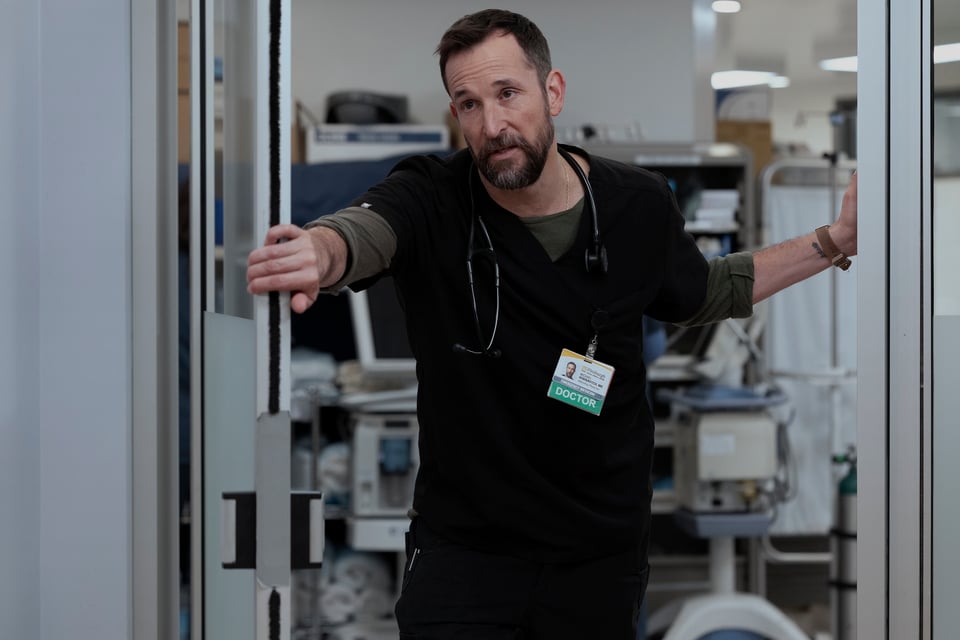
Here’s another comment that caught my eye:
Noah Wyle & Co. seem to think people care about the setting and premise of the show more than anything else. But you need a fandom for a show to succeed and for that you need people to care about your characters and how’s that gonna work if you keep changing them?
You need a fandom for a show to succeed? Since when, lol?
You need people to want to watch. But a fandom implies a whole other level of investment that a show like “The Pitt” does not require.
Or as someone else put it:
The majority of the people watching interact with it as a TV show, not something to base their entire online identity around.
And:
“Game of Thrones” had dragons and incest and shit. That’s a show that deserves discourse. “The Pitt” is too normal for the fandom to be this deranged.
And yet …
If the writers and producers keep messing with the fandom like this (and let’s be real with all due respect, the audience didn't tune in for 'medical realism™', if that were true, the show wouldn't have blown up only at the end of S1), “The Pitt” is heading straight for cancellation after Season 3. And then, someone is going to have to wait another decade to find relevance in this industry again.
I … (long sigh). This reveals so much about a person’s lack of knowledge about TV as an industry.
The thing is, you don’t need that knowledge to enjoy this show. Or any other show, for that matter. But it’s fascinating to see people opine as if they know what they’re talking about!
Yes, the characters and their connections are important. But “The Pitt” is a snapshot of their worklife on one day, there’s only so much interpersonal drama the story can support. If viewers want more, there are 22 seasons and counting of “Grey’s Anatomy” for the watching.
That’s not what “The Pitt” is doing, and applying this kind of fandom energy to it is screwy.
I think it’s happening because some viewers don’t know how to watch a show like this, because they have no real experience with it. I have to assume they grew up primarily watching streaming shows that were written as puzzles to be solved, with a narrative culminating in winners and losers.
Has that warped expectations? Or how younger generations engage with storylines?
Here’s one observation I saw:
The problem with most critical thinking today — whether watching TV or movies or reading books or whatever — is that most people think good creators are trying to deliver answers, when they’re really just posing interesting open-ended questions. This doesn't necessarily mean they aren't guiding your feelings and emotions toward certain possibilities or themes, but merely that you should never feel settled in one perspective.
Yep. Or better yet, I’ll just let this photo do the talking:
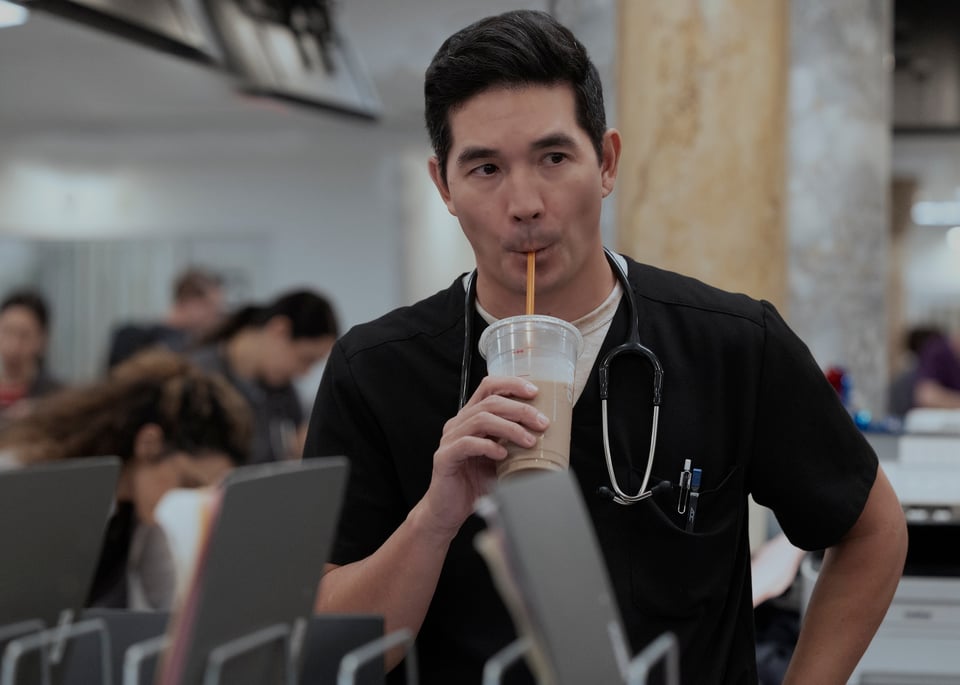
Wyle’s Dr. Robby is the show’s star, but he’s not given a hero’s portrayal, which feels right. And yet that seems to confuse some viewers.
They don’t seem to get dramatic concepts like: Dr. Robby is a very flawed person — a portrait of a humanized doctor, instead of a signifier of values. I actually think low key one of most on point realistic things they do with Robby is he so obviously is biased toward white people and males!
Here’s another telling comment:
I'm in a literature class at my local community college and a lot of younger classmates strongly gravitate towards these framings in their discussion and critique. It's good that they're finding ways to engage, but it does really bum me out sometimes.
As viewers, we should be thinking about what we’re watching — specifically, what TV shows and movies are saying. I’ve never liked the dismissive attitude of “it’s not that deep” because TV and film can shape how we think and feel about the world. That’s worth examining.
But I’m not sure a contentious fandom approach is getting anyone there.