
Is anyone capable of having a normal conversation about Harry and Meghan?
Variety recently ran a story with the headline: Inside Meghan and Harry’s Falling Out With Netflix — and Why the Royal Couple Is Struggling in Hollywood
Earlier this week, Variety ran a story about Harry and Meghan Sussex with this headline:
Inside Meghan and Harry’s Falling Out With Netflix — and Why the Royal Couple Is Struggling in Hollywood
Their professional efforts in the entertainment sphere, under their Archewell Productions banner, are detailed in the story.
Some of those efforts have been successes — including their docuseries “Harry & Meghan” and the first season of “With Love, Meghan” — while others have not — the second season of “With Love” (all episodes were shot at once, but split up to air as two seasons), and other underseen docuseries including “Polo.” The story doesn’t even bother to mention “Live to Lead.” Haven’t heard of it? I don’t think anyone has.
The larger takeaway is that some of their projects have worked, some haven’t. This isn’t a controversial observation. It’s true of anyone who works in Hollywood.
But the piece also includes unnamed sources. Depending on your point of view, they are either in-the-know and providing context, or they are people with agendas peddling baseless gossip.
Here’s a sampling:
Variety spoke to six well-placed individuals with knowledge of Netflix and the Sussexes, who say the union between Meghan, Harry and the streamer has been far from a fairy tale. The Sussexes’ perceived pattern of selling repackaged versions of the same story about their exit from royal life has exhausted Netflix.
And:
“The mood in the building is ‘We’re done,’” one Netflix insider tells Variety of the vibe on Meghan and Harry. Their bedside manner has ruffled feathers in meetings … That’s to say nothing of Archewell’s history of what sources call “poor communication” in their dealings with the company.
How they are perceived is worthwhile territory to explore.
Even so, some of these whispers seem silly:
Insiders say that Meghan has long conveyed that Hollywood is her domain. In virtual and in-person meetings with partners, she tends to talk over or recast Prince Harry’s thoughts, sometimes while he is mid-sentence, sources say (usually preceded by a touch to the arm or thigh). Meghan’s lawyer Kump, in his letter to Variety, says this assertion “seems calculated to play into the misogynistic characterization of her bossing her husband around.” Prince Harry, meanwhile, attests that this is “categorically false.”
I think it’s weird for Variety to include this detail. I also think it’s weird the Sussexes had their lawyer provide a response to it! This is all so stupid.
OK, so people find their PDA at work annoying. I probably would, too. But who cares? It has no bearing on whether they’re any good at producing TV and film. Including this anecdote undercuts whatever analysis the piece is attempting.
I feel different about this one:
Meghan also had odd methods of providing feedback, according to three sources. She was known to “disappear” for long periods during Zoom calls, the sources say. Later, Netflix teams like the marketing department would be informed that her absence was due to her being offended by something that was said.
Kump says that Meghan “works from home, is the mother of young children aged 4 and 6, and often encounters (as many parents who work from home do) children who enter the space unexpectedly during a meeting. Independent of being a parent who works from home, Meghan is also conscious of shielding her team from the distraction of children. Nearly all professionals can attest to needing to turn off the audio or camera during a virtual meeting at some point during many hours of virtual business calls.”
What does “known to disappear” mean? How many times did this happen? Twice? Meh. On a regular basis? Worthy of scrutiny.
Because disappearing from a meeting without telling people you need to step away momentarily does seem counterproductive to getting the work done.
If we take her lawyer’s explanation at face value, juggling the demands of a job with the demands of being a parent is indeed a universal challenge.
And yet, how many people are allowed to handle it quite this way? Again, how many times did this happen? We don’t know.
Is Meghan reluctant to draw firmer boundaries for her children when she’s in meetings? (My mom ran a business from home since I was very young; whenever her business line rang, background silence was expected. She had a professional image to project! And if I disregarded that, I was subject to a pointed glare as she juggled the call. Honestly, it wasn’t traumatizing and seemed appropriate. Learning patience and the ability to wait until someone is available is a lifeskill worth practicing at any age.)
Let’s also remember that Meghan isn’t a single parent without resources. I don’t think she’s a bad person for trying to figure out the right balance. But stepping away from a meeting without a heads-up creates confusion. That tells us something about her management style.
These palace intrigue elements of the story — vague and without attribution — are not uncommon in the Hollywood trades when covering a major figure, be they a star or executive.
So it’s important to understand this is not a technique reserved only for the Sussexes. For good or for ill, innuendo and unsubstantiated allegations have long been the backbone of Hollywood reporting.
Fair … or a hit piece?
It’s likely many will view the Variety report as a smear campaign. That’s because the media — the British media in particular — has waged a smear campaign, with a history of disingenuous and odious reporting on the couple, and Meghan in particular.
She’s been criticized for breaking imaginary royal protocol by closing her own car door, or wearing a one-shouldered gown.
Then there’s this doozy of a headline:
How Meghan’s favourite avocado snack — beloved of all millennials — is fuelling human rights abuses, drought, and murder.
And that’s just scratching the surface.
These stories are designed to whip up a frenzy of racism and antipathy towards her, so much so there were (and likely still are) real threats to her and Harry’s safety.
And all of this was happening while the British media was largely ignoring any number of actual scandals and corruptions that exist within the royal family, namely but not limited to the former Prince Andrew and his connections to Jeffery Epstein.
You don’t have to be a conspiracy theorist to wonder if there was an organized campaign to ensure that Harry and Meghan were vilified for the crime of merely existing, to better distract from actual crimes facilitated by the monarchy.
And the British media is still doing it. Last week, The Times ran an excerpt from a new book titled “Betrayal: Power, Deceit and the Fight for the Future of the Royal Family“ under the headline:
‘Meghan’s brainwashed Harry,’ Camilla told a friend.
It’s maddening that any outlet would devote real estate to this when there is so much more to investigate with regard to the royal family’s enabling of Andew, for starters. It’s a crisis of courage that the royal family’s finances, for example, are so rarely scrutinized with any rigor.
But another nasty shot at Meghan? An unending willingness.
Defensiveness
As a result, fans of the couple are sensitive about any media coverage. I get that. But this defensiveness is an overcorrection.
TV reviews that were critical of “With Love, Meghan” were treated as a conspiracy of haters, rather than what they were: Assessments by professional TV critics who found the show wanting. It happens! Critics write negative reviews all the time. Not every show gets glowing notices. Can everyone take a breath, please?!
Harry and Meghan are public figures with for-profit business ventures. It's appropriate for journalists to assess those ventures. The couple’s business model is predicated on the general public, both as audiences and consumers, buying what they’re selling.
Yes, Harry and Meghan have been subjected to bad faith journalism.
But that doesn’t mean anything but complimentary coverage is off-limits. Or that their professional ventures are immune from critique.
So let’s step back and consider those efforts.
The lifestyle venture
“With Love, Meghan” is her gauzy lifestyle show premised around cooking and hosting guests in a spacious and sunny Southern California home.
For some viewers, it was a calming and delectable escape. For others, it was a boring, lesser retread of other shows.
One critique noted that while Meghan may have a sincere interest in cooking and creating a beautiful tablescape, her predecessors like Ina Garten and Martha Stewart ran actual catering businesses before landing their own TV shows and are therefore speaking from professional experience.
That doesn’t mean Meghan shouldn’t have a show. But her lack of experience doesn’t do her any favors when it comes to the dilettante label. She had a lifestyle blog three years, but that is not a comparable experience to running a catering business, which is necessarily more complicated, expensive, all-consuming and requires managing a staff of people.
The glimpses I caught of the show reminded me, aesthetically at least, of those old Summer’s Eve commercials. So, not for me. But it was for many other viewers, and fair enough.
The first season premiered a year ago in March. At the same time, there was the soft-lauch of Meghan’s specialty food brand As Ever, which had a few stumbles along the way. It was originally called American Riviera Orchard, but was changed after trademark issues. Also, according to Wikipedia:
An anonymous cybersquatter purchased the UK domain name for the brand and directed the URL to a JustGiving fundraiser for The Trussell Trust, a non-profit focusing on alleviating food insecurity.
At the outset, there were some minor issues with the As Ever name, too; was anyone on their team doing due diligence on this stuff? Allegedly, there were some staffing issues, as well.
None of this is damming. It’s hard to launch a business and Meghan had never done this before. Any stumble made the news. That seems unfair.
Here’s what I find more informative: The soft-launch of As Ever coincided with the Season 1 premiere of “With Love, Meghan” and consisted of sending samples to famous people.
But the products themselves — jams and tea and the like — were not available for purchase just yet. That feels like poor planning and a missed opportunity. Why wasn’t there better coordination?
Also, for whatever reason, As Ever products are not sold in either of Netflix’s brick-and-mortar locations in Dallas and Philadelphia.
According the Variety report:
Netflix was sitting on a surplus of As Ever products, including tea and baking mixes, totaling more than $10 million in value (so much so that the company started giving inventory to employees for free, putting the goods on card tables in various office buildings. An Archewell spokesperson says giveaways from sample closets are standard practice at studios).
This detail is strange. Why would Netflix have all that product just hanging around their offices, especially if the streamer wasn’t involved in the retail side? Even if Netflix had some on hand, I’m skeptical it really totaled more than $10 million. That’s a lot of jam!
Netflix was a financial partner in the business until last week, when the streamer divested from the company. Here’s how a spokesperson for the Sussexes put it: “As Ever is now ready to stand on its own.”
That’s spin, and that’s fine. That’s what PR professionals do.
But that doesn’t mean we have to accept it without asking further questions. We don’t know why Netflix disentangled itself from As Ever. Logic dictates that if the streamer thought her business was, or had the potential to become, profitable, it wouldn’t be walking away.
Nevertheless, there are Sussex fans who insist this is a win. That this was always the plan from the beginning.
Who knows, maybe it was.
I doubt it. Rarely do entrepreneurs want deep-pocket investors to say, less than a year in: “On second thought, we’d like our money back.” But none of us has any insight, so all we can do is squint and make some guesses.
There are certain As Ever products that have reportedly sold out, which sounds impressive. It’s also meaningless if we don’t know how many units that is. Selling out 250 jars of honey is very different than selling out 25,000 jars.
We don’t have any numbers because As Ever is not a public company. We don’t have access to financial statements that tell us anything about executive compensation or staffing. Importantly, we don’t know what its EBITA is (earnings before interest, taxes and amortization expenses are deducted), which is how analysts, banks and investors assess the effectiveness of a company's financial strategy, and compare it to similar-sized companies in the same space.
To be clear: None of what’s transpired means her business isn’t successful right now, or won’t be going forward.
I’m saying information is so limited that we just can’t know, or make informed assessments.
I wish her fans were more comfortable with that ambiguity.
Harry’s business ventures
At Netflix, there are two docuseries that line up with his own interests: The aforementioned “Polo” and the 2023 series “Heart of Invictus” (I reviewed it here), which spotlights various competitors during the lead-up to, and their participation in, the 2020 games. Though laudable, this series is not mentioned by Netflix as one of Archewell’s successes with audiences.
We know substantially less about Harry’s professional work outside of TV and film projects.
In 2019, he launched Travalyst, an “independent not-for-profit organization dedicated to changing the way the world travels, for good,” according to blurb on its website.
The org says it mobilizes the “travel industry to distribute trusted sustainability information at scale, empowering action by three critical groups: travelers, travel companies and policymakers.”
Last April, it published a “five-year milestone report.” Here are some accomplishments listed:
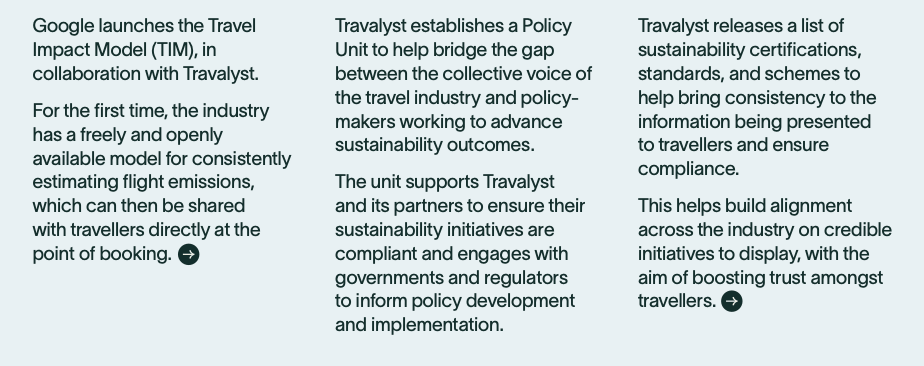
Travalyst says Harry lends his support pro bono, so that’s not an income-driver.
In 2021, he was named “chief impact officer” for the wellness app BetterUp. That’s a paid position (reportedly $1.3 million). We have no information on what the job entails, how much of his time it demands, or how the company itself is faring.
Harry and Meghan as producers
I’m not sure what kind of expectations are reasonable.
They were paid an extraordinary amount of money — anywhere from $30 million to $100 million for a five-year deal — and that was presumably based on their joint celebrity profile. Because producing experience (and a proven track record) just wasn’t there.
Meghan has experience as an actor, with one major role under her belt. Harry has experience launching organizations such as Invictus. Both Meghan and Harry have a facility connecting with people and being in the public eye. All of these are likely transferable skills.
But neither Meghan nor Harry has any experience with the nuts and bolts of producing TV and film from start to finish, which is a multi-layered, complex and frequently frustrating process.
Netflix gave a similarly lucrative deal to the Obamas, who have all kinds of impressive experience as well. But again, none when it comes to producing television. (The Obamas have had a similarly uneven output.)
Producing is a skill. It takes a single-minded focus that doesn’t leave much time for other pursuits, including the launch and running of a separate business. Producing requires an understanding of how all the components come together. Good ideas are a dime a dozen; putting them into play is a much more complicated proposition.
I may not like the work of today’s super-producers — from Ryan Murphy to Shonda Rhimes to Taylor Sheridan to Dick Wolf — but they are prolific because they have the chops (experience + talent) and understand the process.
It’s not a knock on Harry and Meghan to point out that they have a steep learning curve in this regard. But when they’re being paid so much money, perhaps expectations internally at Netflix are commensurate.
There was considerable interest in their 2022 docuseries “Harry & Meghan, likely because it — as with Harry’s memoir “Spare,” which also sold well and for which he reportedly received a $20 million advance — offered a peak behind the curtain.
Branching out away from that has proved to be more of a challenge. It’s not insurmountable, but it also speaks to how hard this all is, whether you’re a veteran or just starting out.
If their TV efforts are fizzling, that doesn’t surprise me; it’s true of many other (more seasoned) writers and producers right now, because the industry is in free fall.
Going forward
At Netflix, Meghan and Harry have some projects (including scripted projects) in development. The phrase “in development” is always open-ended; maybe something will come of it, maybe not.
But there are no plans to film further seasons of “With Love, Meghan.” Instead of existing as a series, it will continue as “seasonal specials,” according to a spokesperson for Sussexes (as opposed to a Netflix rep, which may or may not be telling).
This seems like a marketing problem for As Ever. The show could have been — one might argue should have been — a key driver to expanding brand awareness. If nothing else, it could have been a way to feature (ahem, advertise) products available for sale.
We don’t have the data, but it’s assumed that most streaming shows made in the last few years aren’t being organically resurfaced and discovered by new viewers without new seasons dropping every so often. New seasons result in more stories being written and more conversations on social media. Perhaps seasonal specials can achieve that.
I hate to link to the Daily Mail (Meghan has been a favorite target over the years) but nevertheless …
Following up on Variety’s reporting, here’s what the Daily Mail says about Netflix and As Ever:
Fundamentally there were differences over the direction of the brand. It can be revealed that Netflix had a vision, which would have started with rose wine, and gone on through five phases including the introduction of china and glassware, then food, followed by an expansion into physical retail spaces, and finally a cookbook. All of it was to be sold on the back of Meghan’s sophistication and elegance. I hear that Netflix simply wasn’t able to interest Meghan in any of that.
This sounds plausible? Netflix had one vision, Meghan had another. Maybe the disconnect tempered whatever enthusiasm existed on either side when plans were originally laid out.
Their broader relationship with Netflix
Despite unattributed “insider” concerns, on-the-record comments to Variety affirm the streamer’s working relationship with Harry and Meghan:
Three insiders say Netflix chief Ted Sarandos is fed up with the pair — who, per two sources, have been known to text directly with the co-CEO about their projects, as do many A-listers who work with the streamer. Similarly, chief content officer Bela Bajaria is said to have grown weary of the Sussex pact. A Netflix spokesperson says it is “absolutely inaccurate” that Sarandos and Bajaria have lost faith in the couple.
“Archewell has been a thoughtful and collaborative partner, “ says Bajaria, “and we’ve really enjoyed working with Harry and Meghan. They’re deeply engaged in the storytelling process and bring a unique, global perspective that aligns with the kinds of impactful projects our members respond to.”
Netflix denied there’s any problem, so nothing to see here, right?
That’s one way to read the story.
But let’s consider the possibility that denying that any misgivings exist is exactly what you would expect Netflix to do. That’s how corporate PR works.
So what’s going on?
Well, it’s possible there are differing opinions inside Netflix about the Sussexes’ output.
Or it’s possible Netflix is not being on the level.
Here’s a separate story from Variety on a different topic, also from this week:
Netflix Execs ‘Laughed’ at Claim the Streamer Demands Movies and TV Shows Restate Plot Points for Viewers
Despite Matt Damon and Ben Affleck’s recent suggestion, Netflix execs say they’re not asking filmmakers to repeat their film or TV plots in show dialogue.
“There is no such principle,” Netflix film chief Dan Lin told reporters …
… Bajaria added, “I think it’s so offensive to creators and filmmakers, to think that first of all, we would give them a bad note like that, and they would just take it.”
Many producers and writers with experience working at Netflix have said otherwise, and anyone with eyes and ears can see it on screen.
So who do you believe: These writers (and your own observations) or Netflix?
Let’s go further.
Per the Daily Mail, “Netflix boss Ted Sarandos has unfollowed both Meghan and As Ever on Instagram.”
I never know how much to read into that, but you have to wonder why executives (or their teams running their social media) would bother since this is all front-facing.
Apparently Sarandos’ wife, Nicole Acant, unfollowed Meghan and As Ever on Instagram, as well.
Maybe everything Netflix is saying on-the-record in that Variety story is true. Or maybe not. My larger point is this:
Just because Netflix issues a denial doesn’t mean that’s the full story. Or that we should swallow these denials uncritically.
There’s spin coming from all sides, which is to be expected.
The truth is probably somewhere in the middle.
The podcasts
The analysis by Variety only briefly mentions Meghan’s podcasting efforts, but that’s a whole other area that’s worth more scrutiny.
What has worked? What hasn’t? If her first podcast, Archetypes, was such a success, why didn’t it continue? Her next podcast was Confessions of a Female Founder, for which I had zero interest, so I can’t weigh in. Typically, these kinds of conversations are so carefully curated (founders have their own images to burnish) as to be self-promotional patter, rather than step-by-step tutorials on how to tackle problems that may not be obvious at the outset when getting a company on its feet.
Also, it’s curious that Meghan has positioned herself as a business guru when she’s so new to the entrepreneurial space.
I did, however, listen to Archetypes for professional purposes. Each episode examines an archetype that stymies women. I wrote about it for the Chicago Tribune and thought it was vapid in the way it prioritized celebrity guests:
This week on Meghan Markle’s podcast Archetypes, she interviews Paris Hilton about “bimbo” and “dumb blonde” stereotypes. Markle is a smart and thoughtful host who is interested in parsing out why we feel boxed in by categories that often reduce women down to negative traits. And yet this episode is such a misstep.
Is Hilton the only person with insights on this topic? The most thoughtful? Probably not. But she’s famous. It’s notable that the podcast features celebrities as the primary guests.
Something happens when celebrities interview other celebrities. Everything has the whiff of PR and superlatives. So that when Markle praises Hilton’s business acumen by saying, among other things, "she launched her very own NFT collection," it’s worth pointing out what’s conspicuously missing.
The consumer watchdog group Truth in Advertising pinpointed 19 celebrities, including Hilton, it says may be involved in promoting NFTs without disclosing their connection to these projects. In August, the group sent letters to each celebrity noting that “we have found that celebrity NFT promotions is an area rife with deception …”
Markle has been the subject of all kinds of irrational media coverage and perhaps she wants to keep everything positive on her podcast. Asking questions that probe more deeply — that may not necessarily conform to an empowerment narrative — could ruin that vibe. That’s certainly beneficial for her celebrity guests, but considerably less so for her listeners.
There’s Hilton’s alleged history of racist comments and use of the n-word, also not discussed here. Considering that Markle herself has been subjected to rampant racism on social media and in a veiled form from certain corners of the British media, it’s baffling that she would uncritically invite Hilton on her show and, by extension, legitimize her.
What do people want from the Sussexes?
Some people are predisposed to liking anything Harry and Meghan do and feel protective of them and want to “support” them. That’s the case for many celebrities.
There are also true haters, driven by racism mixed with other toxic sentiments. To these people, all you can say is: Get a life.
But then there’s a whole swath of people in between, who don’t have strong feelings either way, but notably haven’t been swept up by the aspirational eat-pray-love image Meghan is projecting. So why is that?
I have a theory!
Aside from the fact that a lot of her content is unoriginal — it has a “produced in-house by Pottery Barn” vibe to it — I think there’s something else going on.
Meghan and Harry initially branded themselves as a couple focused on good works. That made sense as working royals. And I think Meghan was smart about how she went about developing this image.
Two projects stand out.
In 2018, she spearheaded “Together: Our Community Cookbook” to spotlight and raise funds for the Hubb Kitchen, which is where victims of the Grenfell fire made meals when the building became inhabitable. That had a direct and tangible effect. Here was someone with a high profile who saw how devastating the Grenfell fire was, especially on women of color, and figured out how she could help. No one else in the royal family did anything similar. As of 2024, the cookbook had raised more than $1.2 million.
The other project was her 2019 SmartWorks capsule collection of workwear, including blazers, pants, and tote bags:
For every piece sold, one will be donated to Smart Works, which helps underprivileged and unemployed women dress, prepare for, and ultimately ace job interviews.
Again, she saw a need and figured out a project that could have an immediate effect.
It’s too bad the British media and royal family are self-sabotaging and made it untenable for Harry and Meghan to stick around, because she was skilled at this kind of thing.
But back to that brand. Harry and Meghan, as a team, became famous worldwide for their interest in doing good works. Not in selling a celebrity lifestyle. Good works.
So when Meghan shifted — or to put it more diplomatically, expanded her interests — to focus on luxe surroundings and an exclusive circle of friends, that became incongruous to the brand she originally established for herself when she got married.
And this new brand is out-of-step with the times, in which stabilizing norms are eroding and more and more people are worried about just getting by.
Two months after Season 2 of “With Love” premiered, those who relied on SNAP benefits to feed themselves and their families were suddenly at risk of losing them. We’re experiencing one of the worst job markets in recent memory, and it’s hitting Black women especially hard. The cost of living continues to increase with no commensurate increase in wages, and only promises to get worse. Men in power are making disastrous decisions that are inhumane and put us all at risk. I could go on. I won’t because you live in this reality, too.
The world may be spinning out of control, but the show seemingly exists in an alternate, blissed-out reality. This provides a welcome escape. A reprieve. That’s what TV does! But it’s also at odds with someone whose brand was first (and most effectively) built on good works.
ICE agents have made life measurably scarier for immigrants and their neighbors. Harry himself is an immigrant. But neither he nor Meghan have said anything publicly about the devastation of recent ICE raids. Maybe that’s because it could be seen as poking the bear and would threaten Harry’s ability to stay in the U.S. That’s real. Still, their silence is conspicuous. HE’S AN IMMIGRANT!
And yet both “With Love, Meghan” and As Ever are stubbornly and firmly wedded to the fantasy that everything is fine if you have enough money and celebrity connections.
I can understand why, even subconsciously, people might be turned off by that, along with her “Let’s celebrate entrepreneurs” focus.
Meghan could have gone the lifestyle route by incorporating the idea of good works in a way that served to bridge these two competing ideas.
What if she had done a show designed around surprising an overworked parent. Just showing up on their doorstep with a bag of groceries and saying: “Hi, I’ve brought a crew who are going to vacuum and clean the bathrooms and do the laundry, I’m sending your spouse and kids out for the day and you and I are going to have fun in the kitchen. Have a seat, let me make you a coffee or tea and you can relax while I show you how I make a one-pan pasta.” Same content, different context.
I dunno, maybe it’s a dumb idea. It would take more work, more coordination, more imagination than the show she did.
But it would have helped foster the idea — which she captured so well with those two aforementioned royal projects — that she wants to interact with, and uplift, people who are neither fancy nor have any kind of social pedigree. And that she’s willing to do it in an environment that isn’t stage-managed to within an inch of its dreamy-creamy life.
So what is their brand?
Next month, Meghan and Harry will travel to Australia, where Meghan is scheduled to be a guest speaker at a luxury wellness retreat. Tickets cost nearly $2,000 (more if you want a photo with her).
According to the event’s organizers, it will feature “powerful conversations, relaxation, laughter and unforgettable experiences.”
As for those ticket prices, per Inc. magazine:
The cost itself is not unusual for celebrity-led retreats or premium conferences. Prices for these kinds of events can vary widely, and Markle’s retreat falls within the range of many high-profile gatherings.
Even so:
The event’s hefty price tag and celebrity focus are already sparking debate about what, exactly, the duchess is selling: a meaningful conversation, a premium fan experience, or simply access to Meghan herself.
I think this speaks to a more general confusion around the couple’s brand.
I suspect that, for some, it’s hard to square the old “good works” image with the newer influencer direction Meghan has taken. Influencers may be ubiquitous, but there’s also a certain amount of cynicism directed towards them. That’s potentially one issue she has to contend with.
Fans who are all-in don’t share this confusion. But if endless growth is the only metric for success in our current capitalistic frenzy, it’s fair to wonder if there are enough fans to ensure her business can expand upon its current customer base.
This month, the brand is collaborating with a luxury florist on a limited-edition “Bloom Box” that will include “an arrangement of 18 blooms of gardenias, white peonies, jasmine, and mint, packaged with As Ever’s Herbal Peppermint Tea and Sage Honey.”
The price tag: $255.
I … wow, that’s a price tag!
Listen, I get it. A limited edition of anything isn’t meant to appeal to (or be affordable for) the masses. But this approach doesn’t grow the business. It’s aimed at people already predisposed to buying her products.
But back to her good works image, at those prices, maybe it would go down better if a percentage of the proceeds went to [insert cause here].
Is there a ceiling on interest in Meghan as an influencer? A ceiling of interest in As Ever’s product line? We don’t know. How does As Ever plan to combat a potential plateauing of interest? We don’t know that either.
In lieu of an advertising budget, Meghan does promotional posts on her Instagram account. That’s probably effective on those who already follow her, but does little to bring in new customers.
We know so little about As Ever’s internal operations. It would be interesting to see a business reporter really dig for information on whether it is more than a boutique company at this point. It’s only been around for a year, it seems reasonable to have modest expectations.
Here’s something Harry and Meghan did do recently that falls under their good works umbrella. They donated half a million dollars:
The three grants announced by Harry and his wife Meghan's Archewell Foundation include $200,000 to the World Health Organization to support medical evacuations from Gaza to Jordan, and $150,000 to the Save the Children charity to provide ongoing humanitarian support in Gaza. The third grant of $150,000 was to the Centre of Blast Injury Studies, part of CIS, to help its efforts to develop prostheses that can support injured children, particularly those injured from the conflicts in Ukraine and Gaza.
This feels like a pointed way of saying: We don’t support the destruction Israel has wrought. That’s probably the savviest way for them to get the message across without being more explicit about their opinions. Follow the money, as they say.
Like other celebrities, the couple keeps a clear distinction between their business interests (Archewell Productions, As Ever) and their philanthropic ones (Archewell Philanthropies, recently rebranded from Archewell Foundation).
But the public usually has a sense of where a celebrity’s primary focus lies: Their career in TV/film/music. One person who has successfully bucked that trend is Angelina Jolie. But I think even she had to pick a primarily lane in terms of her image and pursuits, and it’s no longer acting.
My theory is that perceptions of Harry and Meghan are all over the place. They are not like other celebrities because of how their joint image began, and this has led to confusion overall in the marketplace.
Who are you as public figures? (Who are you together and who are you as individuals?) What’s your focus? What are you consistently good at? What makes you different from everybody else shilling a TV show or product?
Even after signing with the high-powered talent agency WME three years ago, this still remains fuzzy. Last month, there were unconfirmed rumors they were going to be dropped by the agency; the reporting was from Page Six, so massive grain of salt.
Maybe their public image will become clearer as time goes on. If it does, that will only benefit them.
But asking these questions isn’t a hit job. It’s healthy and appropriate media analysis.
Nobody is universally liked at work. It’s possible that Harry and Meghan have stepped on toes or made life difficult for their colleagues, intentionally or not. That’s probably true of other famous and high-powered individuals, as well.
But we need to let the Sussexes be people with flaws. Who are capable of achievements but also failures. Anything less is dehumanizing.