How I stopped worrying and learned to love the — no, wait
AI nearly sparked WWIII, but Hollywood has shown no appetite to contend with this alarming possibility
A story in The Guardian ran this week with the headline:
Forget ‘superintelligence’: Error-prone AI nearly sparked World War III this month
According to the report, the “US military’s reliance on brittle chatbots almost brought the US into war with China” because of its reliance on “error-prone systems that are marketed by their manufacturers as being close to superintelligent.”
The piece notes that the incident “didn’t galvanize lawmakers into announcing calls for regulation so as to avoid potential human extinction. Media outlet after media outlet didn’t warn the public that we almost triggered a war against a nuclear superpower because of our reliance on error-prone chatbots.”
Remember when movies used to grapple with the threat of nuclear war?
That doesn’t happen much anymore.
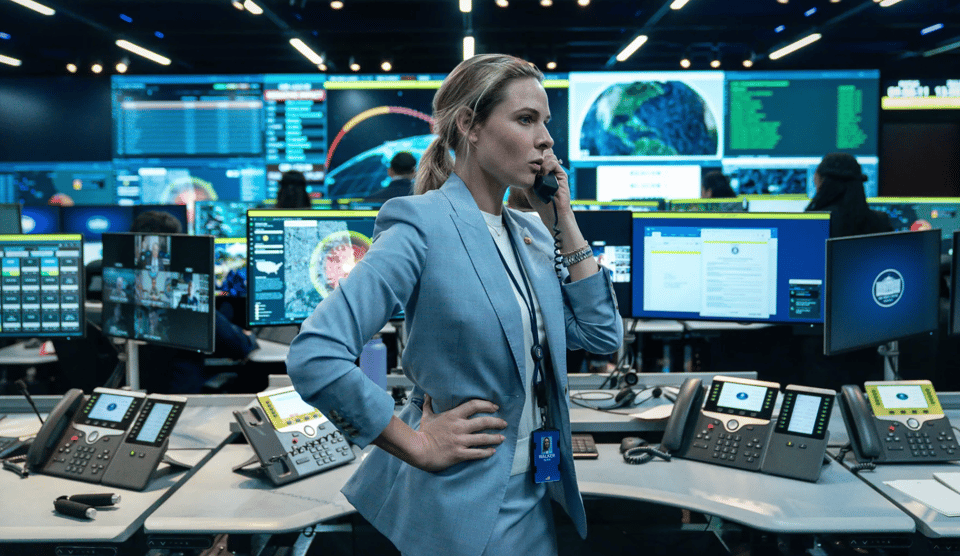
But there was an exception in 2025 with Kathryn Bigelow’s “House of Dynamite” for Netflix, a “what if?” in which an unknown country has launched a nuclear missile, with Chicago as its target. The movie follows national security experts, military experts and ultimately the president as they stare down two options: Shoot the missile out of the sky before it hits (a proposition with an iffy success rate) or retaliate? They have only 19 minutes to decide before impact.
I didn’t particularly like the movie, but I appreciate that it was made at all, and last year I talked with two people from the Bulletin of the Atomic Scientists about the film’s depiction versus real-world threats.
The Bulletin was founded in 1945 at the University of Chicago by Manhattan Project scientists as a way to inform the public “about threats to the survival and development of humanity from nuclear weapons.” Pop culture certainly plays a part in that.
The publiction is run by Alexandra Bell, who told me this:
It’s been a long time since Hollywood put out a movie that really just deals with the threat that nuclear weapons present each and every day, but I’m not surprised by that — the world moved on, too. At the end of the Cold War, everyone sort of wiped their hands and said, “Ugh, glad we finished that particular problem” and put their focus elsewhere. Putting the nuclear threat front and center wasn’t something people thought was necessary because, post-Cold War, we had managed that threat and came out on the other side.
Considering that aforementioned close call with China, it feels conspicuous that the risks presented by AI are absent from “House of Dynamite,” and I remember having that same thought a year ago, when first watched.
I don’t know when the script was written, but it’s a failure of imagination that, when the film was coming together, Bigelow and screenwriter Noah Oppenheim didn’t think more deeply about where AI technology was going.
(A completely unrelated aside: The top paragraph of Oppenheim’s Wikipedia page includes this information: “He became president of NBC News in 2017. The same year, Ronan Farrow claimed that Oppenheim attempted to stop his reporting on the Harvey Weinstein sexual abuse cases, a claim that Oppenheim denied.” When Oppenheim left the job in 2023, he “entered into a film and TV production agreement with NBCUniversal.”)
OK, back to AI and real-world nuclear risks. When I asked the Bulletin’s Daniel Holz about this, here’s what he said:
There’s an increasing amount of information that needs to be processed quickly and all that stuff is going to be done through AI systems. So AI will be part of any decision-making, whether we like it or not. All AI has to do is get it wrong once and it’s catastrophic. And AI is embedded into everything, including military systems.
And here was Bell’s answer:
Governments around the world, including the United States, are behind the curve in reckoning with the effects of emerging and destructive technologies. AI is at the forefront of that.
The U.S. has been quite careful about the incorporation of AI into nuclear command and control structures for this very reason. That’s the good news. The bad news is that if you were to incorporate these kinds of technologies and things go wrong, you could potentially end up with a scenario where an AI tool hallucinates a threat.
But you don’t need AI to get into that kind of scenario.
A sobering reminder of just how precarious this all is:
During the Cold War, we had systems go awry that misinterpreted a particular threat as a full-on first strike. So even before AI, the tools we were using were fallible.
We’ve set up a system that’s reliant on mutually assured destruction and eventually our luck is going to run out, whether it’s through AI or human error, or bad judgment by the nine men who control nuclear weapons.
When I asked which movies they thought were most effective at getting audiences to contend with these issues, they cited two classics: “Fail Safe” starring Henry Fonda and directed by Sydney Lumet (streaming on Tubi) and “Dr. Strangelove or: How I Learned to Stop Worrying and Love the Bomb” starring Peter Sellers and directed by Stanley Kubrick (which you can watch for free via the Internet Archive).
Both came out in 1964 and are fun-house mirrors of the same premise: A technical malfunction sends a plane armed with nuclear weapons to Russia, with catastrophic results.
In “Fail Safe,” the men in charge are sober-minded figures. In “Dr. Strangelove,” they are a more satirically unhinged group. In the end, at least in storytelling terms, it doesn’t matter who is in charge because destruction is inevitable.
Here’s what Daniel Holz said about our current circumstances:
There isn’t a lot of trust or good communication right now, so within that climate, little mistakes can rapidly metastasize into disaster. Nations need to work together to reduce these particular threats, and they just aren’t.
I’m sorry, is this depressing? I’m not being sarcastic! A lot is depressing right now, and that probably shapes the kind of stories audiences are seeking out. A counterargument to that would be a movie like “Digger,” which opened in theaters this week and features some big names — Tom Cruise in front of the camera, Alejandro Iñárritu behind it — attempting to take on our current and future climate catastrophe.
I should mention that the Bulletin of the Atomic Scientists does not limit itself to concerns about nuclear weapons but, more broadly, “man-made threats to our existence,” which includes, yes, climate change, but also what it calls “disruptive technologies”:
What connects these topics is a driving belief that because humans created them, we can control them.
Earlier this week, for example, the Bulletin published a piece that explores the ways in which “the bad science of AI doomerism is good for big business.”
There is only so much weight TV and film can bear in terms of grappling with our anxieties. Especially when audiences are desperate for a momentary reprieve from the drudgery and stress of daily life, but also from the daunting realities of our world that are dictated by untrustworthy and erratic people who hold power.
So, with that in mind, if you’re in the market for something that’s a few ticks above a mindless diversion: “The Good Wife” creators Michelle and Robert King have a kicky new legal drama premiering on CBS Oct. 8 called “Cupertino.”
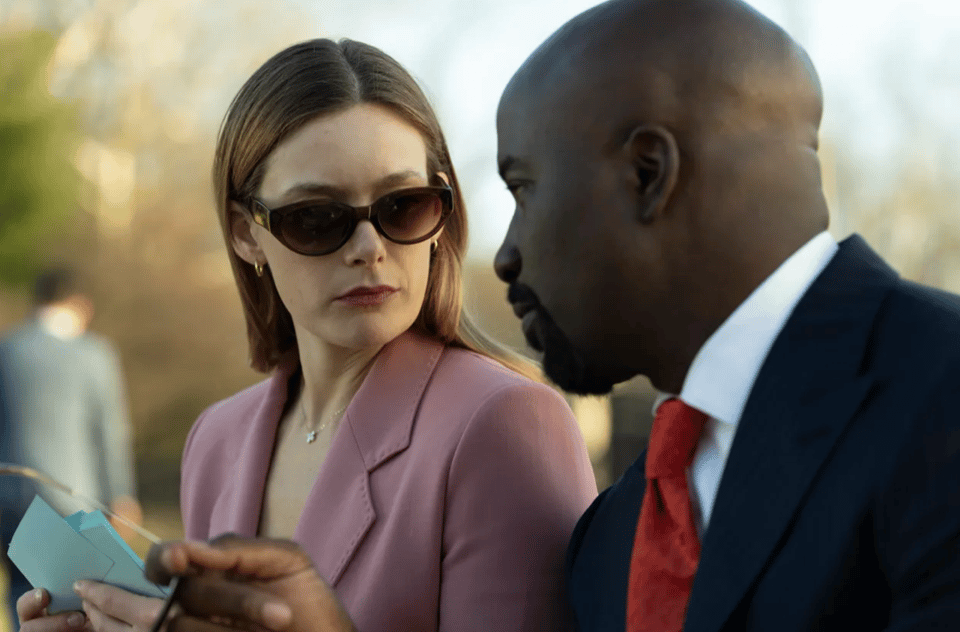
Set in Silicon Valley, it stars Mike Colter as a seasoned attorney who teams up with a newbie lawyer (Rachel Keller) to launch a firm that takes on tech giants, defending their clients David vs. Goliath-style.
And there’s a running AI storyline throughout the season.
I don’t love the show, but I like it enough. And pickings are slim. Happy viewing.