A Spell for Cohesion
Dear Reader,
A few months ago, I was seeking advice from a friend about whether or not I should apply to a couple of art shows that had open calls for submission. While I’ve been eager to participate in more opportunities to share my work, I was lamenting that I didn’t have anything on-hand that I was excited to submit. In particular, I didn’t feel I had any finished quilts that were show-worthy. I had recently received a few rejections to juried shows, ones in which I had to pay an application fee, so I was feeling the dilemma of shelling out money for something that I thought would likely result in rejection.
My friend wondered if my fear and insecurity was a pesky case of imposter syndrome. She recommended I squash it like a bug and submit submit submit. I considered this, but the feeling that I was not ready to continue applying to shows remained.
Cody Cook-Parrott often challenges the notion that imposter syndrome is inherently bad. Sure, it can fill us with doubt and keep us small and hidden. But sometimes it’s a signpost for where we need to go deeper in our practice. Where we need to do more research or gather additional resources. I had a hunch that my imposter syndrome in this case was the latter, that it was pointing me toward a necessary detour.
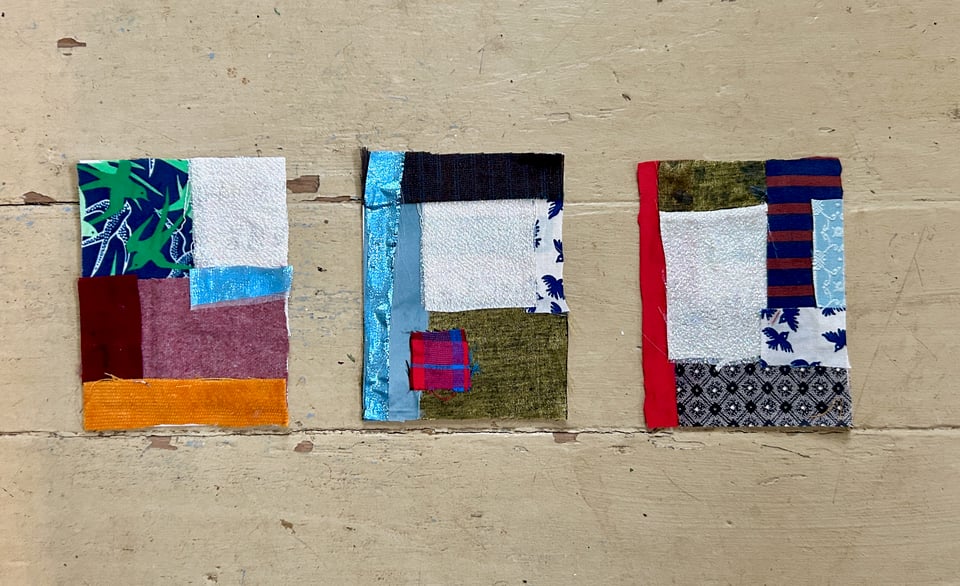
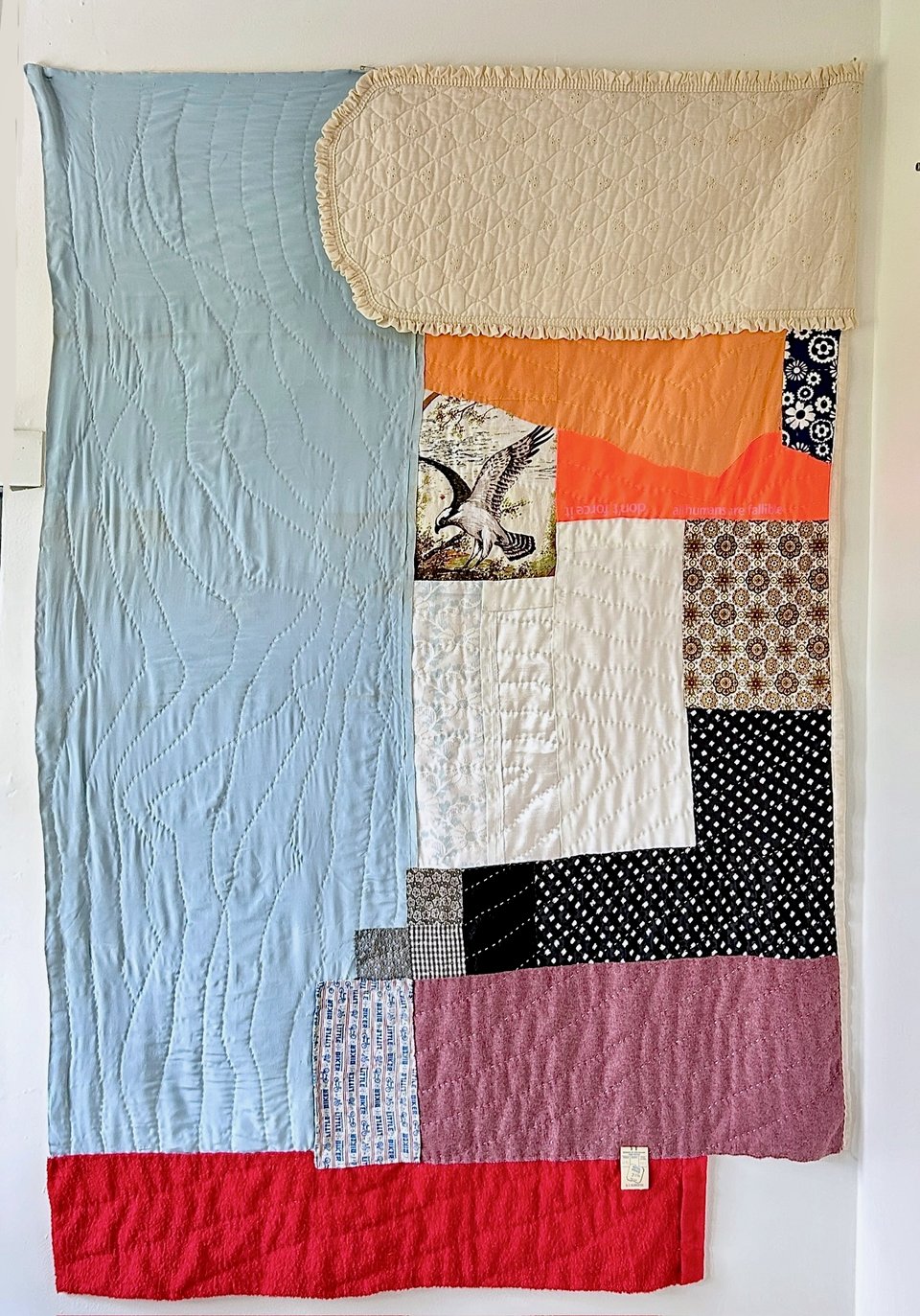
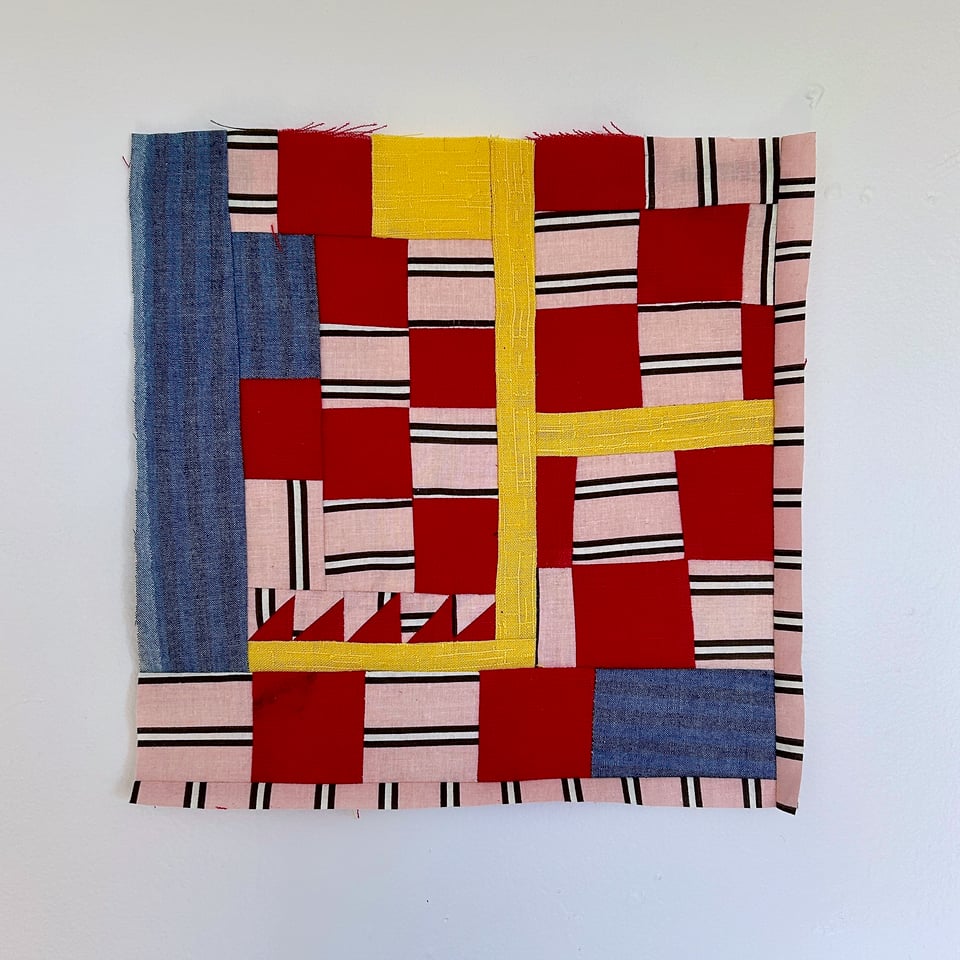
This detour, I think, is the need to hunker down and make more work. Quilts in particular. I feel very much that I’m still in a process of finding my voice with quilting. When I look at the quilts I’ve made, I sense a lack of cohesion. I can’t quite see a unifying thread. I see myself trying lots of different styles and approaches to quilting: improvising with traditional forms, going rogue with no pattern whatsoever, and more recently, using a ruler and rotary cutter for a more precision-based style. While I’ve had fun experimenting, it’s also left me feeling scattered. And this scattered feeling makes me yearn for cohesion and integration.
I want to get a better sense of my voice. Maybe you’re reading this and thinking, “What are you talking about? I can see your voice and your style.” And maybe you can! Or maybe you agree that I’m still very much searching. I don’t think my work is totally devoid of individual style. But my hunch is that the personal mark of the artist might be easier for outside eyes to see, and a little more obscured from the maker. And I want to be able to see my maker’s mark for myself.
I also believe that “finding your voice” isn’t something that can be fully achieved and completed. I think it’s an on-going process of fine-tuning, of pivoting, of reassessing and evolving. I’m trying to keep this top of mind as I make this proclamation to you that I want to find my voice. I realize I’ll probably always be searching to some extent, and that that’s just part of what art making is all about. I also think this need to search could easily tip over into being the unhelpful form of imposter syndrome—something to keep my eye on.
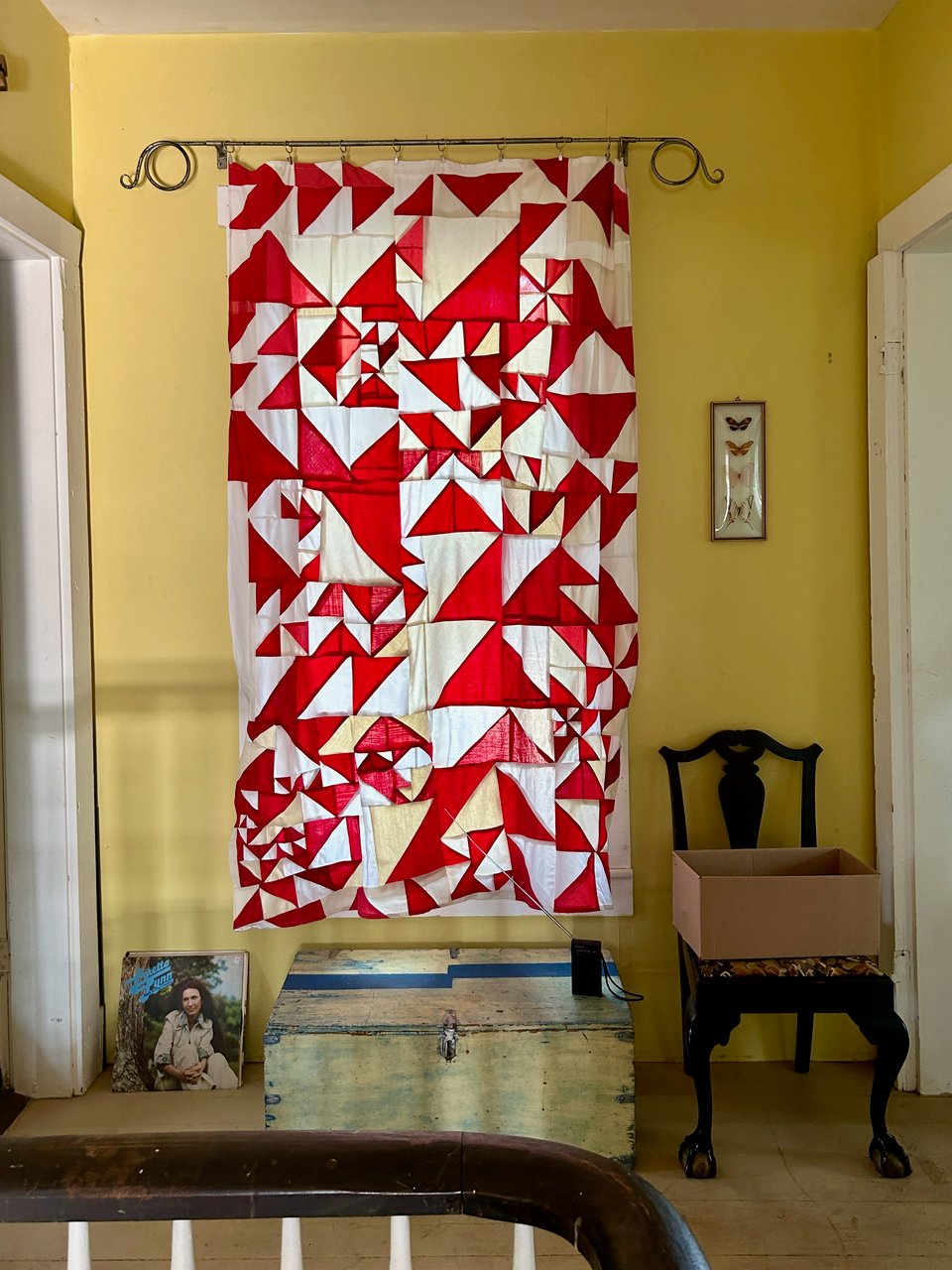
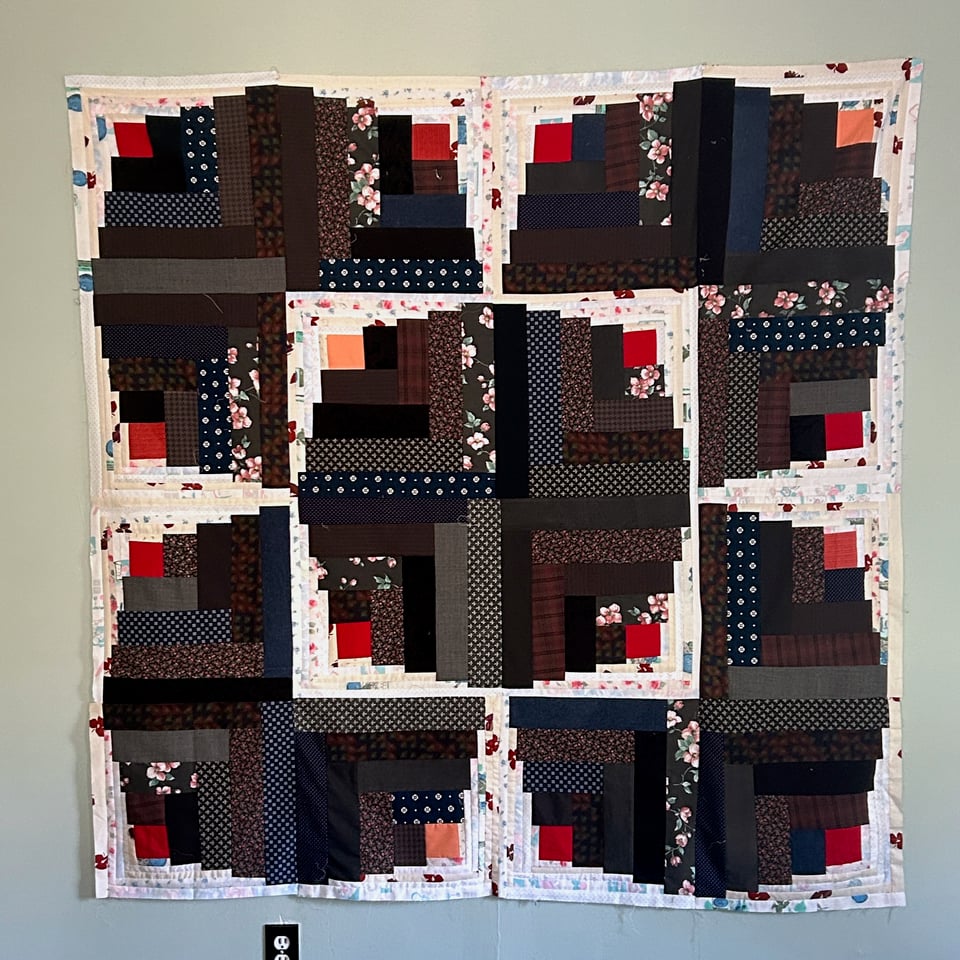
So in my quest for cohesion, I’ve decided to spend 2025 working on a series of quilts. My dad died at the end of 2022, and I recently started making quilts with his clothes. I’ll likely share more about this process in newsletters-to-come, but for now I’ll share that my plan is to complete one quilt top per month this year. I’m so far on track.
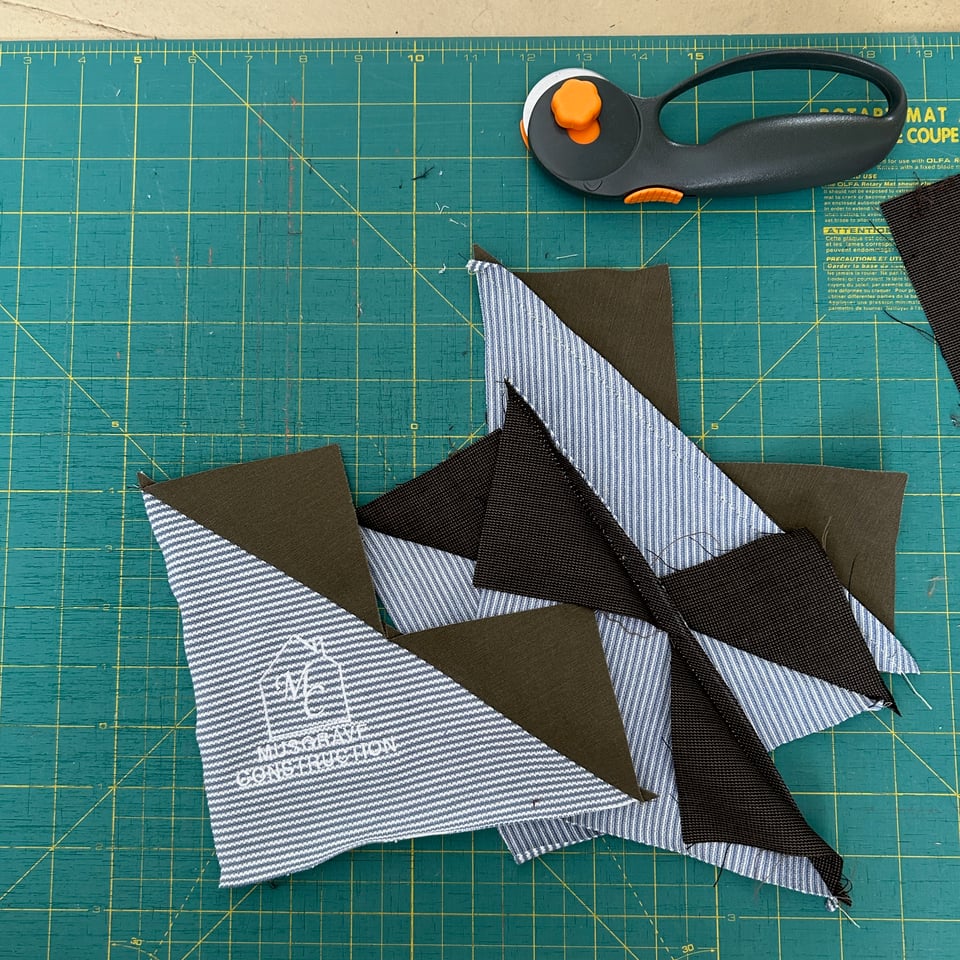
Certainly this project is a way for me to connect to my dad and process my grief. But I also hope that after making 12 quilts with a restricted set of materials and conceptual theme, I’ll get a better sense of voice. That something of a point of view will bubble up and make itself known to me. That’s the spell I’m casting, anyway.
FIELDNOTES:
East Kentucky was among the many areas hit hard by winter flooding over the weekend—just two and a half years after devastating floods ripped through many of the same communities. Please consider giving to EKY Mutual Aid to help those impacted.

I recently had the pleasure of seeing Reclaiming, a short film by my friends and colleagues Clara Haizlett and Talcon Quinn. The film documents oral histories of sexual & reproductive wellness traditions in Appalachian Ohio. I highly recommend checking it out.
Have you listened to the band White Magic? A friend turned me onto their album Dat Rosa Mel Apibus a few months ago and I keep returning to it.
I recently listened to this podcast episode from Haptic and Hue about Hawaiian quilt traditions and it was very interesting.
I also recently read the article “Quilts, Social Engineering, and Black Power in the Tennessee Valley” by Janneken Smucker in Southern Cultures and was blown away by the quilt designs of Ruth Clement Bond. I was also blown away to find out that the phrase “Black power” is thought to have come from one of her quilts.
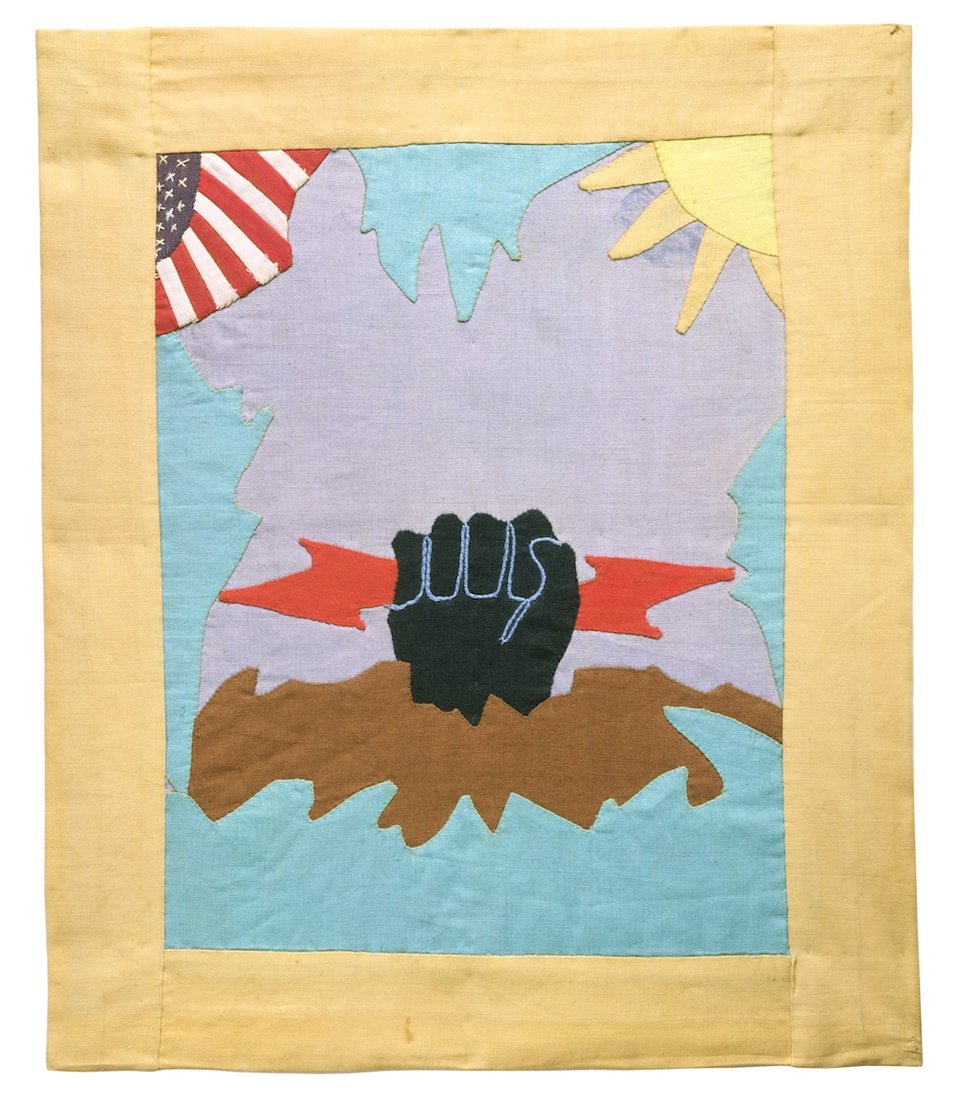
Rose Marie Thomas, appliqué panel of Black Power, 1934. Quilt designed by Ruth Clement Bond, from Museum of Arts and Design, New York, New York.