Water Watch (copy)
But first, this message!
[Hi, All—I think I accidentally just sent this to two people yesterday, so I am trying again! Apologies if you received this already.]
I’ve been quiet because, since the election, I’ve just been overwhelmed.
As you know, we (the planet) were in trouble before when it comes to climate change, and I am concerned about what new damage the incoming presidential administration could do to the environment. So, I took a beat. My mind was going in too many directions…and even this Nature Note is a little scattered! Stay with me.
We were also busy for a bit dealing with a municipal code violation. Our Borough sent us a code violation (“maintenance of exterior premises” and “obnoxious growths and accumulations prohibited”) for our native plant garden on the tree lawn and in the front of our house.
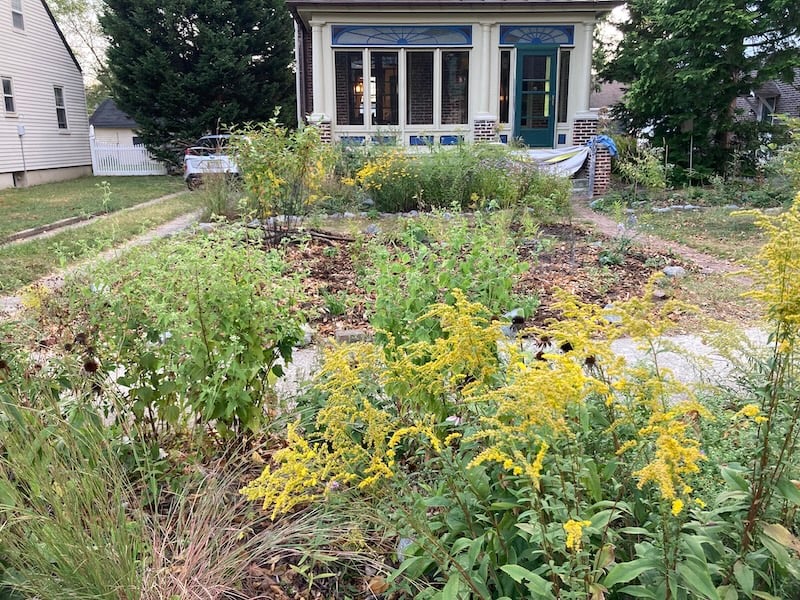
But the code is is for dead, noxious, and overgrown weeds (I’m paraphrasing). Certainly, native plants turn brown in the fall, but they’re very much alive. And as native plant peeps say, brown is a color too.
Anyway, in response, we wrote a letter explaining why our carefully planned and maintained native plant garden doesn’t fit the definition of an unmaintained garden and/or obnoxious growth. We also noted that native plants have many environmental and health benefits traditional lawns do not, and whether or not a garden or lawn is pretty is subjective. Having to respond to this caused a lot of anxiety, of course. Haven’t folks noticed how much time, effort, and care we’ve put into this? What if we’re taken to court? What if my plants are mowed down?
If you follow us on Instagram, you are likely familiar with my beloved “Bud Watch.” Starting in the spring, I take photos of native plants that are ready to bloom and share why they’re awesome for the environment. This has turned into “The Bud Watch—More than Just Buds.” I now use this feature as an excuse to document all sorts of fun stuff going on in the little habitat we created on our ordinary suburban lot. Native plants—what I now call my noxious weeds—bring me joy.

Speaking of joy, I’m happy to report the code enforcement officer handled our case professionally and efficiently, and other Borough officials were supportive and responsive. The code enforcement officer did rescind the violation. Our Borough Environmental Commission and Green Team (I’m on both) have put out a lot of messaging about the positives associated with native plants. But I guess have a way to go!
Side note: Tyler and I have also talked about whether or not to put up some signage. When we first starting planting native plants, I was against this. I said, well, people should already know what this is. But maybe they don’t, and maybe a sign would help lend some legitimacy to our plants—or, more importantly, inspire people to plant native plants. There are several signage options, and I’m not sure what I want to use yet. Stay tuned.
If you’re not sold on native plants yet, I get it. Remember, I rejected early Tyler’s suggestion to turn our front yard into a meadow. But check out Doug Tallamy’s Nature’s Best Hope. Once you read more about the reasons for planting natives, you might be convinced too. Each of us really needs to help create habitat (which does not need to be your entire front or back yard), and municipalities, counties, states, and the federal government need to protect it. By the way—native plant gardening helps you keep your landscaping costs down. You won’t need a lawn service (unless you choose to hire a native plant gardener to check on your plants once or twice a year), pesticides, or constant watering. That saves you money!
I’m trying to keep in mind something I think a lot about as a public historian. I don’t want to nor should I be preaching to the choir all the time. If I were, nothing and no one would change for the better. But advocacy is hard some times.
Ok, ok. let’s talk about water.
The title I gave this Nature Note has more than one meaning. First, if you’re in my area, you are experiencing what the US Drought Monitor is calling a severe drought. These conditions spurred the State of New Jersey to issue a drought watch on October 17. The state has since elevated this watch to a warning. So, you can help by reducing water use where you can. Remember, we need and use water for all sorts of stuff. Watering lawns (though, remember, the more native plants you have, the less water your exterior will need!), washing clothing, taking showers, flushing the toilet, washing cars, watering food in gardens and on farms, etc. It really helps if we all pitch in now to reduce water usage so we don’t get to a point where usage will be restricted by the state. Yes, it has been raining, but we can’t catch-up in just a few days.
In addition to be concerned about the drought, I am also interested in learning more about water quality in my area. But first, let me tell you where I am. According to the US Geological Survey, I’m in the lower Delaware River Watershed (you can find your watershed here). According to the search tool…my entire watershed is “impaired.” You can dig through the data to see what this means. The map is red, though!
At any rate, I started doing some citizen science water testing for nitrates and salt. The good news: Both sites I tested (the Delaware River and the Pompeston Creek) had “excellent” ratings for nitrates and salt! I requested testing strips from the Izaak Walton League of America. And I just learned I can submit my salt readings to the NJ Watershed Watch Network too. I’ll keep testing since these results can change throughout the year. There are other nasties in the water, though, so that’s not great…
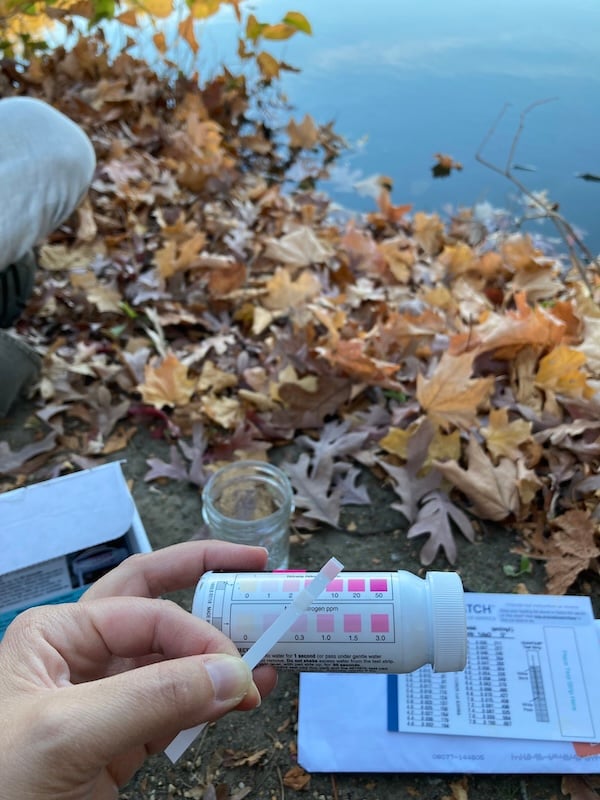
The salt test is actually for chloride. Salt is sodium chloride. (I almost failed chemistry in school, just fyi.) I’m worried about salt because so often I see people wasting salt in the winter…big time! And it’s not good for the environment! So stop it!
I just watched a webinar about smart salting that I found really useful. For example, experts are trying to get folks to simply salt less. Did you know that about a mug full of road salt is enough for TWENTY average sidewalk squares?
Again, adjusting our behavior and not necessarily changing it entirely can go a long way toward lessening the environmental impacts of being humans. And! It. Saves. Money.
Kind of funny how we have to use money as a primary motivator to encourage people not to burn the planet, but here we are.
Additional notes
I recently discovered Bill McKibbon’s work. He’s in environmental studies at Middlebury. You can subscribe to his newsletter, The Crucial Years, here.
Oh! Halloween was a success. We gave out books, recycled pencils, native plant seeds, and potatoes. We are now known as “the potato house.” You’re welcome.
I changed my business banking to a bank that’s a Certified B Corp and is fossil-free certified! Learn more about green banking here.