Aster Advocacy
A few years ago, when I first got into native plants, I asked my favorite volunteer at Bowman’s Hill Wildflower Preserve nursery what I could get for fall. I explained that I had new (vintage) concrete pots I wanted to fill with something pretty.
“Oh, asters,” she said.
Asters?
They are now a favorite of mine, and they’re great to get instead of (or, if you really like chrysanthemums), in addition to chrysanthemums (mums) this fall.
Why the fuss?
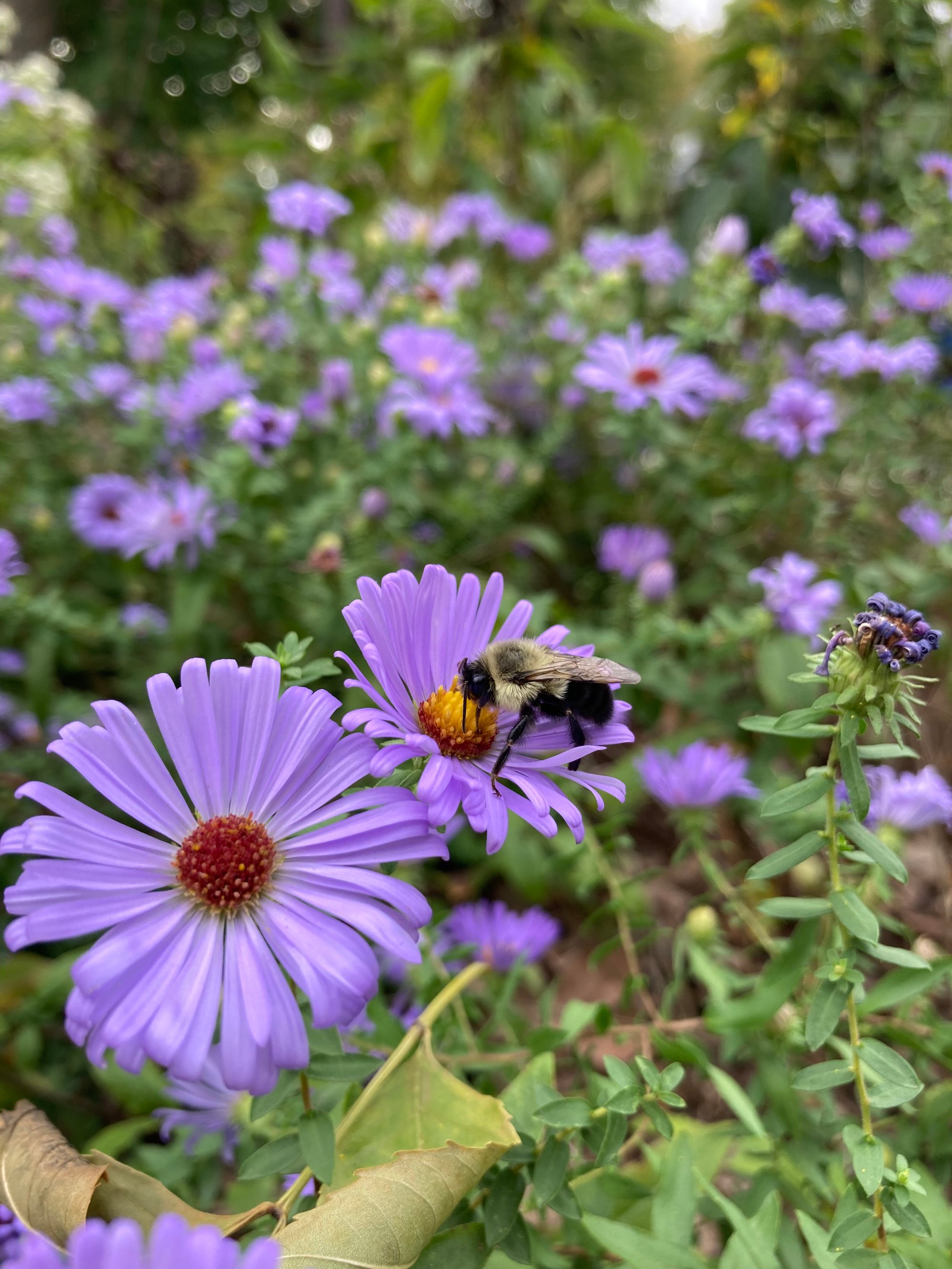
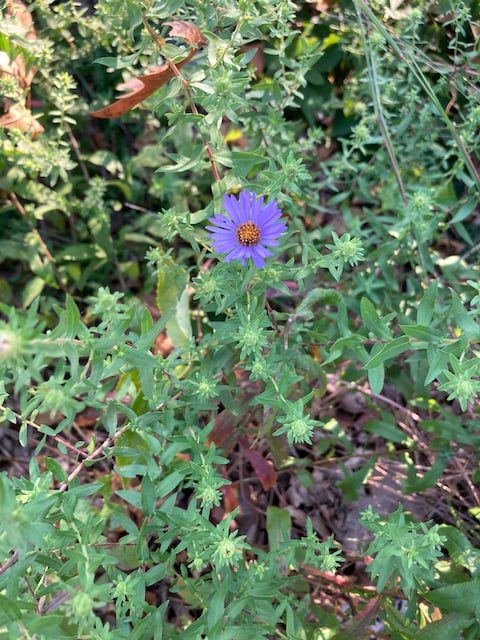
I love mums too. They are hardy. They are colorful. Seeing them around means it’s the beginning of my favorite season. But if you’re a native plant enthusiast like I am, you know they don’t do a whole lot for native pollinators. Native asters come in an array of purples, blues, and whites. Some are great for the shade, others for the sun. And pollinators love them (and so if you plant them, you’re more likely to be helping pollinators keep up their end of the bargain on the food chain—which helps us live off food, btw). Goldenrods are also fall bloomers that are great for pollinators! If you use any social media, you may have seen a few accounts such as Homegrown National Park on instagram, for example, sharing their love for asters and other fall-blooming, pollinator-friendly native plants.
And so, it won’t surprise you to learn that, when I got home from Mom’s Organic Market today, I submitted some feedback. After picking up some staples and noticing they were selling mums, I sent them a message and encouraged them to consider selling native asters instead. Will my feedback have an impact? I don’t know. I sent them some info on the importance of native pollinators and where they can get native asters in the region. I’ll let you know if I hear anything.
If YOU want some asters (and I know you do!), there are many great sources for native plants around. For my local readers, check out the info on the Borough of Riverton Environmental Commission and Green Team webpage. For others, if you live in another state, check with:
-a state native plant society
-a non-profit, educational garden that plants natives
-a natural history museum
-your own municipal environmental or sustainability group
Orgs like these often provide resources and tips on a variety of topics. If they haven’t posted this info, send them a note and ask for guidance!
There are also a few mail order suppliers out there such as Prairie Nursery.
Well, happy fall! Go plant some native plants.
Oh, and leave the leaves! As part of my volunteer work with my municipal Green Team and Environmental Commission, the group and I developed this educational message and attempted to have it sent out via a municipal mailing, but our Borough Council decided to vote on and “deny” the mailing. I did not anticipate that communicating an educational message to our neighbors would be so controversial. (Thanks to our liaison for voting in favor). Unfortunately, I was unable to be at that meeting. The meeting minutes refer to the insert as an an informational “pamphlet.” I’m not sure why, as it would have been just a slip of paper, but, either way, it would have read:
“To rake or not to rake? This fall, leaving some (or all) of the leaves on your property provides your yard and garden with free mulch and a habitat for beneficial insects and other small animals that need a place to shelter over the winter. If you've never tried this before, this year, consider leaving some leaves in one of your garden beds. Borough of Riverton Public Works will be happy to haul the rest as usual! For more resources, please visit the Borough of Riverton Environmental Commission and Green Team website: https://riverton-nj.com/environmental-commission/.”
And then, you would have gone to the municipal website and seen some additional info (forthcoming, but you can start with the folks who originated the catchphrase). Since our municipality is so small, sending something out in the mail with something like the sewer bill is a great way to catch the eyes of many residents. I thought this was a good opportunity to share some knowledge.
It didn’t work out, but I’m not giving up on finding more ways to communicate with folks. Anyway, whether you’re local or not, please consider leaving some or all of the leaves. I know it may be new to you. But it’s good for the earth. And as my middle school poster for earth day said, “Save the Earth. It Can’t Save Itself.”
Enough. Good night.
Here are some additional notes.
As some of you know, I am a historian. I specialize in disability history and advise often on accessibility for disabled people in museums and other non-profit settings (which, btw, helps everyone). Anyway, I subscribe to Patricia Chadwick’s newsletter Disability History and Culture. In her September 2024 newsletter, she linked to an article at the intersection of climate and disability: “States Could Help Disabled People Survive Climate Change—By Involving Them.” Check it out.
Do you like cheese? Do you like local cheese? Then do I have the CSA for you! Tyler and I subscribed to Collective Creamery’s localish cheese CSA this past summer. It was. Amazing. Delicious, life-changing cheese, and plenty of it with each shipment. We plan to get the winter one was well. Tyler always said that if we were super-wealthy, we’d have good cheese all the time. We’re not super-wealthy, but we can now have good cheese some of the time! The CSA doesn’t come to you—you have to get it at a local pick-up. The South Jersey location (Moore Brothers Wine Company in Pennsauken) works for us.
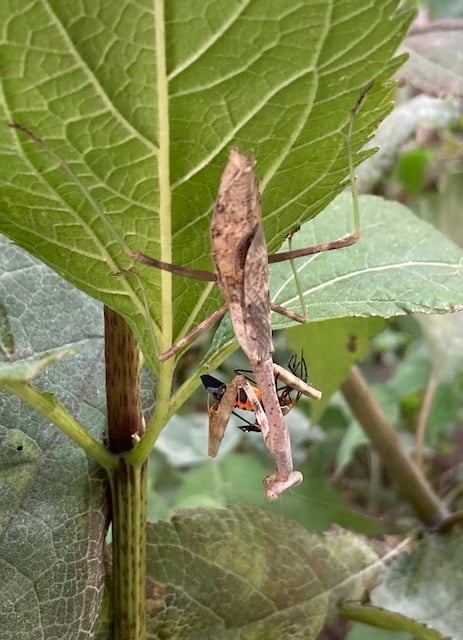
We saw a native praying mantis on our milkweed! I think that’s good?
I’ve read a few books about staying positive despite climate change, but I think this one, What if We Get It Right by Ayana Elizabeth Johnson, is the best so far. Almost every time I read a chunk, I read about then do some specific thing to help mitigate what’s coming. She also uses a lot of statistics and puts things in terms of money, which I think (and hope) helps us encourage everyone to make changes in their lives and communities. I heard about it from NPR (I know, I am so cliche, right?!).
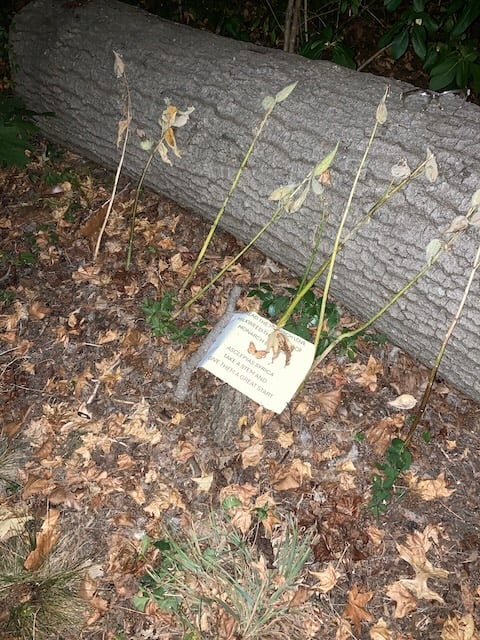
I walked by my favorite native plant front “yard” garden in town the other night and was delighted to see this sweet display.