
The Reformatory
The ghosts of Jim Crow
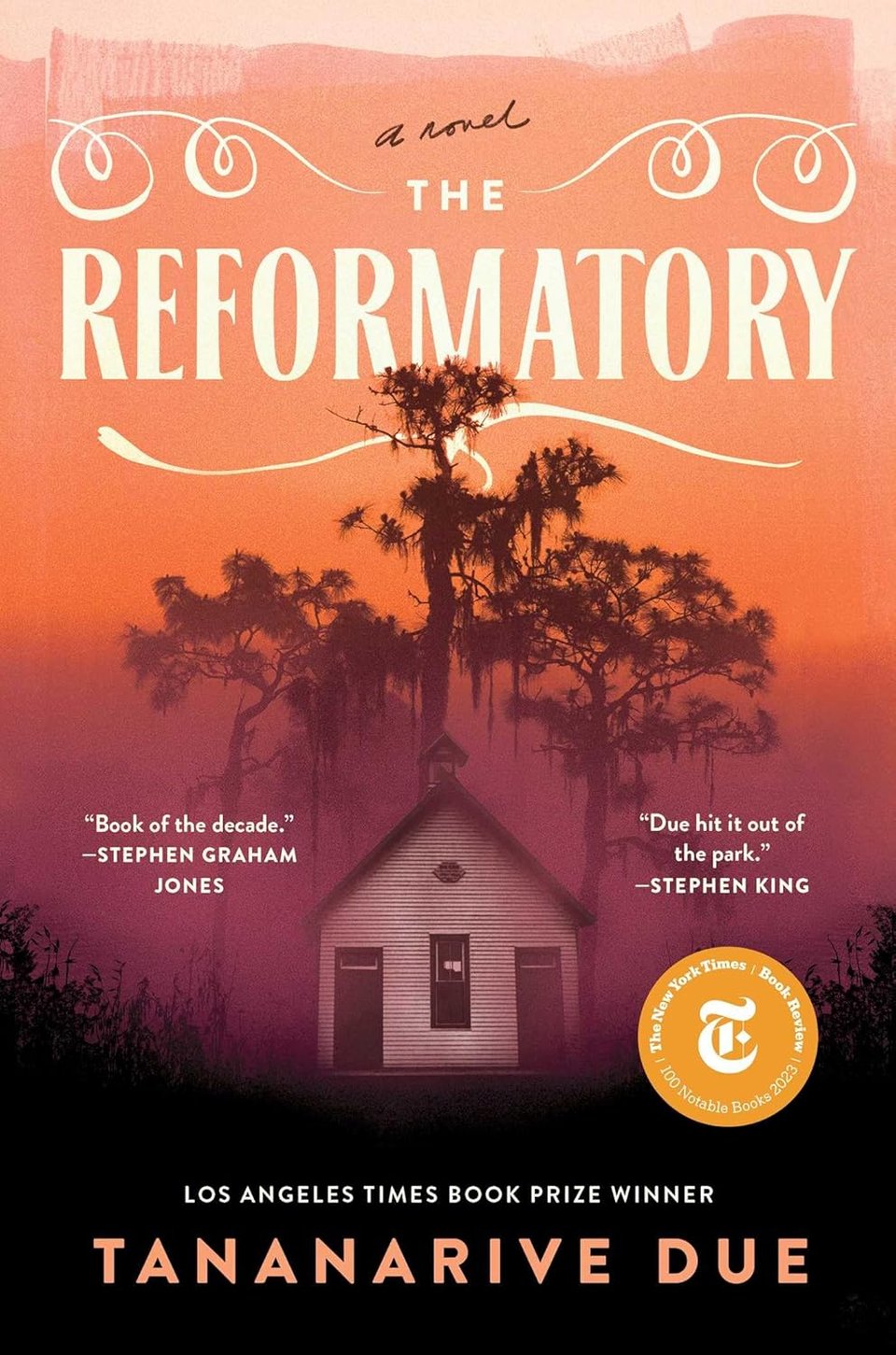
“When you start working there...it turns you into somebody else. Brings out all the worst, buried parts of you. Any wrong you ever wished you could do—that place sets you free,” deuteragonist Gloria learns of the titular “school” in Tananarive Due’s novel The Reformatory (148). Due’s historical fiction indeed revolves around the unearthing and engendering of violence within the fraught system of juvenile incarceration. More than a horror story, The Reformatory is a historical fiction haunted by nonfictional ghosts.
Set in 1950 Florida, Due’s narrative centers on the fictitious Gracetown School For Boys, a self-admitted reference to the real Dozier School for Boys that operated through scandal after scandal from 1900 to 2011. When twelve-year-old Robert Stephens defends his sister Gloria from a white boy’s sexual harassment, Jim Crow jurisprudence sends him to the reformatory, a work camp thinly disguised by the pretense of under-supplied classes, a football team, and a marching band. As Robert struggles to survive relentless abuse, sixteen-year-old Gloria searches for allies to support Robert and save him from imprisonment. But warden Fenton J. Haddock has no intention of letting anyone leave the reformatory, especially not when he already contends with the haints of those who could only escape in death. What follows is a story of carceral cruelty, community resistance, and the ghosts of racism’s victims.
While the split focus on Robert and Gloria occasionally decreases the urgency of the narrative, it also allows Due to provide a more comprehensive historical fiction. Gloria’s plot probes the Sisyphean challenge of successfully legally exculpating, or at least reducing, a Black child’s sentence, and it is clearly evident that the same law that sees fit to force twelve-year-olds to pick cotton on pain of death will not save anyone. However, Gloria’s perspective does enable the novel to show the corrosive nature of Jim Crow justice—the callousness of the rich and white, police enabling extrajudicial violence, and sexist and racist restrictions on the validity of her testimony all play a part. Conversely, Gloria’s part of the story also shows avenues of resistance against segregation in broader society, including the wisdom and mentorship of Black elders, queer women providing shelter, and communal anti-racist direct action. Furthermore, Gloria’s perspective allows Due to honor real Civil Rights Movement martyrs like Harry and Harriette Moore (whom you can learn about from the Moore Cultural Complex in this article), using Gloria’s second sight to highlight real history.
Indeed, The Reformatory shines in using supernatural flashes of civil rights struggle and haints of its ghastly pasts to illuminate the systems that imprison children. As Gloria remarks near the conclusion, “the whole town had a hand” in suffering at the school, not just the judge committing children to prison for want of parents or the warden cracking the whip. Robert’s encounters with haints and Gloria’s visions of racist violence further broaden this systemic view, weaving the beatings and starvings of The Reformatory into a broader indictment of our malignant carceral system. Due’s writing is embodied, gripping, and always suspenseful, but it’s just as potent as a discussion piece on the place of juvenile incarceration in our society. Like its haints of murdered children, the stark ending and thorny questions about imprisonment of The Reformatory demand engagement.