
The Buffalo Hunter Hunter
History and massacre in the American West
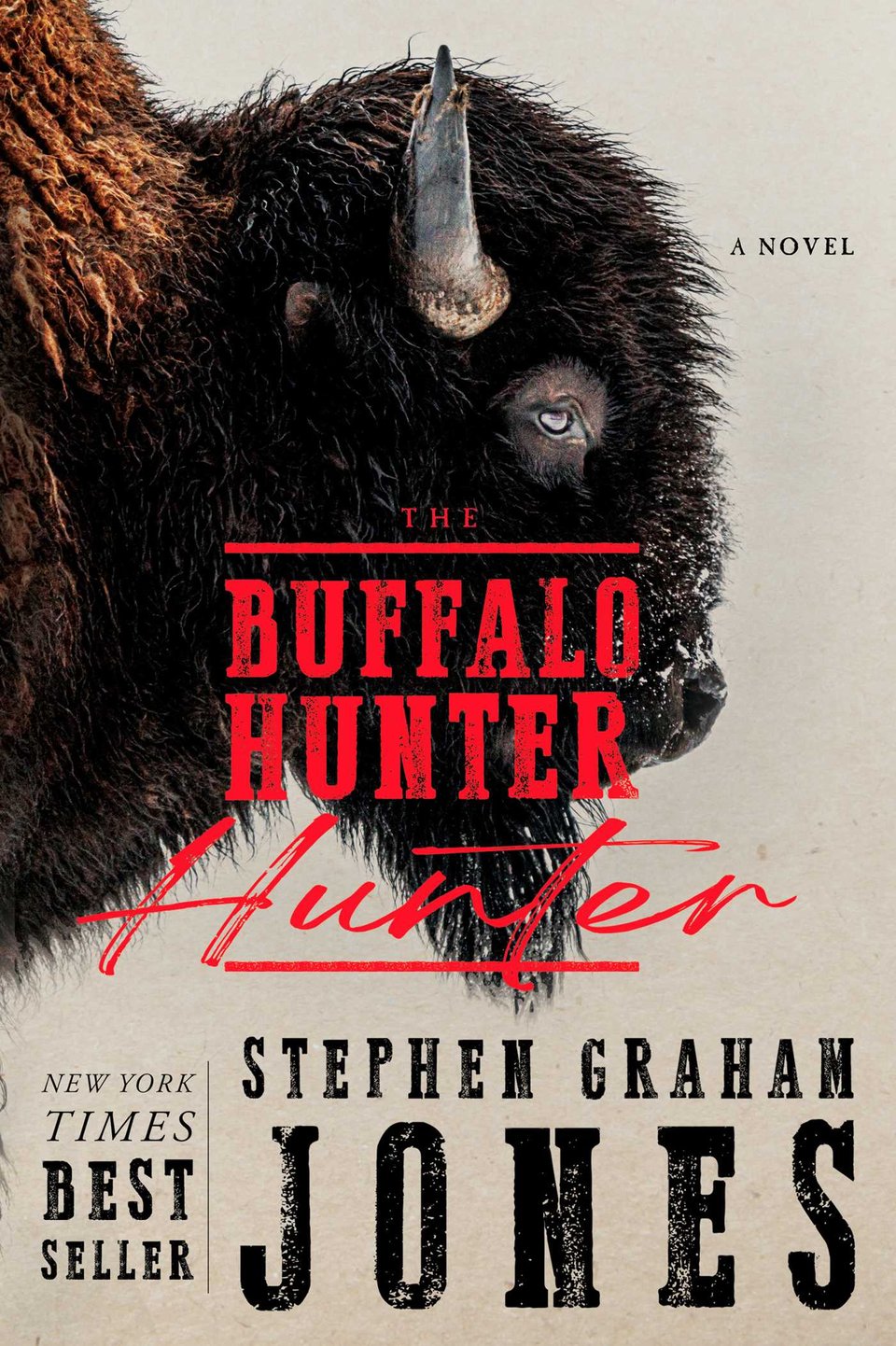
For my birthday this year, I wanted to write at greater length about a book that I’ve been thinking about since reading, and Stephen Graham Jones’s historical horror novel The Buffalo Hunter Hunter charged into that category six months ago. This is a book that scratches a lot of personal itches for me—breathtaking prose, vibrant characters, clever references to actual history (more on that later), artful use of fantastical elements, reinterpretation of vampirism that compares favorably with Ryan Coogler’s recent film Sinners, and a clever plot that asks uncomfortable questions. From the real story of the twinned massacre of Blackfeet people at the Marias River in 1870 and the massacres of bison in the Great Plains, Jones paints a discourse on historical fact amid a sprawling canvas of kinship, desperation, and Western-style vengeance.
The Buffalo Hunter Hunter begins in 2012 when Etsy Beaucarne, a Communication and Journalism professor at University of Wyoming hunting material for a tenure-track completing book, encounters the 1912 diary of ancestor Arthur Beaucarne, who disappeared that same year. Between waxing grandiloquent about gifts from parishioners and his exile in the Wyoming hinterlands, Arthur’s manuscript records conversation with investigators about a mysterious set of murders. Indeed, Arthur’s transcription of new confessions by a Pikuni Blackfeet man called the Fullblood provide the novel a non-Beaucarne third narrator with lyrical, incisive perspective of his time in 1870, starting when he was simply called Good Stab and neither the Marias massacre nor the buffalo killings had been completed.
From the start, the three narrators’ motivations explode a plurality of perspectives on history through the fiber of the historical fiction. Etsy admits a historian or other academic might be better suited to interpret the diary, but rhetorically asks “are any of the scholars from those programs related to the subject?” and aspires to wield the artifact for her tenure as her father did his own research (17). In his own investigation, Arthur presumes an Indigenous person guilty and confidently states that “you can’t guess” at the killer’s reasons; “maybe Franz Boas [paternalistic “father of anthropology”] can, but I’m no Boas. If anything, I’m more Boethius [Roman Christian philosopher], scribbling my earnest inquiries into this log, with hopes of arriving at some greater truth” (16). Arthur dismisses out of hand any possibility of earnestly empathizing with an Indigenous perspective and instead chooses between the budding science of anthropology and a scholar who employed "earnest inquiries" to arrive at a unified understanding of the world while persecuted and imprisoned. On the other hand, the Fullblood tells Arthur he simply wishes to “confess,” later elaborating that he’s talking to Arthur specifically to unburden himself of “all the bodies” he left behind since his last fateful day in camp with his fellow Small Robes band of Amskapi Pikuni Blackfeet (16, 32-40). While the narrators each have a distinct personal connection to the history they record, they also demonstrate different relationships to the past itself, Etsy seeking a career where Arthur seeks knowledge and the Fullblood mourns.
In this polyvocal narrative, some of Jones’s questions of historicity emerge most prominently in the subtle disagreements between confessor and priest. The Fullblood attests to the validity of his story as early as page 43 by quickly digressing to note that “I’m here after all of it, so you know it happened how I say it did” in a manner reminiscent of the self-evident truth that those who have been on the land longest often know it best (as evidenced by this Smithsonian article by George Nicholas). But for Arthur, this Blackfeet narrative immediately sends him running to his own written confession from the period, referring to his writing to quibble that Good Stab did not mention retrieving ammunition after a battle nor accurately describe a cannon’s ammunition, implying that a resulting “massacre of more intimate scale” than the Marias River was fabricated by the teller: “Your over attention to detail may very well be the undoing of your story, kind sir, at least to those of us in the know of such things” (74-75). To Good Stab, facticity lies in eyewitness experience and survival; to Arthur, the matter of historical fact is written and necessitates corroboration with other literate sources. Their conflicting views evoke the distinction between oral cultures and literature-enforcing colonizers, and the ensuing tale of vengeance celebrates the power of oral narrative even today in Etsy’s part of the story.
Indeed, though The Buffalo Hunter Hunter is a story largely “told in a forgotten church in the hinterlands, with a choir of the dead mutely witnessing,” it is also a celebration of genre, a study of kinship, and a “story of America” (302). On a structural level, Jones’s protagonists swerve through Western genre conventions as they sink into moral quicksand precipitating the iconic one-on-one showdowns; similarly, the word “vampire” simmers unspoken beneath a story where the occasional individual sucks blood due to a curse of immortality that shackles them to their stomachs. But the lush prose also conveys interspecies friendships with bison, a firm sense of place in a nurturing but undomesticated landscape, and enduring love for one’s kin. Ultimately, the The Buffalo Hunter Hunter portrays its landscape of historical Blackfeet land in the full context of Native genocide history and its denial. Criticism of colonialism is as old as the thing itself, but it's certainly never had so much bite.