
Sordidez
Storms and gardens in a future Caribbean
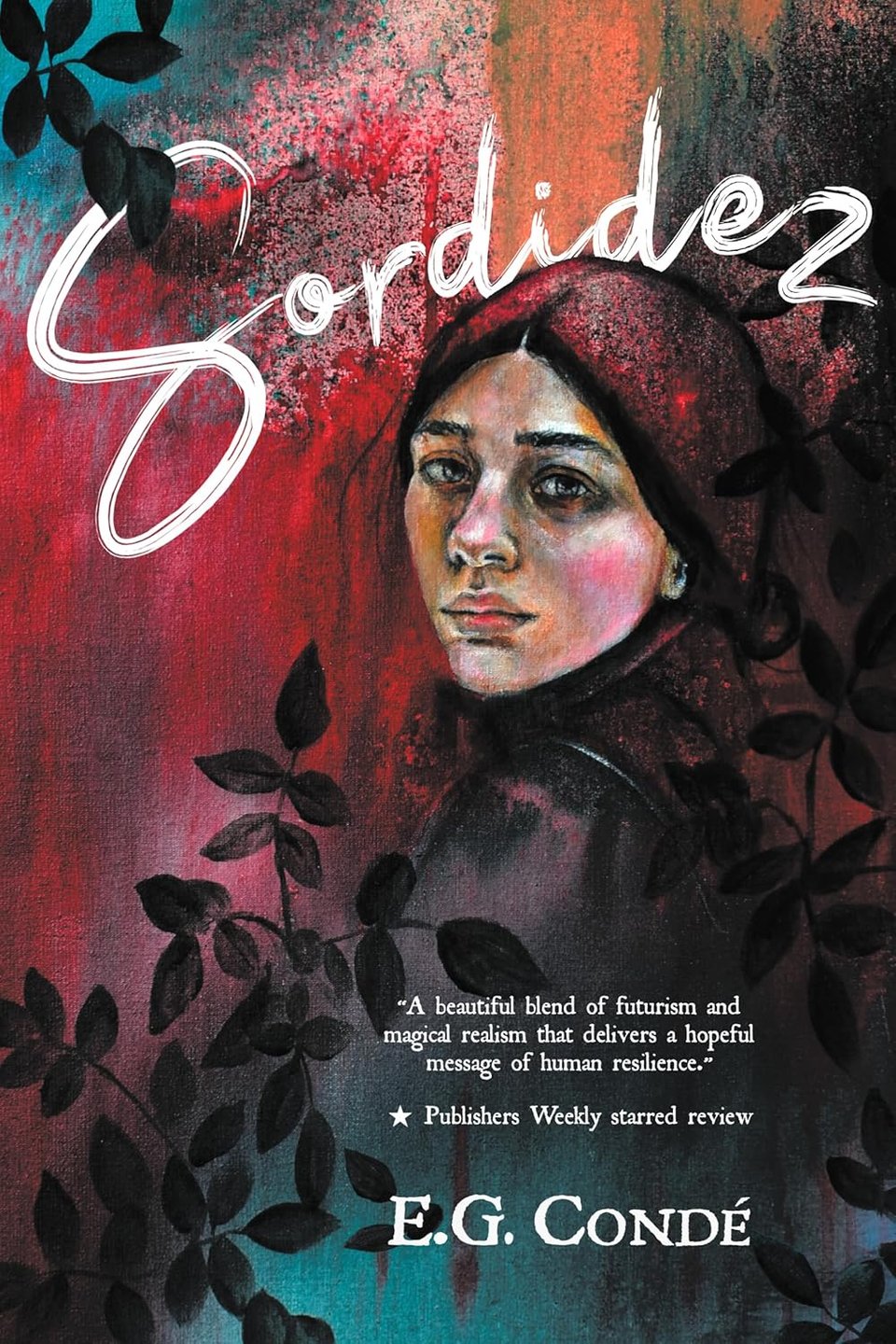
On a day when many people in the United States are celebrating Thanksgiving, I want to talk about a book that reflects on nationhood and gratitude. E.G. Condé starts his novella Sordidez with both a quote from Theodore Roosevelt and Puerto Rican protagonist Vero’s recollection of fictitious Hurricane Teddy in the near future. While one Teddy virulently trumpets that how “all civilized mankind” lies under a debt to the wars waged by “the rude, fierce settler” against native people, the other caves in Vero’s roof before descending “jaws bared, his saliva oozing down on us in wicked rivulets” (5). The juxtapositions turns on Vero’s own note that Hurricane Teddy’s random name matches that of an “American conquistador, the last to lay claim to the little jewel in the Caribbean I call home” (6). In Vero’s view, the juracán (the Taíno root that named “hurricane” in English) fits particularly well in hindsight as it represents the ending of U.S. dominion over the island. But while this post-colonization future has not yet arrived, the juxtaposition reminds the reader of ongoing US-enabled artificial disaster in Puerto Rico, and the story of renewal that follows suggests a storm of paths forward. In this science fantasy narrative, Condé asks whether disentanglement from colonialism may be as branching as the connections between wars centuries ago and ongoing climate collapse.
Set at some point in the none-too-distant future, Condé’s protagonists make their way through hurricane-battered Puerto Rico and a Yucatán Peninsula in artificial drought. Vero Diaz is a trans cacique of his Borikén community who joins the outside world’s government to share his people’s stories. Meanwhile, Margarita is a gardener, cook, and caregiver who houses los sordidos, the “forgotten ones” of Mexican civil war whose minds were wiped by trauma or a neurodegenerative virus. Aleja weaves between these community-builders in her own mission for the downtrodden, seeking justice for the casualties of war, anthropogenic disaster, and ultimately colonization. Each of them must grapple with what tactics will bring about a world where their people can live in dignity and freedom.
Sordidez offers a vibrant and haunting panorama of life in a future Caribbean. Condé’s chapter titles celebrate Taíno, Spanish, and Maya languages, several of Vero’s community use sign language, and the glossary includes other Arawak languages, Yoruba, Bambara, Nahuatl, and Mandarin as well. Deeper than linguistics, Vero’s search for acceptance as a trans man and the gendered violence of colonialism and strongman government lie at the heart of this story. At the same time, the three protagonists each reflects a distinct engagement with colonization. Vero’s story explores the positionality of journalists relative to empire, Margarita’s story wrestles with the centrality of respect for human life amid war, and Aleja shows the weight of colonial violence in everyday life in Latin America. Each protagonist must weigh hate for their oppressors with the centrality of love for their neighbors, a place-based, communal project of expansive living through which they move in the world. In the beauty of the statuesque ceiba trees throughout Vero’s travels, he always spots jurakán wringing the leaves.
If there’s a problem with Condé’s sweeping imagination, it’s that the characters and world are still somewhat underdeveloped. Most characters do not undergo change, with the most notable development slotting that in between chapter breaks. Indeed, with the exception of disease and weather, most of the technological and otherworldly events blur together into the vague realm of miracle or unearned catastrophe. Indeed, while I felt it fitting that the indifferent United Nations (UN) plays an antagonistic role, I found it equally implausible that the organization morph into a global dictatorship given the UN’s consistently stalemating Security Council. There’s more flashy thunder of character moments than the arcing, vitrifying lightning of a layered world in Sordidez.
Nevertheless, there’s a lot to recommend in this book, starting with how those characters engage with the flaws universal to their world. As Vero states, “the problem with heroes [is that] we seldom consider their humanity” (132). Rather than simply suggest one protagonist as a hero completely responsible for their community’s survival, Vero, Margarita, and Aleja are all humans with their own flaws, contradictions, and complexities. Indeed, in one of the novel’s most interesting scenes, a violent revolutionary states that their ideal outcome would be framed by peaceful, local autonomy and mutual aid. At the same time, colonial violence inheres in the bureaucracy that these characters alternately ally with and reject as well as the seemingly random damage of hurricanes. What Condé shows is that resistance and renewal can be just as sweeping.