
Redwood and Wildfire
Love and magic in 1910s Chicago
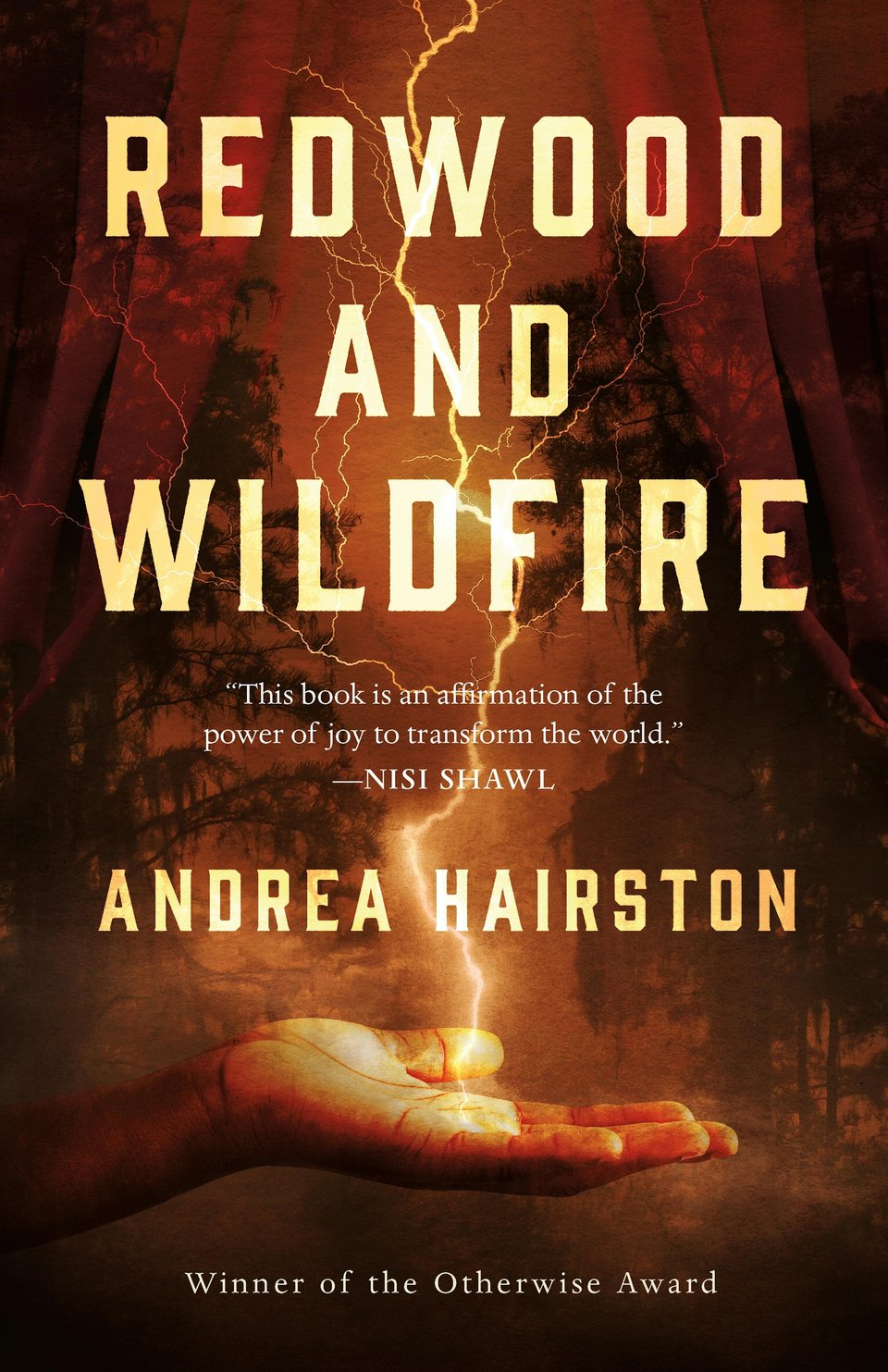
Late in Andrea Hairston’s novel Redwood and Wildfire, her 1900s Chicago protagonists put on a silent film with a particularly piercing title card: “Tell me whom you love and I will tell you who you are” (394). This thematic statement suggests the goals of the filmmakers and actors, spinning a romance between a pirate and a schoolteacher between actors from disparate backgrounds of Gullah Geechee, Persian, Irish, and all other heritages of twentieth-century Chicago. But questioning who we grant our love and what that says about us is also central to Hairston’s exploration of the entertainment industry at the dawn of film. This historical fantasy novel asks what loves makes of us and, moreover, what love for people in their totality can produce.
Redwood and Wildfire begins in back-country Georgia swamp at the end of the nineteenth century, but its cast of characters also venture to Chicago, both in a timebending visit to the 1893 World’s Fair and during the subsequent decades of the Chicago film industry’s steep rise and decline. Redwood is a young Black root worker and storyteller with visions of bringing the figurative magic of racial and gender equality to the stage. Aidan Wildfire Cooper is a Seminole and Irish man yoked to Redwood’s capacious imagination. But to realize their relationship and thrive in the rapidly shifting entertainment circuit, the pair must overcome discrimination and trauma that predate their artistic dreams.
Hairston brings top-shelf imagination and camp playfulness to the page in this book. Dialogue almost always slides between descriptions of the characters’ actions, not just “they said” constructions. As well, environmental descriptions often set the mood and hint at interiority. Combined, the dialogue and setting suggest that there’s always more to the characters and world than Hairston has laid out, grounding the narrative amid the occasional flare of neighborhood-annihilating violence or weather-changing hoodoo conjuring. Bad things happen in this book—it starts with a lynching, and the protagonists suffer alcoholism and rape—but the tone bounces back to hopeful continuously, as Hairston guides the reader through all the aspiration and warmth spilling from her leads.
As a reader who enjoys well-paced and varied prose, though, I found Redwood and Wildfire occasionally less engaging. The book makes its reader feel every year of the multi-decade story as the protagonists wander through Georgia, Chicago, and the long trek between. Admittedly, the addiction, trauma, and discrimination that mark this journey are all byzantine processes, but I felt the path even more inclement due to a noticeable age gap in the romance—Aidan remembers meeting newborn Redwood as a seven-year-old—and repetitive diction. Hairston categorically chooses “dribble” over any synonym, for example, and narration often emphasizes characters’ “tiddies.” Again, some of the linguistic choices reflect the language of the period, but having read Hairston’s sequels Will Do Magic for Small Change and Archangels of Funk, I can attest that plots dribbling through loss are a recurring theme.
Yet I continued with Hairston because of that wide-ranging character work in Redwood and Wildfire. The quicksands of sadness and lush ground cover of joy both mirror Hairston’s historical setting and modern life, and as Redwood puts it, “Everything you got in you to say, you can’t always say it right. Proper ain’t the only talk there is” (209). If Hairston’s writing isn’t always perfectly harmonic or “proper,” it’s no less for breaking from convention and showing there’s plenty more room for dreams and acceptance in our lives. If you love shoutouts to 1900s Black vaudeville and cinema, characters that represent the diverse gamut of gender and ethnicity in their time period, and love changing the world, you’ll love this book.
If you enjoyed this review, consider subscribing for more or buying me a coffee!