
Newsletter - May 2024
2024 MAY 31
In this month’s issue:
MPC User Group Meeting
Jira updates
Name submissions / Voting website
Numbering update
Very uncertain orbits
The MPC is hiring
1. MPC User Group Meeting
The MPC User Group Meeting (MUG) took place on May 21 and 22, 2024 at the Center for Astrophysics in Cambridge (MA). We would like to thank our user group representatives for taking the time to report to us the community feedback and for their constructive suggestions. We would also like to thank our users for taking the time to send valuable feedback to the MUG members. The MPC is glad to see that the community is understanding all the efforts that we make in improving our current system while getting ready for the future challenges.
For those of you who are not familiar with the MUG or would like more information, we have recently added a link on our website to the MPC User Group Page maintained by SBN.
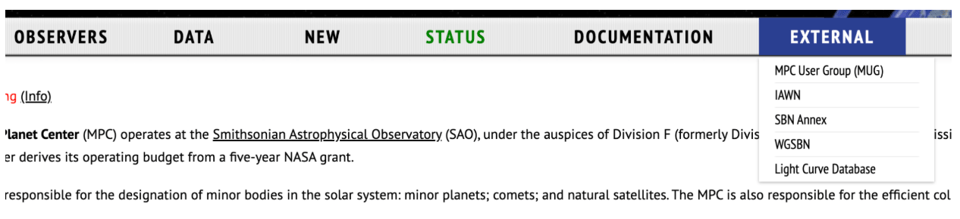
The page contains information about the current members of the MUG and a form for community feedback. While technical and specific issues concerning MPC services should be always sent to the MPC via Jira, users can use the MUG feedback form to express non-technical input, suggestions, broad concerns or positive feedback. The MUG will use the comments as input for discussion. The MUG usually meets twice a year: once in winter (usually in December) and once in late spring (usually in June). Information about MUG meetings and requests for comments are also sent out in the newsletters preceding the corresponding meeting.
2. Jira updates
New Jira status: “ Completed: 48 hr hold ”
As a result of feedback received during the May 2024 MUG meeting, a couple of weeks ago we added a new Jira status: “Completed: 48 hr hold”. It is possible that you have already seen this status on some of your submitted tickets. The status is usually set to “Completed: 48 hr hold” when MPC staff consider a ticket as closed, but they want to leave it open for possible comments by the users.
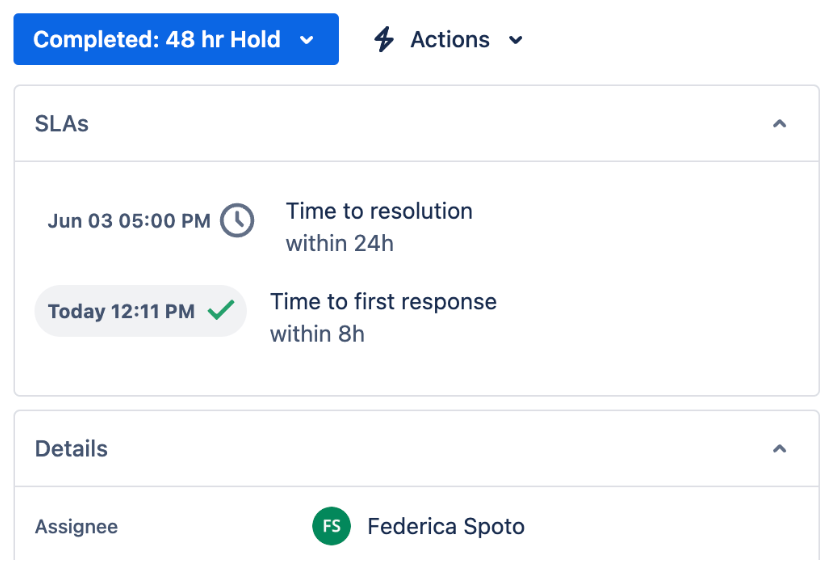
This new change would allow us to not close the tickets too early and thus require the users to open a new one with requests for clarifications. If the status is set to “Completed: 48 hr hold”, the users have 48 hours to add comments or to ask questions. Please note that if you add a comment, the status of the ticket is automatically changed back to “In progress”. Once the status is first set to “Completed: 48 hr hold”, you will automatically receive the message shown in Fig. 2.
After 48 hours, if no comments have been added to the ticket, the status will automatically change to “Resolved”.
Obscode requests are now handled via Jira
The Guide to Minor Body Astrometry page contains instructions on how to request a new observatory code. The first step of the process consists of filling out the form for the observatory code request. We have recently updated the code behind the form to automatically create a Jira ticket with all the information needed by the MPC staff. This doesn’t change anything in the way in which the users submit the requests, but all further communications will be handled via Jira and not via email, unless strictly necessary.
For the time being, we are monitoring the tickets very closely and we add comments when we don’t receive any answers from the users, to be sure that the community could familiarize themselves with the new mechanism.
We also would like to remind our users that filling out the form is just the first important step in the process. After that, observations need to be sent to the MPC following the instructions reported in the Guide to Minor Body Astrometry.
3. Name submission/Voting website
The website used to handle submission/voting for suggested asteroid names has been moved from the MPC server to the WGSBN website, and the naming data from the associated database were transferred to the WGSBN database.
On May 20, 2024 the current site was shut down (the existing links on the MPC site were also repointed to static pages informing users that the site is being transferred). On May 22, 2024 the new site was brought on-line (the links on the MPC site were repointed to the corresponding links on the WGSBN site). If you had the current links bookmarked, please be sure to update them as soon as possible after May 22. The MPC will not maintain the redirects beyond the end of 2024.
Usernames for the new site for discoverers and WGSBN members are unchanged from the old site, but new passwords have been assigned.
Additional information can be found in our Editorial notice from May 6, 2024.
4. Numbering update
In recent months we have made significant progress in reducing the backlog of the to-be-numbered objects. We now number roughly 20,000 objects every monthly circular and we plan to clear the backlog and reach a steady state by the end of 2024.
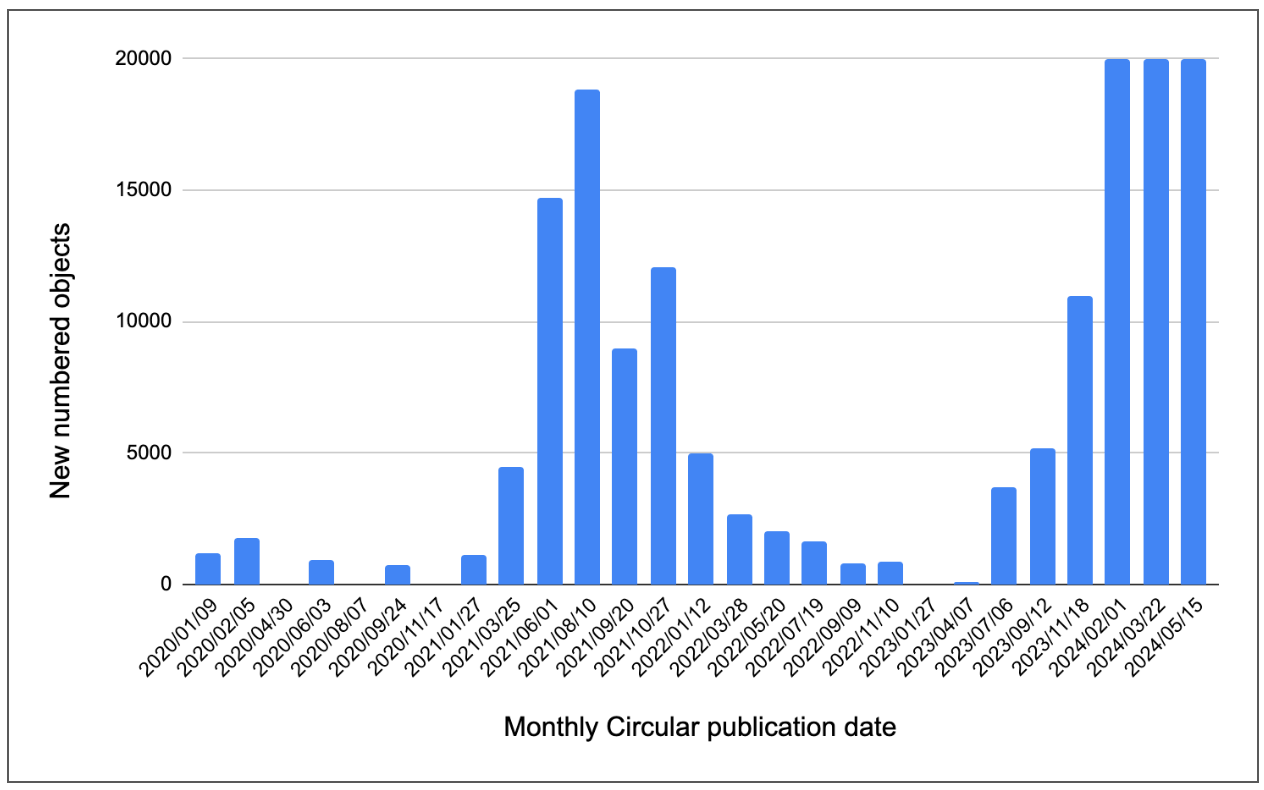
Figure 3 represents an update of Fig. 4 in our January 2024 Newsletter, and shows the total number of objects numbered during every monthly circular since January 2020. Peaks and troughs are visible, but we would like to empathize two main trends:
Between 2022 and 2023 we were working on implementing the new packed numbering scheme, so we have reduced the number of objects to number until we were ready to implement the new schema. In January 2023, we numbered only one object, namely (620000), to be sure that our code was able to handle the new designations. After that, we started numbering a larger number of objects, from 108 in April 2023 to a few thousands in July 2023.
Starting from September 2023, we improved our selection criteria and we have been numbered tens of thousands of objects per circular.
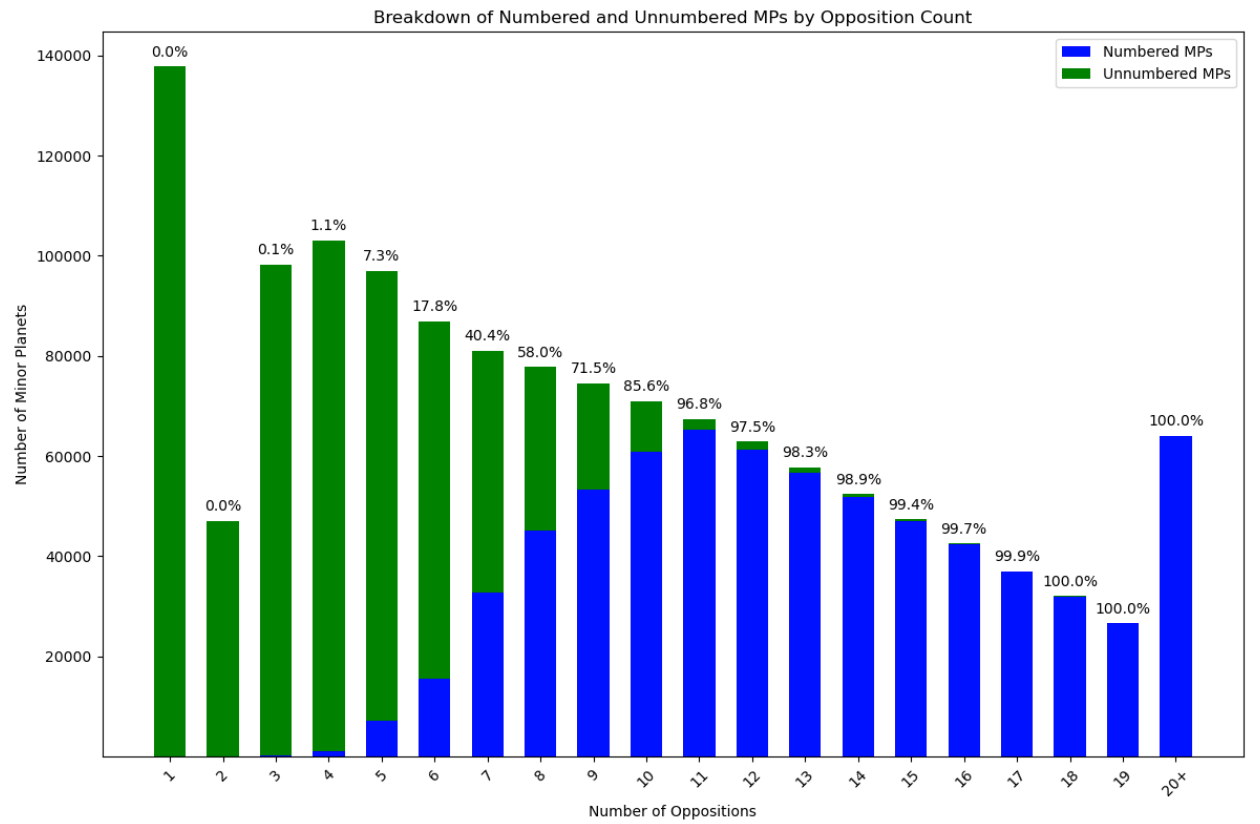
Figure 4 shows a breakdown of the total number of numbered and unnumbered minor planets by opposition count. The histogram shows how we have numbered the totality of objects with 18 or more oppositions, and how we are close to the totality for everything with more than 10 oppositions.
5. Request for archival astrometry for very uncertain orbits
The MPC database contains some very uncertain orbits or designations with observations but no orbits attached. The reason is usually because it is almost impossible to produce a reliable orbit or the orbit is too uncertain. We have recently created a new page to request for archival astrometry and identifications for objects with no or very uncertain orbits.
The page contains two different sections: one for NEOWISE specific objects (mostly from 2010) and one more general section for designations (usually single or two-nights) that are not attached to any orbit, nor are secondary designations.
Observations (in both ADES XML and 80-column format) and orbits (when available) can be found on the webpage, as well as a designation file for the WISE/NEOWISE object.
We encourage our users to submit any archival precoveries: non-C51 astrometric and photometric data is highly desirable. In doing so, please follow our rules for identifications. Single night observations are not useful for linking to these orbits. In case you find matching positions in the ITF or designations that can be linked to these orbits, please use the identification pipeline to submit the linkages.
The new page can be found under the new Orbits navigation item (see Fig. 5).
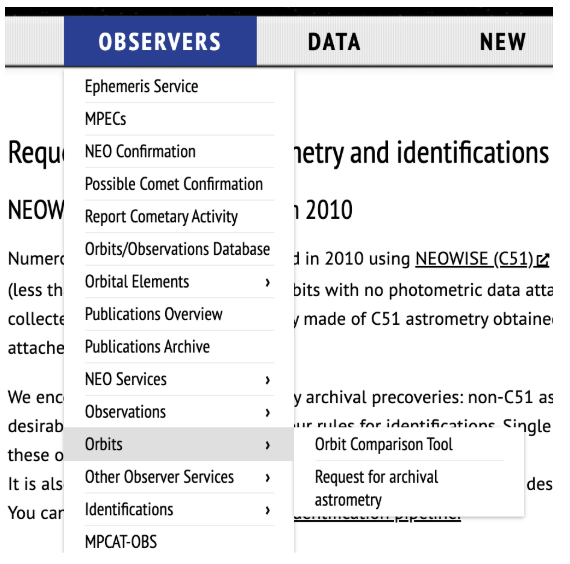
Please use Jira to report any feedback or to ask questions about this new service.
6. The MPC is hiring
A position for a software developer at the MPC has now been posted on the CfA website:
https://cfa.harvard.edu/opportunities/sao-employment-opportunities/posting-24-34Working at the MPC can be both fun and challenging at the same time, especially now that we are getting ready for the new surveys, while trying to improve our current system.
Consider applying for the position if you are interested in working with us!
Add a comment: