Welcome to Issue #1!
O-si-yo lovelies!
I hope everyone is having a great start to spring. I am excited to be finally dropping the debut issue of Tales From the Singing River, my author newsletter that I hope to make a monthly habit.
First, some good news. As of yesterday, I just got my new novel off to my agent. After editing for three months, I had reached that very familiar place I recognize as “the impasse.” When I know there isn’t a damn thing further I can do with it. And so it’s time to give it wings and wait for my agent’s feedback.
Anyway, most of you subscribing know me but a few of you don’t, so maybe I should start with a little bit about me.
My name is Linda-Raven Woods. I am a novelist and poet who indeed hails from the land of The Singing River. My lifelong home has been north Alabama, the mythical Tennessee Valley named for its namesake, the Tennessee River, which cuts through the heart of it. I am an enrolled member of the Echota Cherokee tribe. We are a state recognized tribe in Alabama. Our emblem is the phoenix, symbolizing our rise from the ashes when our ancestral settlement of New Echota was destroyed.

Everything I write grows out of that duality, of being a native Southerner but more precisely, a Native American Southerner and the unique, cultural perspective that experience brings. I have spent thirty years dancing on the southeastern powwow circuit, first as a Fancy Shawl dancer and then as a Jingle dress dancer.
I love to write speculative fiction, with paranormal romance and magical realism being my most common genres. My stories tend to blend literary elements with the weird and quirky—i.e., the buzz words for it are book club and upmarket fiction. I guess you can say that’s where I primarily sit on my perfectly imagined future bookshelf—somewhere between Charlaine Harris, Grady Hendrix, Tommy Orange and Sherman Alexie (yes, whose work I still love).
Yes, this is wishful thinking. But wishful thinking is the stuff that makes our reality happen.
Why the Singing River?
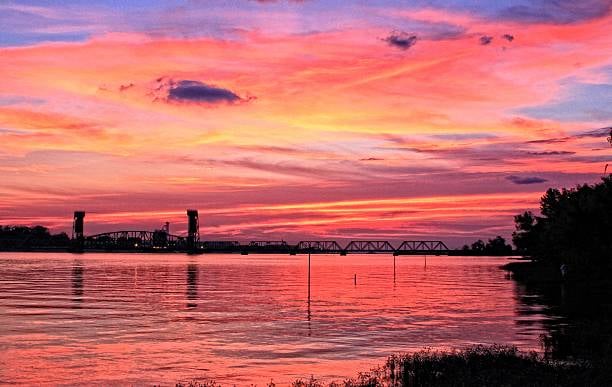
“The Singing River” is the nickname that Cherokee people bestowed on the Tennessee River. Particularly, the myth of the singing woman who lives in the river was one that arose from the Muscle Shoals area, a legend that has been commercially utilized ever since to promote our rich musical heritage in Alabama. I grew up on the banks of this river; it has been an indelible part of every memory-my greatest fear as a child, and yet the whispered voice that always calls to me no matter where else in the world I might go. As my character Billy Ray says in the first chapter of In the Place Where Frank James is Buried, Just North of Here, the river is something we absorb here, like osmosis, in our mother’s wombs. I know this was true for me. I am a product of that osmosis. So are my stories.
What I’ve Been Watching
Well, seems everybody and their grandma has an opinion on it, so I might as well weigh in. Yes, after a lot of resistance, I finally broke down and went to see Emerald Fennell’s 2026 “Wuthering Heights.” (And, no, the quotes aren’t to indicate this is some twisted, pseudo-version of Emily Bronte’s classic novel. It’s a direct take on the 1939 version and a homage to classic 1930’s movie posters).
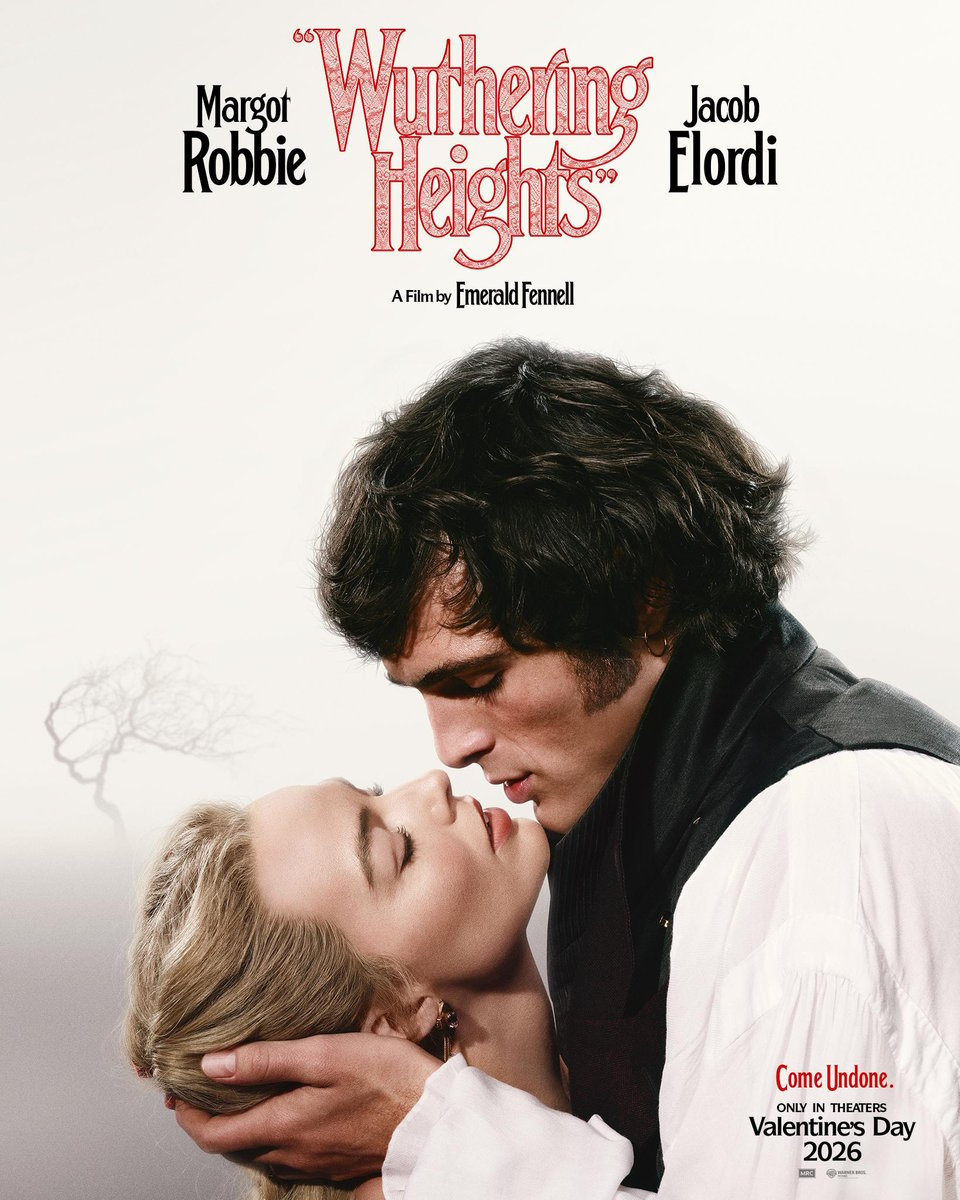
Anyway, it came to a head when I drove all the way to Florence to attend the Wuthering Heights book club discussion and realized I was the only one there who wasn’t able to chime in my two cents about the movie. But I was still keeping my heels dug in when I asked, “So does Heathcliff dig up Cathy’s body?” and when they said no, I was like, “I’m out then.” That was all I needed to hear, so I thought, to indicate that Fennell wasn’t going to be true to the story’s Gothic elements and everything I loved (yeah, digging up your love’s corpse is pretty twisted but that’s what makes it the sick, twisted, beautiful and perverted story we all know and love).
Long story short, however, my curiosity got the best of me so with it being a Sunday afternoon and the start of spring break…why not? A bucket of popcorn, a bag of M&M’s, and Jacob Elordi on the big screen…there are worse ways to pass a Sunday afternoon.
I have to say, I am so glad I didn’t listen to the mob and allowed myself to appreciate the merits of this beautiful film on its own terms. And, yes, if you are a Wuthering Heights purist, you do have to let some expectations go in order to appreciate Fennell’s vision as its own thing.
Do we get ghosts on the moors? Well, not exactly. But here’s what I did love. Wuthering Heights is an elemental story. Anyone who knows the novel knows this. Yes, we can argue that it’s not a love story because Heathcliff and Cathy’s story is less about love and more about obsession and revenge and what damaged, horrible people they ultimately are. But Bronte made it abundantly clear that everything that shapes Heathcliff and Cathy are-everything that binds their souls together-comes from the land, those sweeping moors. It’s one of those stories that, quite frankly, could never exist had its writer lived anywhere else in the world. Some stories simply grow out of the land. This is one of them.
Most every version of the film has gotten this right, even if it seems the directors and writers could not always agree on much else.
I was not disappointed because Fennell captures that elemental aspect of the story with astonishing and heartbreaking beauty. The cinematography of the moors and that elemental wildness of the story that is so much the essence of the its character’s souls is there. As is, ultimately, the cruelty and violence that is the seed of destruction for both Heathcliff and Cathy. I think a lot of people who are swept up in condemning Fennell for trying to turn this into a romance are overlooking this. Yes, we don’t get the full cycle of generational trauma. But she clearly indicates those seeds are being sown.
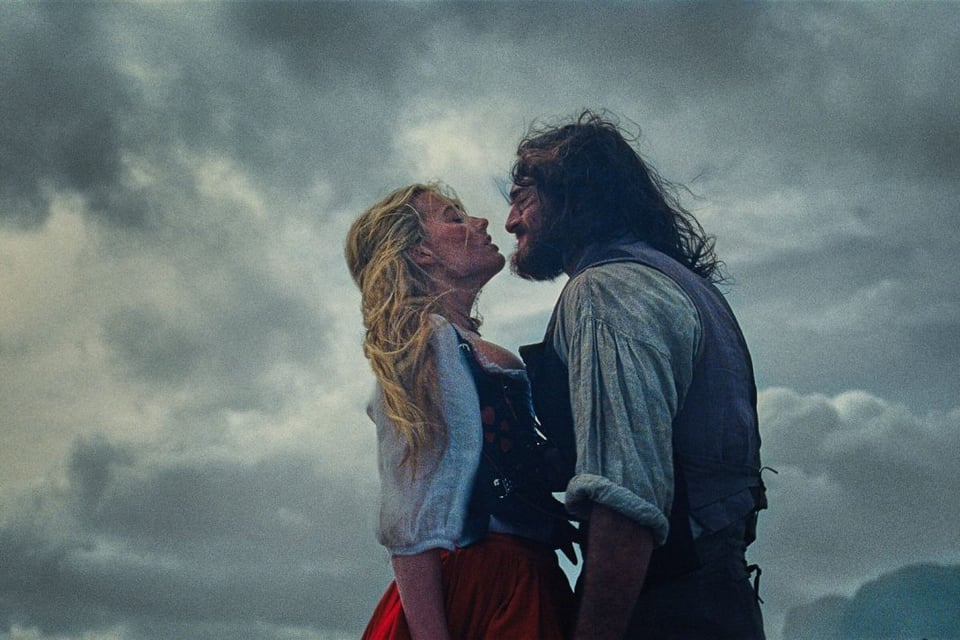
No, it is not a faithful adaptation. Like the 1939 version, it only gives us the first half of the story, and not how the cycle of abuse continues into the second generation. Some characters and storylines were converged. Yes, you do have to suspend a bit of belief to buy 35-year-old Margot Robbi as 18-year-old Cathy. Yes, the anachronistic soundtrack and splashy music video style won’t be to every taste. But…this reminded me very much of what Baz Lurhmann did with The Great Gatsby in 2013. And I think everyone who saw the 2013 “Gatsby” either got it and loved it, or didn’t get it and therefore hated it.

I was one of those who loved Lurhmann’s “Gatsby.” The minute I heard that pulsing soundtrack with “No Church in the Wild,” the minute Leo proclaimed “I’m Gatsby” as “Rhapsody in Blue” swelled and fireworks burst over his head, I was all in. Which probably also explains why I could love Fennell’s Wuthering Heights. Just as with Lurhmann’s “Gatsby,” Fennell’s version of “Wuthering Heights” really reminded me of the power of adaptation, the ability adaptation has to enable us to view familiar stories in fresh and surprising ways. The best adaptations do not take away from the original story, but rather, add nuanced layers to our understanding and perception of it. All I can say is that I came out of the theater feeling literally on fire again with the passion for story and the first thing I did when I got home was to dig up my copy of Wuthering Heights to join my nightcap book stack-not because the film had disappointed me, but because it made me hungry to go back and fill in the brushstrokes. Because the book and film together are like champagne and ice. Peanut butter and chocolate. You get the idea.
So have you seen the new Wuthering Heights? Are you in the yay or nay camp? Let me know!
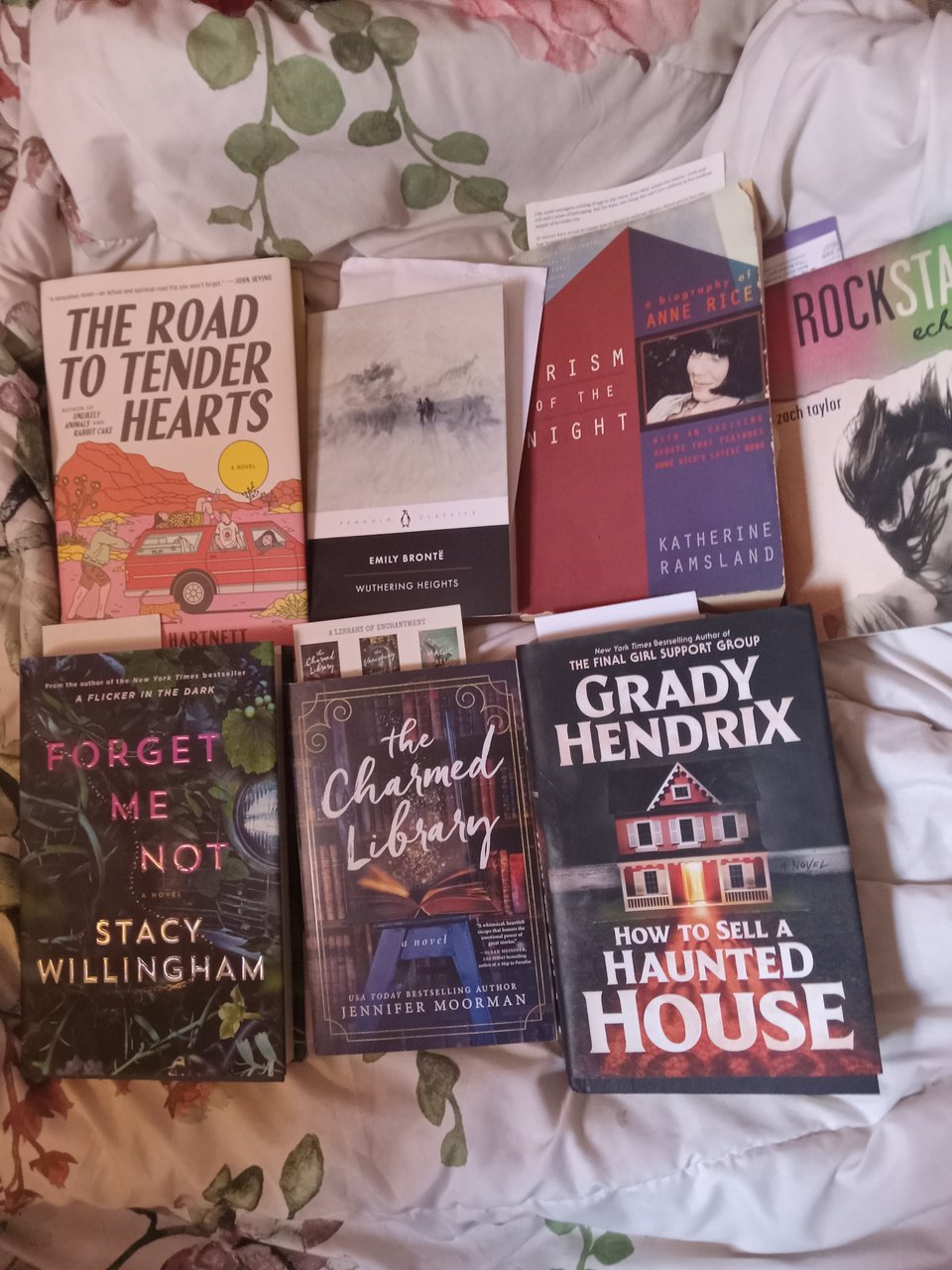
Speaking of my night stack, here are the books currently sending me to dreamland:
See you next month!
My website: http://www.deathangelblues.com/
Follow me on X and Instagram:
https://x.com/LindaWo63893799
