Triggers, Dolly Thoughts, A Date With Edward & Bella and The Great Big Book Festival
O-si-yo lovelies!
The newsletter may be going out a bit late this month. As most of you know by now, I’ve been struggling with health issues most of the summer. My endometrial cancer diagnosis culminated in a full hysterectomy surgery two weeks ago (as of this writing). I am doing fine, though. It was a minimally invasive laparoscopic procedure so overall, recuperation has been much quicker than I anticipated.
I’m back at work, albeit in a limited capacity, and more importantly, back at the computer doing what I do best. And hoping I’ll be able to dance by the time of our Echota powwow at end of September.
Now the downside. Although my oncologist has given me a very optimistic prognosis, it is still considered a stage 3 (because of pelvic lymph node involvement) so the surgery will require follow-up adjuvant therapy. I’ll be doing six rounds of chemo combined with immunotherapy, followed up by radiation. I realize this sounds more alarming than it actually is. Most of it is just precaution to ensure any remaining cancer cells are killed, and to lower the chance of recurrence.
An unfortunate consequence is that I’ve decided to cancel my planned trip to New Orleans for October to present on my Wuthering Heights paper for the PCAS/ACAS conference. I’m disappointed because I was excited about presenting on this topic (it was a defense of Emerald Fennell’s often maligned 2026 film version, which I happen to love and which I argue is much truer to Bronte’s vision than many realize). However, while traveling is certainly permissible during chemo treatment, it also involves a lot of extra precautions because of lowered immunity. In the end, I fought out the decision but decided it just wasn’t worth the risk and the added stress at this time. New Orleans is simply not the greatest place to be with a compromised immune system—and at a crowded conference, to boot. It’s also not a great place to be if you can’t really enjoy all the good food, the drinks and walking to all the sites. I think I’ve made the right choice to stay close to home for now. The conference will still be there next year, when I’m hopefully fully recovered and stronger.
But anyway, where I’m going with all this: I really wanted to talk today about triggers. Particularly, triggers in books and popular media as it pertains to cancer and how cancer is portrayed. If you’re like me, it’s something I never really thought about until I found myself as a person with the “c” word.
Suddenly realizing that even my favorite escapist pleasures can result in emotional triggers.
Why?
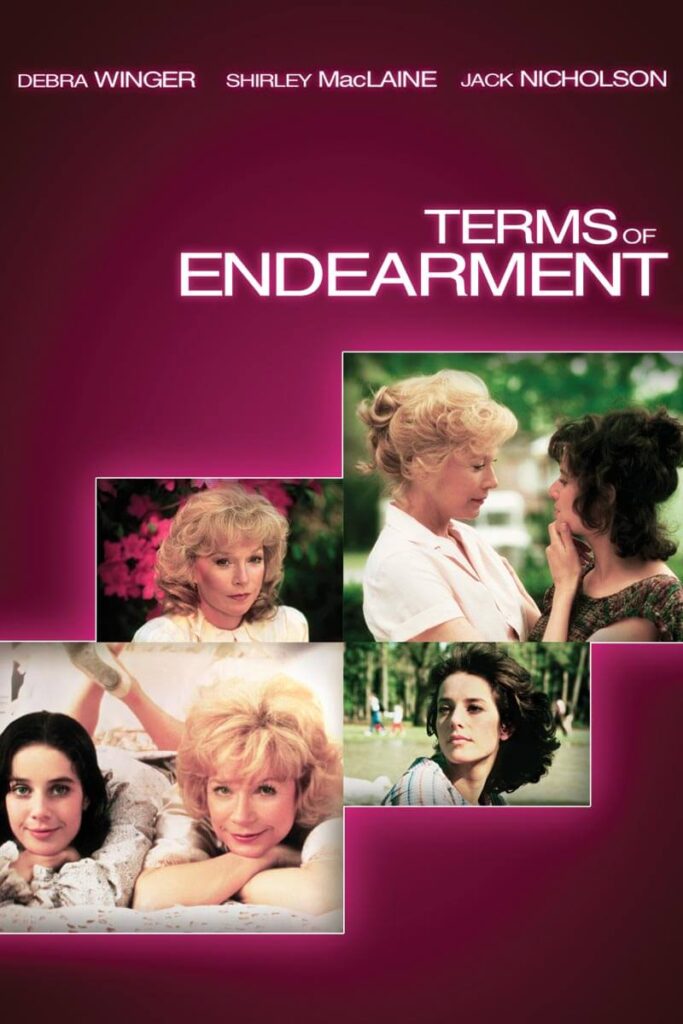
Because cancer has been used as a dramatic trope for writers for so long that it’s become second nature. Think about it. From Love Story to Brian’s Song, Eric to Terms of Endearment, The Fault in Our Stars to Breaking Bad, cancer has been used as the dramatic lynchpin to guarantee emotional investment and lots of wringing hankies.
I get it. Cancer raises the stakes, a destructible foe whose inevitable conclusion is suffering, death, and loss. It forces characters into difficult and life-altering choices. It forces characters to confront mortality, either their own or a loved one’s.
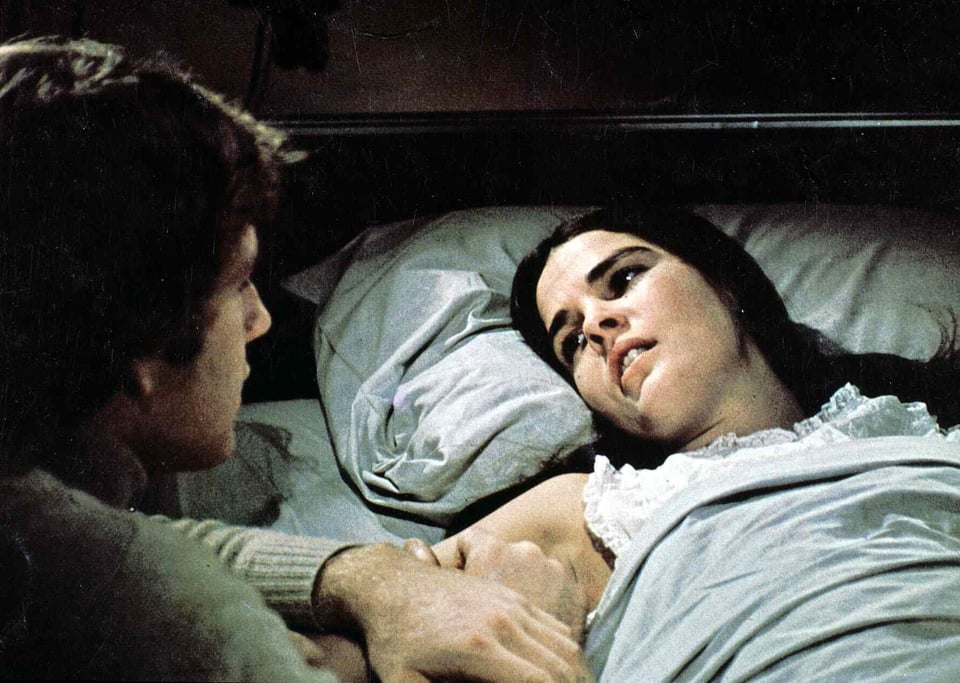
But what impact do these stories have for people with cancer? And can that change depending on the variables (for example, as one with a highly favorable prognosis compared to someone who is terminal?). I’ll just say I’ve had an interesting crash course in this experience over the summer.
First, “Trigger Warnings” is a phrase we’ve come to hear a lot in entertainment over the last decade. I’ve always been the one who scoffed at the notion. All my life, I’ve held to the opinion that as readers (and viewers) we should be able to put our big girl/boy pants on and deal with books and films as they are presented. I even hated those “Explicit Content” warning stickers that the PMRC forced onto all of our albums in the 80’s and 90’s. Even if one argued that it didn’t censor the actual content, it still took away something that I thought was inherently wonderful about adolescence and the joy/shock of discovery.
My favorite argument back then was: What if there had been a PMRC sticker on The Doors’ debut album? Would that have watered down that delicious shock of the first time when he heard Jim Morrison dare to say, “Mother, I want to f**k you” in the middle of “The End?” It was effective because it shocked. Because it hit from out of nowhere. Because, you know, in the midst of that lovely, brooding ballad about saying good-bye to a lover, you were left going “WTF was that all about?”
Today, I still admittedly get very annoyed when I see editors and literary agents espousing long lists of specific and minute triggers in their “Don’t Send Me” lists. There comes a point where I almost want to say, “If you are truly that triggered by most topics, maybe you’re in the wrong business.” Of course, I am a polite and aspiring author, so I say nothing.
But you get the idea. This was my stand, a hill I swore I would die on. I’ve certainly encountered my own share of trauma, everything from bullying to sexual abuse and assault, divorce to supernatural experiences to eating disorders, you name it and I’ve probably lived it. And can still read any books on those topics without need for hand holding.
Then came cancer. And suddenly it hit with jarring clarity. Exactly what it means to be “triggered.” Let me just say getting that diagnosis puts you in a very weird head space. Part of you still just wants to be “you,” living your life and doing the things you love. But now part of you is wondering: Is this disease going to kill me? Am I on borrowed time? (Yes, we all are, but c’mon, unless you’re 90+ we all like to think we’ve got at least a few decades ahead).
For my entire life, books and stories have been intricately woven with my entire identity. They are my inspiration, my comfort, my happy place, my place where I am most at peace and most “me” (if that makes sense). If I’m not reading a story, I’m watching one. I’m listening to one. I’m writing one.
But it didn’t take long to realize that many of the stories I was reading only fed my anxiety. And that’s natural because once you’ve had a cancer diagnosis (and even if you’ve survived and are in remission) that anxiety is always real, close to the surface. It doesn’t take much to scratch it.
This summer, everyone was raving about Ann Patchett’s new novel, Whistler. I couldn’t escape hearing about it. I’d read the blurbs and decided it sounded like the kind of story I love, and the book club discussion was coming up at Court Street Books (shameless plug; I love you guys) so I ordered my copy.
Small spoiler alert ahead, in case you haven’t read it yet and plan to!
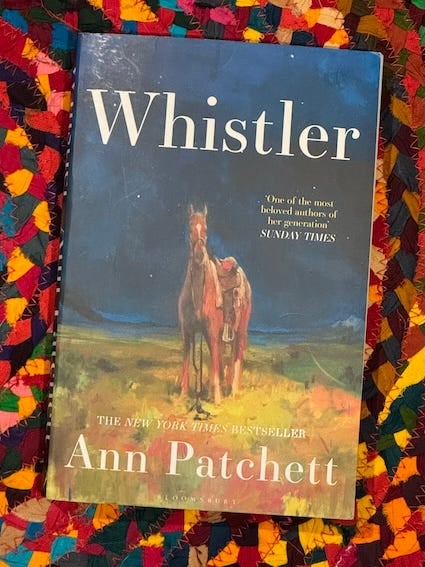
Let me just say, first of all, I adore Ann Patchett and she is absolutely one of my favorite writers. And like everyone else, I fell in love with this book. It’s a quietly beautiful tribute to love and the unexpected avenues that familial love can take. But then came the unexpected twist I hadn’t seen coming: After re-discovering her beloved stepdad Eddie again, the narrator Daphne Fuller learns she may lose him again. Okay, that’s life. I was handling it fine until Eddie cavalierly refers to his chemo as “the poison.”
That’s when I suddenly couldn’t anymore. To my credit, I didn’t DNF. I kept going. I loved the book and wanted to finish it. But it grew increasingly hard at that point on. I don’t blame Patchett. The reference was true to Eddie’s character.
But for someone facing chemotherapy, it was an emotional trigger, reminding me of the harsh reality of the treatment at a time when I needed reassurance. What I’d hoped to be a cozy and escapist experience had turned into a painful, jarring reminder of my own reality. Very soon I’ll have to this same “poison” to be injected into my own body! It’s my only option if I want to live.
I wondered how many cancer patients must go through this on a daily basis? It doesn’t help that writers often rely on outdated treatment procedures and outdated patient reactions to outmoded treatment practices when describing cancer treatments in books and films. In some cases, it’s because the books/films themselves are from that outdated period. But even in contemporary fiction, writers are still often guilty of clinging to the myths rather than the reality of current cancer treatments. How many books have you read recently that feature a fully functional mom, for example, who has to schedule her chemo treatments around the kids’ soccer practice and a full time job? That’s the reality that most modern cancer patients live. Not lying in a hospital bed hooked to machines, waiting to die. We need more of those stories, if they aren’t already out there.
Terms of Endearment has always been one of my favorite movies. Until this summer, when I realized I just couldn’t with it. Once I realized I’d become Emma rather than Aurora, I knew it would never be the same experience. I’m sure I will be able to visit it again, eventually. Perhaps once I’ve achieved remission and can once again view it with a bit of distance from my immediate situation.
Heck, I’ve even been reading this very charming Native American YA novel, Medicine Wheels by Byron Graves (huge shoutout to the Heartdrum imprint over at HarperCollins! They are doing wonderful work getting these stories out there) but guess what? A few pages in, and we already learn that Bryce’s grandpa is-yep- dying with cancer!
Through it all, I’ve had to learn to keep a sense of humor about it. It’s really the only way to maintain some perspective. I’ve joked with my husband that the only “cancer” thing I can watch right now is “Breaking Bad” because at least there we see a cancer patient taking full control and agency over his disease. Walter White, to quote one of the famous lines from the show, isn’t in danger. “I AM the danger,” he says. Over the course of five seasons, we see Walter fully living his new normal, embracing his alter identity, taking charge of his life, and building an (albeit illegal) empire. In this case, cancer is the narrative catalyst but not the tragedy trope.
What are your thoughts on the use of terminal diseases as plot devices? Would you continue to read stories that use a disease you have as a focal point, or do you find them too traumatic?
Speaking of which…
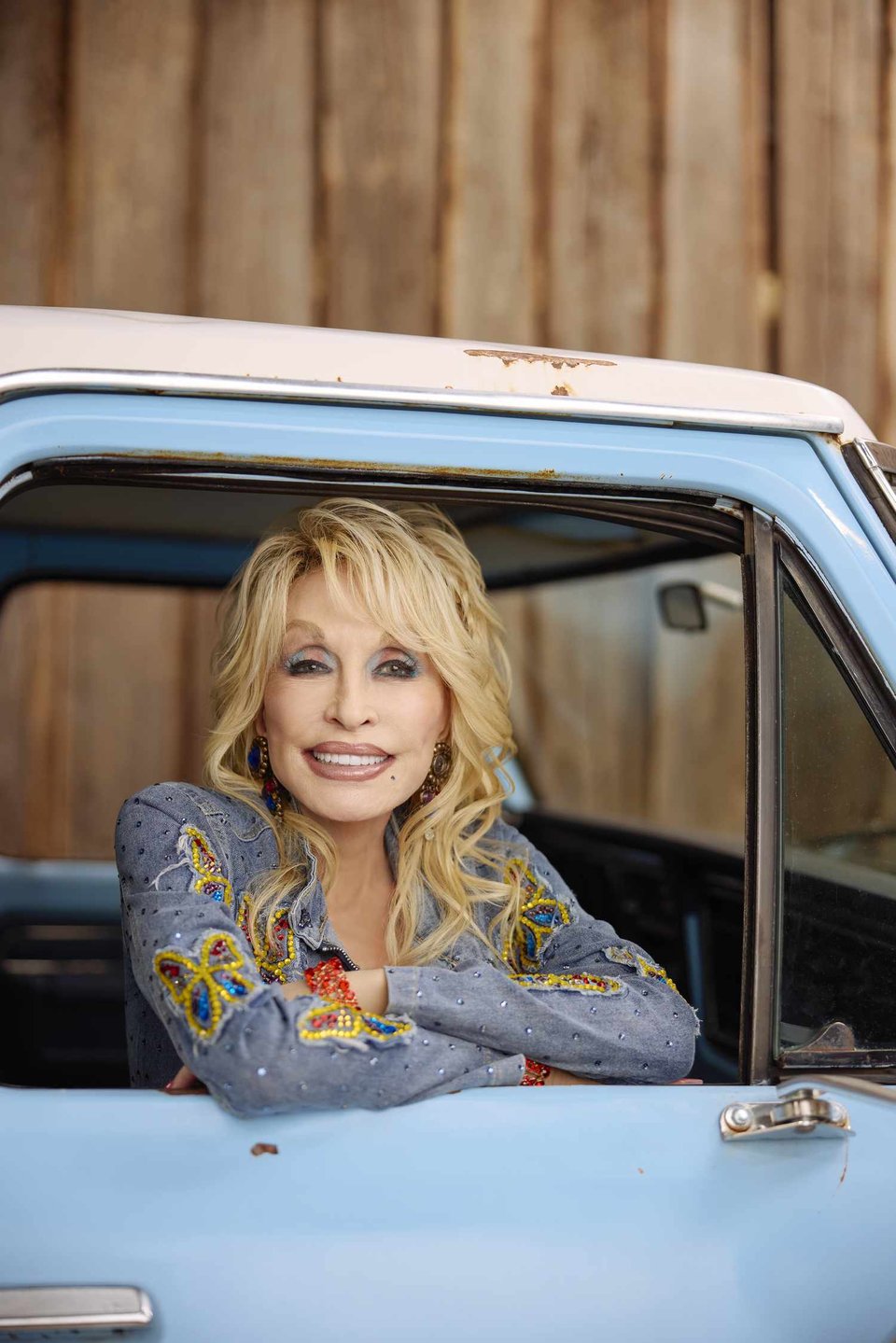
The world is a little bit sadder and colder place with the loss of music icon Dolly Parton, who also succumbed apparently to a brief battle with cancer (the specific type has not been disclosed).
Dolly was one of those larger-than-life celebrities who have simply been with us for so long, part of our cultural consciousness for so many decades, that it seems a bit unreal to recognize she’s no longer here. Dolly represented a particular brand of celebrity whose numbers are rapidly dwindling (the non-partisan, larger-than-life figure who transcends genres and generations and is for the most part universally loved). The loss of those celebrities always hits a bit harder because it feels like losing a little piece of ourselves. I don’t know of too many who’ve had the same impact as Dolly. Maybe Betty White. Maybe Mr. Rogers. That’s kind of an odd mishmash of a trio when you think about it, but each one in their own way had “It”-whatever is that elusive quality that makes a public figure universally adored across generational divides.
While I’d love to delve into all the “whys” that would be an essay beyond the scope of this newsletter. But as so often happens in times like this, when a loss is still fresh, it’s inspired me to do a deep dive into Dolly’s music and film catalog, to revisit old favorites and make interesting discoveries. One fact that has really hit home all over again is just what an amazingly prolific and insightful songwriter Dolly was, from the poignant storytelling of “Coat of Many Colors” to the gothic tones of “Jolene” to the plaintive ballad that Whitney Houston later turned into her own powerhouse anthem, “I Will Always Love You” (although Whitney’s version ended up overshadowing Dolly’s, I still love Dolly’s own very stripped down version which is much rawer and more intimate).
Then there is that great opus for the working class, the gospel-inspired “9 to 5.” Not to mention, her performance in that film was pure comedic genius. I just adore those scenes where she engages in those sexist battles with Mr. Hart, both the ones where she is the victim and then the fantasy turnaround where she gets to turn the tables. (And a shoutout to Dabney Coleman as well who played Mr. Hart brilliantly. That line where she asks him what kind of cologne he’s wearing and he visibly blushes as he replies, “Stud” cracks me up every time!
Please feel free to reply to this email and share your own favorite Dolly moments!
A Date With Edward & Bella:
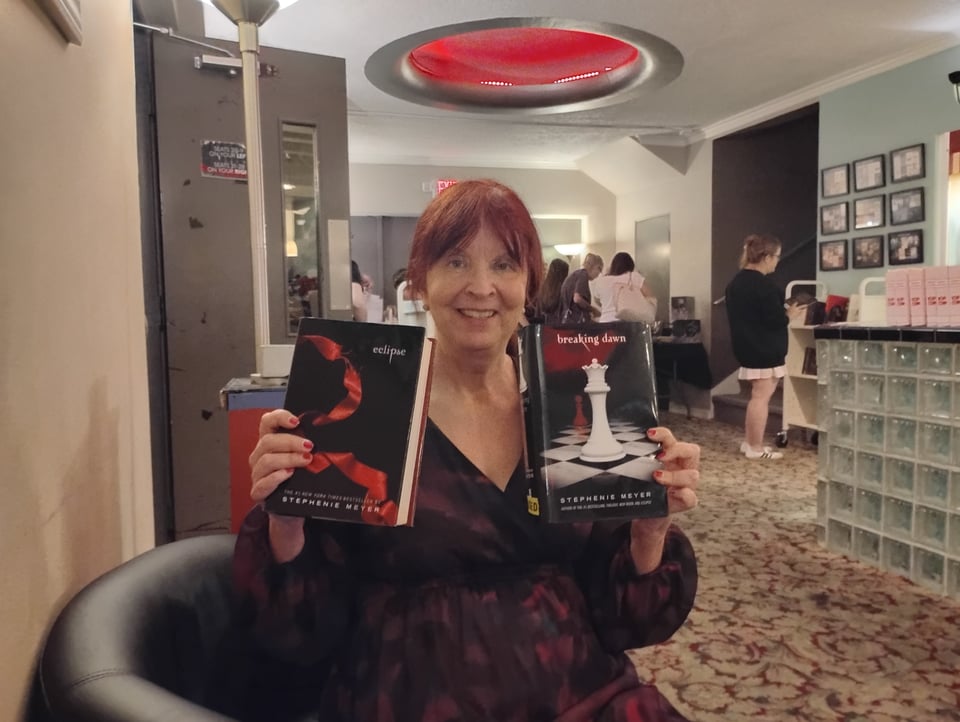
Last Friday was also a fun date night for Shane and me, involving a short trek over to Florence and the historic Shoals Community Theater. To explain, The Shoals Community Theater routinely has showings for second-run classic films, and last Friday was a showing of Twilight. I’ve been taking a very deep dive into Stephanie Meyer’s universe these past few months as I’ve been working on my own paranormal romance series, The Kids of Crossroads. My story isn’t exactly “like” Twilight but has enough similarities that I feel I can definitely learn a lot from reading the series. Anyway, reading the books had whet my appetite for seeing the movies. I’d only watched part of Twilight, once, long ago when I happened on it while surfing channels in a hotel room. But this was an opportunity to experience it in a way that only moviegoers twenty years ago could have appreciated, on a big screen with a VERY loud and engaged audience who didn’t mind screaming, “Take it off!” when Edward unbuttons his shirt in the meadow, or “Kiss her!” when Edward’s lips hovered over Bella’s and you wondered…will he kiss or bite? Yes, you can argue that maybe driving an hour and a half and paying five bucks apiece for a movie we could easily stream at home was a bit extravagant, but I love the experience of story immersion with a collective audience. Plus I had another incentive…the pop-up book shop which enabled me to complete my collection, since I was still missing Eclipse and Breaking Dawn! No more.
Other Updates:
Excited to announce I’ve had several works accepted for publication in various literary journals. Most of these pieces will see light of day sometime during the fall, winter, and spring. “Poem For Cade” will be in the current issue of The Waiting Room from Nervous Ghost Press, due any day now. “Powwow Cycle,” “Today is a Strange Day” and “Native Sisterhood” will all be in the upcoming February, March and April issues of Feed the Holy. “Whistle Britches” will be published in the spring ‘27 issue of Smoky Blue Literary and Arts Magazine. I’m also thrilled to announce I will be one of the presenters at the first annual Great Big Book Festival to take place in Huntsville, Al on November 7th.
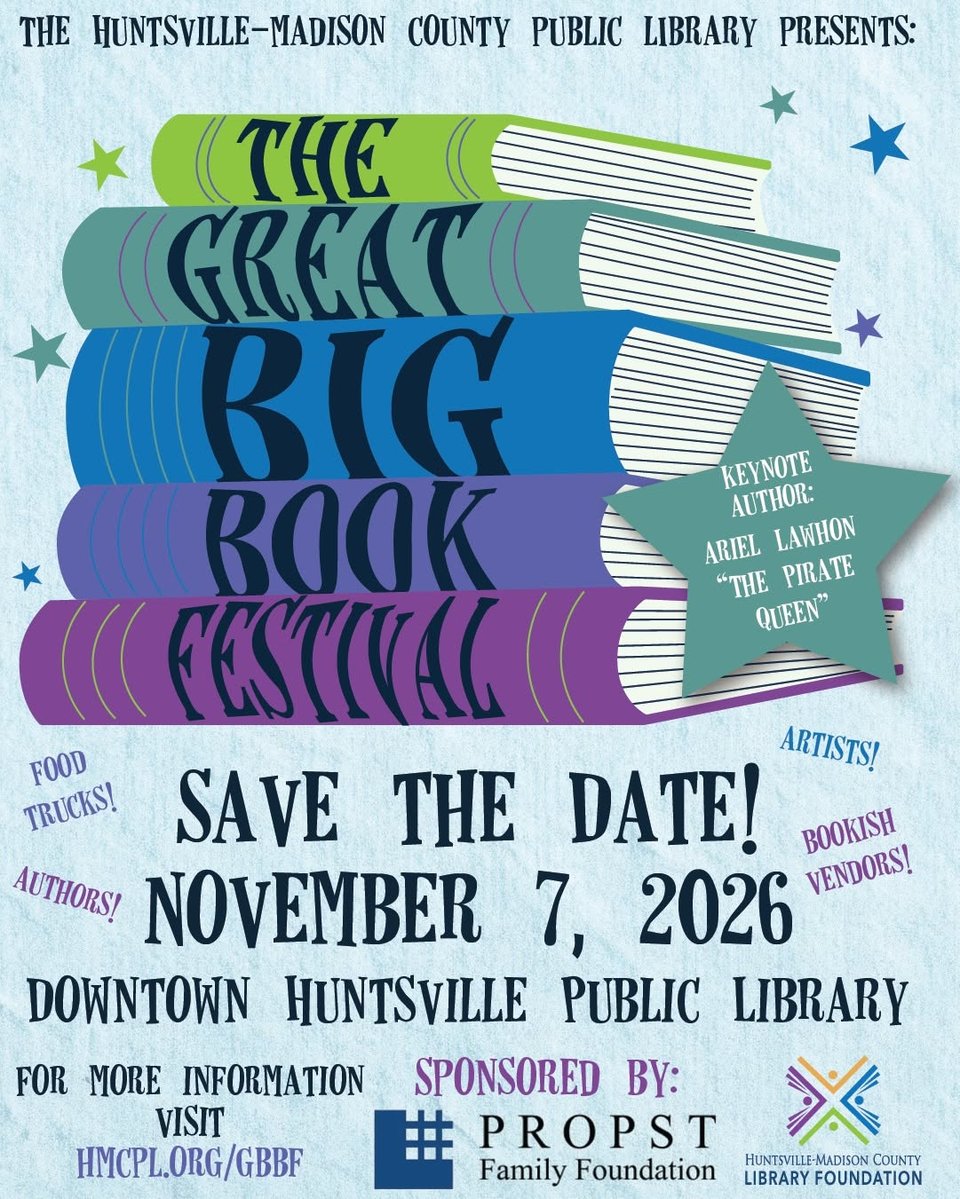
I had submitted a proposal on using local myth and Tennessee Valley folklore in writing, and the organizers contacted me to let me know they’d love to have the presentation as part of the festival!
As of this writing, my agent and I remain hopeful for the new revision and new round of submissions for Elmer & Leonard while she awaits the arrival of my new books (yes, the plural is intentional because I’ll be delivering both volumes of The Kids of Crossroads to her in October, maybe November at latest).
I’m not sure at this point what we will do with In the Place Where Frank James is Buried, Just North of Here. My agent really wants to put that one aside for now and focus on “Kids’ (she thinks it has stronger market appeal). As soon as I pitched “Kids” to her she was super excited and said, “Let’s focus on that one for now.” I haven’t given up on “FJ,” though. That book, after all, did place as a semi-finalist for The Big Moose Novel Prize by Black Lawrence Press, a fairly prestigious competition. I get that it’s a quirky book, though, and one that’s a bit difficult to sum up in a neat logline. My agent does love the story, so I think we’ll be coming back to it at some point. Now may simply not be its time. It happens. It’s a discussion I’ve had many times with many published writers who have all “been there, done that.” Your first book to see light won’t always be your “first.” Sometimes not even your second or third.
My take on it is that all my books are my children in some way. I love all of them equally and fiercely; sometimes I play favorites, but I never lose sight that each one is unique and deserves to be loved on its own merits. If one gets published before the others, it doesn’t mean it’s “better.” It just means it got luckier, the right people discovering it at an opportune time when the market aligned for it. I’ll be proud and happy for it, absolutely. But I won’t stop loving the others any less. Every story for me comes from a unique place, grows out of an experience, is a love letter to a place or to people I’ve known and loved (even if they sometimes come disguised as vampires, witches or ghosts).
The published writers with whom I’ve been fortunate enough to share these conversations always, invariably, have this to say: Once you get that first book in the door, it will be easier to find a home for all the others.
The only one who can ever shelve a book is you.
One last reminder before I go…I’ll be starting a Substack soon. The Substack will not be a replacement for the newsletter, which I will continue to send out. Rather, it will be an addendum where I’ll be able to take more deep dives into a wide range of topics, from pop culture to folklore to writing.
I should be able to give more details by the time the next newsletter goes out. I hope some of you will consider subscribing.
On that note,

