Tales From the Singing River: May Musings
O-si-yo! Well, here it is, end of May and time for another edition of Tales From the Singing River. This issue comes on the cusp of my favorite time of year. School is out, grades are in. I have three months of broke but happy (translate: crappy paycheck but lots of free time) which means long, beautiful days of writing, reading, planting sunflowers, watching them grow-and exploring all my favorite haunts.
My latest obsession… to find the exact location of Rocky Hill Castle. This historic-and notoriously haunted-plantation house was featured in Thirteen Alabama Ghosts.
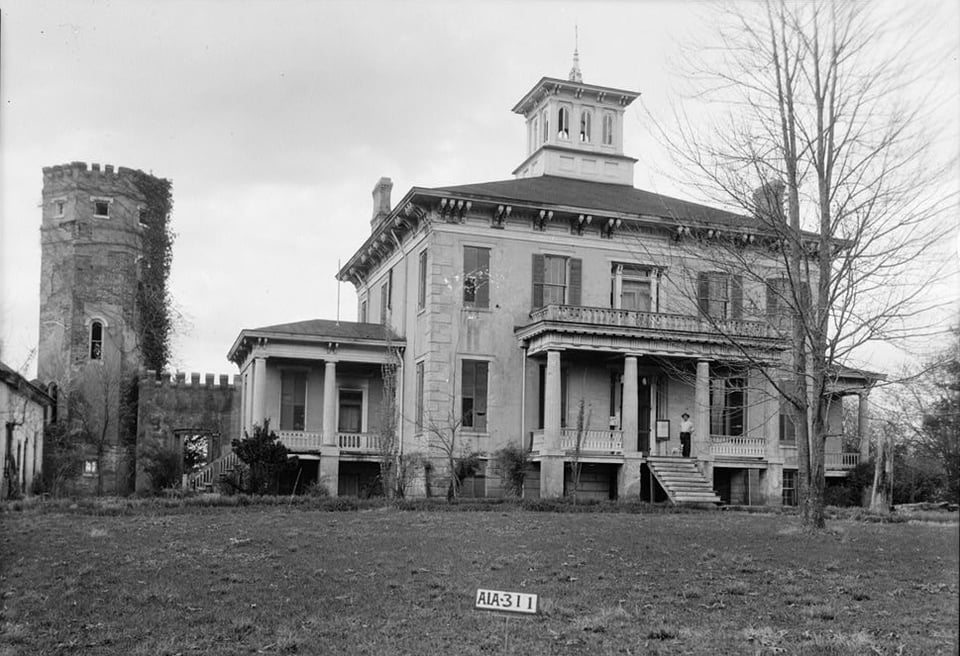
It was located somewhere between Town Creek and Florence, Alabama. Older people in these parts will still tell stories about it—how exciting it was for them as kids in the backseat of an old Chevy, to look out and catch sight of that Gothic tower in the distance! But since it was demolished in 1961 and the number of people with first hand memory of it is rapidly dwindling, it’s become a bit of a mystery to pinpoint exactly where it sat. I know that its approximate location was somewhere very close to Nance Creek. Supposedly, the “rocky hill” where it sat is still there. I need to find the creek and then look for a rise with enough outcroppings to make any horseback ride a treacherous affair (hence how the house got its name). I plan on packing a lot of sage for my ramblings—even if the house is long gone, I’m certain the land it sets on is not at rest.
I’ve learned the hard way to be very careful about what I open myself up to on such ventures. Let’s just say I’ve had enough experiences to know there is a dimension beyond this one. And it’s something to be respected.
Nevertheless, with an abundance of caution, this will be the summer of Rocky Hill Castle! And, yes, there is a story brewing somewhere in all of this (in the place where no caution is needed—my imagination).
In the Place Where Little Richard is Buried
If you’ve been following me this long, then you know I’ve written a book called In the Place Where Frank James is Buried, Just North of Here. Among the many local myths that novel explores is the urban legend that the outlaw Frank James was buried here. But here’s something that isn't a myth.
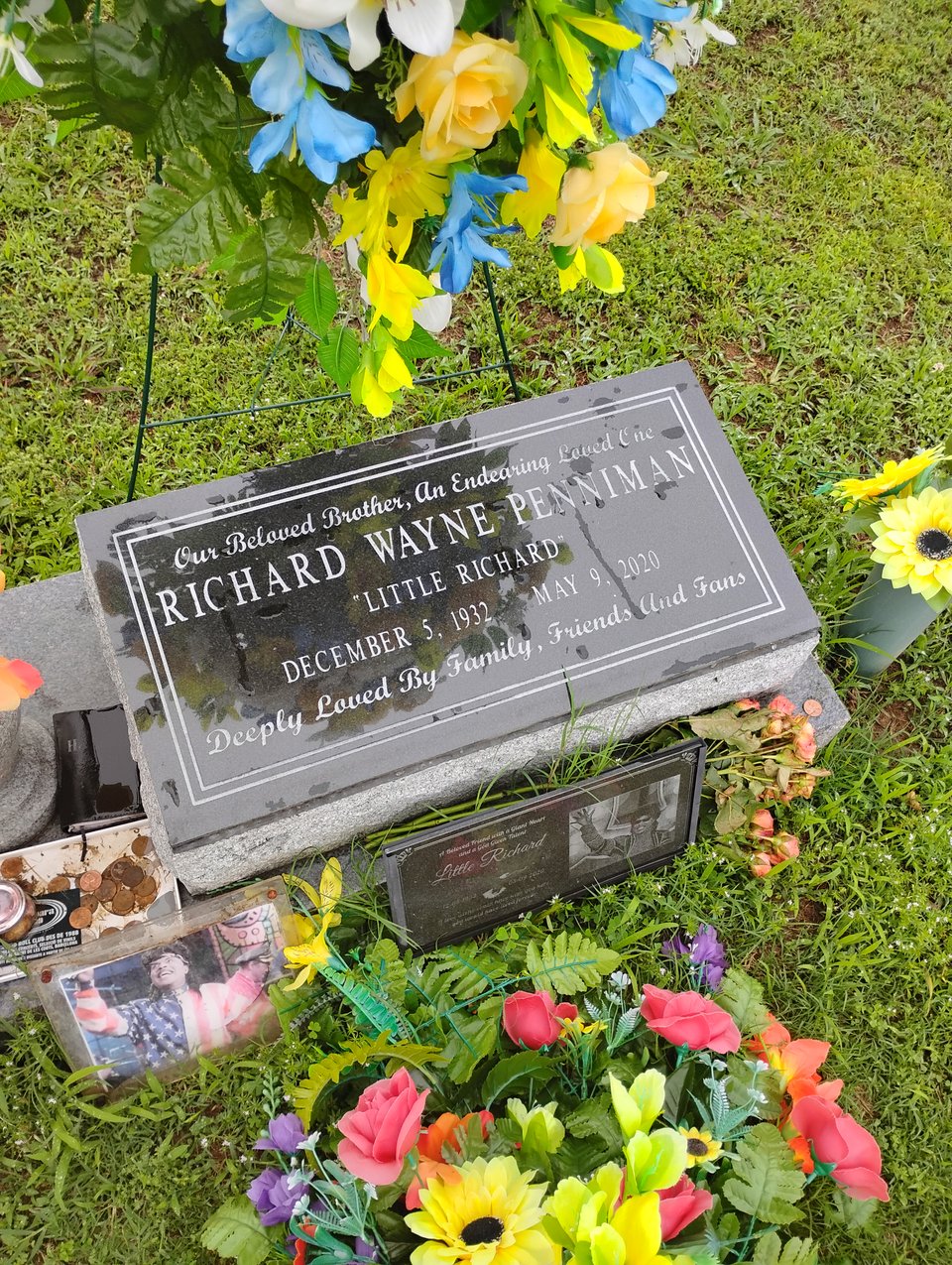
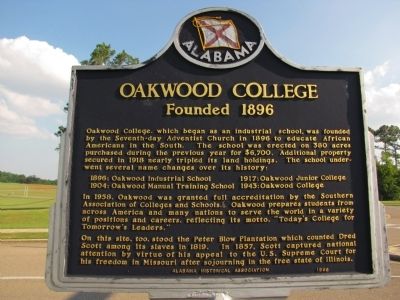
Did you know that rock’n’roll icon Little Richard is also buried here? Yep, I am also in the place where Little Richard was laid to rest, just a few miles across town, in Oakwood Memorial Gardens. The cemetery sits on several sprawling acres that were donated by the university, primarily for alumni and faculty of the institution (which also serves as a Seventh Day Adventist church).
How did he end up here? Well, it goes back to the time when Richard gave up rock ‘n’ roll because he’d gotten “The Call” and decided to preach instead. He studied theology at Oakwood College (now it is Oakwood University) and apparently fell under the spell of the Singing River because his soul kept calling him back here.
Of course, it was also during his stint at Oakwood that one of his most infamous incidents occurred ( allegedly exposing himself to a young man, a fellow student). Richard struggled with his sexuality and identity his entire life. I still cringe when I see some of those interviews where he claims, “God took all those feelings away and made him straight.” I’d be shaking my head, saying “I don’t think that’s how it works, Richard.” Sure enough, next interview a year or two later, it was back to the eyeliner and banging “Tuitti Fruitti.”
But I’m not making light of his beliefs. I believe that Richard was very sincere in his religion, but like most of us, he was a complicated individual and I think for artists like him who grew up with fundamentalist upbringings, it was often difficult to tow that line between being a servant of God and loving what they called back then “the devil’s music.”
In the spring of 2020 when Richard died, my dad had also died just a week before , so I was in kind of a weird place emotionally when Richard also passed in Tullahoma, Tennessee where he’d been living with his brother. He was 87 and suffering with bone cancer. Still, it was sad to get the news. “The Architect of Rock ‘n’ Roll” was dead. One less, colorful character on this planet.
And life became just a little colder, like it always does as the world settles around such a loss.
When word spread that Little Richard was going to be buried here-that he had a plot at Oakwood Memorial-the town lined up to catch his hearse, like it was a parade and Richard’s casket was the main float.
I was one of those, for reasons that I still can’t entirely express. But I know that having just lost both my parents (a mere seven months apart) had something to do with it. I was feeling death’s sting in an unusually close way that spring, and of course there had been the pandemic as well, which cast its own morbid shadow.
I suppose part of it was rubber necking, morbid curiosity, whatever. How often do you get to see a famous rock star’s funeral procession?
The procession was delayed. People stayed anyway. They waited hours, in the rain. Someone played “Tuitti Fruitti” and “Good Golly Miss Molly” on a car radio speaker, both of these songs that, ironically, hadn’t meant much to Richard in a very long time.
Through the grapevine, we’d get the latest updates on the procession and its various holdups:
The procession is coming through Ardmore.
Fifteen minutes later: The hearse just crossed the state line.
Finally, here came the rumble, the cops on their motorcycles, leading the motorcade.
When the hearse finally came into view, people cheered. But then, as the line of vehicles with family members passed, a strange and eerie quiet fell.
I realized there was something more than morbid curiosity that had brought us here. The popular sentiment was, “Brother Richard is coming home.” It didn’t matter if you were black, white, indigenous, whatever. We were gathered to welcome home a man who wasn’t born here, but came to think of this town as his adopted home-so much so that it’s where he decreed his body be laid.
There’s a Cherokee proverb I always come back to, one that an elder taught me many years ago: “Spirits will always come back to connect with the places where they were happiest.” Little Richard chose this place because, for him, it was where he walked with God.
For many months afterward, my husband and I would periodically visit Richard. He was so close by that it was an easy hobby to fall into. He didn’t have a headstone for a long time, and I wondered if he’d died in poverty and they couldn’t afford one. It bothered me for a long time, wondering if Richard was being neglected. But eventually, they placed the very modest but nice stone that you see here in the photos. I suppose the family was working on it. I’ve learned from my own family’s experiences that headstones can take a frustratingly long time.
Anyway, I realized yesterday that I had not visited Richard in a very long time. But the last week or so I’d felt this little tugging at me, like Richard saying, “Hey, it’s been awhile.” Maybe it was something to do with another May rolling around. I realized it had been six years since I lost my dad. At the time, the circus around Little Richard’s burial had felt like a distraction. Had he simply served his purpose for me?
I wasn’t sure, but for the last few weeks, I’d had this nagging feeling to visit again. So on a rainy Tuesday afternoon, wading through mud and wet grass, I found myself here. Again. “Just checking on you, Brother Richard.” I murmured. Somehow, I felt that’s how he would appreciate being addressed.
The grave was smothered in flowers. Two, huge memorial wreaths. An altar of tokens on the gravestone included a jar of lip gloss. Nearby, The Trinity of crosses look over him.
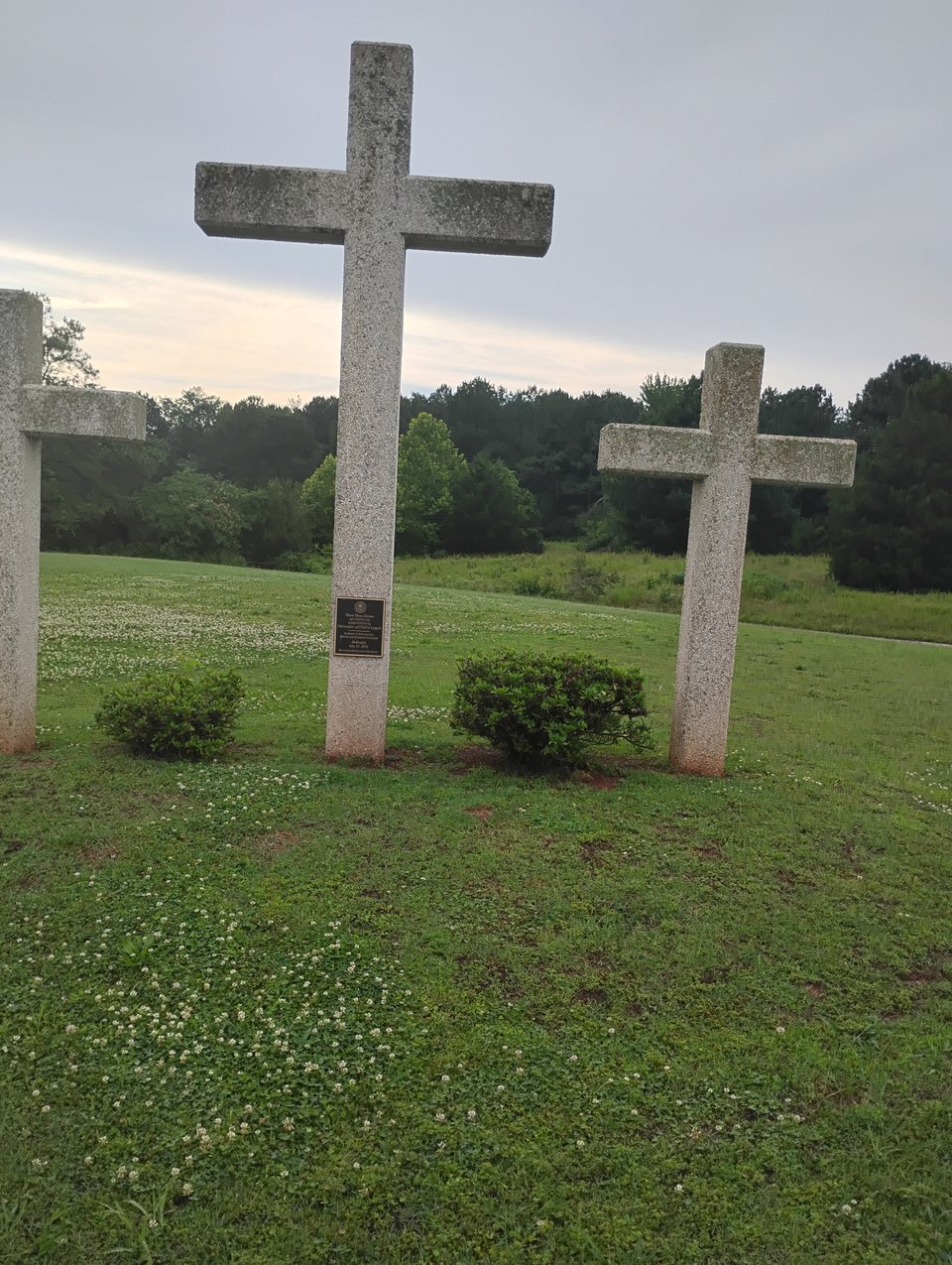
The Architect felt at peace, his spirit settled. “I’m doing okay,” he seemed to say. “I’m home. You?”
I think I realized this was why I needed to come here. It’s been a tough few weeks. I’m facing surgery in another week. I don’t know the outcome. I’ve been stressing about a lot of things-my health, my career, my books, my finances, all of it piling on. But being at Richard’s grave reminded me of the strength I draw from this place. It reminded me of the things I’m grateful for-home, life, the fact that my legs can still walk upright among these graves, that my lungs can still draw in air.
I said my good-byes to Brother Richard. I don’t know when I’ll be back, but somehow knowing he’s just up the road is one of those little things that makes life here just a little bit happier.
Well, What Else is Up?
I have some exciting news that came out of my recent excursions to the Atlanta Writer’s Conference and the Tennessee Writer’s Conference. Since I now have agent representation, I no longer go to these events to seek out an agent, but I do go to meet editors (and, of course, networking in general which is important at any stage of the writing journey). Anyway, I had a lot of editor interest in my novel Elmer & Leonard, my story of a Southern road trip with a nerdy Native American widower and the vampire blues prodigy he encounters.
I am now working with my agent to follow up on these requests. But a funny thing happened because this interest has also necessitated going back in and doing some revisions, mainly to the opening chapters.
I knew it would have to happen, eventually. That I would be asked to dive back into that manuscript. But after the novel pretty much solidified for me two years ago, trying to jump back into it—diving back into that world, with those characters, felt a little strange. And this brings up something interesting about the revision process which I don’t think too many have addressed, but which is (I am convinced) a very real phenomenon.
Well, at least for me, it is. Almost every writing manual, every coach and mentor, all those writing advice channels on YouTube and whatever, will say the best thing you can do when revising is put the manuscript away for awhile.
And, yes, there is definitely something to be said for coming back to a manuscript with fresh eyes. Just like when you watch a movie the second or third time around, you’re going to catch a lot of stuff you didn’t see before.
It becomes much easier then to read the manuscript the way a reader would, rather than as the writer. You can often get a much clearer sense of what you’ve done right and what you’ve done wrong,
It becomes a bit easier to see the trees through the forest.
But something else happens, too. And here’s the best analogy I know to describe it, which may sound nuts at first, but hear me out.
Okay, when I was a kid, my absolute favorite TV show was The Munsters. You’ve all probably seen it, at least heard of it. It was a goofy but loveable show about a family of “monsters,” all based on well-known film monsters of the Universal film world. There was Fred Gwynne’s loveable and childlike Herman Munster, Yvonne DeCarlo as a “Bride of Frankenstein” vampire wife, Al Lewis as Grandpa, the cantankerous old vampire modeled on Count Dracula, and their weird werewolf kid, Eddie.
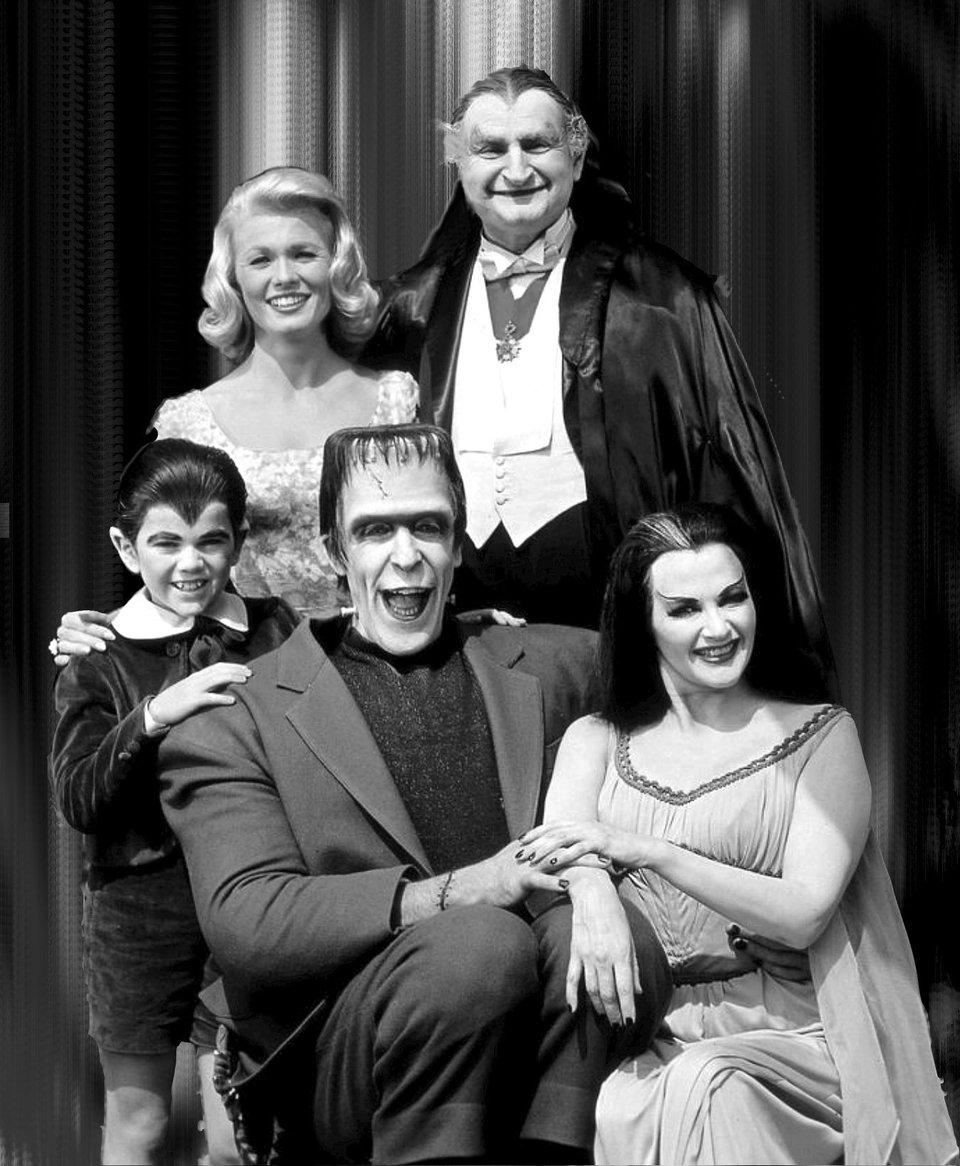
Like so many 60’s sitcoms, it was a totally goofy premise that shouldn’t have worked-but it did thanks to the amazing chemistry and comedic timing of its cast. Looking back as an adult, I realized this was what endeared those characters to me, all those little touches. The way Fred Gwynne mastered the art of reaction-his childish stutter, the open mouth to indicate when he was trying to process something too profound; the way Yvonne DeCarlo would fidget with her hands; the unique way Al Lewis would go “Uhhh boy” when one of his experiemnts blew up or Herman did something stupid-which was every episode.
It worked because those actors were wonderful, and they made those characters alive (even if they were all supposed to be dead-several times over).
Then something happened. The show ended. The cast moved on. Years later, they tried to revise the series with a made-for-TV movie, The Munsters’ Revenge. I watched this movie. It was awful. More than awful, it was painful to watch. Yet it had all of the same actors, reprising their same roles. This wasn’t one of those reboots where they have different actors reprising the roles. This was the same cast from the 60’s. It should have worked. Sure, many years had gone by, but you would think it would have been like riding a bicycle for them to fall back into those characters.

Not so. The acting was stiff; the timing was off. Everything felt like a parody of what had seemed so effortless and endearing thirty years before. I’m sure much of the blame can go to bad writing and directing, perhaps.
But there was something else as well. Even though the movie had the same actors, it was clear that Fred Gwynne, Al Lewis and Yvonne DeCarlo were out of touch with their characters. It was kind of like when you have a favorite show and you go back and watch the pilot episode. Pilots always feel a bit “off” because the actors haven’t yet settled into those characters; they are still molding them, still trying to figure out who they are.
Every show has that golden period where it hits its stride. It usually takes some time to build it-and often cannot be artificially recaptured once it’s over and too much time has elapsed.
I think being away from a character for many years can feel much the same way for a writer as it does for an actor. You’re back in that skin again. But you’ve lost touch with the essence of that character. Given enough time, you might grow into that skin again, but it’s a process and doesn’t happen immediately.
That’s not something you can artificially create just by putting on the costume and the makeup again.
Where am I going with this? Simply put: Trying to jump back into a story after several years away from it feels a lot like that. I think the advice of storing a manuscript away and coming back to it later has a lot of validity. But there is a window that isn’t exactly infinite. For me, there does come a time when I realize that, even though I loved this world and I loved these characters when I was there, once I typed “The End” that was kind of it for me. Once I’ve moved on, it’s very hard to immerse myself back into that world. I do often find that I’ve lost touch with those characters, that thoughts and impulses and dialogue that came so natural at the time now feel a bit strained.
It’s a process, of course, because I’m having to basically reacquaint myself with the characters and that particular world all over again. Given enough time and immersion, I can usually get that rhythm back. But time is the key word there.
And yes, sometimes it IS as a easy as slipping back into an old, favorite pair of loafers.
Other times, however, it’s like the characters are purposely evading me, protesting, “Hey, we don’t want to be poked anymore, leave us alone.”
Every time I finish a story, it feels a bit like like when you close a book. That world and those characters are solidified within. I’ve brought them to where they needed to be. And by the time I’m asked to revise again, it’s usually long after I’ve moved on, immersed myself in other stories, other worlds and fictional lives. So going back to a place I’ve already been takes more than a bit of settling in again.
It’s the same feeling I’ve heard actors express when they’re trying to explain why they have no desire to re-watch their movies. Maybe it’s a thing that can only make sense if you know that process, of breathing life into something, living it every day for weeks and months, and finally seeing it through to what feels like some kind of resolution.
You’re pleased that you did it. But you don’t necessarily want to go back and relive it. For me, writing a book always feels a little like that-it’s a journey I’ve undertaken. And once I get to the end, I just want to bask in the satisfaction of “having written.”
Revision is so painful precisely because it forces you to fight against that complacency. There’s an old saying, well known among writers, that most of us enjoy “having written.” Writing itself is actually—often—quite painful.
Don’t get me wrong. I absolutely love the editing and revising process. It’s often where the true magic happens. There is something immensely satisfying about already having that basic scaffolding up and that canvas created, especially if it’s just a matter of filling in the brushstrokes. But again, timing is everything. It’s all about hitting at that Goldilocks moment when there’s been “just enough” distance, but not too much.
I know that many of you are writers, too. And all of you are readers. So what has been your experience with revision, especially something you’ve been away from a long time? Do you find it difficult or easy to dive back into a story again? As a reader, how do you feel when your own favorite writers return to a character or a storyline from years past?
Is it the same, or do you feel a kind of energy shift, the sense that something feels a little off? (Granted, the energy shift isn’t always a bad thing-it can mean the author has grown, and the characters have grown).
The Lestat of Anne Rice’s later Vampire Chronicles definitely isn’t the same rogue of the earlier books. Rice wove herself in and out of that universe for a total of forty years, with sometimes a decade or more between each book. Each time involved a process that was simultaneously both re-immersion and reinvention.
Sure, characters can grow and change, just like authors grow and change.
It can be a bit more problematic, though, if we left a plunky, 24-year-old heroine in a small Southern town ten years ago, and a decade later we’re back and she’s still a plunky, 24-year-old heroine in a small Southern town— except her creator can no longer connect to her 24-year-old voice and her quirky, 24-year-old personality now reads like parody.
Okay, enough random, deep thoughts for the day (why do I feel like Mary Jane from the John Boy and Billy skits all of a sudden? Cue the stoner voice: “I just sit around, ya know, and…. think about stuff.”).

What I’m Reading
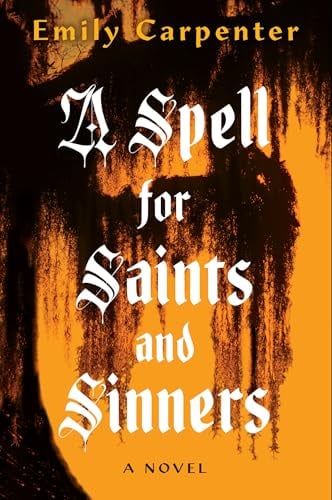
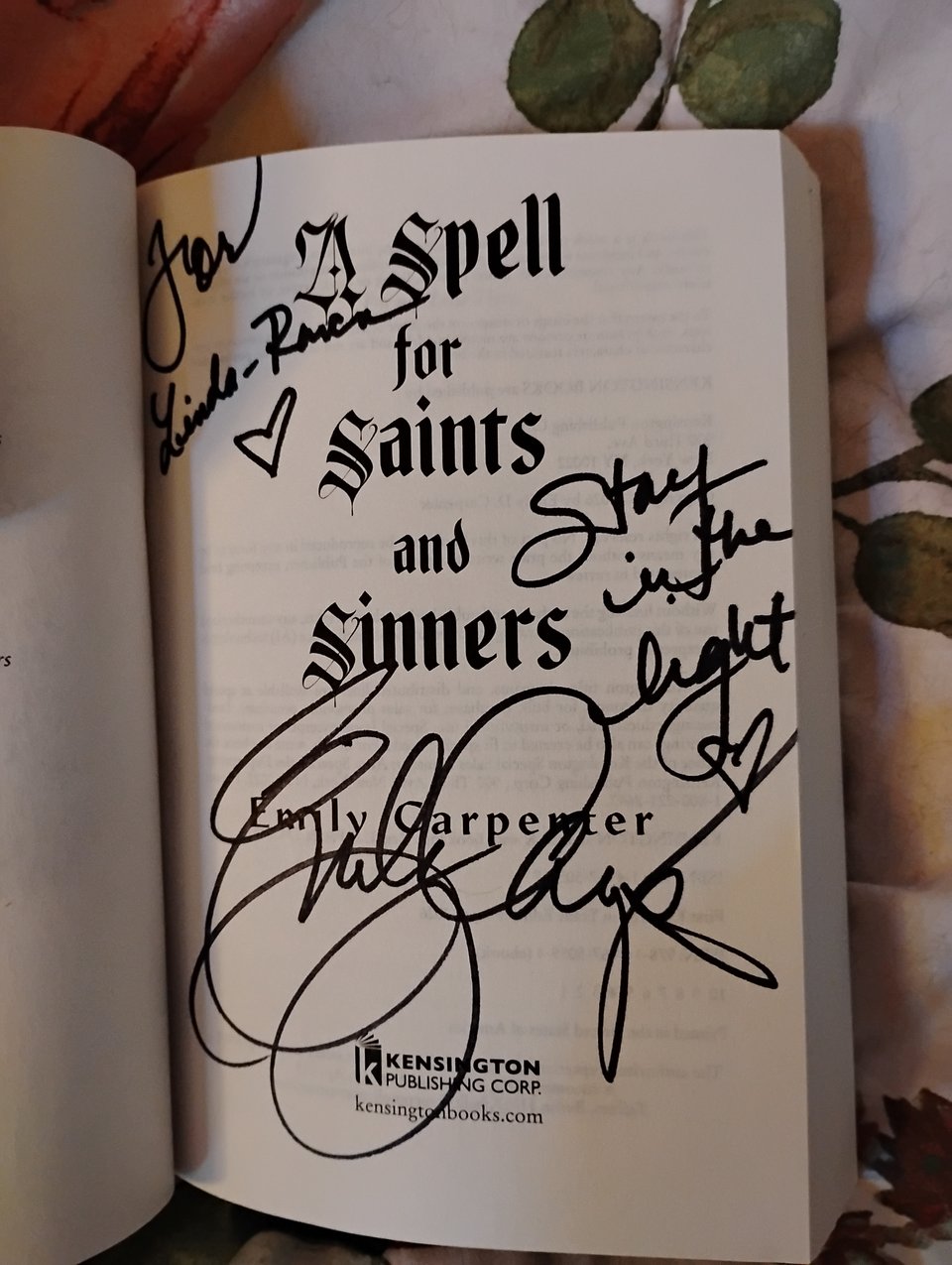
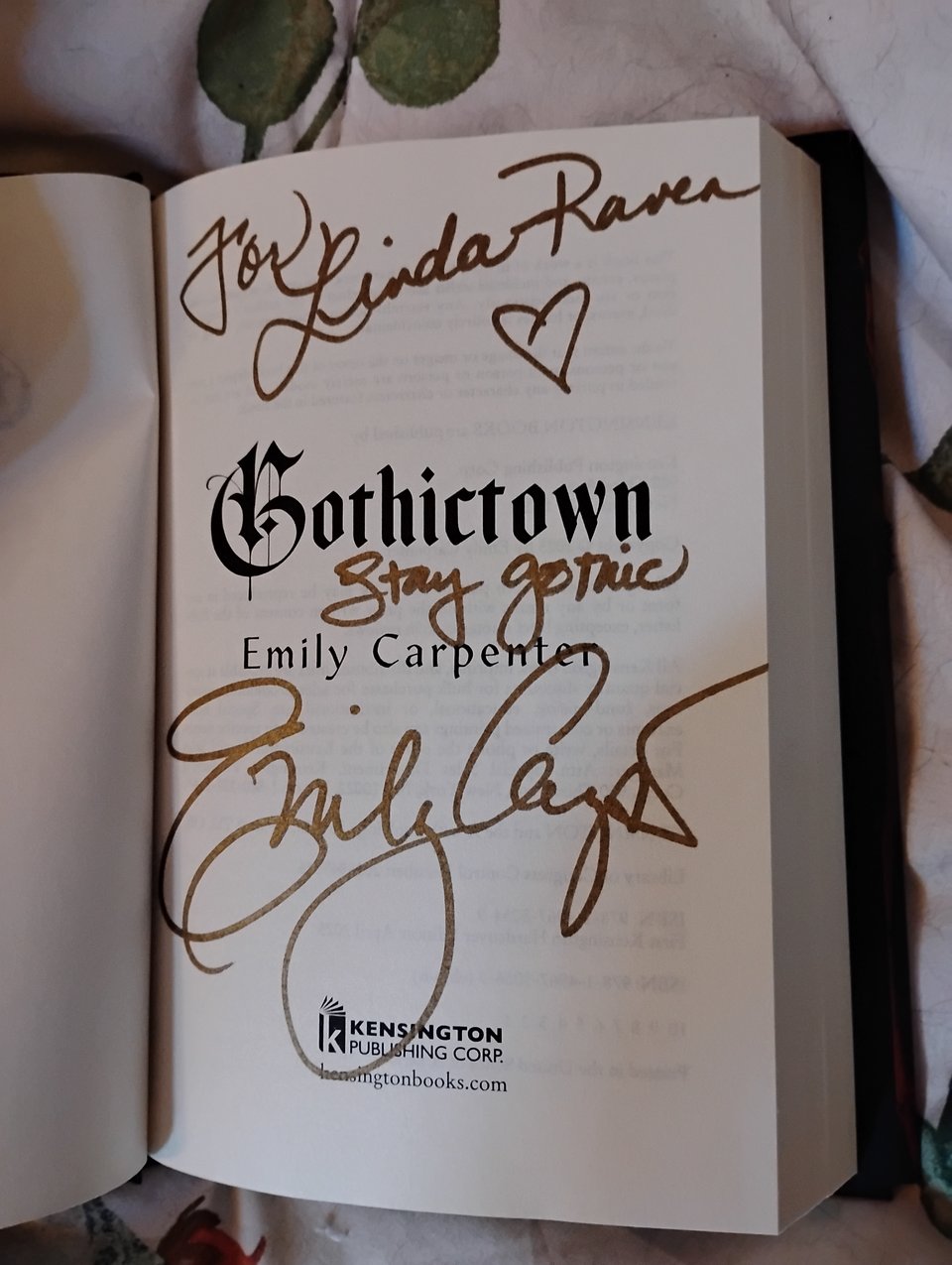
This month brought me back to one of my favorite local, indie bookstores, big shout-out to Court Street Books in Florence where I spent a delightful afternoon last Saturday with New York Times bestselling author, Emily Carpenter, and picked up her two latest: A Spell for Saints and Sinners and Gothictown.
It was a lot of fun and I enjoyed getting the chance to hang out with Emily.
I’m amassing quite the collection of signed books! I love supporting authors, but especially supporting local, Southern authors. Can’t wait to add these to the night stack!
And on that note, before this edition grows into a book itself, I should probably end it here. See you again in June with (hopefully) many exciting updates and-praying-a clean bill of health from my biopsy. Until then, donadaghovi.

