The Mechanics of Liberation
Spring 2026 edition
Welcome back to Notes on a Present Future. If this is your first time here, this newsletter uplifts the stories and the work of people shaping the world to build just futures now.
What’s inside
1. A note from my desk
2. Updates (mine and, more importantly, yours)
3. Reading, watching, listening
4. Stay in touch and collaborate with us.
A note from my desk
One of my joys of the past twelve months has been participating as a member of the Changemakers Authors Cohort, a fellowship which creates community for social justice advocates to write their books. In one of my coaching sessions with the writer Emile Suotonye DeWeaver, we talked about the writing process and how it morphs and warps under the twin weights of daily responsibilities – ones of care, support, or service – and the current intrusions of the external world – ones of mass detentions and democratic backslides, shrinking civic space and shriveling opportunities, undeclared wars and mounting atrocities.
I was having a moment of regret that I hadn't gotten as far with my writing on my Changemakers book as I had promised myself, telling Suotonye about all the frames and stories I was planning on stuffing into it. He said, hold on. You don't need to write all of it. You have lived experience. You have cultivated mastery over parts of your work. Write about that. And let other writers write the other stories.
It was a necessary reminder: Liberation is a constellation of practices, not a single act, and results from a network of narratives, not a single story. Once you commit to the overarching work, there are many ways to do it. When one path closes or costs too much, another opens. You don't have to leave. You just move differently. You move with and alongside other people to create shared movement toward equity, justice, and shared opportunity.
For years, I've moved across the landscape of collective leadership, narrative power, community-led governance, trying to weave all of these together through futures-oriented frameworks, tools, and stories. These are concepts that can be dismissed as “soft” and unmeasurable, but they are connective tissue. And the world’s demands urge us to hold all of it at once, because none of what is happening right now can be held at a distance.
We are living at a time of so much death and destruction and rampant fascism, all so a cadre of old oligarchs can break the world and profit from the wreckage. Over the entire world, Tehran, Gaza, Minneapolis, Caracas, El Fasher, in real time, hundreds of thousands of people are being disappeared, killed, bombed, exploited, or denied their rights to participate in civic life. Fuel is scarce, democracy is dissolving, data is sucked up, art is criminalized, movement is circumscribed. And we are watching it all happen in real time. As if we have a front seat to war. As if we are in perpetual mourning. The people this is happening to are not footnotes or collateral damage or, in the parlance of social media, “distractions.” These violations against us rend the fabric that we are trying to weave into something whole. These stories land in the body, in the writing, in the work. These people are part of the constellation.
So are we. There are many of us who practice care, imagination, and hope, with our bodies, with our resources, with our words, and with our art. You who are reading these words are bearing witness and refusing to look away. Whether you are showing up to protests, donating to mutual aid, shielding vulnerable people from violence, making your voice be heard on your media platforms in delicious satire or searing anger, developing insights for where we are and what pathways we need, creating new forms of art, commerce, or networks, you are the ones who crafting new ways of being.
Suotonye's framing helps me see our work as it should be situated now: Shifting with different moments, resources, and needs. Living and adapting to liberation movements that respond to daily shocks and opportunities. Recognizing that we work in and as ecosystems, where the strength of the whole depends on the diversity and vibrancy of its parts. We build just futures through social movements, through the patient development of leaders who understand power, through narratives that determine whose suffering registers, through mutual aid that refuses to make people wait for justice to survive, and through hope and imagination practiced as a discipline. That all together is the work. It is nowhere near finished. Showing up to it, in whatever form the moment demands from us, is the mechanics of liberation and the infrastructure of change.
Now, to the updates…
Updates
Mine:
I have quite a few updates this time – we’ve been very busy at CfTC.
Reimagining impact journalism: For the next 12 months, I have taken on a fractional leadership position with Proximate Press, an independent media outlet whose mission is to make sense of our shared turbulent moment through the lens of money and power in philanthropy, impact investing, and international development. Proximate is three years old and has built itself in that time to become a dynamic and valuable news source for the social sectors. Now the outlet is planning for its next phase of growth and evolution, particularly in the face of ongoing sector and global systems shift, and will be testing new media production, distribution, and governance models that will be fit to meet the moment. My role is to lead strategic planning, including experimentation and evaluation, helping the Proximate team define what comes next for its operating model, its editorial direction, and its long-term architecture. I am deeply excited about this work. I will lead Proximate alongside my continued full-time leadership of the Center for Transformational Change, bringing CfTC’s resources and expertise in systems, sector, and organizational transitions to my role at Proximate.
Mapping possible futures: Last year, I joined the 10F Consortium, an independent collective of futurists, strategic analysts, and domain experts mapping systemic transformation from 2025–2035. We are 20+ practitioners from five continents who operate without institutional, commercial, or national agendas to track what comes after the deliberate dismantling of the post–Cold War order across ten domains, including trade, technology, climate, migration, civil society, and finance. This is my first real experience with strategic foresight practice, and I’ve found it fascinating. We’ve recently written a series of ten forecasts for NGOs, foundations, multilaterals, and public- and private-sector actors navigating disruption and who often don’t have the capacity to engage with strategic foresight practice. The forecasts are free, no paywalls, and Creative Commons licensed. Learn more here.
Creating political hope: For the past few years, I’ve been working on concepts of hope as an active practice toward justice and equity. Inspired by #FallofFreedom this past autumn, on MLK Day 2026, we released our first zine on political hope from the Center for Transformational Change. We asked artists, writers, and creators: What gives you political hope? How do you create it? How do you sustain community through it? Their responses are beautiful and urgent. Read the full zine here.
Building Narrative Infrastructure: Narrative power relies on who owns the machinery of meaning-making. As I wrote in my previous newsletter, last autumn we released Narrative Infrastructure for Narrative Power: A Framework for Community-Led Change as a free resource for civil society and social sector storytellers to help you assess your possibilities and roles and explore collective action and partnership options as you navigate that landscape. Since we released the framework, continuing media consolidation and democratic decline has worsened and little progress has been made for communities that lack ownership of the platforms, institutions, and networks that shape their stories. I discussed these issues in two separate outlets: on the fantastic Convergence podcast talking to Cayden Mak about controlling narrative infrastructure, and on Proximate before I took the helm, focusing on the role of fiscal sponsorships as a resourcing mechanism. (Subscribe to both publications!)
Confronting Risk: In August of last year, I had the privilege of joining MOD. in Adelaide as a Visiting Research Fellow, where I applied our Transformational Change Leadership framework across new communities and contexts. Working through panels, discussions, and workshops inside questions about collective leadership and risk – one of the seven core characteristics of the framework – the inquiry reinforced my belief that complex challenges require distributed intelligence and collective leadership, not top-down control, and opened up exciting new possibilities for where we might bring TCL. I wrote about the fellowship here.
Engaging in Service: My current field service is dedicated largely to organizations that build infrastructure as a form of justice work, creating and shaping the conditions under which stories get made, and by whom, and who has control over access to technology, platforms, information, and data. To that, I volunteer with Brown Girls Doc Mafia through its Capacity Council. In 2025, BGDM marked a decade of material investment in BIPOC women and nonbinary documentary filmmakers. Also holding a 10 year anniversary last year was Electric South, for which I sit on the board of directors, celebrating ten years of building an ecosystem for African artists working in immersive technologies. And I recently became part of the AI and Doc Working Group at MIT, led by Kat Cizek and Tabitha Jackson, which interrogates how artificial intelligence is reshaping nonfiction storytelling.
Yours:
For those of you interested in ethical technology
Algorithmic Accountability Toolkit Damini Satija with her team at Amnesty International launched the Algorithmic Accountability Toolkit, a practical resource for civil society groups, journalists, activists, and researchers investigating AI systems used by government and public institutions. Drawing on years of algorithmic investigations, the toolkit combines legal analysis, community testimony, and public records to build collective power for investigating AI harms and seeking accountability. The resource emphasizes multi-disciplinary approaches bringing together research, auditing, advocacy, and strategic communications—methods that recently led to the shutdown of a discriminatory algorithmic system at Sweden's Social Insurance Agency.
The Society for Hopeful Technologists, launched by Rachel Coldicutt, is bringing people together who feel technology has gone off track and want to help course-correct. The project is building a solidarity network for collective action while cutting through tech hype to make how things really work clearer and more accessible. A volunteer team is laying the foundations now, with paid membership launching later this year.
The AI Safety Paradox Speaking of Rachel Coldicutt, she and her team at Careful Industries have published a new literature review for Lloyd's Register Foundation examining what "safe adoption" of AI actually means, and whether it's achievable. Drawing on more than 300 sources covering AI safety in critical systems, worker outcomes, and environmental impacts, the paper identifies five key barriers to safe adoption. The work will inform an upcoming Foresight Review into the Safe Adoption of AI in Engineered Systems.
Digital Freedom and Internet Governance Jillian York, Director of International Freedom of Expression at the Electronic Frontier Foundation, joined Revolution Social to discuss the urgent need for more diverse approaches to internet governance. Jillian shared insights from her work advocating for global activists and examined pressing issues including content moderation challenges, the critical role of end-to-end encryption, and the unintended consequences of age-verification laws. The conversation also explored AI training's use of copyrighted materials and why grassroots activism remains essential for protecting our digital rights.
The New Face of Power and Violence Najjuko Joanita of The Nawi Collective offers a powerful reflection on how Big Tech has become the new face of empire, connecting digital violence against women and girls to broader patterns of extraction and exploitation. Writing for The Nawi Collective during #16DaysOfActivism, she examines how tech corporations profit from gender-based violence through content moderation, gig work, and surveillance while hiding environmental destruction and labor abuses behind innovation rhetoric. The piece challenges us to reimagine technology rooted in care rather than control, drawing on African feminist traditions to envision liberation beyond the digital economy's extractive logic.
Pipeline Insights: Civic Infrastructure in the Age of AI New Media Ventures and New Rising Ventures released their 2025 report analyzing over 200 organizations building civic and pro-democracy AI solutions. The comprehensive study reveals that leaders of color and women are driving innovation in responsible AI—from legal access tools to narrative defense systems—yet face severe funding shortfalls despite high technical capacity and IP ownership. The report documents urgent gaps in civic infrastructure ahead of the 2026 midterms and highlights four featured investments: Justicia Lab, Scrutinize, Retro Report, and Breakthru.
Cartography of Generative AI, a project by Estampa, maps the networks of resources, extractions, and dependencies underlying today's AI tools — grounding these technologies in material and ecological reality rather than hype. Available as a free PDF in ten languages at cartography-of-generative-ai.net.
Collective Governance for AI: Points of Intervention lays out a framework for how communities can meaningfully influence and govern AI systems at every layer — from design and data to deployment and public policy. Instead of seeing AI as something only big corporations control, the project breaks the technology into approachable “points of intervention” and highlights practical, community-centered strategies for steering it toward shared benefit and accountability. This work sparks ideas for how collective power, diverse expertise, and democratic practices can shape AI’s future.
For those of you interested in international development, human rights, and global affairs
To Save Us From Hell The podcast on international relations and the United Nations reached its 50th episode, marking a year and a half of in-depth conversations on global governance and UN leadership. Co-hosted by my niece Anjali Dayal and journalist Mark Leon Goldberg, the show has built a dedicated following among UN watchers and policy enthusiasts, and its milestone arrived at a timely moment: on December 16th (proud Auntie moment alert), Anjali briefed the UN Security Council on "Leadership for Peace" during an open debate convened by Slovenia, reflecting the real-world relevance of the issues the podcast continues to explore.
Expanding your reading list Check out Elmira Bayrasli's Book List on Interruptrr, her invaluable foreign policy newsletter that amplifies women's voices and expertise. This year's roundup features standout picks like Barbara Demick's Daughters of the Bamboo Grove on China's one-child policy and Erin Sikorsky's Climate Change on the Battlefield, alongside fiction favorites and books that center women's perspectives in national security and global affairs. After 12 years of curating weekly insights, Interruptrr continues to widen the lens on foreign policy—proving that expertise knows no gender. Subscribe to join a community committed to smashing the pundit patriarchy, one recommendation at a time.
Refugees’ Realities Hafsar Tameesuddin of the Asia Pacific Refugee Rights Network (with whom CfTC had the privilege of working last year on questions of Meaningful Refugee Participation) gave a brief interview covering the challenges and opportunities ahead for refugees and the climate change impacts on forced displacement, to help us rethink our approaches and strategies in responding to the issues of forced displacement.
"Re-envision No More Division": A Reflective Photo Essay of 2025 Todd Miller from The Border Chronicle presents a powerful photo essay documenting the U.S.-Mexico borderlands throughout 2025—from Inauguration Day in Nogales to the Rio Grande in fall. Inspired by Robin Wall Kimmerer's vision of "a different way forward" grounded in reciprocity and respect, Miller's images capture memorials, dust storms, migrant solidarity walks, surveillance technology, and unauthorized cows crossing rivers, illustrating both the turbulence of the year and the resilience of border communities.
Lawyering for Liberation: A Toolbox for Movement Lawyers is a newly published book featuring reflections from more than twenty movement lawyers and organizers on using legal tools in support of social movements. Drawing on experiences from struggles including Black Lives Matter and Palestine, the book examines approaches to protest, litigation, and policy work that have been tested in practice. The book can be ordered at https://bit.ly/law4lib. Proceeds support the work of Law for Black Lives.
The Aid Report is a data-driven project documenting the real-world impacts of U.S. foreign aid cuts. It curates verified news, analysis, and firsthand accounts that show how changes in aid policy affect communities around the world — from health and food security to governance and rights. The site also maintains an Impact Tracker with vetted reports of disruptions and outcomes on the ground, and invites contributions from people with direct experience
New Narratives for Humanitarianism Ben Phillips and Patrick Gathara co-wrote an opinion piece in The New Humanitarian titled Ten Ways to Build a New Narrative for Humanitarianism, challenging the sector to examine the assumptions and power dynamics embedded in how humanitarianism tells its own story. The piece is written, as they put it, from a place of love for what humanitarians strive for and ambition for what the field can become.
From Critique to Construction Speaking of Patrick Gathara, in his latest Decolonise How? column, Patrick argues that the humanitarian sector has gotten very good at diagnosing what's wrong with crisis reporting, but not much else. Ethical practice that depends on individual goodwill will always remain fragile, he writes; what's needed is structural change. He outlines plans for an Ethical Humanitarian Communications Working Group at The New Humanitarian to do exactly that, bringing together journalists, humanitarians, academics, and crisis-affected communities to develop practical tools for impossible ethical dilemmas. (When Linda Raftree and I launched Regarding Humanity nearly fifteen years ago, this would have been beyond our wildest dreams. This is so needed.)
For those of you interested in new economic and organizational models
Civil Society Wayfinder Accountability Lab launched a campaign highlighting local organizations reimagining civil society work amid aid cuts and sector uncertainty. Emerging themes include youth leadership, media literacy, diversified funding models, and narrative power through storytelling and art. The #CivilSocietyWayfinder campaign showcases grassroots organizations already doing this work, including Rongmohol for Youth (Bangladesh) empowering youth on climate and misinformation, Freeworld International (Ghana) building vocational skills for behavioral change, African Child Projects (Tanzania) bridging the digital divide in civic life, and Kick Corruption out of Uganda mobilizing citizens for community-led accountability.
Unlocking Non-Human Genomic Data Kevin Slavin has launched Fairfield Bio, a new venture building the world’s first marketplace for non-human genomic data. Co-founded with former CDC Chief Medical Officer Mitch Wolfe, Kevin’s project aims to unlock a trove of genomic information that remains inaccessible due to misaligned incentives, unclear rights, and legal complexity. By creating sovereign, enforceable terms for sharing and use, Fairfield Bio goal is to reward data providers, protect users, and accelerate scientific discovery for the widest landscape of (human and non-human) beings that we share this planet with, all of which provide incalculable value, and all of whom deserve our respect and care.
Derailed The Philanthropic Initiative for Racial Equity (PRE) released Derailed: Rising Attacks and Retreating Resources for Racial Justice, a new report revealing that funding for communities of color has fallen to 6.8% of all institutional giving—lower than in 2014. Following up on their 2021 Mismatched report, PRE found that despite overall philanthropic growth of 44% between 2019 and 2023, support for communities of color dropped 22% (adjusted for inflation), while racial justice funding never exceeded 1.4% of institutional giving. The report documents how philanthropy has retreated from racial equity commitments amid political attacks and offers recommendations for getting back on track.
Building a Creative Ecosystem Starfish's current cohort includes 8 creators and 1 tech partnership working across digital performance, economic theater, documentary, children's festivals, webcomics, XR, live jazz, and AR-driven cultural preservation. The mid-career and award-winning grantees share a common thread: building new models for how creative work gets made and sustained, rather than relying on traditional ones.
For those of you interested in creativity, storytelling, and the arts
Priya's Shakti The comic book series "Priya's Shakti" was selected as a "Top 10 Culture for Impact 2025" by the Museum for the United Nations. The series uses the superhero genre to make difficult topics around gender-based violence approachable and empathetic, giving voice to survivors through a relatable female superhero. By leveraging the familiarity of superhero storytelling, the work demonstrates art's power to reimagine and change the world.
DSL.Tools’ List of 50+ Immersive Things is a curated collection of 50+ notable projects, experiments, and experiences shaping the landscape of immersive technology this year. Compiled with contributions from a broad community and presented as part of the team’s DSL Field Notes project, a social prototyping journal for collecting, connecting, and reflecting on creative work, the list highlights ideas and tools worth watching.
Young on Filmmakers on Climate BYkids has opened applications for its Film Development Fund, an open call inviting young people aged 13–18 to submit ideas for short documentary films. The current theme is Climate Action. For nearly two decades, BYkids has partnered with young people around the world to tell stories that matter, pairing kids with professional filmmakers to create documentaries that explore their own lives and urgent global issues. If you know a young person with a story to tell, or an educator looking to bring this into the classroom, it's worth a look. Deadline: April 22, 2026
All Will Rise Joost Vervoort is one of the collaborators on All Will Rise, an indie video game he's been building with his studio Speculative Agency. It's a politically outspoken deck-building game rooted in real climate activism, specifically the legal efforts to force a major pension fund to divest from fossil fuels. The game casts players as investigators building a case to put a corrupt billionaire on trial for the murder of a river. Joost describes it as "inappropriately joyous." The public demo will be taken offline by March 22, 2026, so play it while you can.
And Still We Rise Alan Jenkins and Gan Golan released And Still We Rise, the final issue of their critically acclaimed 1/6: The Graphic Novel series. The graphic novel imagines an alternate history where the January 6th insurrection succeeded, exploring how authoritarianism takes hold and how ordinary people resist. Since its 2023 debut, the series has been adopted by educators nationwide and comes with free teaching guides.
Homegrown, a new documentary by Michael Premo, offers a verité portrait of men drawn into the Proud Boys movement before and after January 6. Rather than focusing solely on the Capitol attack, the film takes a longer view of radicalization and its aftermath, aiming to create a more nuanced and enduring record of the events surrounding that day. Homegrown is being released directly to viewers starting January 6.
For those of you interested in narrative, cultural, and systems change
Applied Narrative for Movement Building The BLIS Collective released the second paper in their series on their foundational philosophies, titled "Applied Narrative Research for Movement Building." The paper introduces their applied narrative research methodology, and argues that narrative research should not seek to only better understand how ideas and perceptions shift, but should be designed to increase the narrative power of movement actors who are working to shift the material conditions of our communities.
Games for Systems Change David Finnigan has released his framework to help organizations harness the power of games more effectively for systems change by embedding game designers within project teams. He argues that this will help organizations use games more effectively and create targeted, iterative interventions that engage participants through meaningful conversations toward real-world impact.
Women Driving Global Uprisings Eliza Anyangwe and her colleagues at the Fuller Project have launched Revolutions, the first edition of a new chapter in their work, examining women's roles in global uprisings. From Gen Z protests in Nepal to the Women, Life, Freedom movement in Iran, the series asks why women's contributions to political transformation so often disappear once history is written. This is very much worth a read and a newsletter sign-up.
Competence Kills the Strongman Eric Ward, Salzburg Global Fellow, published an essay arguing that authoritarian movements collapse not when denounced, but when people experience competence, dignity, and belonging in everyday governance. Eric’s piece, which he notes has become even more urgent following Trump's open threats to Europe and encouragement of far-right parties across the continent, offers a universal rights playbook for building governable multiracial democracies and positions inclusive governance as an act of worldwide resistance.
Reading, watching, listening
What I’m reading:
Mixed Realities, Vicki Callahan and Sarah Atkinson have released a book arguing for the imperative of inclusion on emerging reality spaces. I was privileged to have been one of the interviewees for the book.
A history of internet culture: Anil Dash has released the entire trove of his writing, from 1999 to date, on how internet culture is created, for free. It makes for great reading.
Cozy Mysteries I’ve become a convert to the joys of cozy mysteries, piling up on Donna Leon’s Commissario Guido Brunetti series, Augusto de Angelis, and Dorothy Sayers. The most recent read was The Widows of Malabar Hill, the first in a series by Sujata Massey set in 1920s Bombay. Can’t wait to start the second one.
What I’m watching:
Dance with Ricky Ubeda, dance with Manuel Liñan, and then dance some more with Umoja’s visual EP
The Inquisitor Angela Lynn Tucker’s film about Barbara Jordan premiered on PBS. It’s a timely watch.
A Knight of the Seven Kingdoms I’ve never watched Game of Thrones (seriously…) or House of the Dragons, but I heard nothing but good things about this show, so I tried it. It’s truly lovely, once you get past the violence, with great acting, a fantastic way to play with first person-perspective, and a question on what goodness means in the face of cruel oppression.
What I’m listening to:
For all the post-punk GenXers, Peter Murphy released Silver Shade last year.
Diljit Dosanjh is such a fun listen. (And another reason to dance.)
And, yes, if you need even more reason to dance, try Trinix’s Origin.
Just discovered the Peter Cat Recording Co (where have you been all my life?)
And finally this beautiful album from my friend Aisha Fukushima, who combines hymns, love songs, and old voice notes into a gorgeous soundscape.
See you in a few months.
In solidarity and joy,
Lina
To work with us: Center for Transformational Change
We specialize in strategy, convening, and original productions related to social transformation across displacement, climate justice, equity, and cultural engagement.
To book me for speaking: My Chartwell Speakers Profile
To learn more about my work: www.linasrivastava.com
To support this newsletter, please visit this link and send it to your friends.
To ask to amplify your social transformation project, please email here
To reach me on social media: LinkedIn, Bluesky, Instagram
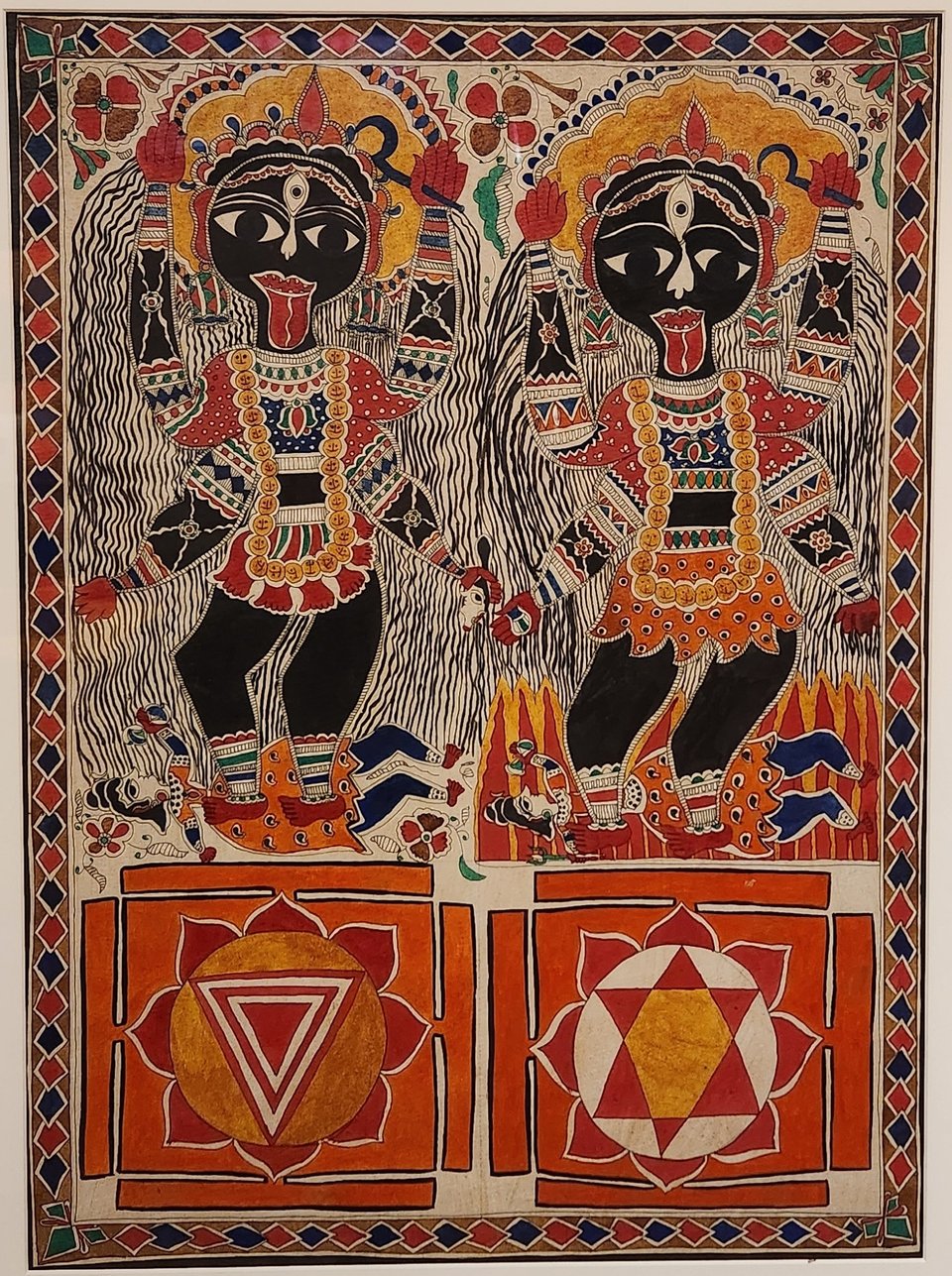
The photo above was taken during a visit to the Art Gallery of South Australia in August 2025, at their exhibit “Hindu Mythology: Gallery of the Gods”
You are on this list as a member of my community. If you would like to change how you receive this newsletter: Update your preferences, subscribe at buttondown.com/linasrivastava, or Unsubscribe from this list below.
Copyright 2026, Lina Srivastava. All rights reserved.