
A Toast to the Archivists
When I was doing the earliest research for Brittle Idols, I got it into my head that I wanted to use a dead mall in an Iowa winter as one of my settings. I’ve always liked abandoned spaces- (I’m enjoying a book right now called Subterranean Twin Cities, by Greg Brick, about the caves and tunnels underneath my own metro area, but that’s not for book research. At least as far as I’ve planned right now. I just like abandoned buildings.)
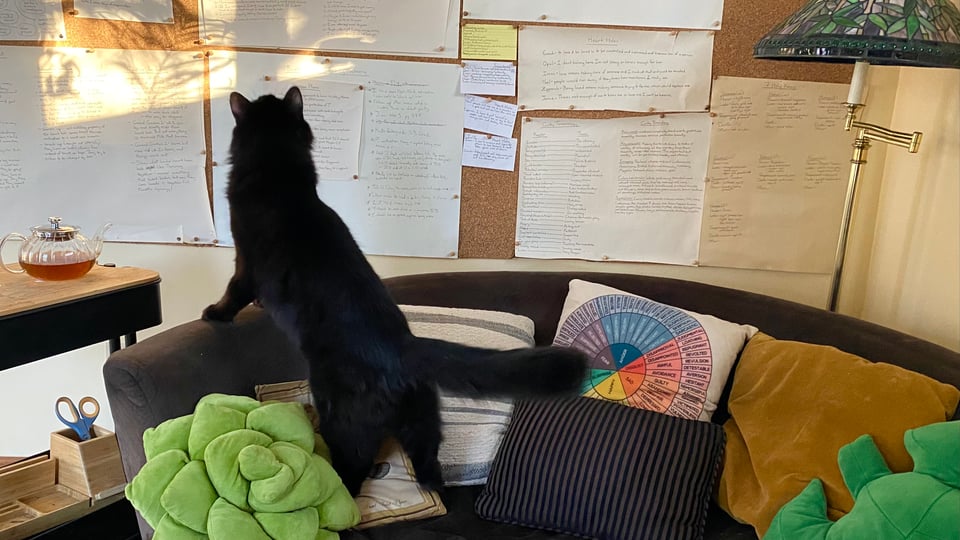
It didn’t take long to find a half empty but still functioning mall in a small Iowa town online, and I wrote it down on my big corkboard.
Of course I could just make something up. I do make up locations. Obviously there is no multi-building hospital complex for genetically altered people in southern Minnesota. But the town of Winona where that hospital is located, where Names in Their Blood takes place, is real. In fact, my wife went to college in the area and I, accordingly, spent as much of my time there between the ages of 17 and 20 as I could manage.
Since I knew Winona well, I knew useful details, like that they had an excellent nursing program because the Mayo Clinic was nearby, and as a result other medical specialties had popped up in the area. I knew the red bricks of downtown’s squat buildings, and how nerve-wracking the roads winding through the bluffs can be, with their sharp turns and sharper drop-offs. I toured all over the Mayo clinic to design the Coldwater clinic.
But I can’t always rely on my own life experience. I don’t know Iowa well. I took a trip there to prep for writing Brittle Idols, but this book has a lot more travel than the previous ones, more different locations, and I only had a weekend to check out the whole state.
So I never made it to Crossroads mall.
But it’s a great location and I really wanted to give it a tangible sense of reality, even if I was planning to collapse the glass roof and fill it’s courtyards and escalators with snow.
I tried looking up the mall’s website, but it was clear that something was off.
A little more searching yielded the information that, in the year and a half or so since I’d picked that mall, it had gone from struggling to scheduled for demolition.
I’m not bothered by the fact that the mall won’t be standing in the year my book is set. It’s not the first spot it’s history diverges from mine. But still, I felt like understanding this mall would make the ruins of a mall in my book feel real- like someplace you could visit. I didn’t just want a mall, I wanted a mall that was of this place. I believe it’ll feel more haunting and intriguing if it has that sense of near-familiarity that comes from a place that was once something familiar, and isn’t now. That’s so romantic.
But I wasn’t going to make it to the mall, especially before it was torn down. And with the mall perishing slowly for years and years I couldn’t just find other people’s photos of the place, because nobody was instagramming the place. Nobody was going there.
That was when I found a whole world of fantastic and mysterious volunteer archivists.
I found a whole network of people making video tours of dying malls before they vanished.
Some of them seem to travel extensively to make their videos. They just calmly explain some mall history, wander around, showing me the layout, the quality of the light, the little details of flooring and signage and an idea of the timeline of the mall’s decline. And there was a video tour of the exact mall I needed.
Truly, I have no idea who the intended recipient of this is. Or the motivation for making it. Surely it isn’t profitable? The ones I’ve seen aren’t brimming with mall propaganda or even overflowing with nostalgia, which are motivations I would understand.
But I just love that there are people with this impulse to document, archive, and record. Maybe they don’t need a further justification. Maybe documenting is for them, like creating is for me. Maybe it’s it’s own reward.
Isn’t that lovely?
Now I notice online how many people set about preserving and describing all sorts of things I’ve never given a thought to before.
Some of them make videos, while others write books, or webpages, or zines.
And, sometimes, people like me need that information for a creative project. Other times, it just serves to let is slow down and notice and appreciate something with a new level of depth.
So, for my last newsletter of 2025, let me raise my glass to the archivists, who appreciate what others may overlook, and preserve knowledge for it’s own sake.
Before you go, I ask you to contact your representatives to protest the current administration’s attempts to dismantle the National Center for Atmospheric Research. I truly believe Trump’s support is cratering and many of his political supporters are realizing he will not protect them if they continue to push unpopular changes, so now is a good time to let them know that attacking climate change measures is unpopular. The link is for 5calls, and includes a script, but email also works!
Thank you so much for joining me, and I’ll see you next year,
Lee Brontide
Thank you for joining me for another month of Shed Letters. My books, Secondhand Origin Stories and Names in Their Blood, are available as free ebooks here, or in paperback form from your local independent book shop. And don’t forget, as a subscriber to Shed Letters, you have exclusive access to my free novelette, Doll’s Eye View, the Martin focused story that takes place between Secondhand Origin Stories and Names in Their Blood.
Add a comment: