
Debunking the Solar Cost Shift Myth
Economist Ahmad Faruqui on how California got net metering wrong and how smarter rate design could accelerate electrification and protect customers.
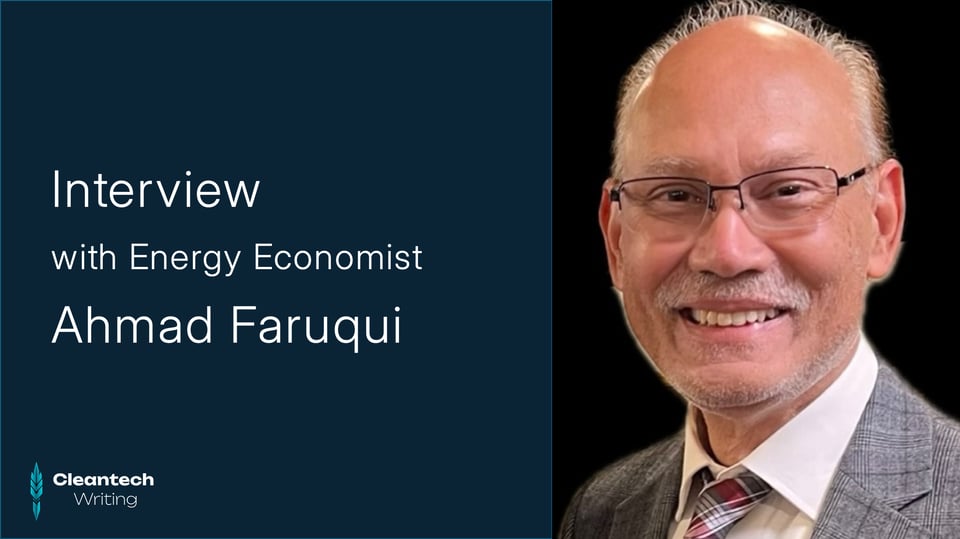
This month, I'm delighted to share a recent conversation with energy economist Ahmad Faruqui. Ahmad has spent decades in the trenches of utility policy, working on energy efficiency, rate design, and load forecasting for more than a hundred clients across 20 countries. He's co-authored four books and over 150 articles on energy and defense policy.
This breadth of experience has given him a unique and important perspective on the clean energy transition. In recent years, he's taken strong public stands against utility policies and regulatory changes that he believes harm consumers and undermine climate goals, especially in his home state of California.
In our conversation, Ahmad explains how utilities are "demonizing solar customers to protect their profits," why California's net metering overhaul was "subterfuge," why the "cost shift" argument is bogus, and how simple rate design changes could actually accelerate electrification.
We also discuss why utilities have become so unpopular, and what a few are doing right.
The conversation has been edited for brevity and clarity.
Lakis Polycarpou: Utilities often claim that rooftop solar customers unfairly shift costs to non-solar customers. You have been very critical of this claim. Can you explain briefly why?
Ahmad Faruqui: In most jurisdictions, utilities are compensated based on the size of their rate base—the investments they have made in their various assets, like generation, transmission, and distribution. They earn a return on those investments. So if they sell more power, they will have to make more investments in generation, transmission, and distribution. If they sell less power in the future, then they won’t be making as many investments.
With rooftop solar, sales go down. When sales go down, the rate base in the future is going to be smaller, and they’ll make less money.
So what do they do? They demonize solar customers and discredit them in the eyes of the general public so that they can impose more stringent restrictions on things like net metering. They can’t say, “When you put solar, our profits go down.” That would be too blatant, even for them.
And so they have come up with a very clever argument, which is to blame the solar customers for stealing money from the less affluent customers. “Reverse Robin Hood” is what they call it. Lower-income customers, the ones living in rental properties, et cetera, those obviously are not installing solar panels today because they are expensive.
So they say, “When you put on solar panels, you reduce your consumption, your bill goes down, but we have a certain revenue that we need to collect. It’s guaranteed by the commission, so we have to raise rates for all other customers to recover that lost revenue.”
For years, I have said to them, “Please become more customer-centric.” And they keep on saying, “There’s nothing in it for us.”
It’s a self-centric business model. For years, I have said to them, “Please become more customer-centric.” And they keep on saying, “There’s nothing in it for us. Where is the revenue?” And so it’s tunnel vision that they suffer from. And unfortunately, it’s not going away anytime soon.
If somehow, miraculously, commissions authorized utilities to install rooftop solar panels on customer roofs and put them in their rate base as a microgeneration asset, they would become solar’s biggest champions, and the same cost shift argument would disappear instantly.
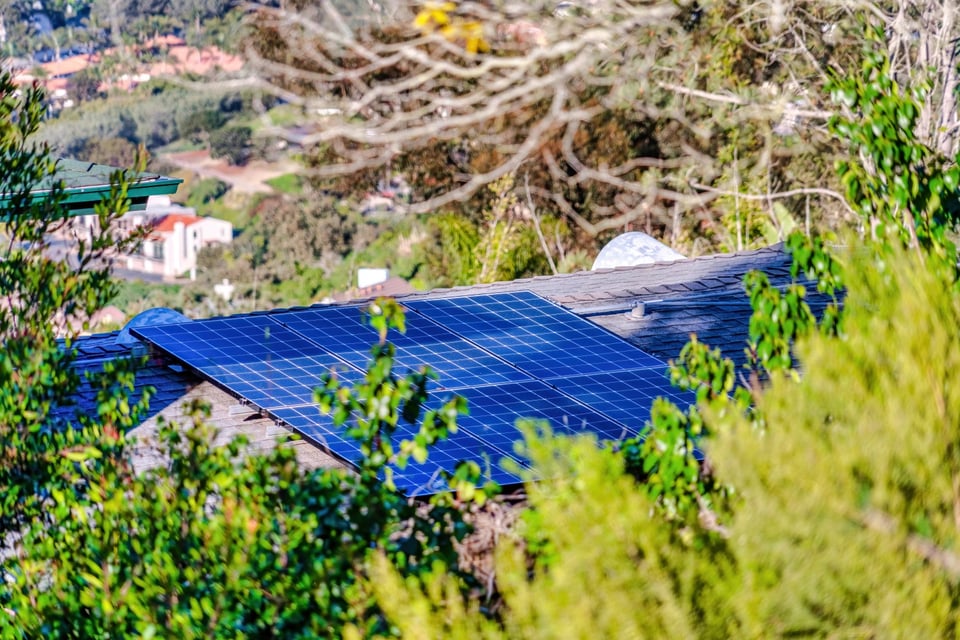
Lakis Polycarpou: That leads to my next question. In 2023, California changed the rules for how utilities would compensate rooftop solar with net metering, and you and several other economists opposed the change. Can you explain what the change was, and why you were against it? Have the impacts on the industry played out as you imagined? For example, one of the arguments that they made in favor of it was that it would encourage more battery storage.
Ahmad Faruqui: Batteries are expensive. Solar is expensive. And so they suddenly made the proposition for households even more expensive. Under the previous rules of the game, if you bought power at 30 cents a kilowatt hour and you sold that power back when the sun was shining, you got 30 cents. It’s the same power.
The utilities now only pay solar customers 10–20% of what they paid for power when they export it back to the grid, claiming they still need to cover transmission and distribution costs. No other industry does this.
If you go to Costco and you buy something for a hundred dollars and then you realize you don’t need it or it’s the wrong kind, you take it back and they give you a hundred dollars back because it is the same product.
If you go to Costco and you buy something for a hundred dollars and then you realize you don’t need it or it’s the wrong kind, you take it back and they give you a hundred dollars back because it is the same product. They don’t say, “Well, I’ll only give you back 25% because I still have the transportation and distribution costs. I have to send it back to the manufacturer, and I have a labor force, I have to pay their salaries, et cetera.”
The utilities argued that changing the rules would lower the cost shift because people would now put in batteries so they can store excess generation and use that power at night.
So what do people do? They invest $10,000 to $15,000 in a battery to make up for that lost compensation. But the utilities are not paying for the battery—the customer has to pay for the battery. So suddenly, the payback period or return on investment from solar, which was five to seven to nine years, has now almost doubled.
As you would expect, solar installations rose initially because people panicked. And so before the deadline, the sales of solar and batteries shot up and then fell by 80%. It was very dramatic.
The utilities needed to put a spin on bad news. So they said, “Oh, 50 to 70% of new solar installations are now with batteries.” Okay, but the number of new installations is down 80%.
Lakis Polycarpou: Could you explain why you were opposed to the income graduated fixed charge (IGFC)?
Ahmad Faruqui: The initial proposed decision was a three-pronged attack on solar, like a trident. And the first prong was a grid access charge of $8 per kW of the installed solar panel. If you have 8 kW, you would pay $64 a month just for the privilege of being connected to the grid.
The second prong was to make it retroactive — to reduce the guaranteed net metering period from 20 years down to 15 years for existing customers. So they were going to shave five years off the original 20 years.
And the third one was the drop in export compensation.
They haven’t given up. The forces — I call them the guardians of the status quo — are still at work.
The final decision, because of all the pressure, eliminated the first two provisions. All they have now is the third provision. However, they haven’t given up. The forces — I call them the guardians of the status quo — are still at work, and they came up with this fixed charge concept.
Initially, the fixed charge was going to be preposterously high, and it was going to apply to all customers. But, the low-income constituents in California have a strong advocacy organization called TURN—The Utility Reform Network—which would have objected vociferously to a high fixed charge.
So the proponents of the fixed charge made it income graduated. That meant that the lower-income customers would have a smaller fixed charge than the higher-income customers. They claimed it was simply a way to promote electrification, because they would lower the energy charge a little bit and raise that same revenue through a fixed charge.
Well, for the average customer, this would have no impact. Their bill would stay the same. So if a bill is already very high, it would still be very high. It’ll actually go up when you electrify or buy an electric car.
Heat pumps are very expensive to install and operate. Why would you buy something that’s more expensive to buy and more expensive to operate? I mean, it’s not a piece of jewelry, right? It’s not even visible to your neighbors. It has no luster. Why would someone have any incentive to install a heat pump to further raise that high bill? They would have to have rocks in their head.
It was basically aimed at the solar customers, who are in a higher income bracket. They will pay the higher fixed charge.
Lakis Polycarpou: So is the idea that they would lower their volumetric charge?
Ahmad Faruqui: Yeah, they would keep lowering it. But again, it's a shell game. It's rearranging the deck chairs on the Titanic. Their rates are sky high. Not just the rates; it's their bills, which are sky high. You have bills for an average house—four bedrooms, 2,400 square feet—$500 a month average year-round, for electricity, and gas is separate.
These numbers used to be $250 just eight or nine years ago, so they've doubled in less than a decade. So why do you expect such a customer to put in a heat pump or buy an electric car? The only reason we have more electric cars in the state than any other state as a percentage is simply because we have very high gasoline prices.
Lakis Polycarpou: What about solar installation costs? How does California compare?
Ahmad Faruqui: That's another problem. Solar installation in California is way too expensive. In Australia, the cost is less than a dollar per watt. It's the same technology. The utilities and installers keep saying, "Oh, it's the soft costs—the permitting, the licensing, the bureaucracy." But I think there's more to it. I think there's a huge profit margin.
Australia has high labor costs, just like the US — groceries, everything else is expensive there. So why are solar panels so much less expensive?
In Pakistan, my native land, where labor costs are lower, their solar costs are half of Australia's. So suddenly solar has taken off there because the grid is in terrible shape, and people have unreliable and expensive power. The average price of electricity [in Pakistan] is higher than the US average, in a country with per capita income one 50th of the US. And electric prices are higher, $200-$300 a month. Which, for them, is a killer.
Our solar industry really needs to study those other markets to learn how to lower their costs. I'm somewhat pessimistic that they will move fast enough. They keep telling me time and time and again, “It's the soft cost and it's nothing we can do, it's the government, it's the US government or the state government or the county government that has put these layers on layers of regulation.” So somebody needs to publish a report on that. And if it's the government that's to blame, then the government needs to become more efficient.
Lakis Polycarpou: So, how would you advance electrification? You have some interesting ideas on how rate design could impact adoption. Could you explain that a bit?
Ahmad Faruqui: It was prompted, honestly, by California’s high priorities towards net zero and electrification being a key part of it.
And they kept coming up with strange proposals like the IGFC. I said there’s a much better way to do it, which is marginal cost pricing, targeted at the new end uses that you want to promote to have cleaner air. Those are electrification technologies.
I said just focus on two of them. The big ticket items are heat pumps and an EV that will become uneconomic if electric rates keep rising, even with high gasoline prices. There’s a limit. And heat pumps are dead on arrival at those high rates. And so I said, let’s drop it down to marginal cost, which is around 10 cents. The current rate is around 35 cents, so it’ll suddenly become three times more attractive.
The change won’t affect the revenues of the utilities on the existing sales, because those are based on the embedded cost that they have used throughout. So it’s not like I’m saying, go to marginal cost for all the kilowatt hours sold. It’s just the incremental kilowatt hours sold. And that marginal cost should be properly calculated.
The incremental price of that kilowatt hour is 10 cents. Why are you charging 30 cents for it? So, at least for these desirable end uses, charge 10 cents. And then at another time, we can worry about why you’re charging 30 cents on everything else, but let’s save that for another day because that would be like a crisis of titanic proportions, right?
The proposal is simple and transparent, but the objections that came in were endless. I’m actually going to write a paper on the objections.
For example, with all the new technology, particularly for EVs, you have telematics, and you can figure out how much power someone is using in the electric car. “But that’s not of metering quality.” Well, open your mind. Why does it have to be 100% accurate? Why not 95% accurate? And how do we know the meters are a hundred percent accurate anyway?
It’s an objection that has no legs to stand upon, to mix metaphors.
And then comes the second objection. “It is unfair to charge different prices that vary by end use.”
I say, “Is it fair to pollute the environment and not be charged for it? Is it fair to overcharge customers for doing the right thing when they go for a heat pump rather than a gas furnace with an air conditioner?” If, as a society, we have made that our goal, then let’s do it. Let’s not come up with this endless list of objections.
Lakis Polycarpou: A lot of other states and other countries look to California as a model for energy policy because of California’s focus on climate. Do you think that California is the right model in this case, or is California just a warning for what not to do?
It is good to have that North Star. However, if you lose the roadmap on how to get there and you start doing things that are counterintuitive and counterproductive, then you’re going to create problems.
Ahmad Faruqui: I think it’s a mixed bag. When you have goals, ambitious goals, which are laudable, which California does have — the goals have been very aggressive by 2045, they want 100% renewable and carbon-free — that is something to aspire to, and it is good to have that North Star. However, if you lose the roadmap on how to get there and you start doing things that are counterintuitive and counterproductive, then you’re going to create problems. And that’s what has happened.
The cost shift argument has become the tail that wags the dog. It has created so much division. It has created so much polarization. Neighbor against neighbor, haves versus have-nots. The reality is the utilities created this problem themselves by wanting a business model that was solely focused on selling electrons, when they could have been in the business of selling services, when they could have been in the business of providing value to customers beyond just the commodity.
And so I think other states should look at California and say, let’s learn from their mistakes. Let’s not demonize one class of customers to benefit another. Let’s think more holistically about what rate design should look like in the 21st century. And let’s think about what the utility business model should be. Should it be just about selling kilowatt hours or should it be about something else? And I think that’s where the conversation needs to go.
Unfortunately, California has become a cautionary tale in some ways rather than a role model. And that’s sad because they had so much potential to really lead the way. And they still could, but they would have to change course quite dramatically.
Lakis Polycarpou: Do you think that the ownership structure of California utilities, which are investor-owned, is part of the problem? Would things be different if they were public utilities or co-ops?
Ahmad Faruqui: That’s a great question. I’ve worked with all three types. Investor-owned, municipal, and cooperatives. And each has its strengths and weaknesses. The investor-owned utilities have access to capital markets. They can raise money for large infrastructure projects relatively easily. But they also have this profit motive that sometimes creates misaligned incentives. The municipals and co-ops are closer to their customers. They’re more accountable in some ways. But they also can be less innovative, less willing to take risks.
California’s problem is not fundamentally about ownership structure. It’s about regulatory structure. The Public Utilities Commission has enormous power, and they have not used that power wisely in many cases. They have allowed the utilities to capture the regulatory process. What matters is good regulation, good oversight, transparency, and a willingness to put customers first rather than utility profits or other interests first.
Lakis Polycarpou: Is anyone doing it right, or is this just the way utilities work?
Ahmad Faruqui: There are varying degrees of doing it wrong, and some are doing it less wrong. I don’t think perfection has been found. The one that I think has the best customer ratings is actually in Oklahoma — Oklahoma Gas and Electric, OG&E. They have, of course, low rates. They also have a dynamic pricing program, which customers love. And it amazed me because I was there a couple of times, and the man sitting next to me on the plane to Oklahoma City asked me, “So what brings you to Oklahoma?”
And I said, “Well, OG&E.”
He said, “They’re one of the best utilities I have ever had, and they give me so many choices of rates.” The next morning, I’m in a taxi going to their headquarters. The taxi driver drops me off and says the same thing. And then I noticed they had four murals painted on their exterior on each side of their building showing how customers with different lifestyles are benefiting from new rates — physically portraying it, making it tangible and visible. And just think about the priorities they must have. They are truly customer-centric. So that’s a really good example.
And SMUD — Sacramento Municipal Utility District — actually is another example. SMUD, when they rolled out the fixed charges, they did it very gently and gradually. They didn’t just do it overnight. I think it took 7 to 10 years for them to roll in a higher fixed charge, the $24 number. And they also rolled out time-of-use rates. They first did a pilot, good results. They offered it on a voluntary basis, good results. And then they started educating everyone that this is the future.
I saw billboards on the freeway talking about their time-of-use rates, just like I saw the murals on the buildings of OG&E. So if their heart is in it, utilities can do it.
I’ve seen similar patterns across the country. Municipal utilities and co-ops generally have better customer ratings than investor-owned utilities. But even good utilities face challenges when they try to innovate—I’ve been personally attacked as a ‘hired gun’ simply for providing objective analysis. Eventually, I had to stop working with certain utilities because the political polarization was too toxic.
Lakis Polycarpou: Now you can speak frankly about your experiences.
Ahmad Faruqui: Yeah, yeah. My wife keeps saying, “Don’t speak too much because PG&E might cut our power off.” I said I would like them to do it because that would be a very good case to have. One of my daughters is an attorney. We’ll have a field day.
I’ve seen countless billing errors—meters mixed up, faulty equipment overcharging customers. And when utilities are caught, they often refuse refunds or make customers fight for months to get their money back. That’s why people hate the utilities.
Thanks for reading!
If you're working on energy policy or the clean energy transition, I'd love to hear your perspective. Have you seen similar dynamics with utilities in your state or country? What would it take to align utility incentives with clean energy goals?
If you found this conversation valuable, please share it with others working on energy policy and the clean energy transition.
Found this article helpful? Check out past editions and sign up to get it delivered to your inbox.
