
"Free" Press?: Keeping ScOR #18
The great thing about having a news and information system dominated by private corporations is that those news purveyors are independent and free of government censorship and influence. Am I right?
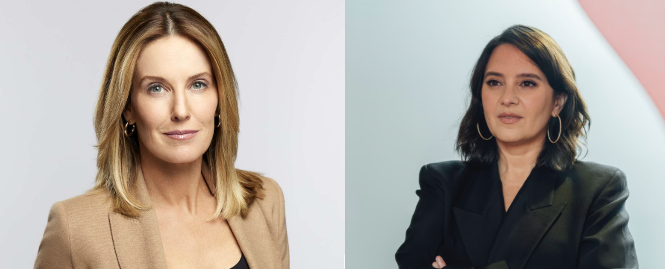
Unless you’ve been taking a well-deserved break from the news over the holidays, you’ve probably heard about the 60 Minutes report that Bari Weiss, the recently-hired editor-in-chief of CBS News, blocked just hours before it was to air on December 21st. You may have seen the piece itself, as I did, because it was “mistakenly” released on a Canadian website and various people captured and shared it on social media. (CBS’s parent company, Paramount, issued takedown orders to get those posts removed.)
The 13-minute report, by correspondent Sharyn Alfonsi, documented the brutal torture and other abuses experienced by the 252 Venezuelan immigrants seized by U.S. agencies and sent to the CECOT detention center in El Salvador. The piece had been in the works for many weeks and CBS editors and lawyers had declared it sound and ready for air. But after Weiss viewed it a few days before its scheduled release, she made the last-minute decision to shelve the piece on the stated grounds that it didn’t include comments from the Trump administration and didn’t “advance the ball” beyond previous reporting by other outlets.
As Alfonsi noted in her report, the administration had declined multiple requests for comment. Withholding a story because government officials have refused to answer questions, she pointed out, effectively gives the administration a veto over reporting it doesn’t like. “We go from an investigative powerhouse to a stenographer for the state,” Alfonsi wrote. She also wrote this of Weiss’s decision: "The public will correctly identify this as corporate censorship.”
In this media controversy, the business context is everything. In July, Trump’s Federal Communications Commission approved the sale of Paramount, CBS’s parent company, to Skydance Media. The deal was bankrolled by the Trump-supporting software billionaire Larry Ellison. His son, David Ellison, is the CEO of Skydance and now, after the merger, of Paramount.
The FCC approval of the deal came after Paramount’s previous owners paid $16 million to settle a lawsuit that Trump filed in October. He claimed that a 60 Minutes segment on Kamala Harris was misleadingly edited to help his opponent. Experts on media law assessed that Trump had no chance of winning had CBS fought the suit — which in normal times it certainly would have done. But Paramount’s owners cared more about assuaging Trump and saving their proposed merger than standing up for their journalists, so they wrote the check. That same month, Paramount announced the cancellation of The Late Show with Stephen Colbert, another move widely seen as a gift to the president.
In October, David Ellison and Paramount bought The Free Press, the independent media company founded and led by Bari Weiss, for $150 million, and named Weiss editor-in-chief of CBS.
Weiss, 41, is an opinion journalist with virtually no reporting experience. She was previously known for her dramatic departure from the New York Times in 2020. In a public letter on the way out, she claimed that it was hard to publish anything in the Times that “does not explicitly promote progressive causes.” Weiss has called herself a “left-leaning centrist” and a “radical centrist,” whatever that means, but she puts at least as much gusto into attacking the progressive left as the extremist right.
David Ellison’s appointment of the anti-woke and under-qualified Weiss to lead CBS News looked to many like yet another gift to Trump. Now, just a couple of months into her tenure, here was Weiss inserting herself into the editorial process of her network’s acclaimed investigative program to block a report shedding harsh light on Trump’s brutal deportation policies.
“This is what government censorship looks like,” Democratic Senator Ed Markey of Massachusetts wrote on X. Senator Chris Murphy of Connecticut was even more blunt: “Trump has effectively taken editorial control of CBS.”
*
This is all happening in an extraordinary moment under a brazenly authoritarian president — a time when various captains of industry have chosen to genuflect before the president. Million-dollar corporate donations to fund Trump’s inauguration and his ballroom — and cringeworthy displays like Apple CEO Tim Cook’s gift to Trump of a glass plaque with a solid gold base — are disturbing enough. But when media barons begin steering their news organizations’ content to please the current regime, that’s a more direct threat to what remains of our democracy.
Another billionaire, Washington Post owner Jeff Bezos, blocked his paper’s endorsement of Kamala Harris for president last fall. With the above story — Paramount bows to the president to get its merger approved, then hires a reactionary news chief who in turn spikes a story the president surely would despise — we’ve entered new territory.
Trump and his aides have done nothing to counter the impression that they want Orbanesque, authoritarian control of the media. Lashing out in a Christmas Eve post, Trump wrote: “If Network NEWSCASTS, and their Late Night Shows, are almost 100% Negative to President Donald J. Trump, MAGA, and the Republican Party, shouldn’t their very valuable Broadcast Licenses be terminated? I say, YES!” Trump’s top aide Stephen Miller got shouty, as he does, about the 60 Minutes staffers who’ve objected to Weiss’s blocking of the CECOT report. “Every one of those producers at 60 Minutes engaged in this revolt — fire them,” Miller said on Fox News. “Clean house.”
No part of this is normal.
*
There’s an old debate, of course, about America’s capitalistic media system and what it means for the prospects of an “informed citizenry.” How do corporate ownership and the profit motive influence the editorial posture of news organizations, and just how do those mechanisms play out? (We’ll take on these questions in more depth in the coming season of Scene on Radio.) In modern times, corporate news operations have ostensibly built a firewall between the business and editorial sides, with owners staying out of day-to-day newsroom decisions.
But owners and publishers do hire their top editors, and those editors hire the reporting staff. Which could help to explain why, as critics on the left have long observed, mainstream news organizations persistently shy away from challenging the corporate-dominated status quo. As Noam Chomsky famously told a BBC reporter in the 1990s: “I don’t say you’re self-censoring. I’m sure you believe everything you’re saying. But what I’m saying is that if you believed something different, you wouldn’t be sitting where you’re sitting.”
So, in one sense, maybe the Bari Weiss-CBS fiasco is just an unusually flagrant and transparent example of a longstanding dynamic — of corporate censorship, as Sharyn Alfonsi called it. What’s new here is that the installation of an ideologically acceptable editor-in-chief seems to be about pleasing not only the network’s corporate masters, but also the occupant of the White House.
Donald Trump’s campaign to take control of the news media continues. Warner Brothers Discovery, which owns CNN, is on the auction block. Netflix wants to acquire WBD, but Trump’s friends at Paramount have launched a hostile takeover bid, with Larry Ellison promising to personally backstop the deal with $40 billion in equity financing. Trump has made clear that he wants new ownership at CNN, calling the people who run the network “a disgrace.” Ellison has reportedly told White House aides that Paramount would make sweeping changes at CNN, even mentioning hosts that could be replaced.
There are clear signs that the White House has a preferred suitor in the Warner Brothers Discovery sweepstakes. Trump’s FCC Chair, Brendan Carr, has said publicly that he doesn’t think a takeover of WBD by Paramount would require any review by his agency. Meanwhile Trump has signaled that the Netflix bid for WBD (and CNN) “could be a problem.” Tossing aside the norm of regulatory agencies’ independence from presidential whims, Trump said, “I’ll be involved in that decision too.”
None of this is normal. Sharyn Alfonsi and her colleagues at 60 Minutes know that. They’re rightfully speaking up inside their shop. The media owners who are so inclined to curry favor with Trump need to understand that that choice comes with costs, too. When ABC suspended Jimmy Kimmel’s late-night show over a comment about Charlie Kirk’s killer, people replied by canceling their Disney and Hulu subscriptions in droves. The network reversed course.
Every act of resistance makes a difference, y’all.
*
Know someone who might like Keeping ScOR? Please forward this to them.
If you missed past posts, find the archive here.


Add a comment: