
Issue #13: Sugar Blues
A dive into the long, dark history of sugar: its world-wide and individual influence
Book Review
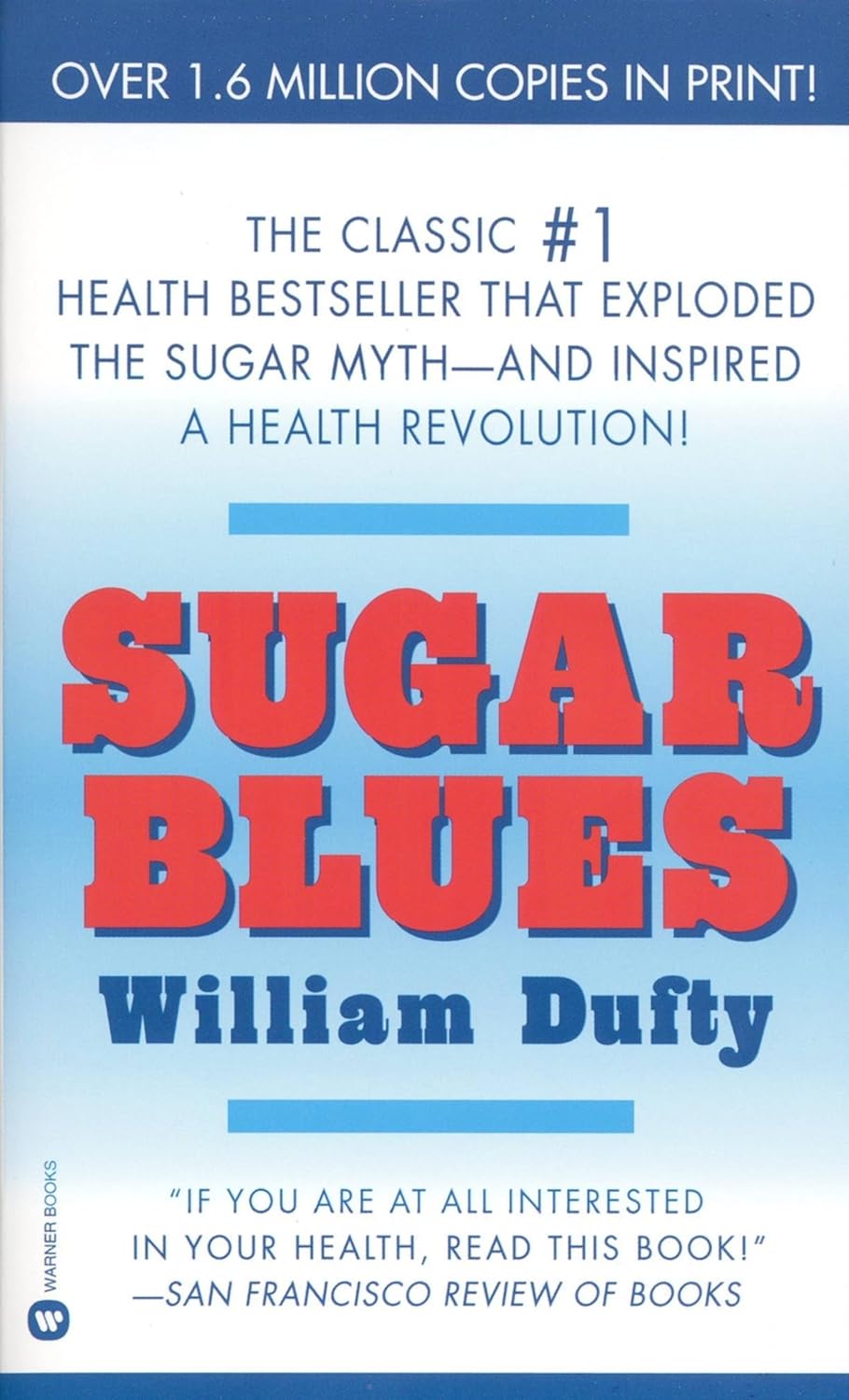
Sugar Blues by William Dufty
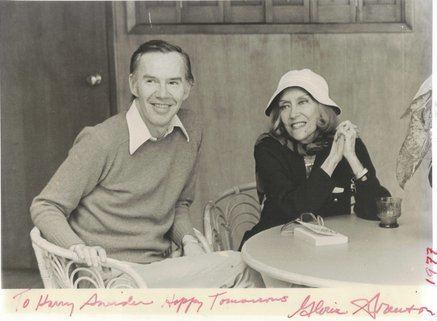
In the beginning, there was Gloria Swanson and a sugar cube.
Audio version: Kate reads this article to you!
Book information and ratings:
Sugar Blues | by William Dufty, 1975 | |
Genre: | Nonfiction |
|
Subject: | Health/Wellness, History | |
Rating: | Worth the read | |
Read as: | Print copy | |
Readability: | Accessible | |
Subject Weight: | Light | |
How I found this book:
In the depths of January, during my annual drag through winter depression, I came across this title. I was curious: was there a correlation between sugar blues and winter blues (and/or depression in general)? Were the “sugar blues” just as straightforward as it sounded? Also, what was the perspective on the subject of sugar in 1975?
I ordered a used copy from thriftbooks.com. A few days later, I happily tromped through the snow to retrieve it from my mailbox.
About this book:
In the beginning, there was Gloria Swanson and a sugar cube.
****
Dufty is attending a press conference in New York, and in the crowded room finds an empty seat next to the Hollywood star, Gloria Swanson. When lunch is served:
I unwrapped my sandwich, sprung the lid of my coffee jug, picked up a sugar cube. I was unpeeling it when I heard her commanding whisper:
“That stuff is poison,” she hissed. “I won’t have it in my house, let alone in my body.” (p 1)
This kicks off Dufty’s inspiration and exploration on this subject. Personally, as he eliminated sugar from his diet, “[…] Dufty went from 225 pounds to 142 pounds” (LA Times). Professionally, it led him to write this unexpectedly entertaining and entirely encompassing book on the history and effects of sugar.
****
“It’s Necessary to be Personal” is the title of the first chapter, where the author shares the role sugar played in American culture, in his family’s subculture, and in shaping his personal diet habits from boyhood. (For example: compulsively stealing dimes from his mother’s purse to buy his favorite grape soda.) With his lifespan extending through the bulk of the 20th century (born in 1916), I found his perspective and recollections fascinating!
The rest of the book is a repeated dolphin dive as the author weaves across a vast timeline: from the current 1970s issues, down to the years of the crusaders, back up to discussing the current medical studies, and a dive down to the Dark Ages, and on and on–until we end floating on top of these stories, deeply disturbed by the sugary horrors we have been swimming in for centuries.
****
The first, and deepest, dive takes us back to the last major crusade in 1204, with the “discovery” of sugar and Dufty’s observation that:
What followed was seven centuries in which the seven deadly sins flourished across the seven seas, leaving a trail of slavery, genocide, and organized crime. (p 31)
****
We then resurface to discuss the health consequences of sugar: that it causes adrenal fatigue/whiplash and “since the cells of the brain are those that depend wholly upon the moment-to-moment blood sugar level for nourishment, they are perhaps the most susceptible to damage” (p 47).
****
Plunging back to the Dark Ages, unexplained health issues started to arise as sugar moved from a luxury item for the wealthy to a daily diet for rich and poor alike. “What the avant garde of endocrinology tells us today, the sorceress in what we call the Dark Ages knew by instinct or learned by experimentation” (p 48).
There are many theories on the motivations behind the witch hunts (and probably all bear some merit) but I had never considered that sugar profits might have been a major motivator. It would be much easier for the addict, the culture, the merchants, and the governments to blame the healers rather than the sugar–with its devoted users and sweet profits provided by slave labor.
The “sorceresses” and “witches” (holistic healers) would have questioned dietary changes and might have pinpointed sugar as the culprit (or did). Can’t have that.
****
We then discuss the time of “The great confinement of the insane,” which,
[...] began in the late seventeenth century, after sugar consumption in Britain had zoomed in two hundred years from a pinch or two in a barrel of beer here and there to more than two million pounds per year. (p 61)
And we launch into the horrifying history of early mental health medicine, the demonizing of masturbation (did you know that the strait jacket was designed specifically to keep people from masturbating?), and an outline of terrifying experimental treatments.
****
He discusses the shift in world economics with the refining process of the sugar beet, and the invention of morphine (another man-processed white crystal), and how sugar infiltrated the food industry, including the fermenting process of beer and wine–and the invention of rum.
And don’t forget the appearance of scurvy–and diabetes.
Did you know that sugar was added to tobacco in 1973 in the form of molasses?
****
One of the most vivid anecdotes for me was this:
Millions of tons of sugar could hardly have been floated across oceans for centuries without some bizarre misadventures. Once such occurred when a vessel carrying a cargo of sugar was shipwrecked in 1793. The five surviving sailors were rescued after being marooned for nine days. They were in a wasted condition due to starvation. They had subsisted on eating nothing but sugar and drinking rum. (p 136)
The author then cites several instances of starvation-level situations where people survived for long periods of time on water with little or no food (or maybe some salt). His point being: “As a steady diet, sugar is worse than nothing. Plain water can keep you alive for quite some time” (p 136).
Refined sugar is lethal when ingested by humans because it provides only that which nutritionists describe as empty or naked calories. In addition, sugar is worse than nothing because it drains and leeches the body of precious vitamins and minerals through the demand its digestion, detoxification, and elimination make upon one’s entire system. (p 137)
I could just see it: a shipwreck, a desert island, and 5 sea-scrounged sailors finding land–and, by god!–barrels of sugar and rum wash up with them! Sweet salvation!
How were they to know that it was not salvation, but starvation they were imposing on themselves? That the sugar stole nutrients and the rum dehydrated their bodies? That eating the “edible” sugar was worse than eating nothing? That they were hustling their death right along?
****
The author does throw out a life raft of wholesome dietary suggestions at the end: fruits and vegetables, nuts and grains—and lentils.
(Despite the author’s best efforts, I still think lentils are gross.)
****
The answer to my initial question is: Yes, (of course) sugar does negatively impact my health–mental and physical, and directly compounds my winter blues situation.
So, did I give it up…?
YES!
…for about 2 weeks.
(And that can be a subject for another time, The Four Tendencies, by Gretchen Rubin comes to mind…or something like that.)
Afterword:
This is the dedication on the inside page:
For Billie Holiday
Whose death changed my life
And
Gloria Swanson
Whose life changed my death
I love the poetry and background here.
Dufty co-authored Billie Holiday’s autobiography Lady Sings the Blues in 1956. The famous singer died in 1959. And, the dedication to Gloria Swanson also falls into context, per the interaction detailed on page 1 of the book (and at the beginning of this article).
But, in the process of researching this author and book, I learned that “The publication of Sugar Blues led to a reunion [of William Dufty] with Swanson, and they were married in 1976. Dufty remained devoted to the actress for the rest of her life, assisting her in the composition of her autobiography, Swanson on Swanson” (encyclopedia.com).
Although she was 16 years his senior, they were happily married from 1976 to her death in 1983. What an unlikely and inspiring love story—the author and the muse!
****
I also learned that, like many female Hollywood stars, Gloria Swanson was a woman of intellectual depth, passion, and action. Check out this article from Library of Congress Blogs. (And check out the comment section while you’re there!)
So, now I have added two more titles to my list: Lady Sings the Blues and Swanson on Swanson!
About the author:
William Dufty (1916-2002) was a journalist, editor, speech writer, screenwriter, author, and ghostwriter. His skillful navigation along a life-path strewn with fortunate circumstances led Dufty from a reporter's beat at the New York Post all the way to Hollywood. […] it is estimated that he was the ghostwriter of some forty books during his lifetime. […] Dufty's investigative reporting earned him a Page One Award from the Newspaper Guild and a George Polk Memorial Award from Long Island University. encyclopedia.com
Sources:
Dufty, William. Sugar Blues. Warner Books, 1975, New York.
*This is issue #13 of The Book Moth Newsletter
Add a comment: