
March Round up
Hello! This month I’ve managed to watch quite a bit and my Letterboxd list for March is quite scattered as I’ve watched a wide range - from Blade Runner 2049 to Bicycle Thieves.
Deep Dive: The Stepford Wives, 1975
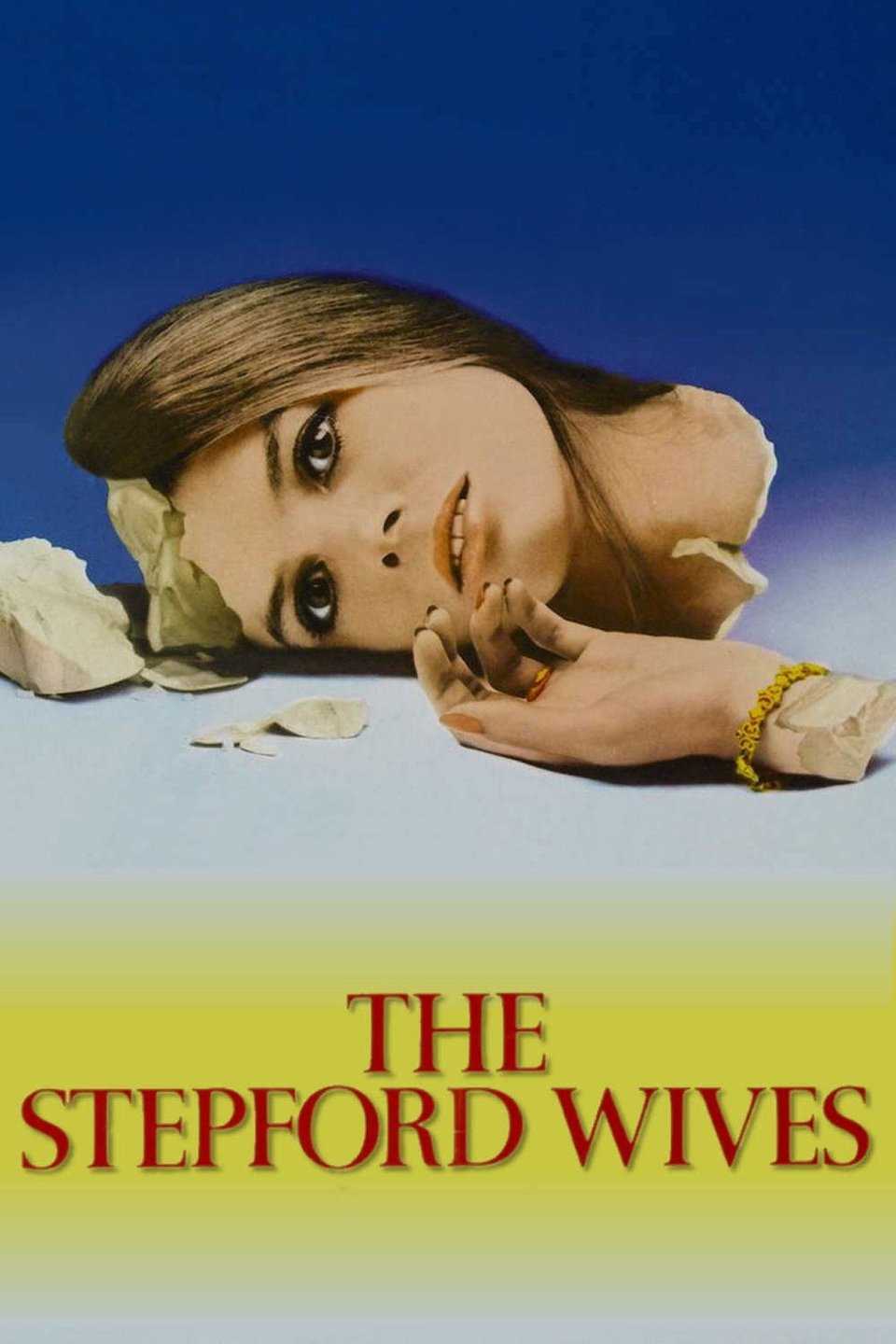
I had a lot to pick from for a deep dive this month, but I decided to go for Stepford Wives as I’ve been thinking about it a lot since I watched it. As a quick warning, I am going to do spoilers with this one, although I do think that most people do have a vague knowledge of the plot.
The Stepford Wives, directed by Bryan Forbes is based on a book by Ira Levin (of Rosemary’s Baby fame). Katharine Ross stars as Joanna, who moves with her family from New York to the suburbian town of Stepford. As she settles in, she realises there is something deeply wrong with the women of Stepford.
I haven’t read the book, but the film came at a time where there was a backlash against second wave feminism. As women started organising and fighting/gaining rights and freedoms, there was a counter to this, as you can see in the film. The men of Stepford are replacing their wives with perfect housewife robots precisely because of the WI initiatives they were starting.
I can not get out of my head the parallels with today. As intersectionality has come to the fore, along with trans rights and many others in a new wave of feminism, we are now facing a backlash with the rise of the far right. Unfortunately, the far right has got its claws in and is starting to strip back some of our hard won rights. This all includes women unironically wanting to be trad wives and trying to sell it as a natural and proper way of life.
For those who don’t know, Ballerina Farm is an Instagram account who is run by Hannah Neeleman. Her whole premise is that she gave up a promising career in ballet to marry a millionaire, stop working, have many many children and live on a farm, cosplaying as poor with her incredibly expensive cooking range in the background of her videos. This is all insinuating that women should give up their hopes, dreams and ambitions because nothing is more fulfilling than being a wife and mother. Stepford Wives, although made in the 1970s, demonstrates to us the horrifying truth behind all of this. Joanna, unlike Hannah, desperately wants to cling on to herself, she has ambitions to be a photographer. At one point, she locks herself in a dark room, leaving her husband to deal with 4+ children, something that he seems incapable of doing and which he absolutely resents her for. He does not want her outside of the home and outside of the traditional family. He seems to think that normal arguments between couples are beyond the pale. The idea of losing yourself in a traditional role and the men being totally okay with all of it is the horror here.
There is a scene where Joanna goes to see a therapist which nearly had me in tears. Her husband tells her she is suffering from hysteria and must see someone before he would even contemplate moving out of Stepford. She decides to see someone outside of Stepford that she herself has found. Joanna makes a desperate plea that any woman could identify with. She can not be specific about the threat, all she can do is talk about some kind of omni-present foreboding that something is not right and that she will end up like the others. Unlike so many others, the therapist just believes and validates her and tells her to get her children and get out. Of course it becomes too late, Joanna is murdered by her own replacement and the ending scene is one of the saddest and most depressing as the women walk down the aisles of a supermarket, their lives having been reduced to which cleaning product they should buy and how best to please their husbands.
Jordan Peele cites Stepford Wives as a major influence on Get Out. Chris is a photographer, mirroring Joanna’s chosen profession. In Stepford Wives, the first moment you truly understand something is wrong is at a garden party/barbecue and one of the women malfunctions. This has been lifted into a very similar scene in Get Out. It’s interesting that Peele was able to take the themes of middle class white feminism in the Stepford Wives and turn it into a satire on the stupid idea of “post racial America”.
Hammering it Home
A friend and I have decided to watch the Hammer Horror films in chronological order (taking inspiration from the Hammer Time podcast), so welcome to a new section - Hammering it Home! There are 60 or so films and we’re aiming for two at a time roughly once a month. Got a bumper crop this month though.
The Quatermass Xperiment, 1955:
In the age of the atomic era and a bunch of stupid giant radioactive insect films coming out of America to appeal to a burgeoning teenage audience, Hammer Horror decided to kick off with an X rated (hence the name) film, which brings the radioactive horror to the UK and tells a much more grounded story of an astronaut who brings something back from space. This is an excellent start and it’s no wonder Hammer continued on after this.
Rating: ⚒️ ⚒️ ⚒️ ⚒️
X: The Unknown, 1956:
Lots of boring men in suits explaining nonsensical science to justify the steaming pile of what looks like excrement terrorising the Scottish countryside. The main crime of this film is that it’s just quite boring and the monster is dreadful.
Rating: ⚒️ ⚒️
Curse of Frankenstein:
The first Peter Cushing (Frankenstein) and Chris Lee (the Monster) pairing, together with Terence Fisher. This is the Gothic horror that Hammer made its name with, the first film in colour and you get the first sight of Kensington gore, as the mix for blood effects was called. Victor Frankenstein is truly psychotic in this and Peter Cushing is having a great time with the role.
Rating: ⚒️ ⚒️ ⚒️ ⚒️ ⚒️
Quatermass 2:
This is better than X: The Unknown but not as good as Quatermass Xperiment. By this point we’d had a few beers so I don’t think we were following as well, but there are some cool visuals and I quite like the last 20 minutes or so. It is quite slow moving at the beginning. I think the human story is lost a bit as the world of Quatermass broadens out.
Rating: ⚒️ ⚒️ 🔨
(Some of) the rest:
Wild at Heart, 1990: I love David Lynch so much. He was an incredible film maker who could do the darkness and the light like no other. His America is the pastiche of cherry pie, hot coffee, and the white picket fence, while at the same time being the dark underbelly. Laura Dern and Nick Cage are on the run and embark on a road trip across the South. This is his homage to his love and obsession with the Wizard of Oz and I loved it.
Blade Runner 2049, 2017: Blade Runner 2049 is way too long and I found that the dialogue was mumbled, so it’s very hard to understand what is going on. I also had issues with the inclusion of the AI girlfriend presented as a real love relationship when it just can’t be.
Bicycle Thieves, 1948: This film often tops best film ever made lists and it’s really easy to see why. It is such a beautiful and melancholic look at post war Italy. Most of the actors were unknown and untrained actors, adding to the realism of the film. My daughter was watching with us and at the end said ‘Grown up films are sad’.
I’ve been doing this for a few months now, hope everyone is still enjoying! Let me know if you have any feedback in general, or anything you’d like to see more/less of, but otherwise that’s all folks! See you next month!