The Sounds of Outer Space
This is Finish Your Monsters, a weekly blogletter about the creative process. I'm sharing adventures in art and life as well as setting CLIFFHANGER goals for myself, so--
DID I MAKE MY GOAL?
My goal for last week was to write a full outline of a new feature film.
And I made it!
Well, I made it as far as I want and need to. I wrote enough of the outline that I feel ready to start scripting.
There’s a lot of advice about the best way to write anything, including a feature film script.
Here’s my very strong opinion: The best way to write a film script is the way that works best for you.
Some people write individual scenes out on notecards. Some people follow a strict regimen of writing out a beat sheet (the big picture structure), then a detailed outline, then a detailed treatment. Other people just sit down and start slamming the keys with a vat of coffee dancing on the table next to their computer and/or oldie-time typewriter.
The process I used for scripting Dead Media was the most successful for me so far. So I’m trying to emulate that with this new feature.
Here’s my general process:
Once I get an idea, I know it’s worth pursuing if I can’t stop thinking about it. If I’m taking a shower or shopping for groceries and one idea just tumbles out after another.
At this point, there’s a feeling that the idea is glowing. Usually, I picture it as a nice inviting blue glow. It feels like an idea I want to live with for a long time.
During this time, I write down a mishmash of ideas as they come to me.
Then, I do what I did this week: Take all those ideas and work them into an outline. When I was pitching in Hollywood, I’d write a full outline. (Partially so friends, managers, agents, etc can read it at that stage and give notes.)
But when I’m planning on making the film myself, I prefer a looser outline. Here’s my general structure:
Act One: Clear and full outline of meeting the characters, setting up the world, the conflict, and the inciting incident that kicks the story off. The hook.
Act Two, Part One: The first few beats as the main characters wrestle with the challenge. The first actions they would take.
Act Two, Part Two: A bunch of stuff that might happen? A few things that need to? A set-piece that might fit here? A really bad thing that probably happens.
Act Three: A clear idea of what needs to happen, but WILD AND FREE in terms of HOW it happens.
Final Beat/Final Image: A clear idea of what this is. It can change, but knowing what thought/feeling/image I’m going to leave the audience with helps give everything else focus.
This sort of “half an outline” works well for me because it gives you guidance and structure but it also leaves lots of room for you to learn from the characters as you go. For connections and opportunities to present themselves organically. A good balance between leading with plot and leading with character.
The biggest thing for me before I start scripting: I like to know the WHAT, but still have plenty of room for the HOW.
Anyway, outline mission is accomplished. Now on to the scripting!
Lots of other adventures this week—including writing up subtitles for Dead Media for another film festival, celebrating my wife Sara’s birthday, and the screening of the new short film, VICTIM SEVEN!
The reception to Victim Seven was great. It worked exactly the way I wanted it to and I’m looking forward to getting it out on YouTube soon. If you want to catch it, you can subscribe to my YouTube channel here.
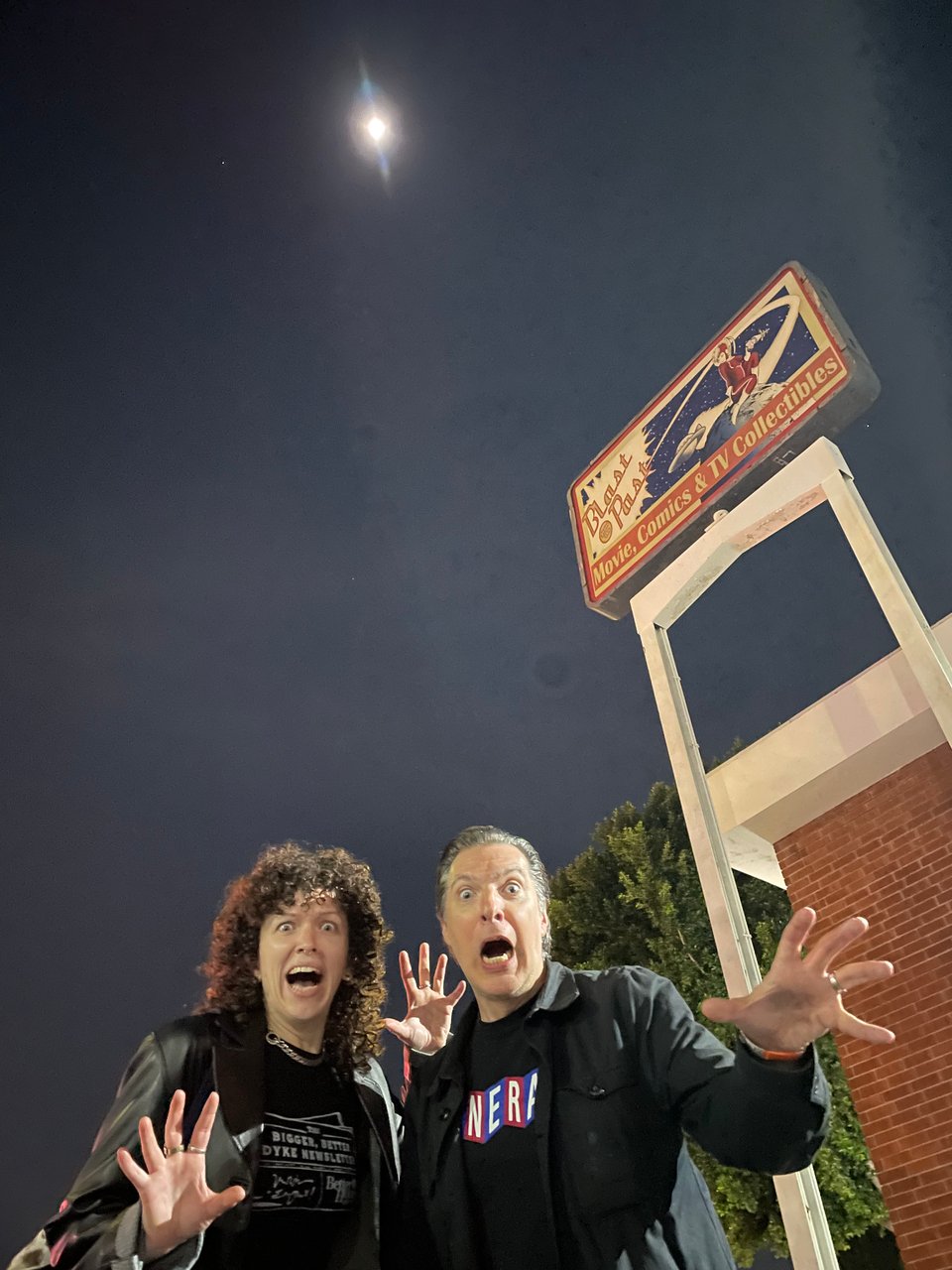
A NICE THING THAT HAPPENED THIS WEEK
This week I had a nice thing happen that made me think a lot about the importance of art being PERSONAL. All art. Including (…building hum of energy…) SOUND DESIGN! (explosion and fanfare!)
This week I got to meet one of my biggest filmmaking inspirations: Ben Burtt. He is the legendary sound designer of Star Wars, Indiana Jones, Wall-E, and so much more. He’s the man who made lightsabers hum, Vader breathe, R2-D2 speak, and the list goes on an on.
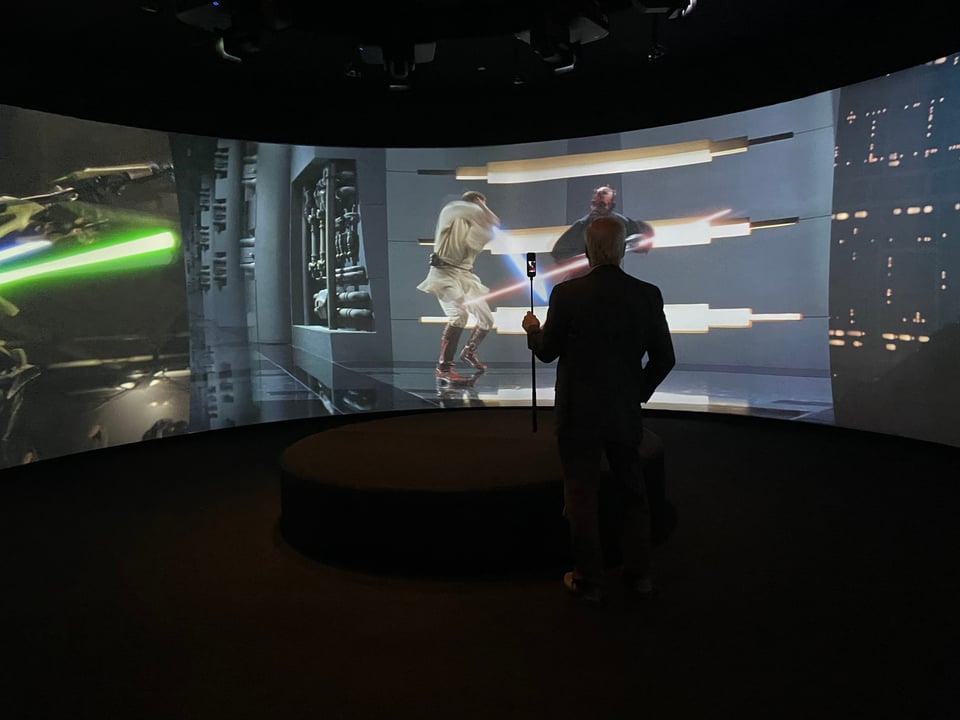
He’s also a director and an editor. He edited all three of the Star Wars prequel films. The editing of the lightsaber fight between Obi-Wan Kenobi and Darth Maul in The Phantom Menace is a masterclass on different techniques to capture movement and fury.
Ben Burtt also uttered one of my favorite statements about film in a DVD bonus feature: “Films aren’t released, they escape.”
As a lifelong Star Wars fan, I’ve always admired Ben Burtt, but now that I’m making my own films, I’m deeply inspired by his approach to sound design. The history, the philosophy, and the expertise married to a sense of play and discovery.
So I was delighted to attend a talk he was giving at the Academy Museum for the closing of their sci-fi/genre exhibit. Inside that exhibit, there was a film experience created by Ben Burtt. It was called BEHOLD.
A circular screen wrapped almost all the way around the viewer with three panels. On the screen, a 26 minute film played in a loop. The film took the viewer on a journey through the cinematic history of sci-fi. But it wasn’t chronological. It was emotional. From dreams of exploration to anxieties of war with alien cultures, fear of invasion, to meeting strange allies, creating robots, getting lost in the void and the far future, and ultimately back to dreaming of the stars.
I absolutely loved it. It showcased the fun, the whimsy, the absurdity of genre storytelling. But also artfully demonstrated the deep, true, human emotion embedded in even the cheapest b-movie serial: Fear, paranoia, longing for escape and discovery and connection. To paraphrase a sci-fi film, “No matter how far humans go into the stars, there we are.”
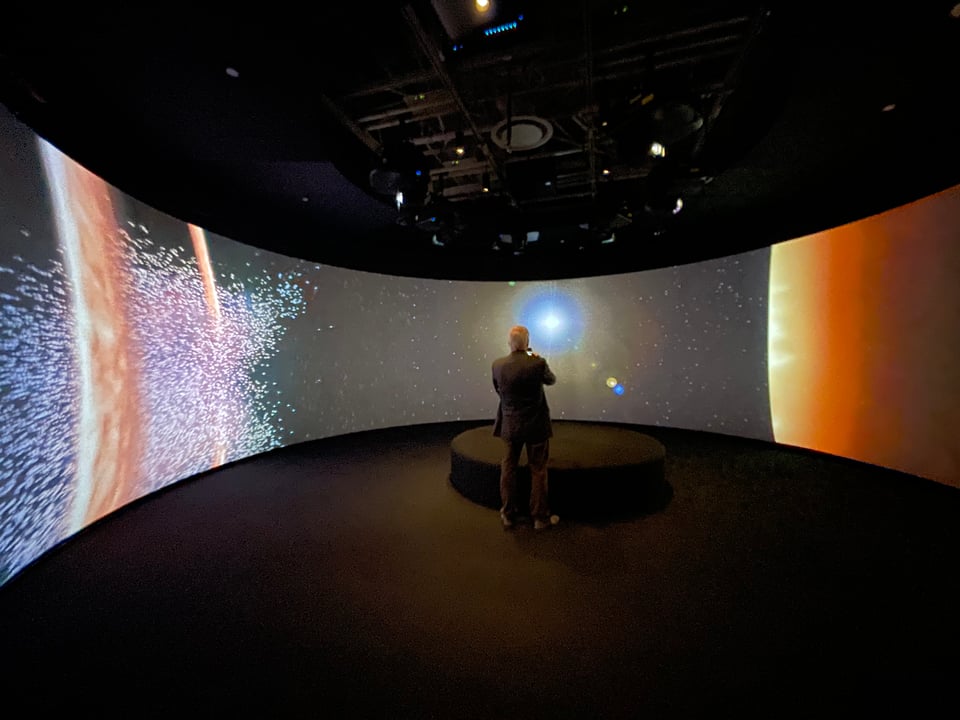
To celebrate five years and 34,000 screenings of BEHOLD, Ben Burtt gave a talk to a packed crowd in the gallery. After some opening remarks, he opened it up for questions.
Not surprisingly, one person asked him about making the original sound of the lightsaber. I’ve heard the tale before, but there was something different in the way Ben Burtt told it this time. Something more personal.
The mission for creating the Star Wars sounds was to go record organic sounds from our actual world to give the fantasy a grounding in reality.
Burtt told the story of recording the calm hum of an old movie projector. But then combining that with the more harsh buzz of a broken wire being moved close to an old CRT television.
But he added the detail that the projector was in a theater he worked at showing old movies. The CRT television was the one in his apartment.
It really struck me: Not only is the lightsaber one of the most famous sounds in the history of storytelling, the history of storytelling is embedded in the sound itself.
Random found objects didn’t create the sound. One person did. A person who grew up loving films. That sci-fi loving sound nerd made this impossibly cool sound on objects created for storytelling. Objects he had a relationship with—a projector he ran, a television he watched.
I think it’s very cool that the hum and the buzz and the crackle of a lightsaber contains not only the history of a galaxy far far away, but the history of storytelling right here on planet Earth.
After the talk, I got a chance to speak to Mr. Burtt and tell him how much his sound design inspired me as I worked on making the sounds of horrible monsters and haunted DVDs for Dead Media. I also asked him about a short film he made as a young man—a parody of adventure serials called Rod Flash Conquers Infinity. He was very gracious as I strongly encouraged him to make the film available publicly.
If you’re curious about the history of sound design, the contributions of Ben Burtt (and Barbara Streisand!!!) to cinema sound, OR just want to see a clip of Rod Flash, I highly recommend checking out the great documentary, Making Waves.
LIGHT PLUGS
SHORT FILMS ON YOUTUBE: This week, we also released another short film! This one is called DEEP INTO NORWAY. It’s fun, scary, and pretty personal. I filmed it on my iPhone on an actual family trip to Norway. The film helped me work through some true feelings about my heritage as a Scandinavian. It’s 6 minutes long. I would love to get more views, comments, likes, etc. You can check out DEEP INTO NORWAY here!

DEAD MEDIA MAILING LIST: We’ve got a mailing list for Dead Media. I’m only going to send out messages occasionally with concrete info and asks for help—screening dates, sales news, help getting the word out, etc. You can sign up here if you’re interested!
DONATIONS TO DEAD MEDIA: We need all the help we can get for film festival submission fees, advance money to book theaters, etc. Through Film North, you can make a one time tax deductible donation here. Thanks for all the help and support!
MY GOAL FOR THE WEEK--
This week, I’ve got a lot of tasks to get on top of for promoting Dead Media, but I also want to keep moving on the new feature film script. So my goals for this week are: Send 5 Dead Media related emails and write the first 5 pages of the new feature film script.
YOUR GOAL FOR THE WEEK--
I would absolutely LOVE to hear what you're working on this week in the comments below. What's your goal? How can I help you literally finish your monsters?
A LITTLE SKETCH--
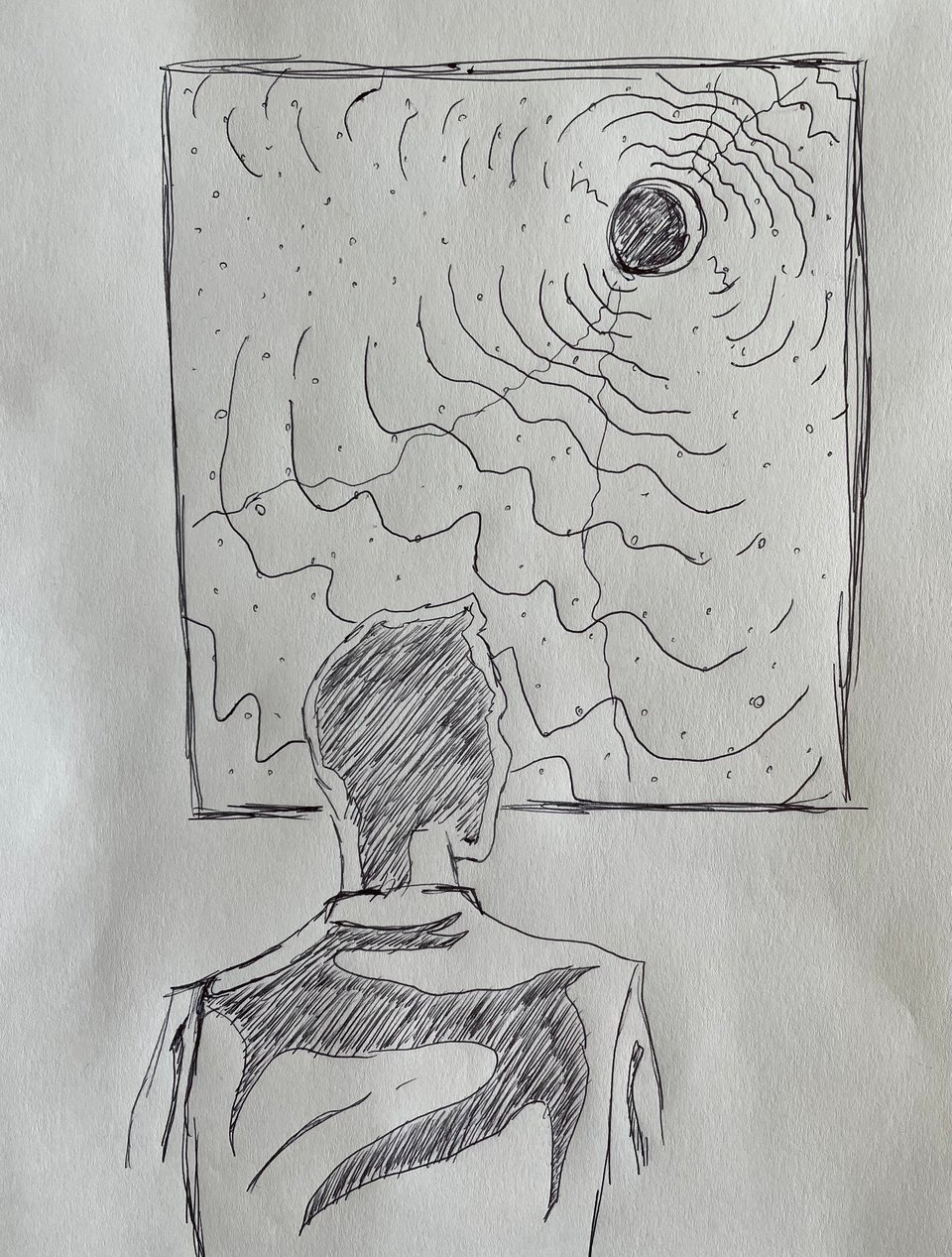
This week’s sketch is a quick drawing of a young person staring through their window and imagining all the sounds that might exist in outer space. Hope your weeks include some creative time, some nice times, some fun sounds, and some completed monsters.

-
Hi Joseph! It’s been a while since I wrote into your blog, but I have been reading it every week to encourage me to keep working on my project. I have been working on a draft of a fantasy novel, and my goal was to finish this draft by the end of Q1. And I did it! This Sunday I finished it, and I was expecting to feel ecstatic or relieved or something. Instead, I felt sort of melancholy, and empty almost. I wondered how you (or anyone else who’s writing into this blog) feel after finishing a project or completing a massive step? Are you excited? Do you celebrate? Does it feel anti-climatic? Do you ever feel strangely sad afterwards? I’ve moved past by melancholia though, and I still have a lot to do before I start the next draft. I am now moving on to the arduous task of: WORLD BUILDING. Which I have no clue how to do. But my goal for next week is to create a timeline of the history of my fantasy world. See you next week!
-

Thanks for reading! I always feel a mix when I finish one step of a project. Right when I finish, I feel very proud and happy. But I also feel very cautious and reserved because I know it's only one step in the whole process. As time goes on and I move on to the next step, I'm left with the feeling of pride about each step that was completed. I also think it can feel a little melancholy because creating something means spending lots of time with it. It's almost like going home from a party, tired but satisfied and already missing your friends. I think it's great that you have a next step planned out and I wish you luck on finishing that next monster!


Add a comment: