January: At last, the snow gods deliver!
Frontenac State Park Association newsletter
January 2026 (Vol. 4, No. 1)
Comments, contributions, compliments, complaints? Reach your newsletter editor at pamelamarianmiller@gmail.com.
January: At last, the snow gods deliver!
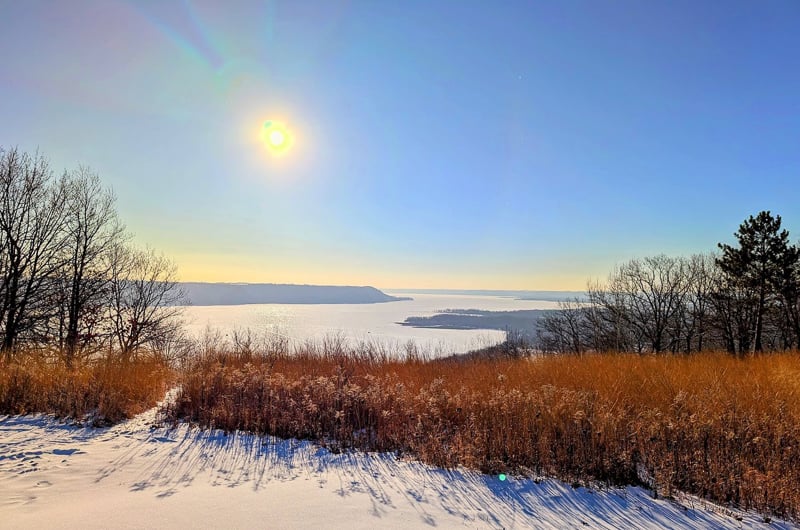
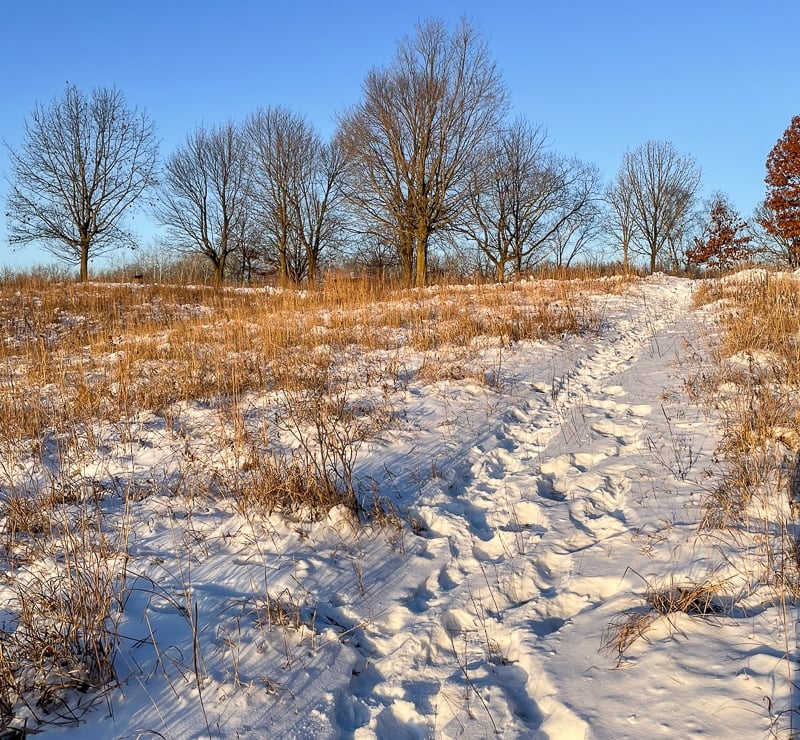
Yesssss! We have snow! The glittering snow and cold we winter lovers have so pined for made a brief appearance in December, when Frontenac State Park’s cross-country trails were lovingly groomed for skiers. Then rain pocked and ruined them, with subsequent freeze-thaw cycles creating uneven, unfriendly ice — a pattern we’ve become drearily familiar with over the past two-three years. The weather at Christmas was dull and balmy (yeah, we know, good for driving, and we do appreciate that). And then came … Sunday’s beautiful storm!
That means today’s traditional New Year’s Day First Day Hike will include cross-country skiing and snowshoeing. However you’re navigating and celebrating it, do stop by the main picnic shelter to warm up by the fire, enjoy some decadent treats and say hi to your friendly Frontenac State Park Association volunteers. Happy New Year, all!
Upcoming park events
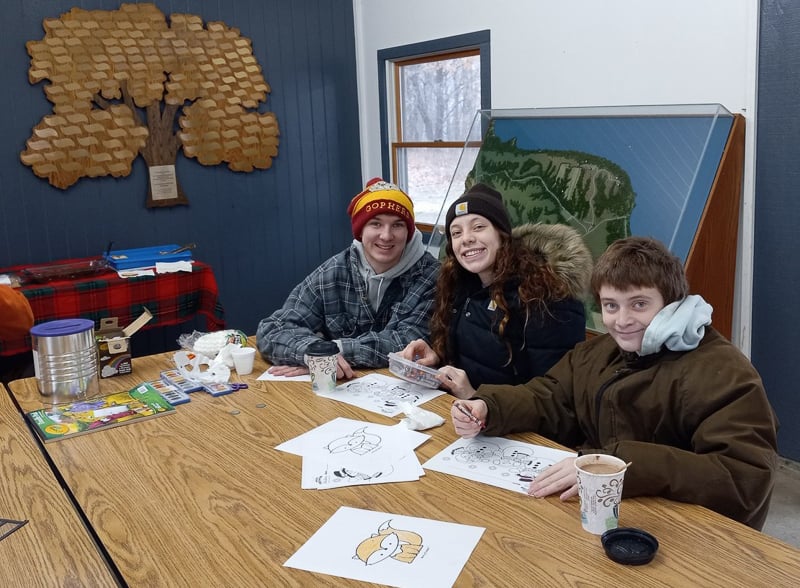
Thursday, Jan. 1, 2026: As mentioned above, our annual First Day hike/ski/snowshoe. What better way to welcome the new year than in Frontenac State Park? And when you’re ready for a warm-up break, stop by the main picnic shelter between 11 a.m. and 2 p.m. for greets and treats from your Frontenac State Park Association pals. (Note: First Day is a Minnesota-wide event.)
Monday, Jan. 19, 2026: Free day at Minnesota state parks, one of four this year.
Saturday, Jan. 31, 2026, 6-8 p.m.: Our annual Candlenight walk/ski/snowshoe. Come enjoy the nearly full moon, luminaries flickering in the winter woods, bonfires, cocoa, tea and homemade treats at the main picnic shelter, courtesy of the FSPA. And we’ll once again have a beautiful display of 2025 photographs from the park posted on iNaturalists by park visitors — perhaps some of those images come from you!

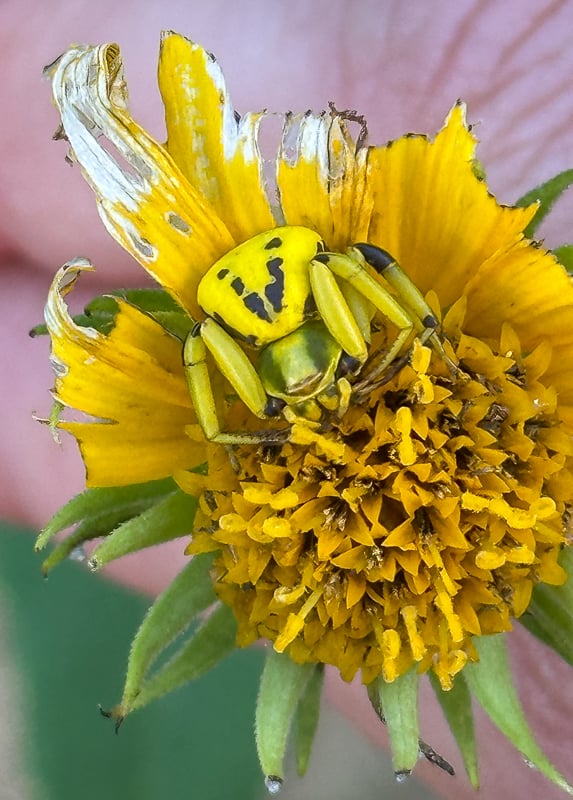
Keep your dance card open for Prairie Dreams on Saturday, June 13, 2026, when more than 130 stunning, artistic quilts will be displayed along a trail at the park, including this beauty, “Nature’s Creatures,” by Jane Ward.
The following event is not in the park, but may be of interest:
Tuesday, Jan. 6, 2026, 5-8 p.m.: Carrol Henderson, longtime leader of Minnesota’s Nongame Wildlife Program and author of “A National Legacy: Fifty Years of Nongame Conservation in Minnesota,” will speak at the St. James Hotel in Red Wing. Various nature organizations will have displays in the lobby starting at 5. Henderson will speak at 6 and sign books thereafter. Sponsored by the Red Wing Environmental Learning Center. Register here.
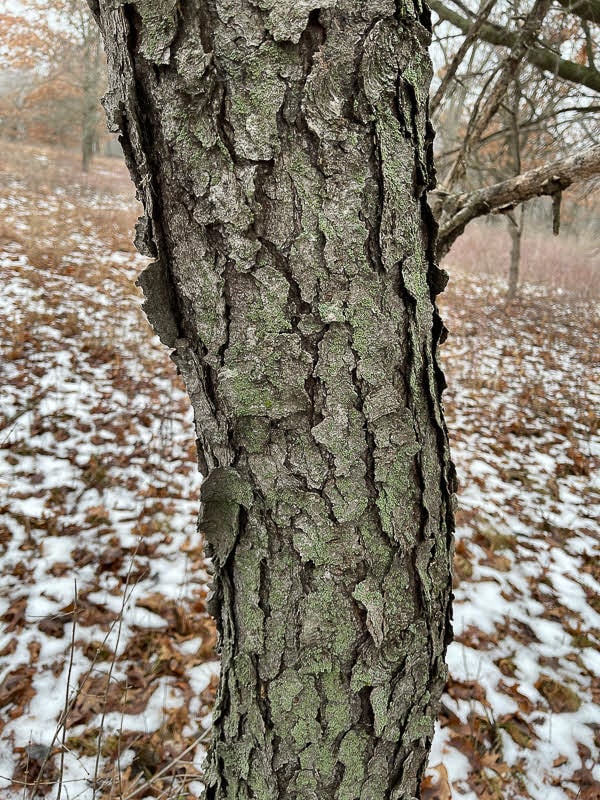
This month’s iNaturalist moment
Nature books: Riveting reads for January
By Pamela Miller
Minnesota Master Naturalist volunteer
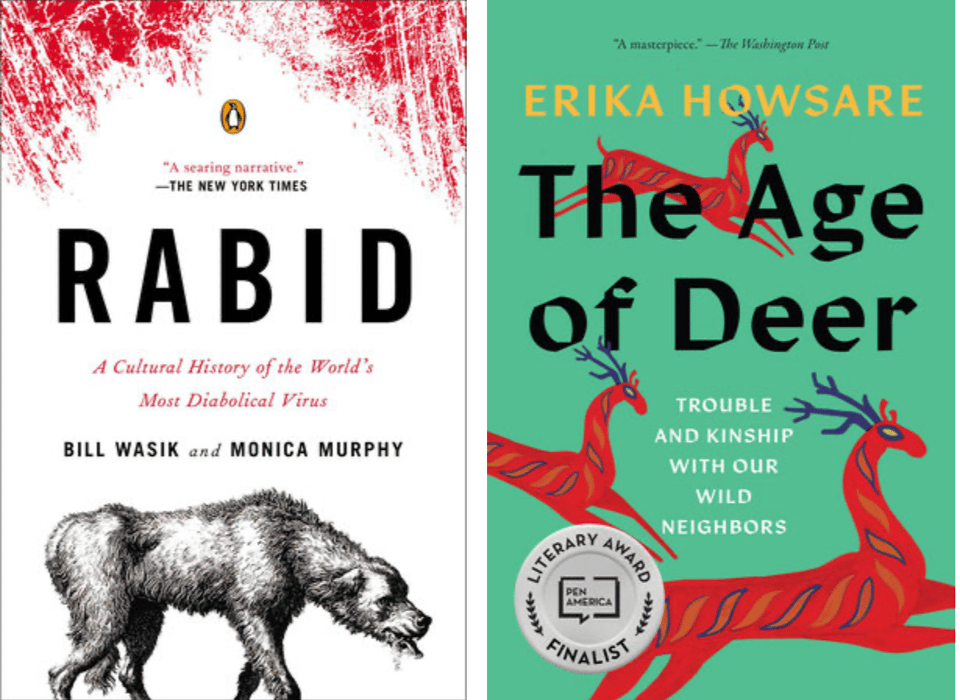
What are you up to in January, Mabel? We know you’re all working or playing hard, but hope that quiet nights by the fire with a good book aren’t infrequent. Thankfully, even in this disturbingly anti-science era, the world is flush with amazing books about flora and fauna, science and nature. We’ve found two in particular that will keep you enthralled long after your winter night bedtime.
“Rabid: A Cultural History of the World’s Most Diabolical Virus” by Bill Wasik and Monica Murphy. Penguin, 2012: Whoa! Forget “It” and “Stranger Things” — “Rabid” will raise the hair on the back of your neck from the first page to the last, but you won’t be able to console yourself by murmuring that it’s all made up — because it’s all horribly true.
Throughout history, rabies — a zoonotic disease like so many others that plague us — has terrified, tortured and killed wild and domestic animals and humans in ways that have inspired horror stories about (thankfully mythical) creatures like vampires, werewolves and zombies. Spread by savage bites from real-life slavering, mad creatures, the virus spreads not in the bloodstream but by slowly creeping up the nervous system to the brain, where it wreaks excruciating havoc and always kills an untreated patient. To make things even creepier, our best friend, the dog, has been rabies’ most frequent victim and perpetrator.
Reading “Rabid,” you’ll have nightmares about the so-called “good old days” (your newsletter editor knows of at least two true stories involving rabies in her own family — we bet you can find some in yours too) and flee sick-looking raccoons as if your life depended upon it (which it may). Most of all, you’ll want to gold-plate your pet’s rabies tag after learning about the madness and mayhem that prevailed before Louis Pasteur’s vaccine became commonplace, something we generally don’t give a second thought to as we take our dogs and cats to the vet for its yearly jabs in this easy, breezy modern era. You’ll think about it now!
“The Age of Deer: Trouble and Kinship With Our Wild Neighbors” by Erika Howsare. Penguin, 2024. We who often visit or live near Frontenac State Park know all about white-tailed deer. They’re so pretty! They’re such pests! But our relationship with deer goes far deeper than we realize. They’re crucial to our economies, our art and literature, our culture, our very image of American life, both rural and urban. Thoroughly researched and gracefully written, “The Age of Deer” is rich in both science and story. You’ll view our ubiquitous wide-eyed neighbors with more interest and understanding after reading this one.
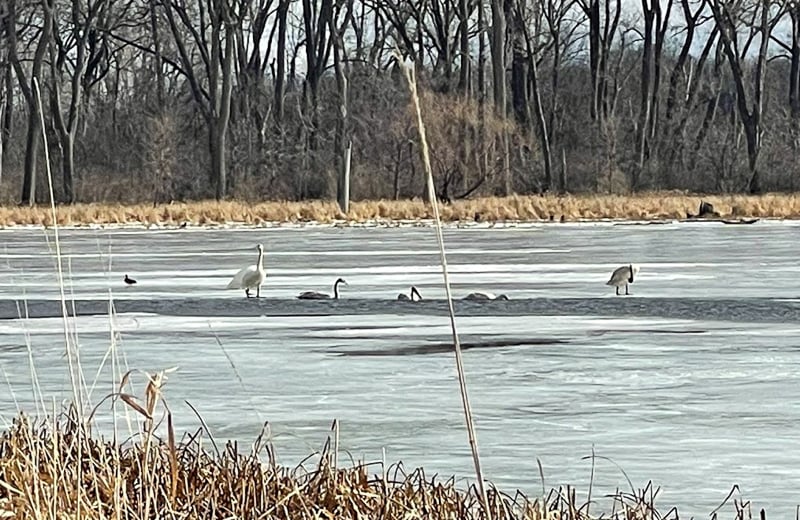
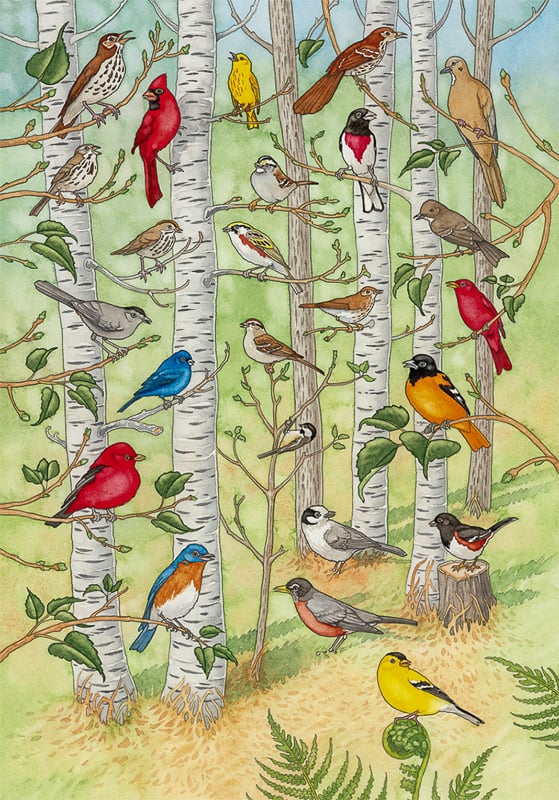
Birdnote: For a bird watcher, it’s one sweet scene after another
By Janet Malotky
Minnesota Master Naturalist volunteer
If you’re ever driving up to the park’s main river overlook and come up behind some dope putzing along the road at walking pace with one hand on the wheel and the other on her binoculars, there’s a good chance it’s me. I know it’s wrong, and I apologize, but I just can’t help myself.
Yesterday at the base of the hill I saw an American Kestrel perched on the telephone wire, looking for lunch. Just past the park office a Red-tailed Hawk swooped into a nearby tree, landed and sternly surveyed the scene. A bevy of bluebirds perched in a cluster of short trees, the males as blue as ever, so lovely against the snowy prairie backdrop.
A bit farther along I scared up a flock of Dark-eyed Juncos, who took to the trees with their white edge tail feathers flashing. Then, in their usual spot along the edge of the road, four male pheasants pecked at the grass stubble. They moved cautiously into the woods as I passed.
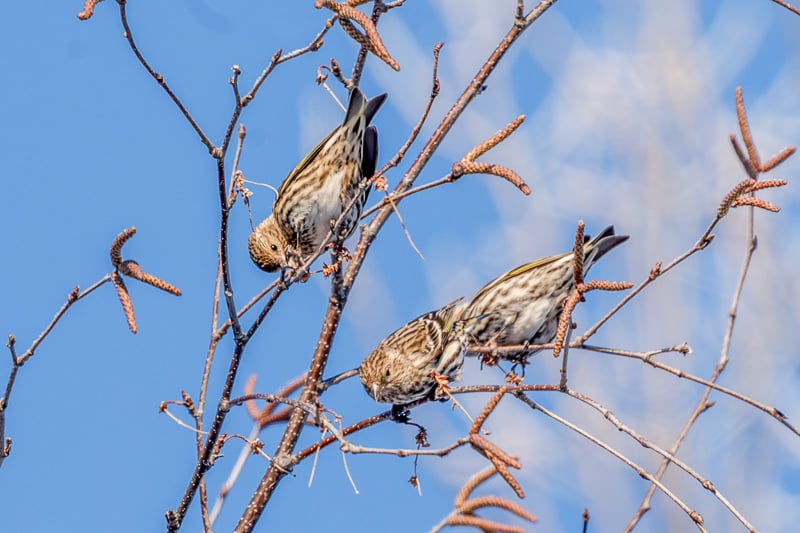
Up on the bluff top, two crows stalked a picnic table, a flitting flock of American Tree Sparrows tumbled through the tall grass, and a Bald Eagle rode the bluff edge thermals. A couple of Blue Jays cried overhead. At the main picnic shelter’s feeders, an American Goldfinch and a Downy Woodpecker busied themselves with the seeds.
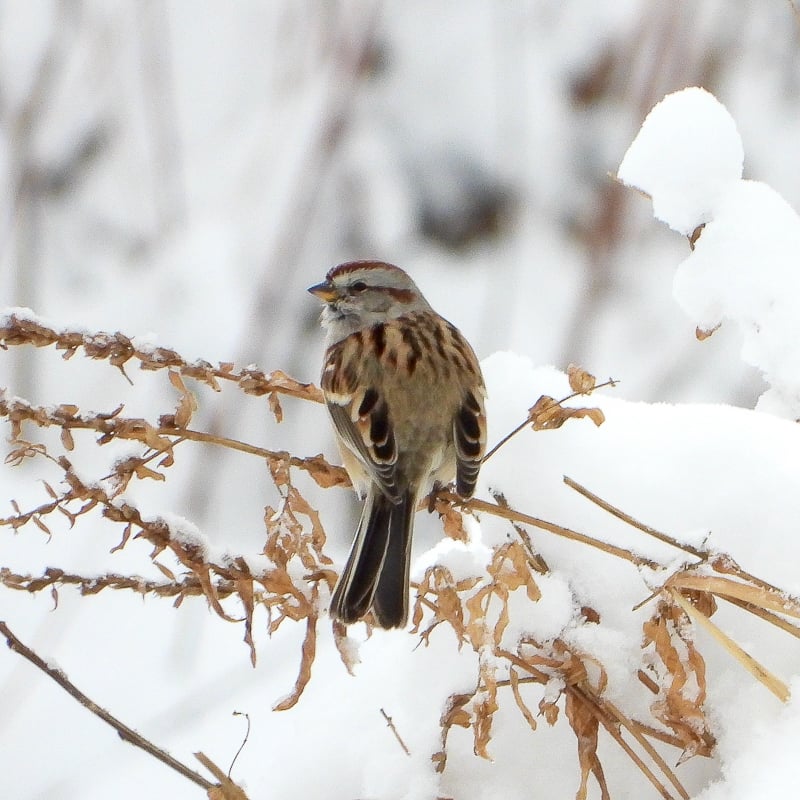
When you’re a birder, every outing is a treasure hunt, and every bird brings a thrill, especially in winter, when the cast of characters is greatly reduced. During migration in the spring, a drive up to the overlook and stroll along the bluff top trail can result in sightings of 40 to 60 species of birds. Birding in spring can be overwhelming! And the sounds! Everybody is singing in the spring. Right now, in winter, the birds are mostly quiet, not needing to defend a territory or attract a mate, speaking only in occasional chips and chirps. They fit right in with the snow-muffled winter landscape.
A winter stroll in the park can bring all these treasures. But let’s be realistic. As January wears on and the cold grips tighter and the gray seems to scowl, who doesn’t long for a taste of the warmer seasons? Might I suggest you take the opportunity to check out this Minnesota Department of Natural Resources birdsong-learning tool? It’s simple, fun and might warm your soul on a cold winter day. And remember, birdsong has been shown to positively benefit human health.
Notes from the field: Shedding light on the importance of darkness
By Steve Dietz
Minnesota Master Gardener volunteer
Technically, the winter solstice marks the onset of astronomical winter in the northern hemisphere. I prefer to think of it as a kind of hump day for the season, when days become longer. On Dec. 21, our period of daylight was eight hours and 50 minutes in Frontenac, Minn., the shortest of the year. Today, Jan. 1, it is eight hours and 54 minutes. Hooray!

Humans, of course, are not the only organisms to respond to the changing length of daylight, known as photoperiodism.
Many plants have a complex process to measure these changes very accurately — within 30 minutes at times. The changes trigger key events in their life history, such as when to start budding.
Somewhat counterintuitively, plants actually measure the amount of darkness they receive. Without going into details of chloroplasts, phytochromes and cryptochromes, this is why our poinsettias are all “Christmas red” in December. Poinsettias are native to the mountains of Mexico. For their bracts (leaves) to turn, they need to replicate the day/night conditions where they evolved. Starting in October, the plants must be in complete darkness for at least 14 hours per day. Any interruption of darkness — a streetlight, a light switched on in a room — can interfere with the process. The University of Minnesota Extension program has a handy guide for how to keep and grow this year’s poinsettia for next Christmas here. It recommends at least 16 hours of darkness starting around the fall equinox in September.
Many other organisms use photoperiodism to regulate aspects of their lives. Birds, for example, shrink their reproductive organs in the fall, when they are not needed, and grow them back in the spring. Many mammals and insects are also triggered in various ways by daylight length.
The beauty of photoperiodism is that, within a very narrow range, it is basically constant at any given latitude and altitude. Plants and animals aren’t fooled that a mid-winter thaw is actually spring, because the number of hours of daylight don’t indicate spring.
There are two potential problems with this constancy: light pollution and climate change.
As with poinsettias, many insects and animals rely on measuring the darkness to trigger key life events such as moulting and migration. Artificial light can interrupt these cycles with sometimes disastrous consequences. This doesn’t mean humans should not take advantage of lighting the night, but the importance of dark skies is more than being able to see a lot of stars — darkness is key to many aspects of a thriving ecosystem. Moderating lighting makes a difference, even at local scale. (The Dark Sky Society has some helpful guidelines for good exterior lighting plans here.)
The other problem is climate change. Some plants use a combination of clues to trigger bloom time, including temperature along with daylight. With more frequent “100-year” storms and extended droughts, with minimum (night) and maximum temperature records falling regularly, many plants are blooming earlier. According to the U of M Season Watch project, for example, common lilacs bloomed four-plus days earlier in 1990 than 1940, and this trend is continuing.
There are many other such examples. We may wonder how it can be bad that we're enjoying our lilacs earlier, but bloom time and bug time are linked. If birds migrate at a certain time significantly determined by a set photoperiod to take advantage of nutritious caterpillars and other insects, but plants have already bloomed and caterpillars and pupae have metamorphosed, the mismatch can be disastrous. As one scientific paper puts it:
Over evolutionary time, there has been precise fine-tuning of critical photoperiod and onset/offset of seasonal adaptations. Climate change has provoked changes in the availability of insects and plants which shifts the timing of optimal reproduction. However, adaptations to the stable photoperiod may be insufficiently plastic to allow a shift in the seasonal timing of bird and mammal breeding. Coupled with the effects of light pollution which prevents these species from determining day length, climate change presents extreme evolutionary pressure that can result in severe deleterious consequences for individual species reproduction and survival.
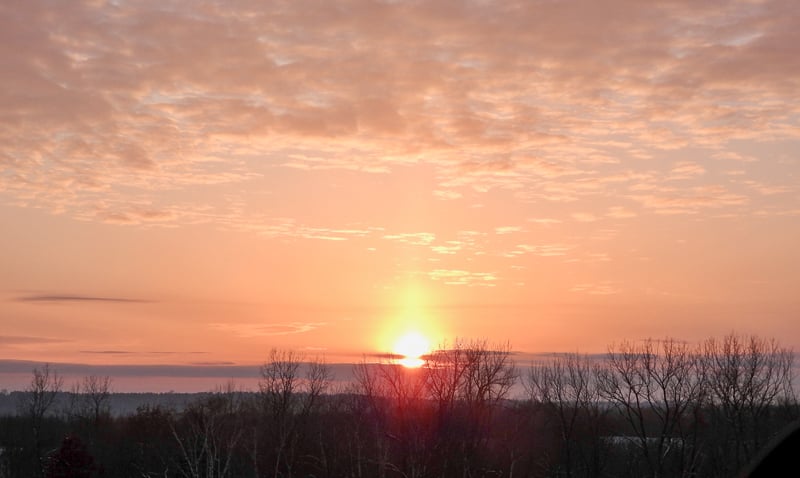
May the light be with you in the coming year.
Poem of the month
“To the New Year”
By W.S. Merwin (American; 1927-2019)
With what stillness at last
you appear in the valley
your first sunlight reaching down
to touch the tips of a few
high leaves that do not stir
as though they had not noticed
and did not know you at all
then the voice of a dove calls
from far away in itself
to the hush of the morning
so this is the sound of you
here and now whether or not
anyone hears it this is
where we have come with our age
our knowledge such as it is
and our hopes such as they are
invisible before us
untouched and still possible
Interested in joining the FSPA?
If you are a member, thank you! You help us pursue our mission of supporting this treasured park in myriad ways.
If you’d like to join us, we’d be honored to have your support, especially as we build our 2026 membership list – remember to renew if you’re already a member! Dues are $25 per year for an individual, $35 for household membership. Here’s a link with signup information.
A reminder that joining us occasionally to help with volunteer efforts is awesome too, even if you’re not a member. The FSPA’s goals are to support Frontenac State Park activities and share our love of this beautiful park with as many people as possible.
To sign up to regularly receive this free, spam-free monthly newsletter, click on “Subscribe” below. Feel free to send questions or comments to your newsletter editor at pamelamarianmiller@gmail.com. Questions about the FSPA? You can reach FSPA president Steve Dietz at stevedietz@duck.com.
Handy links for more information and education
Frontenac State Park
Frontenac State Park Association
If you take pictures in the park, tag us on Instagram
Frontenac State Park bird checklist
Frontenac State Park on iNaturalist
Parks & Trails Council of Minnesota
Website for our township, Florence Township
Minnesota Master Naturalist programs
Red Wing Environmental Learning Center
Lake City Environmental Learning Program on FB
Visit Lake City
Zumbro Valley Audubon Society
Bruce Ause’s Wacouta Nature Notes blog
Marge Loch-Wouters’ Hiking the Driftless Trails blog
Frontenac State Park staff
Jake Gaster, park manager; Amy Jay, assistant park manager; Amy Poss, lead field worker
Parting shots
Thank you, readers and park visitors!
This is Volume 4, No. 1 of the Frontenac State Park Association newsletter, which was launched in April 2023.
Here’s where to browse the full archives of this newsletter.

