
The End of the World, the Start of a New One - Monk and Robot
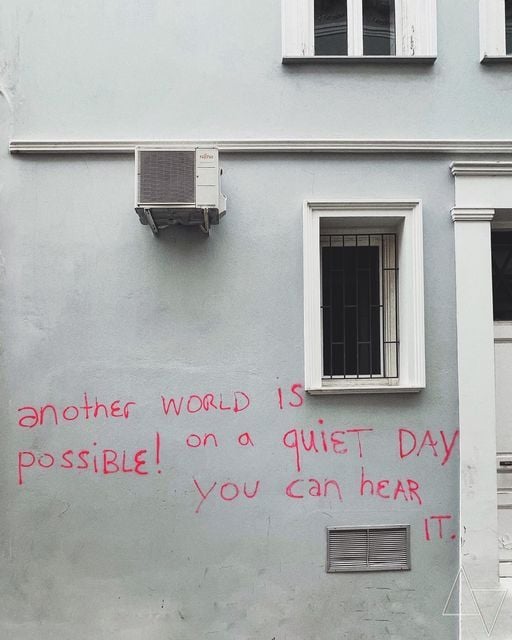
Maybe the world isn't doomed. Maybe we don't have to lie down in the dirt and go to sleep. Maybe there's still time to change things. You’re still here, right?
I realize that I've spent a lot of these newsletters complaining about things—hard scifi, description over analysis, queer representation—but as always it's easier to pick and critique than to talk about something you love. Critique is entertaining. Caring about something is a vulnerability.
I think about the end of the world a lot these days. I expect many of us do; it's hard not to when it feels like each day takes us a step closer to a brink we won't be able to return from. My story, Radio Wives, is actually coming out soon in the next edition of Lighthouse Journal (go check them out! They're pretty cool over there, if I may be biased for a minute), which is the first of two stories I personally refer to as 'an apocalypse in two parts'. Both stories explore an ill-defined end-of-the-world and the reactions of those left behind. The first story, Radio Wives is about staying alive despite waking up each day wishing you hadn’t. The second story, We Were Here Before the Waves is about being so achingly glad to be alive and here, in whatever way that may be, for however long. I hope one day I'll be able to get that second story out into the world as well. I think that's the kind I really need right now.
I was a bit too young to be reading The Hunger Games and the rest of the dystopian boom as it came out, but my cousins were always happy to dump their old second-hand books on an excitable 13-yo whenever I'd come to visit. I, like many people, found my early teenage years shaped by stories of the end of the world, corrupt governments, and doomed romances. As an adult, I've found I've only grown into a world that looks too much like some of those books—minus the doomed romance, up to you whether that's a good thing or not. These stories always focus on the big conflicts, the fight to overthrow the government, to cure the plague, to escape from this prison or that. Our western literary canon is eternally focused on conflict, stories always centring around some great struggle, though that struggle may be more or less explicit in any given work. It's rare to see a story that explores the aftermath, the slow rebuilding, the restructuring. Real change is slow and hard, it isn't one great fight, but a thousand daily choices and a slow path to something new. Saving the world is boring. It's still worth doing. It has to be.
Last Exit by Max Gladstone is one of my favourite books, and I have a ritual of reading it again every summer. I know it well enough now that it takes little effort, and honestly that's what I need sometimes. As I've mentioned, summer is my summer of re-reading and remembering. 'August is the most melancholy month' and so on. I don't quite know why Last Exit hit me so hard the first time I read it, but I know why it has stuck with me for as long as it has: it is, at its heart, hopeful.
Yes, Last Exit like so many other stories focuses on the struggle, the great fight for the future of the world, but it doesn't stop there. The 'big bad' being defeated is just one step. This world is still cruel, it's still harsh and unfair, bigoted and close-minded. The only way to change things is to step back and find a new path, a new way of living. Saving the world isn't defeating some great evil, but instead looking out for your neighbours, caring for one another, and trying your best every day to make the world a little bit kinder instead of feeding everyone around you into the jaws of the great machines of our times. Last Exit doesn't show us a perfect world, but it shows that, maybe, it's worth doing the work to get there.
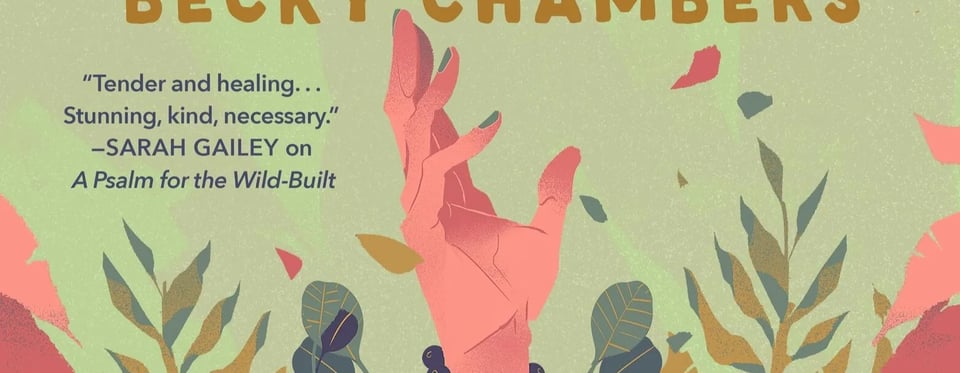
Maybe it says too much about me to admit just how hard I cried the first time I read Becky Chambers' A Psalm for the Wild-Built. While A Psalm for the Wild-Built is far more focused on the personal struggle of tea-monk Dex (as it should be), I do not believe that the story would work without the backdrop of being on a world that…perhaps isn't perfect, but is definitely working to be better. The Monk and Robot series is an example of Solarpunk, which acts in direct contrast to and conversation with the cyberpunk genre. Where cyberpunk focuses on individual freedom through technological means in the face of a crumbling world, Solarpunk instead explores a world in which humanity has (or is working to) address climate change and our impact on the environment. While these worlds may have advanced technology—AI, robots, interstellar travel—the ultimate focus is on the way that a society can evolve to live alongside our (or other) planets. Solarpunk rejects climate doomerism and looks to a brighter future, often one with greater rights and freedoms, even without the technological freedom and intense individualism of cyberpunk.
For most of us, the kinds of struggles we encounter in our lives are not great revolutions or battles, but the more mundane and personal, though no less deeply affecting. A Psalm for the Wild-Built shows a world where you can be safe, happy, content, and it shows us a character who is still struggling. Dex's experiences with depression and their constant restlessness were incredibly familiar to me, and having a story that told me 'you don't need to be perfect. You don't need to spend your life for other people. You deserve to exist without being 'of value' and you're allowed to struggle' really hit something. It was a different thing to the note that Last Exit and its call for communal action and criticism of our world did. Both of those notes are valuable. Both of them promise—hey. Things are going to be alright. There is still time, for you, for everything. It might be hard and it might take a long time, but that cliff you feel yourself being drawn towards doesn't have to lead to the end of the world. Maybe, even if it does, we'll still survive it.
Let me live in this world a little longer. Let me talk a little more. Hold my hand, let me spill out our words.
We were here. We were here. We were here.
-We Were Here Before the Waves
If you’re looking for some hopeful or solarpunk fiction, check out A Psalm for the Wildbuilt by Becky Chambers, All the Birds in the Sky by Charlie Jane Anders, and the game Magician’s Voyage by A. E. Elm.
What I’m reading right now:
My brain-fog has been really bad recently, and I haven’t really been able to focus on books or anything much more engaging than The X-Files, so this is a rare newsletter where I’ll admit that what I’m reading is: nothing. Sometimes that’s alright. The world won’t end because I’m not meeting my reading goal.
An album to listen to:
Dear Wormwood, by The Oh Hellos. I have a rule that I can only listen to this album between the spring and autumn equinoxes, when the world is alive and breathing. My friends know that I complain about this bitterly as March drags on.
Add a comment: