
On Palatability, Surgeons, and Deserving Nice Things - The Spirit Bares Its Teeth
Here we are again. Who gets to decide how I write myself? Who gets to deserve nice things? Another point I’ve been going round and round in circles about for far too long. This isn’t an answer. We’re here to have a conversation, in which I get to talk and talk and you nod politely and tell me I have a leaf stuck to my face.
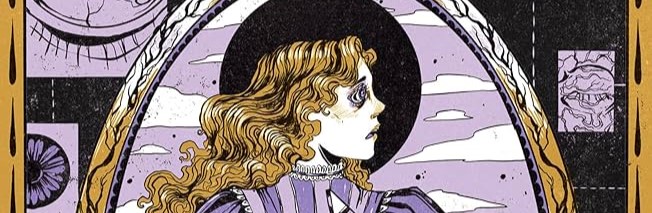
I just finished reading The Spirit Bares Its Teeth by Andrew Joseph White, a story about a trans man in Victorian England who wants nothing more than to be a surgeon. Unfortunately for him, he was born with the ability to pierce the veil, in a society where women are not allowed to work as spirit mediums and those that do are treated for 'veil sickness'—a lovely analogue for any kind of mental health, gender or sexual identity outside of the norm, or neurodivergence. When I say lovely, imagine, if you will, the bitter sarcasm dripping from each syllable.
I've read one of White's books before—his debut, Hell Followed With Us—and it was perhaps the first book I read that I felt really captured my particular experience with dysphoria, although that title has now passed to the novella Pluralities, by Avi Silver, for making me cry with seeing myself in a way I didn't expect. While I do genuinely enjoy White's books, they are absolutely brutal reads. Hell Followed With Us left me unable to function or speak for the rest of the evening because I foolishly ploughed through the entire thing without a break, not realizing how much it was affecting me. I was more careful about Spirit, if only because I was ill at the time and couldn't focus for more than an hour or two at a stretch. The world has not been kind to trans people. To neurodivergent people. To people who don't quite fit the mould laid out for them. Hell Followed With Us was one of those books where at the end you could have cried with relief for the characters being...happy, but if you actually looked at the beginning and ending, you would see that they never got where they desperately hoped to. Things are not good, the world wasn't saved. They learned to live within the changed world in the only way they could.
For me, these books really bring up questions of the way that we represent queer people in media. There are a lot of critiques flying around of 'straight women' writing all of the popular mlm fiction (that is a whole other can of worms, and I've put those quotes there for a reason. More often than not those authors are neither straight nor women. Other people have covered this better than I ever could), and one of these critiques is that the relationships are often sanitized.
I’ve been seeing more and more videos and essays centred around the phrase ‘enough ‘good’ queer representation’ as a way of critiquing this sanitization and calling for more diverse queer stories depicting messy, real lives. Questions of what is 'good' representation get stuck in traps of respectability politics and the fact that queer characters are often shoehorned in to either moralize or get killed off. I don't disagree, but I don't think it's an issue of 'women' writing these books and TV shows, but rather the way that popular media requires us to be palatable. Mainstream media will always try to appeal to the largest audience, and that too rarely entails the kind of genuine, weird, queer stories that I want to see.
While I think it’s valid to draw critiques of the simplification of queer representation, I do not think that turning those critiques on individual creators is done in good faith. This is an issue centred in massive corporations and studios, not on one person writing a ‘boring’ romance. All mainstream media is part of this larger cultural and corporate background, and there is plenty of wonderful and strange queer representation out there, it’s just more often coming out of small publishing houses and independent films.
The thing is, I think we deserve happy stories, stories where things turn out and the world is kind to us (Becky Chambers, Grace Curtis, in some ways Heartstopper but frankly if you've actually read Oseman's work you know that things are a lot messier than they look). I often say when looking for new things to read that I enjoy stories that are brilliantly, joyfully queer.
I can't seem to write them myself. All of my stories end in tragedy these days, or start from tragedy, or circle around a tragedy that no one wants to acknowledge but that is pulling at the centre of the narrative like a neutron star. We also deserve stories that are raw and messy and brutal, full of gore and peeling away your own skin and drowning under a thousand unfamiliar oceans. I don't want to rehash things I've said in more detail elsewhere (even if I haven't shared that particular essay yet. It's coming. I promise) but I would recommend looking up the New Queer Cinema movement and Ruby B. Rich's book. We deserve to write stories that don't need to be palatable, whether those stories are kind and gentle or a knife slipping into the meat of your eye. I guess that's what I'm trying to say.
What I'm reading right now:
Rereading Last Exit as is my summer tradition. Messy relationships and people who tried to save the world when they were young and bright—and failed. Overwritten in the way I'm an absolute sucker for and a punch right to the heart of this world.
Also relistening to The Archive Undying at work. Comfort books in around the nausea and rising heat.
An album to listen to:
Lush, by Mitski. I once had someone ask if I liked Mitski, and after flashing back to that goddamn post, I answered yes, thinking of Lush. They then asked if I liked her newer albums or the old stuff, because 'the new ones are fine, but her old music would make me worried'. Lush was the first album Mitski released.
What I'm working on:
Fragments of Jae's story, as yet unnamed. You'd think I'd have figured it out by now, a year and change into this. It's a beast that keeps changing form. A lot of walking around an empty station and avoiding thinking about all the things you should really be thinking about. Also materials science, because I know one thing.
Add a comment: