
On Going Home Again, a Kind of Web-weaving - The Dispossessed
I cried at the end of The Dispossessed, reader. These were not the tears of The Left Hand of Darkness nor of Gideon the Ninth; I was not weeping for a character lost, a friend torn away, a possibility broken. I cried with relief, and with jealousy.
This wasn’t meant to be web-weaving. This was meant to be a newsletter and an essay and everything it normally is. This is a kind of web-weaving.1
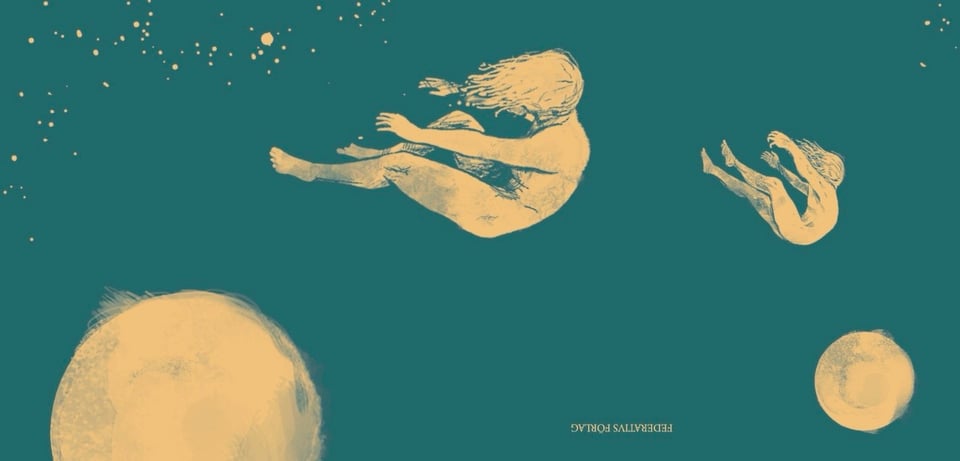
“To be whole is to be part;” Odo writes— “true voyage is return.”
I found myself, throughout The Dispossessed, thinking about exile.
I have a bit of a ‘thing’ about exile stories—if you know me, I’m sure the reasons are obvious. If not, hello. I’m glad you’re here anyway. Is The Dispossessed an exile story? Clearly, it’s a story about anarchism, about the things we will do for one another, about the things that are most important to us—freedom, and what does freedom mean to you? It’s also a story about walls, and about who stands on which side of the wall.
The Dispossessed is built on ideas about cycles, about journeys, and about return. The very structure of the novel adheres to the ideas expressed in the earlier quote from Odo, the woman whose philosophy shaped the anarchist society of Anarres—The Dispossessed is told in two timelines, one which follows Shevek as he leaves his home planet as a continuation of the revolution that created Anarres, and the other interwoven throughout which tells of his life leading up to the very decision that led him to leave. the truly brilliant part is that, just as we learn why he chose to leave, we see him return. The Dispossessed then shows the journey as a circle, pulling each end close together. True voyage is return, indeed.
I’m talking around the point. Description is always easier than analysis is easier than talking about myself, because it was Shevek’s return to his world that had me crying.
“I will lie down to sleep on Anarres tonight," he thought. "I will lie down beside Takver. I wish I'd brought the picture, the baby sheep, to give Pilun."
But he had not brought anything. His hands were empty, as they had always been.”
-The Dispossessed, chapter 13
Quite a few of Le Guin’s books explore these ideas of exile and return, rarely as the primary story line, more often hovering in the background, haunting our characters. Shevek, though he chose to leave Anarres to seek academic freedom and collaboration between their small moon and the capitalistic world of Urras, still became an exile, just as Odo was long before him. Estraven of The Left Hand of Darkness is exiled from Karhide, and numerous smaller stories within the novel follow the exile and loyalty of those caught within them. Even Earthsea, traditional fantasy narrative though it may appear, follows Ged as he must flee Roke to escape his past mistakes.
One of the key features of all these stories of exile, of people driven away from the countries and people they love despite any reason, is that they get to return. Even the greatest tragedy among them ends back where it began, somewhere like home.
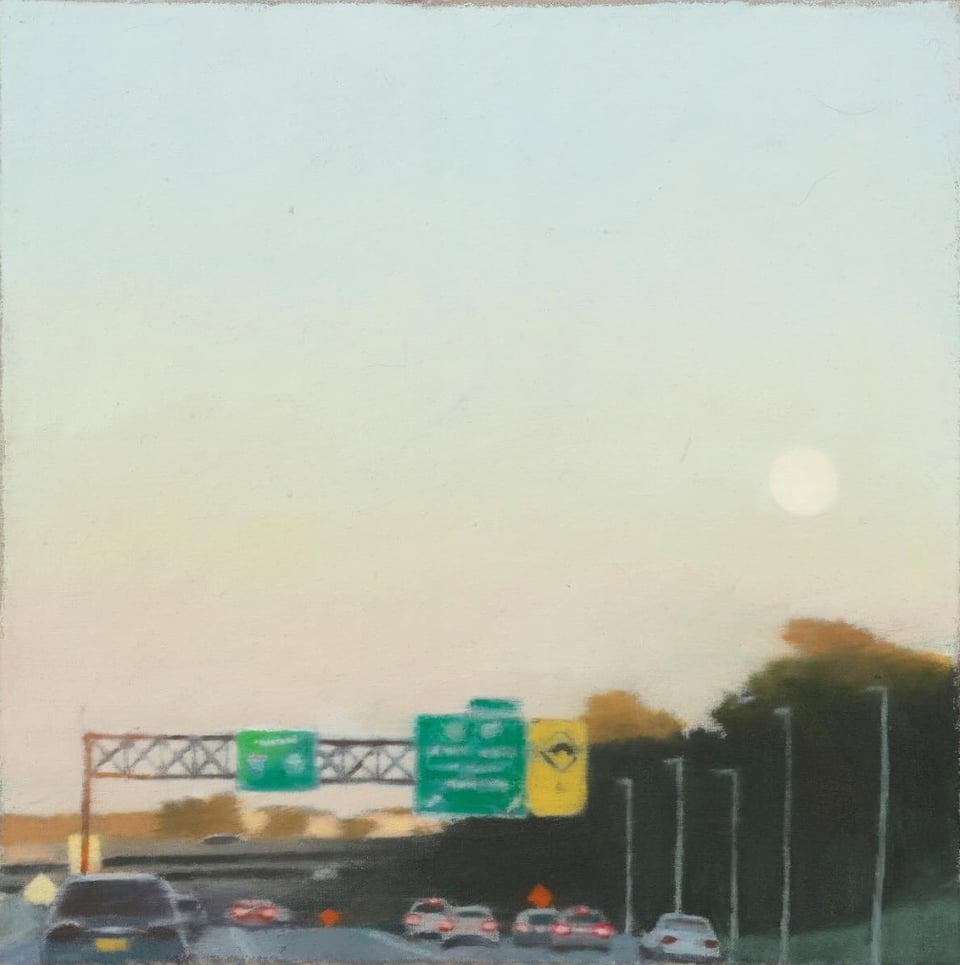
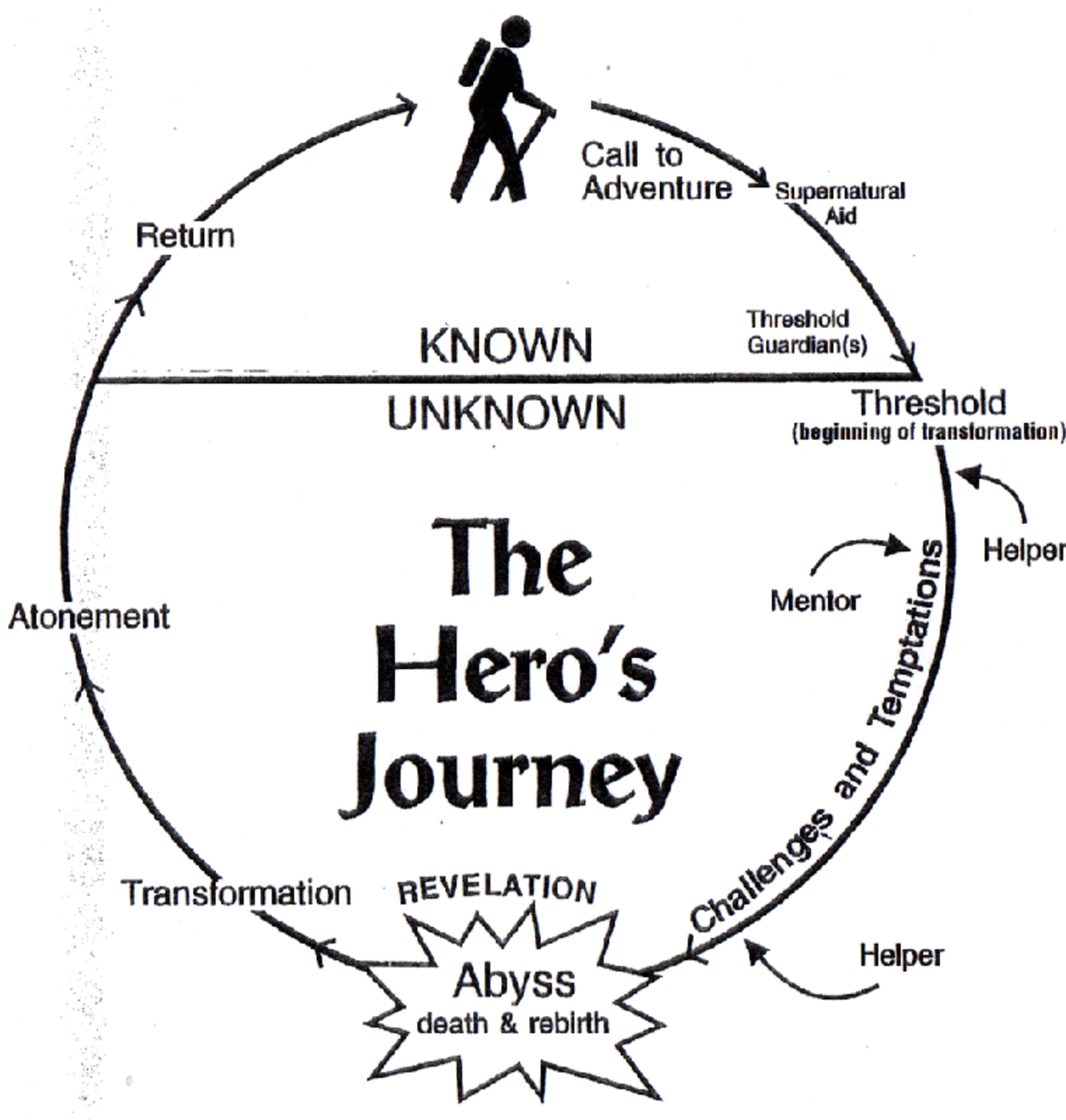
I mean, the Hero’s Journey, right2? Return to the ditch you were dragged from, return a new man! Return richer and stronger and utterly changed! Of course these stories must end where they began.
That’s not really what’s happening here, though, is it?
The Hero’s Journey, for all it proclaims to be circular, isn’t really about going home. Why would you ever want to return there, save to present yourself to the small world you came from. The shape of most Hero’s Journey narratives, to quote Le Guin herself, are “that of the arrow or spear, starting here and going straight there”. I think that far more of us relate to an exile narrative than we’d like to admit.
You’ve wanted to go home for a long time, haven’t you?
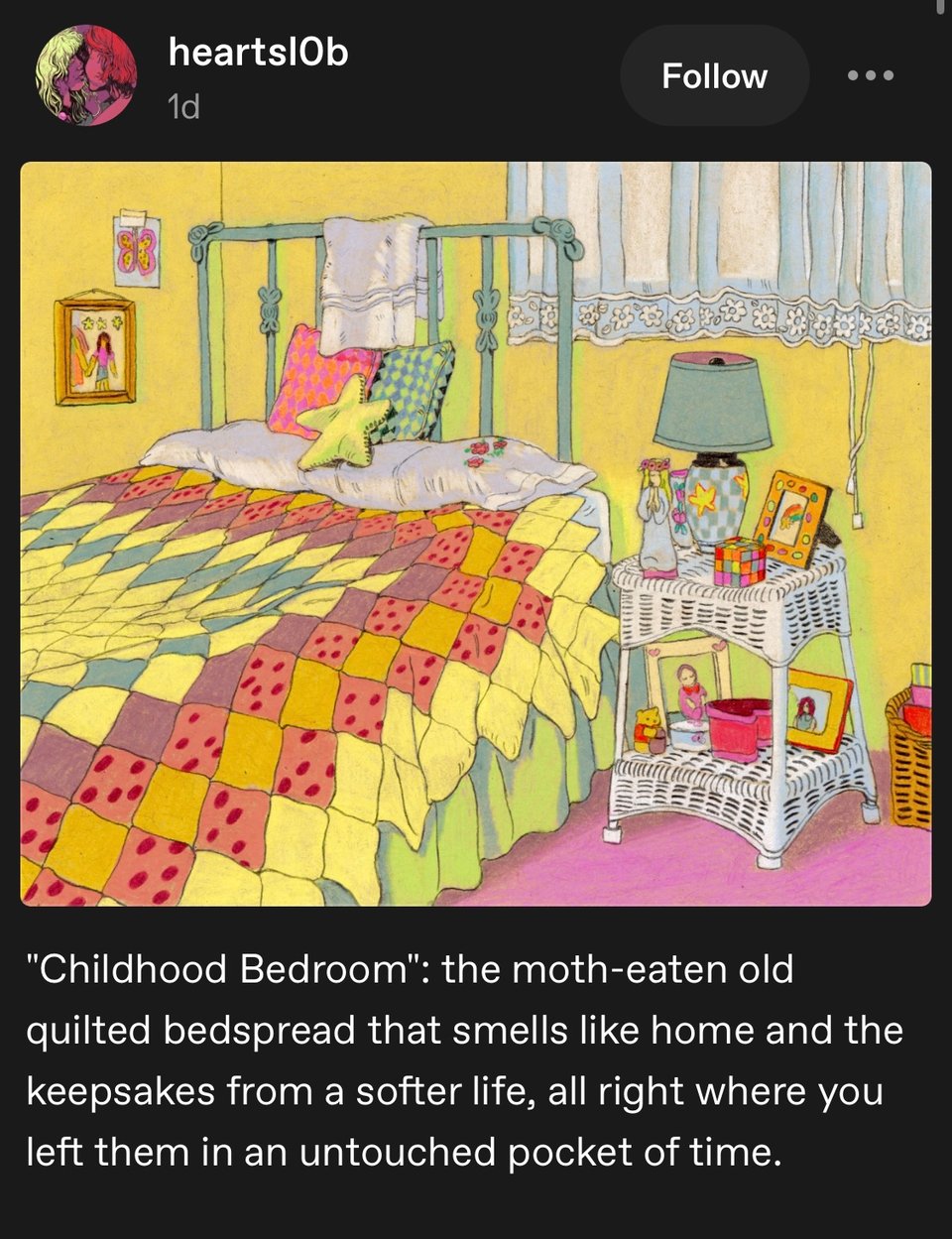
A lot of my work—both writing and art, though I’m sure it’s far more obvious in written form—has a kind of deep-seated longing to go home which I’m often only aware of upon reading it back and going ‘oh, again.’. Maybe it’s the house you grew up in, before everyone moved away. Maybe it’s the park you sat in with friends you haven’t seen in years. Maybe it’s a half-remembered apartment from your first year at uni. You catch yourself flicking through old photographs, absorbed in the blurry recollection of this place you used to love. You can’t go home, though, can you? The human memory is amazing, and it’s amazingly good at overwriting itself. We are a faulty operating system built on nostalgia. How can you ever really go home when the person you used to be no longer exists?
“You shall not go down twice to the same river, nor can you go home again…You can go home again, the General Temporal Theory asserts, so long as you understand that home is a place where you have never been.
-The Dispossessed, chapter 2
Each new thing we experience becomes part of ourselves; we change and evolve every day in tiny ways, and that change compounds. Your cells are fully replaced every seven years (and other things we’re told as children and never really bother to read up about properly) and who you were yesterday is not who you are today. A longing to go home is really a longing to be the person you were the last time you felt at home—maybe that’s why we want to go home so badly. There isn’t a good English word for this particular longing. The Portuguese is saudade.
I miss spring and five years of a small town in the hills, but here in the maples and red brick I remember a different life in my bones. Someone else is inside me who only ever got to go home for two months of the year.
-extract from a post on my writing Tumblr
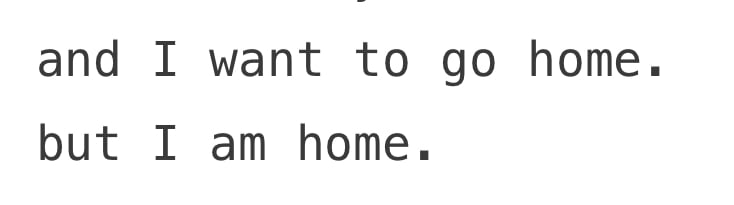
That’s still not quite right, is it. Every day after class and work I say ‘I’m going home now’ (let’s pretend it didn’t take me months to be comfortable saying those words, let me have my hangups). I go home to see my parents on the holidays. Home isn’t just a longing for the past.
I don’t want to talk about the Wayward Children series. I feel that I have to. I think that it’s an oversimplification of this longing—the issue, you see, is that home is never one place. We’re an incredibly adaptable species, you know, and it’s amazing how quickly we can form a connection to a place, to make it a part of ourselves. Wayward Children promises us, there is a place where you belong, fully, and once you discover it you will never feel at home anywhere else.
The terrible truth of the matter is, I am home everywhere I have ever been. I have loved every city I’ve lived in, and I have missed every one I’ve left. Home is what you make of it, home is the people you choose to share it with, but home is also a hundred tiny places scattered across our warm lonely planet3. There will never be one perfect place that will fix all of your problems; all we can do is make the best of wherever we are, and if you can’t, there’s a whole world out there. Sometimes you need to leave a place, and it’s terrible and wonderful in equal measures.
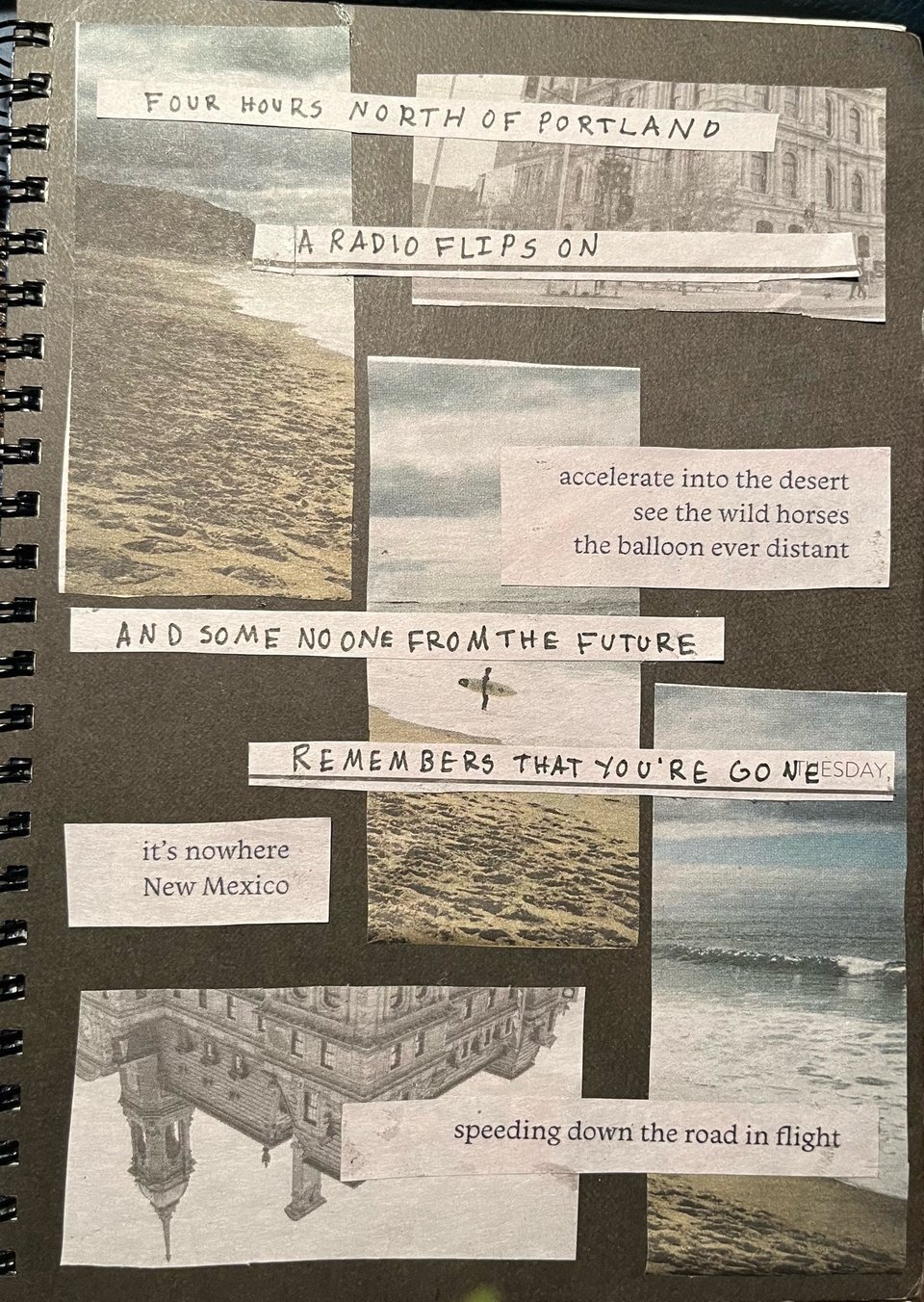
“The god between the dark says that every journey is one journey, and we can only celebrate each new stop on it. There is no returning, you don’t ever get to come home, there’s only meeting each other in the next place.”
In my story, I wrote a god of travellers, of in-between places, and I made it benevolent. It is the god between the dark. It is infinitely patient.
I wrote this extract before we began to read The Dispossessed. I don’t know how to deal with that fact.
What I’m reading right now:
Got that exam season brain going (I’m on my fifth Discworld book, Jingo).
An album to listen to:
I’m running out of albums, guys. I need to start broadening my music taste. That being said, in light of being reminded of it this morning and it rather fitting into the theme of this week’s newsletter, may I recommend the single Sad Country Yeehaw Song, by Dormchair Therapist. Yes I know it’s called that. Trust me on this one.
What I’m working on:
It would feel wrong to include any more of my writing after this newsletter being half scraps of my own work.
If you’ve never had the luck to encounter a web-weaving before, a web-weaving is a kind of transformative work (originating on Tumblr) which takes scraps of images, poetry, quotes from books or movies or video games, and ties it all together into one post. The themes of the work are conveyed through the connections between each piece of ephemera. Sometimes they are fandom based, more often not, and almost always express a certain emotion or idea. This is one of my personal favourites, though perhaps not the best example of the art form. ↩
By The Mountain Goats ↩
Add a comment: