
Non-linear narratives, Opioids, and Dead Authors - The First Fifteen Lives of Harry August
I realized that these newsletters have started falling into loose divisions approximating something like 'scifi as a genre', 'media analysis' and 'writing craft'. This was supposed to be another ramble about writing craft. It’s not quite that. Anyway, let's talk about non-linear narratives. Today's newsletter is for Trai, and is not at all about the thing I promised to discuss within it.
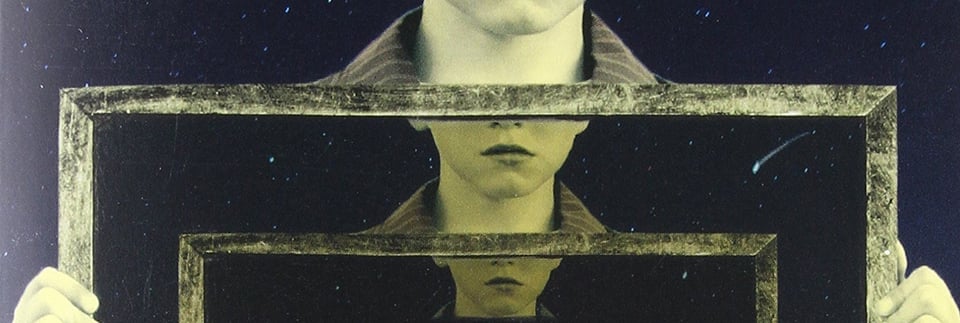
In many ways, I feel like nonlinear narratives go hand in hand with unreliable narrators. Why are you telling us this information in the order you are? What purpose does this serve? Is that purpose on the diegetic level or due to authorial intent?
I have complicated feelings about Death of the Author as an analysis approach—or more accurately, the way that most people use 'death of the author'. As I've mentioned a couple times throughout these newsletters, I do not believe that the author's intentions are the be-all end-all of a text—to reiterate my previous point, I think that any interpretation of a text is valid only when it can be backed by textual evidence, whether that be the author's intention or not. If the author wrote the text with a particular intention, but that intention does not come through in the text, then you cannot expect a reader to reach that interpretation. Similarly I do not think it is wrong to pick out a piece of evidence or meaning that the author perhaps didn't intentionally leave within the text. (for most cases, of course, you can't exactly ask the author 'hey did the blue curtains in this scene foreshadow the character's long-lost sister's return in the final chapter?'. Analysis and interpretation is ultimately subjective, even if it must be backed by evidence.)
The thing is, you cannot truly separate a work from the author. While Death of the Author argues against the obsession with the 'ultimate meaning' of a text as defined by the, too often I see people use it to mean the separation of the work from the author. In cases like J K Rowling, the work of Harry Potter cannot be separated from the author, firstly because continued support of the franchise supports Rowling's crusade against trans people, and secondly because the very text is riddled with her own biases and personal opinions. The author is always present within the text, whether by lived experience, cultural biases, political leanings, or any number of other factors.
I’m tired of talking about JKR. Fuck her. On a more amusing side of the argument, I recently was reading the Genius annotations on the Mountain Goat song Dilaudid, and the one that stuck out to me was the note which claimed that the narrator's partner was a trans woman:

I am, of course, always happy to consider a queer reading of a work—here we ask again, does it matter whether an author intended a queer reading? Not really, but don't try to claim they did just because a work meets our modern understanding of queer identities etc.—but in this case, there is absolutely no evidence to back up this interpretation, which does not fit the themes of the wider work. Dilaudid, named for the opioid, is part of an album exploring John Darnielle’s relationship with his abusive stepfather, and his fall into drug addiction as both coping mechanism and eventual ‘escape’ from the household. The Sunset Tree cannot be separated from this context, as it is an incredibly personal album informed by Darnielle’s experiences. Also, ‘Picture of my dress’ is about a widow driving around the country taking pictures of her wedding dress if I remember correctly, though that’s definitely a bit of a ‘word of god’ proclamation from Darnielle’s twitter, so take it with a grain of salt.
This has gotten so incredibly off track. I fear that's become rather par for the course at this point.
I find that I encounter non-linear narratives more often in literary or slipstream fiction, rather than mainstream science fiction. This is likely because, quite frankly, non-linear narratives are challenging. They ask of the reader far more attention and patience than a more traditional narrative. We as humans experience the world sequentially—every action has a reaction, and other misquoted laws of physics. Causation is clear to a certain extent when a story is told linearly, while a non-linear narrative requires an unexpected amount of work to unpick meaning and the impact of each action. If you're not paying attention, you may miss a time jump or an important piece of information being revealed at an unexpected moment.
In this way, despite being more demanding of both reader and author, non-linear narratives provide so much more freedom. The author is able to reveal any piece of information, withhold a scene or revelation until the moment that it works best within the narrative, and the diegetic reasoning behind a non-linear narrative can be incredibly interesting as well. In Claire North's book The First Fifteen Lives of Harry August, the titular Harry is a person who is reborn again and again into the same life with all his previous memories. The narrative steps lightly between these different timelines, often taking chapters to explore philosophical ideas like faith and the way it changes over multiple lifetimes; how relationships can evolve over time; the ways that context can shine a new light on past experiences. Using a non-linear narrative structure, in this case, allows a stronger thematic core to be constructed, but it also allows the pacing and drama of the novel to form just as the author desires. An event which happened in one of Harry's early lives is recontextualised by a later life, and rather than have to remember the original event those two moments can be depicted one after another. The main conflict is interwoven with these philosophical musings and aimless meandering across the world and through time.
However, Harry August adds a second layer to the intentionality of the non-linear narrative: the story is being told, by Harry August, in the form of a letter. The novel opens:
I am writing this to you.
My enemy.
My friend.
You know, already, you must know.
You have lost.
Harry August himself, then, is withholding information, constructing the narrative to suit his own goals, drawing out the story for his audience, his enemy, his friend. This is the point in which non-linear narratives intersect with unreliable narrators—is the structure of the story simple due to the author’s taste, or is there some reasoning present within the story for that decision? If it’s the latter, asking yourself why is the character telling us this story in this order can bring a very interesting layer to any analysis. Sometimes, what a character doesn’t say can tell you just as much as what they do say, and a good author can make incredible characterizations, narratives, and themes from the negative space left by their story.
What I’m reading right now:
I’ve actually read three books since my last newsletter—I just (last night) finished reading I Cheerfully Refuse, which I would recommend wholeheartedly. I think that immediately after finishing it, I rated if five stars, though I may drop that to a 4.5, which is mostly because the ending felt a little bit rushed. I find that endings are always the point that good books stumble a little bit, and are just very hard to get right. Someone will always be left unsatisfied.
An album to listen to:
This week’s album must, of course, be The Sunset Tree, by The Mountain Goats. We’re going to make it through this year, you and I. We’re more than halfway there, and I know it only gets darker every day from here, but it’s still summer, and the world is beautiful. Pull up your fishnets, and take your foot off of the brake, for Christ's sake!
Add a comment: