
Contact and Consumption - Into The Drowning Deep
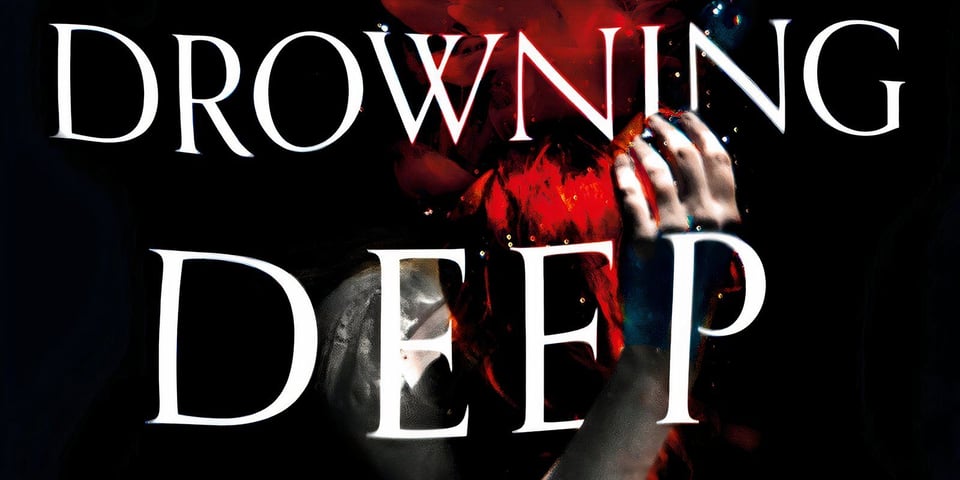
So, I have joined a book club (for the first time in my life) and our very first book was Into The Drowning Deep, by Mira Grant (aka Seanan McGuire, you know, of the wayward children series). I breezed through a good chunk of wayward children before it started to grate on me, so I went into this book with pretty positive expectations.
Unfortunately, I did end up sitting at my kitchen table bitching about it while I powered through to finish in time for book club.
This newsletter will have spoilers for the overall plot of the novel, but none of the twists or character motivations, that being said I was frankly annoyed enough that I wouldn’t recommend reading the book itself. However, before any criticism I will say that the prose itself is fine and easy to read, and as always I appreciate Grant’s attempts to include diverse voices in her stories.
Into The Drowning Deep is a near-future horror sci-fi book about an expedition to the Mariana Trench to search for mermaids. Mermaids who attacked and massacred the first expedition sent for the same purposes.
One of the big questions that we had—at least that I had—was whether the book would fall further on the sci-fi or horror side in regards to making contact with the mermaids. Let me explain:
Science fiction, when centred around contact with an alien* race, often focuses on the possibility of communication, of common ground and understanding between the two groups. Solaris falls somewhat outside of what you would usually think of when it comes to contact stories, but it is the one I found myself thinking of again and again while reading: can we communicate with an alien life form that is so far beyond our understanding as to barely fall within the bounds of what we consider ‘life’? Can we as humans ever look at another life and view it through anything but our own human-centric lens? Man is not searching for new worlds, merely a reflection of himself, etc etc.
The question of communication with the mermaids is put forth relatively early on, as we see the mermaids mimicking human voices and a sign language translator is brought on the ship due to suspicions that the mermaids communicate via sign. All in all, the story appears to be perfectly set up for a contact situation.
On the other hand, this is a horror novel; it advertises itself as such, and the entire reason we know the mermaids mimic human voices at all is because they did so before eating the person they were mimicking. So, you know, horror. That’s alright, horror and contact stories can overlap; we are eternally afraid of the other, and all of horror fiction has its roots in that gothic fear.
Let us return to my earlier question: where does this book fall in the messy and ill-defined spectrum of horror and sci-fi? Will the ship come to understand the mermaids, will the day be saved by our intrepid translator and our sonar experts…or will one survivor return to shore, bloodied and alone, haunted by their memories of the ship?
The answer is, annoyingly, both and neither. Into The Drowning Deep is a book that is afraid to commit to its own genres and themes. One simple example is that, from the very start, climate change is presented as if it were meant to be the driving force behind much of the narrative and the characters’ aims; our main cast are largely marine biologists, of course climate change and ethical considerations of exploration would feature. However, climate change and the impact we have on our environment…isn’t actually a theme of this book. It feels almost shoehorned in, with how quickly it’s forgotten by the narrative. Many of our main characters have an interest in conservation, and yet by the time we hit the Mariana Trench all discussion of human impact and the ethical problems of keeping animals captive is waved away by, and I kid you not, ‘we have a legal contract with the dolphins’.
First of all take that in. Canonically they can talk to dolphins (ok whatever, fine) and have contracts agreeing to give them their freedom in exchange for SACRIFICING THEMSELVES FOR THE MISSION? (Also thank you Mira Grant for assuring us that no dolphin incest was happening, I really cared about that. I hate to say a book is ‘too woke’ because I’m, well, me, but this genuinely felt like getting lectured by a tumblr purity culture warrior at times. Oh you were mean to our perfect bisexual main character? Die a ridiculous and horrible death within pages. You didn’t learn sign language? Get eviscerated two pages later. There were times I felt I was reading an infographic about how not to talk to marginalized people, rather than reading about characters who acted like real human beings. This is besides the point, but truly limited my enjoyment of the story, alongside the utter lack of comprehension regarding what organic chemists actually do. Anyway.)
Where were we? Right, climate change. It would have been so simple to pull the ‘mermaids are attacking us and hate us because we’ve caused the loss of habitat and food supply’ etc, which while predictable would have at least been thematically resonant, but no. One offhand comment about the mermaids being pushed out of shallow water by the increase in boat traffic, which is actually contradicted later by the existence of an evolutionary pathway which would only make sense in deep water so I don’t even know. Whatever.
This is a book that started with the idea ‘mermaid horror’ and then built a narrative around that. Unfortunately, the issue with the lack of thematic commitment extends to issues with genre as well. Contact with (a) mermaid is achieved, and all it does is save one character’s life. It has no larger relevance to the plot. Strike one against this being a contact story. While there’s plenty of gore and death happening on the ship, it only happens to characters we don’t care about or that were ‘mean’ to our main cast, save two instances early on that were actually very effective. In fact, I would argue that the early sections of this novel were by far the strongest, effectively building anticipation and the terror of the depths. Once the tension builds towards the climax, however, all of our main characters are perfectly fine and somehow escape all kinds of situations that were earlier proved to be completely deadly to others. I joked to my friends about ‘deus ex tube’, because that’s what it was. Twice. Mira Grant really needed to kill a couple more of her darlings for me to read this as true horror. Strike two against this being a horror novel.
So what’s left? In this story, nothing. Into The Drowning Deep is a story that comes so close to reflecting on humanity’s place in our natural world and how our fear and dismissal of anything outside of ourselves feeds into our destruction of the planet, and then it slips and falls and jabs itself on a poisoned shrimp.
What I’m reading right now:
I picked up Guards! Guards! during the break because I desperately needed something light and fun to hold my attention. I am terribly attached to all the pathetic little swamp dragons one burp away from meeting a fiery end by their own stomach juices. I have anxiety too, little guys.
An album to listen to:
Am I allowed to say Through This Fire Across from Peter Balkan? It’s not even out yet, but I feel like the shipwreck and apocalyptic visions, alongside the sheer ridiculousness of having Lin-Manuel Miranda on backing vocals captures some of the ‘what the fuck’-ness of this book.
What I’m working on:
Recently finished up a big chunk of Stars Like Darting Fish—Intermezzo, a 10k word interlude about your ex situationship digging around in your brain. Oh, and we hit 40k words, so this damn thing is a novel! At this point I’m really just writing to prove to myself that I can finish this.
Hands pushed them up, up onto the table, an ocean of limbs outstretched to touch, direct, bound. The light caught on them, blinding them with the reflected glow from their own skin and they were illuminated at the centre of the room. They couldn’t make out any of the faces around them, and it might as well have been a crowd of strangers for all they could tell. It wasn’t though, where was—
“What am I doing here?” they shouted, and the cheers grew louder, nearly drowning out their words.
They took a step back, then another, and their heel caught on the edge of the table, sending them toppling into the grasping sea.