
Compassion, Parallel Narratives, and the Ocean - Meet Us by the Roaring Sea
We're back today with another...writing-craft-ish newsletter, which is really just me musing on something I've been noticing a lot recently. How many timelines can you hold in your mind? I won’t ask you to keep fifteen repeated lives in there, I simply ask you to hold the grief of everyone you’ve ever met. Isn’t that better?

So, one of my goals for this summer was to write a book, but I am chronically allergic to longform writing. My brain works perfectly at novelette to novella length, the pieces I'm most proud of come about in the 10-20k range. I love writing short fiction as well, but anything with a real narrative creeps towards that 20k marker...and no further. Which is why I made it an active goal to do so, because otherwise I'm sure as hell not making it out of novella range.
As such, I started pulling a whole bunch of books to read to try and figure out how to build a structure, plot, and narrative style that could help me reach that goal. I wanted to choose spec-fic stories that leaned literary (so, usually falling somewhere in slipstream), and came up with Our Wives Under the Sea, Meet Us by the Roaring Sea, and Solaris as a starting point. If you've read these books, you might notice an interesting structural similarity: they're all composed of two partially distinct narratives (Solaris kind of breaks this, but I'm still counting it). Our Wives simultaneously tells the stories of Miri caring for her wife Leah after a failed deep-sea expedition, and of Leah on that expedition, breaking and interweaving their timelines and stories. Solaris follows Kelvin's experiences on the station, but arguably the Solaristics sections could nearly stand on their own as a strange review of the fictional research field.
Meet us by the Roaring Sea takes the story-within-a-story structure further, by having the secondary narrative take the form of a manuscript that the primary narrator is translating from Tamil. It's hard to talk about this book partially because none of our narrators—whether the AI engineer processing her grief over her mother's passing through her translation work, or the group of medical students writing in Tamil caught in a drought at the edge of a war—are given names. I don't like the dichotomy I've created of 'primary' and 'secondary' narratives, so perhaps I should instead use 'external' and 'internal', as Kumarasamy herself does. Perhaps that's what made the structure of Roaring Sea work so well for me--the narratives feed into one another, and in many ways the 'internal' narrative is the only one of the two that could stand on its own, though without the hand of our external narrator, we would never be able to read it, would we?
The key point of these types of structures as far as I'm concerned is that the narratives cannot truly be separate. If you have two stories in the same physical novel that do not intersect thematically or narratively, you've just written two short stories. Rather, the primary and secondary narratives should influence one another, passing ideas and themes back and forth to expand on them more fully. While Leah's narrative in Our Wives explores her grief and isolation in the face of horror and great loss, Miri's makes the crushing weight of the ocean and the horror and wonder of facing the unknown explicit. Both women must learn to exist in the face of something they cannot comprehend, whether that be the depths of the ocean or the depths of losing someone you love.
I first read Meet Us by the Roaring Sea a couple years ago on a beach with some of my best friends, on the first trip we ever took together. There, on our patch of rocks and salt air, I was suddenly two people, three, more as I worked my way through the novel. While Roaring Sea also has grief as one of the major driving forces of the novel, it is ultimately concerned with our connections to and compassion for other people. Before even getting into an analysis of the actual content of the novel, the first way that Kumarasamy was able to bring this theme forwards was through the specific choice of perspectives--the primary, external narrative, is told through second person, while the internal narrative is told through the first person plural. Neither of these are exactly standard points of view to take in a novel, but as Kumarasamy stated in an interview with Tricycle, these particular narrative styles "call for the reader’s participation"—perhaps you are the one grieving your mother, tiptoeing around your family and the house she left behind. Perhaps we are a part of that group of medical students, easing our grief and loneliness by taking on the suffering of those around us. It's not rare that I am sucked into a book; it is, however, unusual that I found myself consumed by these characters and the story being told through them.
Through both the internal and external narrative, Kumarasamy explores the way that we can be shaped by the compassion we have for other people. The medical students practice their philosophy of Radical Compassion, forming their bodies to reflect the suffering around them as they slowly meld into one another. The external narrator remembers her mother’s life through her eccentric collections, feeds her own life to the AI she is training, relives the memories of the former soldier sleeping on her couch. Would you choose to take on another’s memories? Their pain? You are shaped and defined by the things you take on, by the things you consume, just like the thing slowly growing in the dark spaces of your computer. Maybe we just don’t want to be alone. Maybe you don’t even have to be alone in the story you’re telling yourself.
Can you tell that I like when people get creative with narrative structures and form?
I’ve been trying to pick apart where this structure is coming from—this is not a new invention, the story-within-a-story is well-established, even if only as a framing device. Nevertheless, it is a trend that I’ve noticed within what happens to be my favourite literary niche.
I wonder if it's the fact these books really do sit at the intersection between genre and literary fiction. I heard a wonderful description of literary fiction recently, though I cannot for the life of me remember either the original quote or who said it, but here's my best memory—"Literary novels are about yearning to understand your place within the world, and thrashing around trying to find it". Literary fiction tends to lean into interiority and the emotional world of the narrator, though I would struggle to refer to many of the literary-leaning novels I've read as 'character driven' in the way I might mark them down on Storygraph. I suppose that I would more so think of them as theme driven. While purely literary novels can drift from section to section, reflecting and tying together disconnected moments, genre readers have a certain expectation of things actually happening in their books. Parallel narratives are, then, a way of having enough to say without boxing yourself into a single story, a single perspective.
Reading, itself, is a kind of radical compassion. Just as the external narrator of Roaring Sea treats her translation as a “kind of resuscitation” [1], so too is the reading of the story a way of reaching out and touching the lives of these people as they move in parallel to our own.
What I’m reading right now:
Taking another crack at The Lord of the Barnyard. Picked it up at a second hand bookstore last summer and only made it through the prologue. Having now read another couple chapters, I’ll say that Egolf really came out swinging with that prologue and my life is much better for having made it through to the other side of it.
An album to listen to:
We’re getting towards the end of the summer. It’s finally time to break out Some Are Lakes, by Land of Talk. This is an album and artist I’ve recently gotten incredibly obsessed with, starting with the song It’s Okay on this very album.
Maybe when I die
I get to be a car
Driving in the night
Lighting up the dark
What I’m working on:
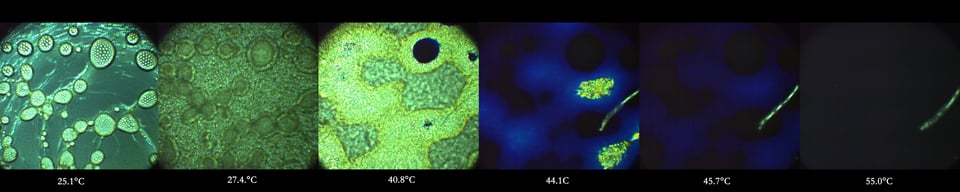
Unfortunately, the answer is just…lab reports. I don’t think you want to read my lab reports. Here’s some pretty pictures though.
Add a comment: