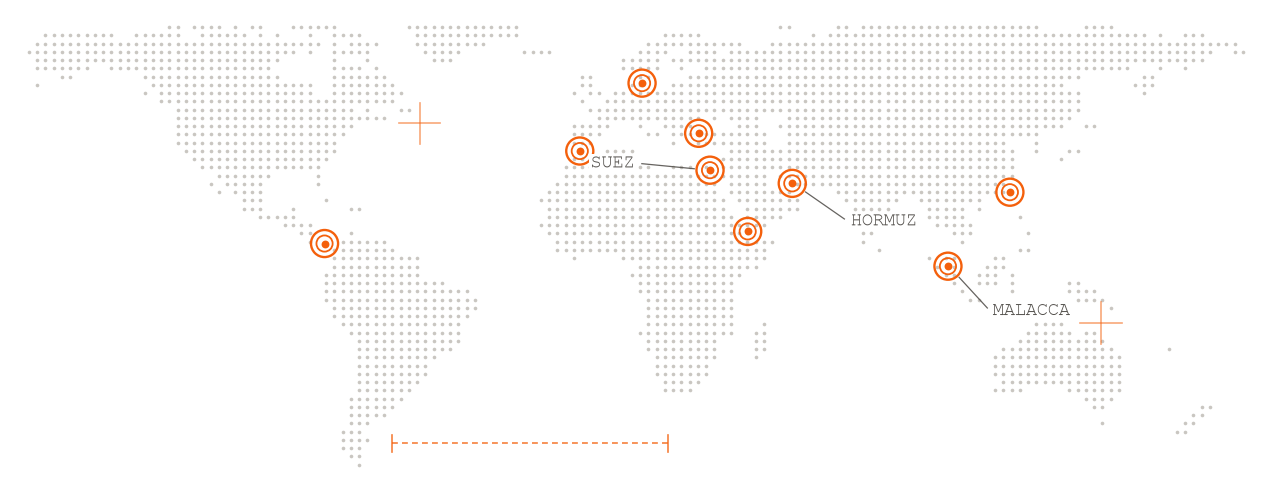
**Trump's Situation Room approved planning for an Iran offensive explicitly wider than the current Hormuz strikes — three sources confirmed the meeting to Axios on Tuesday.**
This is not an incremental escalation signal. The Hormuz theater already represents the most significant U.S. Gulf military operation in three decades. An offensive 'wider in scope' means one of two things: target sets extending beyond Strait-adjacent infrastructure into mainland Iranian territory, or a coalition architecture that pulls additional U.S. assets from bases outside the Gulf into the theater.
What makes the data set significant this morning is the simultaneous White House visit from Iraqi PM Ali al-Zaidi, with Trump pledging 'a lot of deals.' Iraq sits between Iran and every U.S. regional base of consequence. Baghdad's cooperation — or at minimum its public silence — on basing access and airspace is operationally necessary for any expanded strike package that targets Iranian assets beyond the Qeshm-Bandar Abbas corridor.
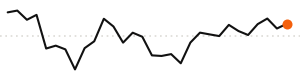
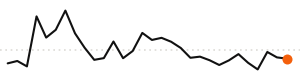
Brent is at $85.26, up 12.2% week-over-week. VIX is at 16.35 — rising but not yet at the 20 threshold that signals institutional hedging demand. Markets are pricing a risk premium, not a confirmed supply disruption. That gap between oil and volatility is the leading indicator. Watch for Saudi positioning in the next 72 hours: if Riyadh activates any spare capacity or signals production flexibility before an official U.S. announcement, that confirms they received early notification of the expanded operation. [Full causal chain analysis in this week's briefing.] **Taiwan's opposition Taiwan People's Party sent its first-ever nine-member formal delegation to mainland China on Tuesday — departing for Shanghai on the same day Beijing reported its slowest quarterly GDP growth since 2022.**
The timing is analytically load-bearing. China's Q2 growth printed below Beijing's own 4.5%-5% full-year target range — a range already described as the least ambitious in decades, meaning even reduced ambition was missed. When domestic economic pressure builds and the CCP's credibility on growth is strained, Beijing historically uses cross-strait engagement as a narrative instrument to project stability and diplomatic competence to a domestic audience.
The TPP's specific political positioning is the non-obvious angle. As the island's smaller opposition party, they occupy space between the ruling DPP — which maintains the firmest separation posture — and the KMT, Beijing's traditional interlocutor. A TPP-PRC dialogue framework gives Beijing a third channel: evidence of cross-strait engagement that doesn't require legitimizing the KMT's historical baggage or engaging the DPP government directly.
This is channel-building under economic stress, not a peace signal. The specific language in any joint statement — whether it references 'one China' framing or deliberately avoids it — will tell you more about PRC strategic intent in the next six months than any military exercise around the island. Entity co-occurrence network analysis across 588 Geopolitical Flashpoints articles today is flagging accelerating diplomatic signaling velocity in this cluster. [Full storyline lifecycle analysis in the weekly briefing.] **SK Hynix surged 13% Tuesday on AI demand optimism while U.S. inflation came in cooler than expected — but the real intelligence signal is in what the market is not pricing.**
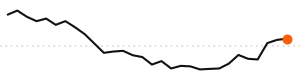
Brent crude is up 12.2% week-over-week to $85.26. Normally, an oil move of that magnitude pushes the 10-year Treasury yield sharply higher as the market prices inflation risk. The 10-year sits at 4.59%, up only 6 basis points on the week. The dollar weakened. Markets are reading the oil surge as a geopolitical risk premium — temporary, non-demand-driven — rather than a structural supply repricing. That assessment may be correct. It may also be a complacency gap that closes violently if the Hormuz theater extends past 30 days of disruption.
The SK Hynix move is a separate signal entirely. AI memory chip demand is re-rating the semiconductor sector independent of the geopolitical backdrop — which is unusual and worth noting. The publishers' lawsuit against Google filed the same day introduces IP liability into the AI infrastructure buildout that the market has not yet priced as a sector-wide input cost. If this case establishes precedent for licensing fees on training data, every major AI developer's cost structure changes — and the re-rating the SK Hynix move is implying has a ceiling the market hasn't modeled.
Two forces are moving simultaneously: a geopolitical energy premium the market believes is temporary, and an AI infrastructure demand signal it believes is permanent. The weekly briefing maps what happens to both assumptions when the Hormuz situation extends beyond 45 days. [3 additional signals in subscriber analysis.] |